Artwork
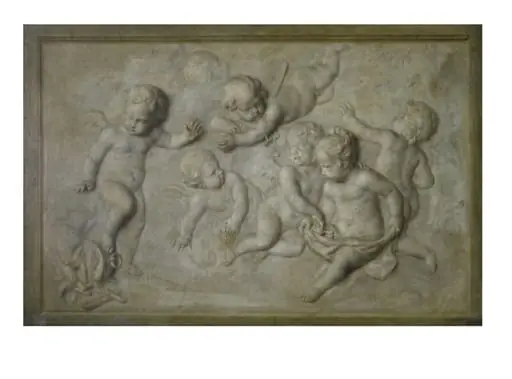
Fragment of sarcophagus from Palazzo Giustiniani in Rome
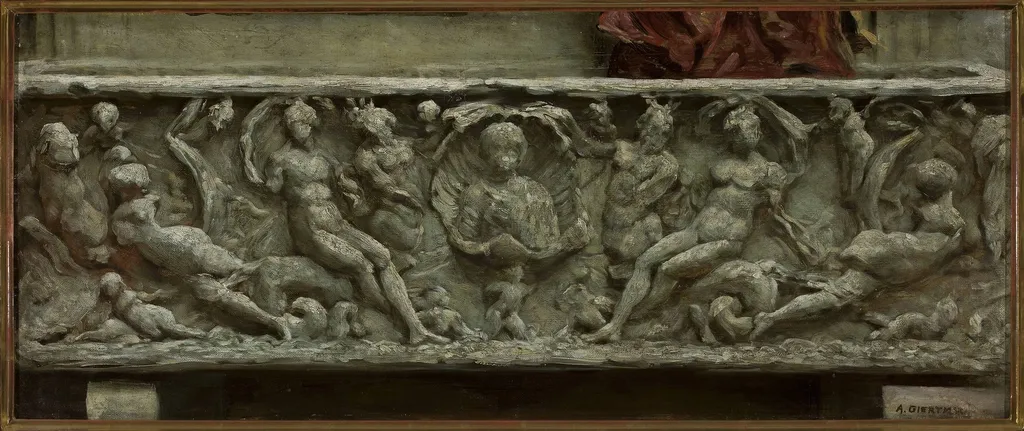
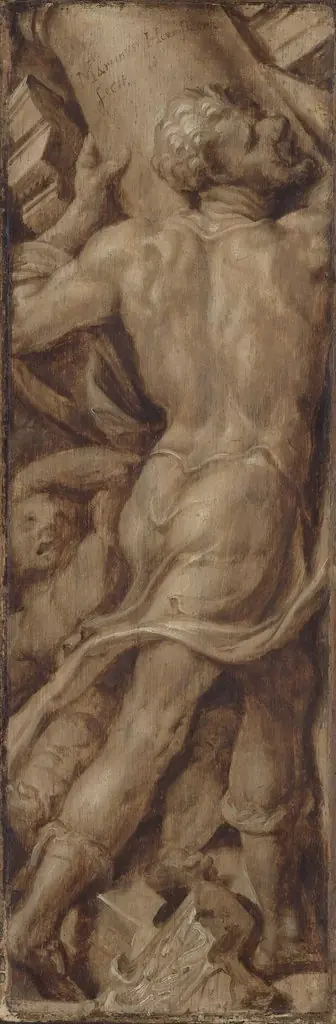
Fragment of sarcophagus from Palazzo Giustiniani in Rome is an oil painting by the Realist artist Aleksander Gierymski. It dates from 1885 and is held in the collection of the National Museum in Warsaw.
About this work
Overview
Though titled as a scene from Rome, it is not a direct copy of a specific monument but a studied observation made during Gierymski’s time in the city.
Painted around 1885 by Polish artist Aleksander Gierymski, this oil-on-canvas work depicts a fragment of an ancient Roman sarcophagus. Though titled as a scene from Rome, it is not a direct copy of a specific monument but a studied observation made during Gierymski’s time in the city. The piece reflects his commitment to close visual truth and belongs to the National Museum in Warsaw’s collection.
Subject & Meaning
The subject is a weathered stone sarcophagus fragment, its surface carved with partial figures and inscriptions. Gierymski focuses on decay and time’s erosion rather than mythological narrative. The absence of complete form invites contemplation of memory and loss, aligning with Realist interests in unidealized, tangible remnants of the past.
Technique & Style
Gierymski employs muted earth tones and precise brushwork to render the sarcophagus’s texture, cracked stone, faded relief, and moss-stained surfaces. Light falls naturally across the fragment, emphasizing materiality over drama. His approach avoids romantic embellishment, favoring quiet observation and tonal nuance characteristic of late 19th-century Realism.
History & Provenance
The painting was created during Gierymski’s stay in Rome, where he studied classical antiquities and urban ruins. It entered the National Museum in Warsaw’s collection in the early 20th century, likely through acquisition or donation. Its provenance remains tied to Polish artistic circles, with no record of private ownership beyond institutional custody.
Context
In the 1880s, Polish artists increasingly traveled to Italy to engage with classical heritage. Gierymski’s focus on architectural fragments, rather than grand monuments, reflected a broader shift toward intimate, everyday encounters with history. This work aligns with European Realist trends that valued empirical observation over idealized narratives.
Legacy
Though not widely exhibited, the painting exemplifies Gierymski’s role in bridging Realism and emerging Impressionist sensibilities in Polish art. Its restrained palette and attention to material decay influenced later generations interested in the poetic potential of ruins, contributing to a national dialogue on historical memory through visual art.
Artist & collection
Artist
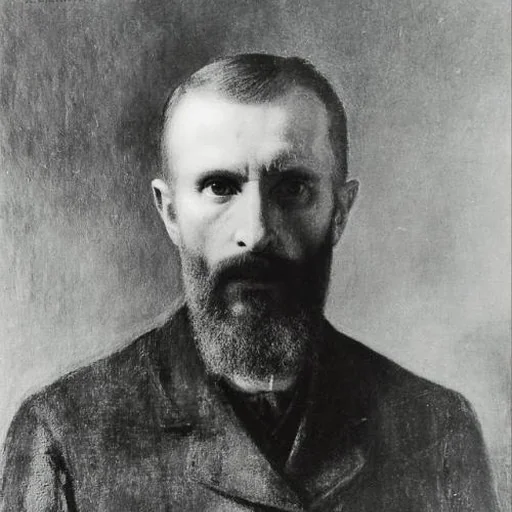
Ignacy Aleksander Gierymski (30 January 1850, Warsaw – d. 6–8 March 1901, Rome) was a Polish painter of the late 19th century, the younger brother of Maksymilian Gierymski. He was a representative of Realism as well as…