Artwork
Bacchanalia
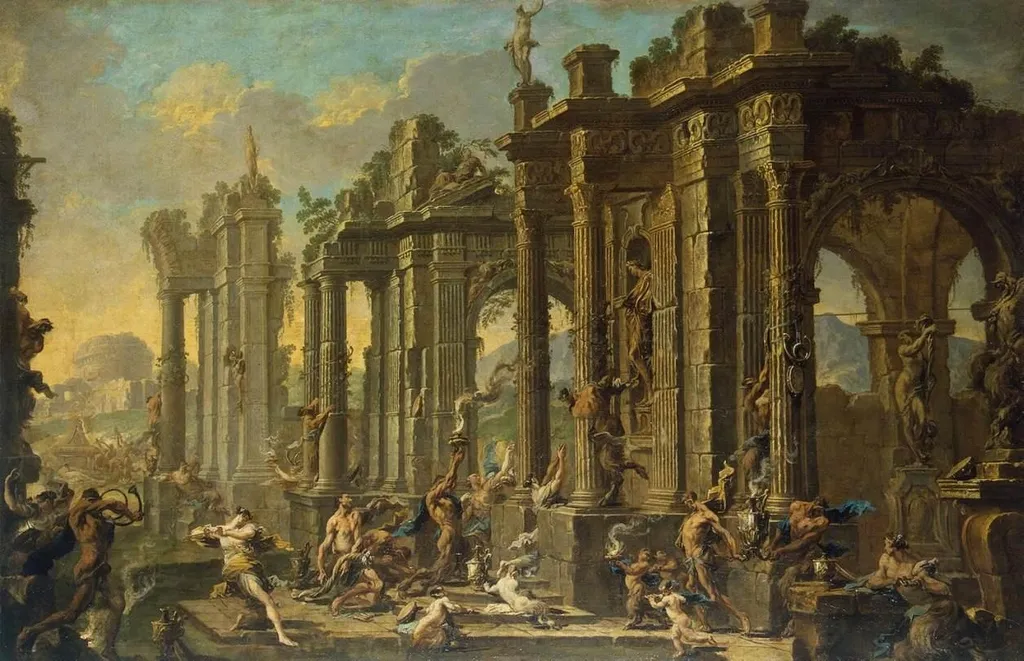
Bacchanalia is an oil painting by the Early Baroque Italian artist Alessandro Magnasco. It dates from 1710 and is held in the collection of the Hermitage Museum.
About this work
Subject & Meaning
Central to the work is the depiction of a Bacchanalia, featuring numerous human figures engaged in revelry amidst the crumbling classical structures.
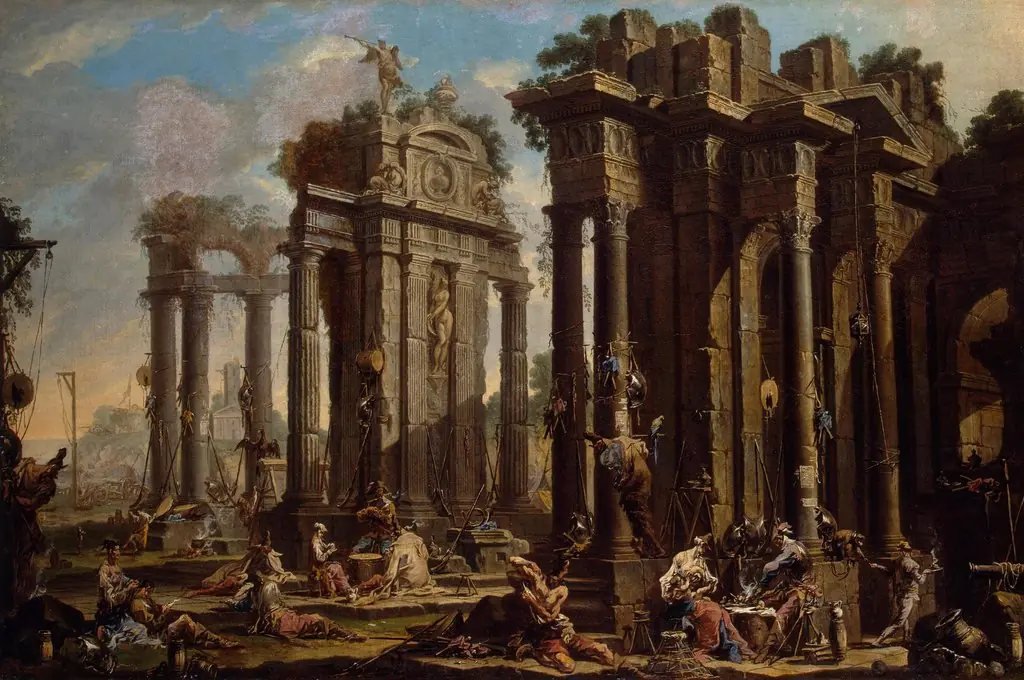
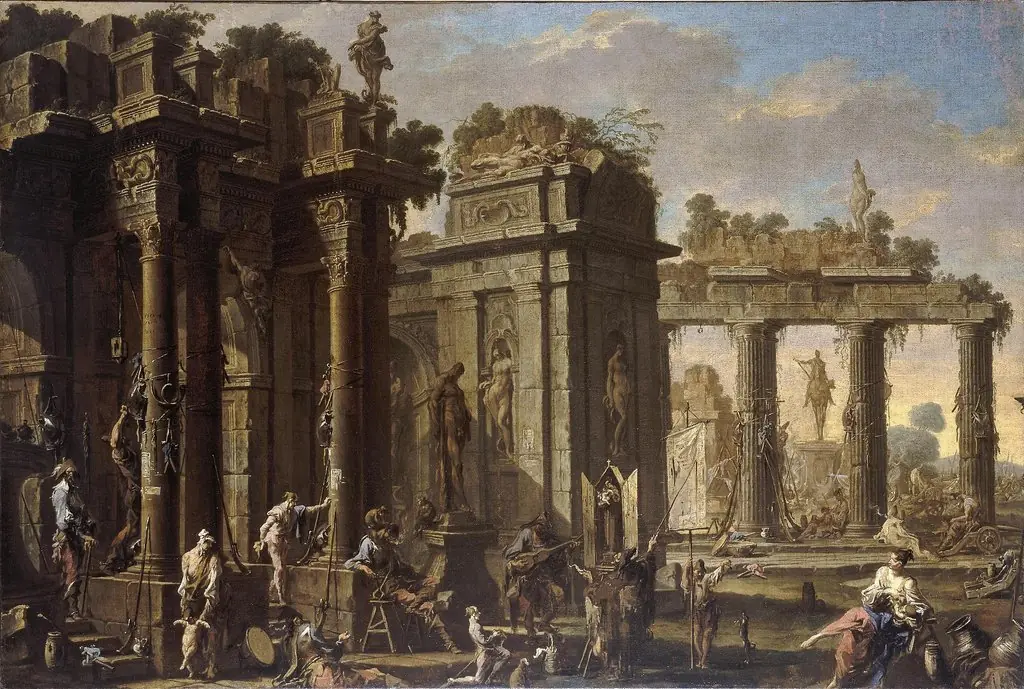
Alessandro Magnasco's 1710 painting, Bacchanalia, is classified as a capriccio that blends architectural fantasy with mythological narrative. The composition depicts a chaotic scene set among ruins, columns, and statues under a dramatic sky filled with clouds. Central to the work is the depiction of a Bacchanalia, featuring numerous human figures engaged in revelry amidst the crumbling classical structures.
This arrangement of ruins and festive human activity creates a juxtaposition between the decay of the ancient world and the enduring, often wild, spirit of the bacchanal celebration.
Technique & Style
The painting employs oil on canvas, a standard medium for Magnasco’s figural capricci of the early eighteenth century. Its composition combines agitated, sketch-like handling with sharply delineated architectural elements, aligning with the artist’s characteristic contrast between loose, dynamic brushwork and precise linear definition. The scene’s crowded Bacchic figures, rendered in rapid, flickering strokes, emerge from a dark ground punctuated by luminous sky and crumbling ruins, underscoring Magnasco’s theatrical staging of mythological revelry amid classical debris.
Dimensions are recorded at 110 cm in height and 167 cm in width, consistent with Magnasco’s cabinet-scale works.
History & Provenance
Alessandro Magnasco, potentially in collaboration with Clemente Spera, created the oil painting Bacchanalia in 1710. Produced in Italy, the work depicts a capriccio scene featuring ruins, statues, and figures engaged in revelry under a cloudy sky. The canvas measures 110 cm in height and 167 cm in width. Following its creation, the painting entered the collection of the Hermitage Museum, where it remains housed.
Context
Bacchanalia (1710) is an oil on canvas capriccio measuring 110 × 167 cm, produced in Italy and housed in the Hermitage Museum. The composition shows the mythological figure Bacchanalia amid ruins, sky, clouds, columns and other figures, a motif typical of Alessandro Magnasco’s fantastical style. Magnasco, also called Lissandrino, worked in the early 18th century, developing a reputation for dramatic, loosely organized scenes that blend architectural fantasy with lively human activity.
Contemporary scholarship places this work within his mature period, noting its dynamic arrangement and atmospheric effects as characteristic of the Baroque capriccio tradition. The painting’s reception has been discussed in terms of its theatrical composition and its role in the evolution of decorative landscape painting.
Overview
Alessandro Magnasco, known as il Lissandrino, created Bacchanalia in 1710 using oil paint. This painting depicts a mythological scene of revelry, characteristic of the artist's fantastical approach. The work is currently housed in the State Hermitage Museum, offering a glimpse into early 18th-century Italian Baroque artistry through Magnasco's distinctive vision.
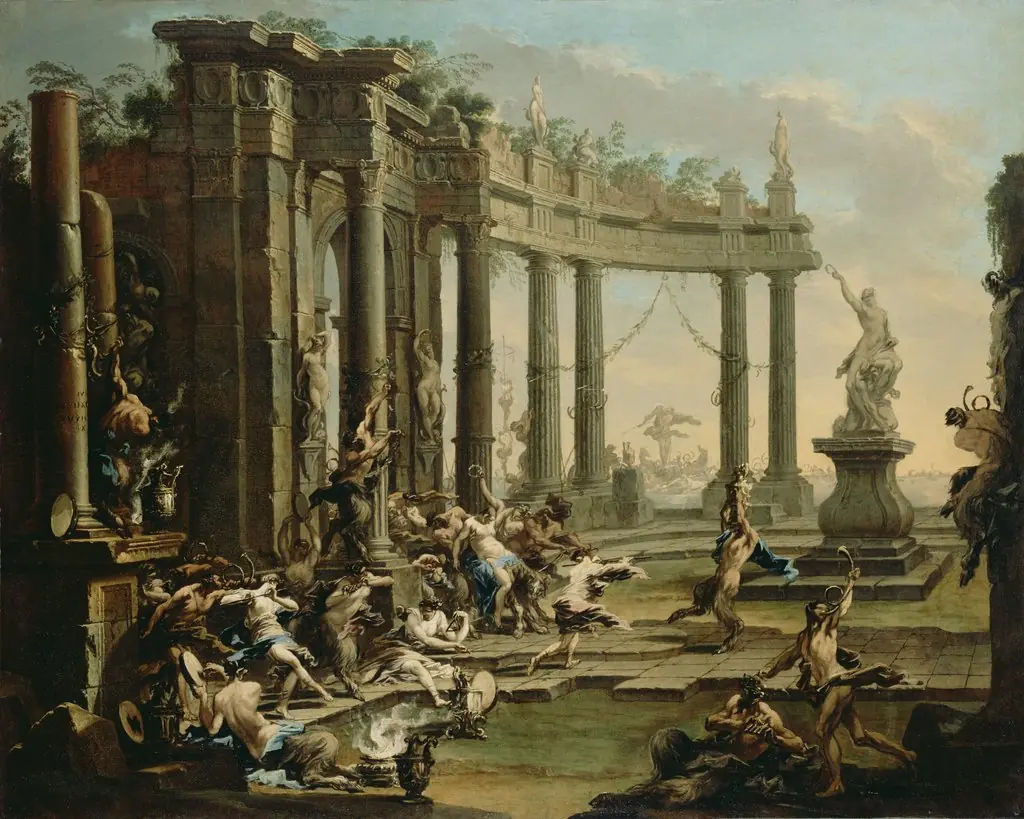
Artist & collection

Artist
Alessandro Magnasco (February 4, 1667 – March 12, 1749), also known as il Lissandrino, was an Italian late-Baroque painter active mostly in Milan and Genoa.

 Halt of the Brigands
 Banditti at Rest
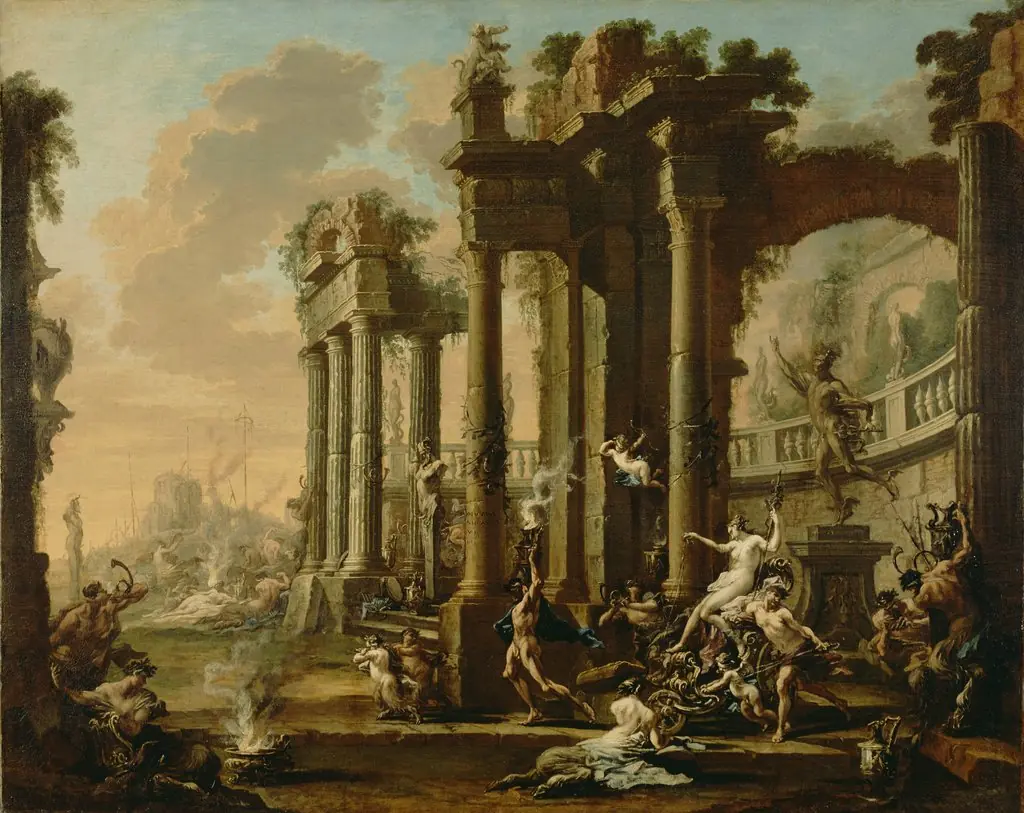 The Triumph of Venus
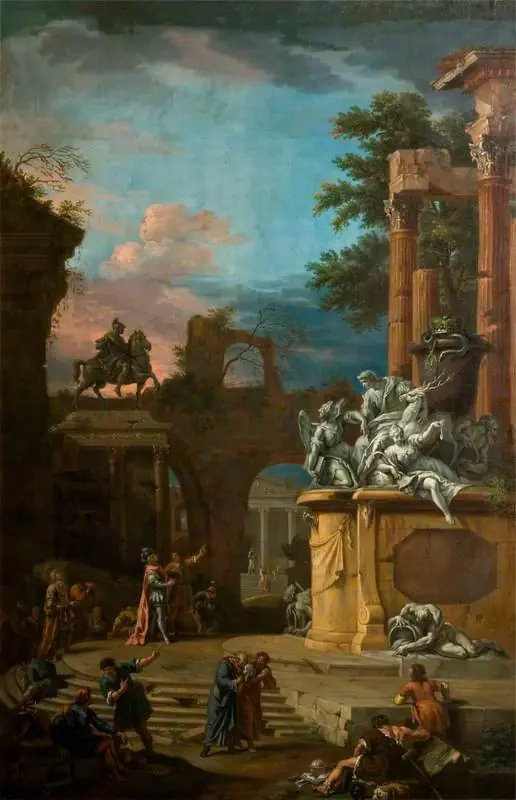 Imaginary Monument to William Cavendish (1640–1707), 1st Duke of Devonshire
 Abduction of the Sabine Women
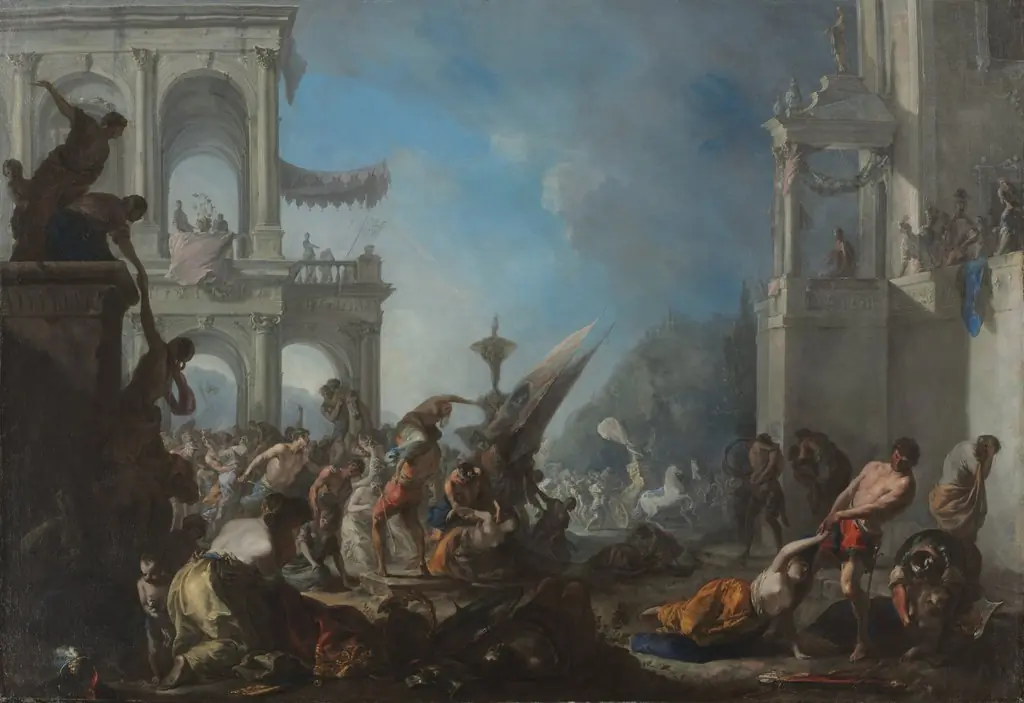 Abduction of the Sabine Women
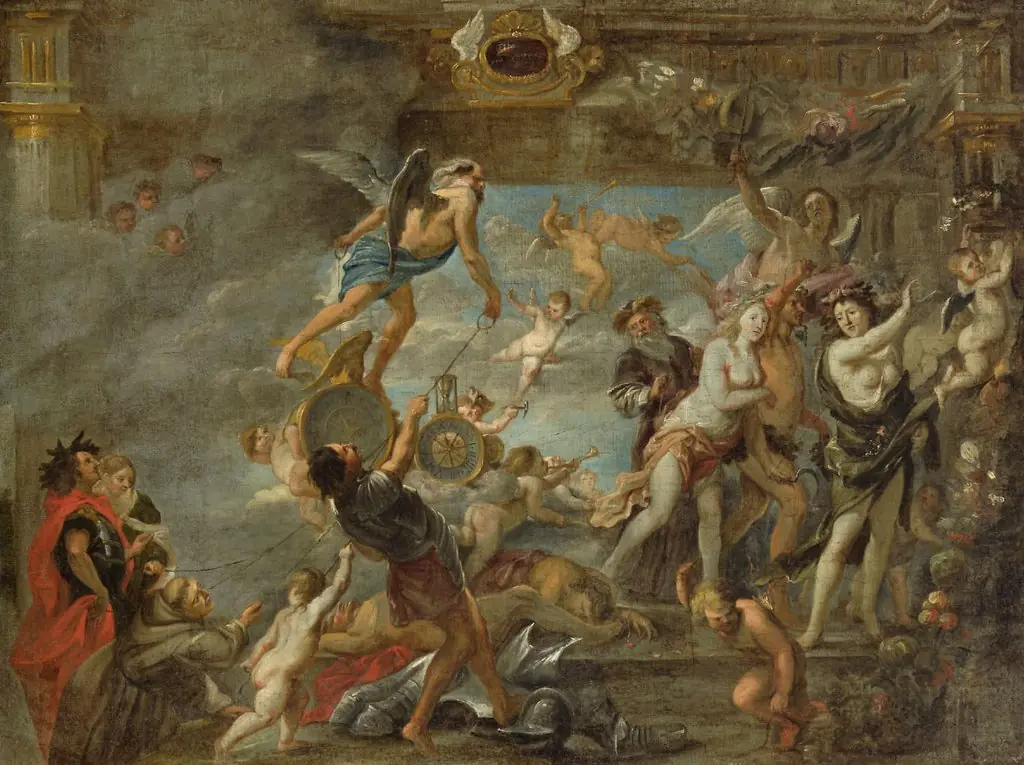 Triumph of Time
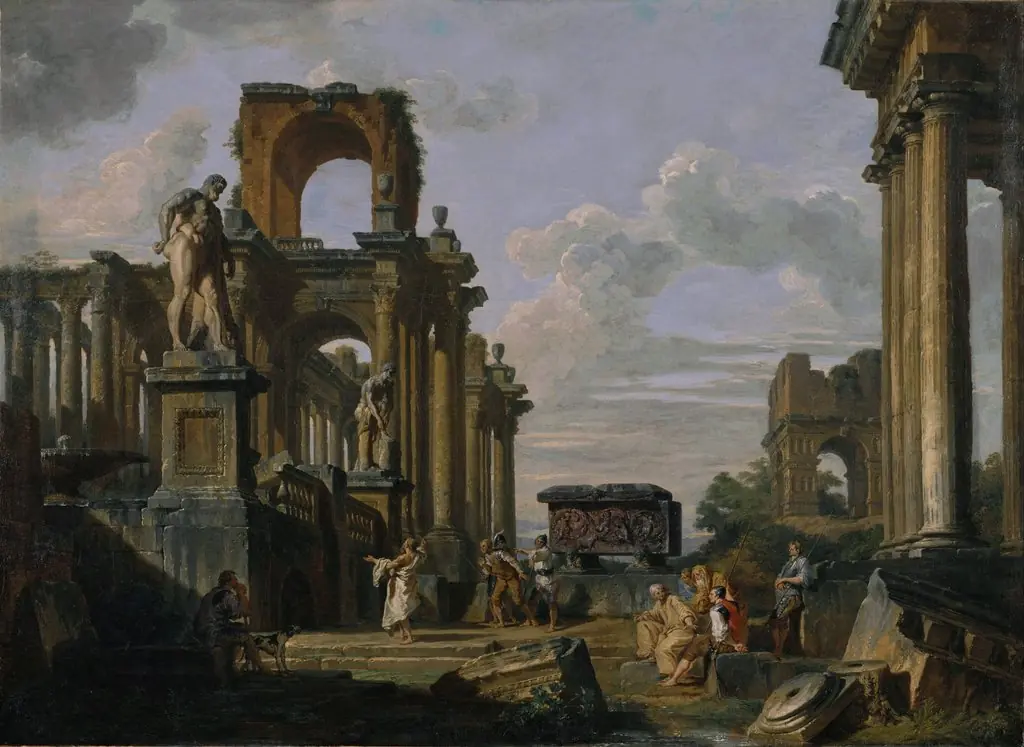 An Architectural Capriccio of the Roman Forum with Philosophers and Soldiers among Ancient Ruins, including the Arch of Janus Quadrifrons, the Sarcophagus of Santa Constanza, the Farnese Hercules and the Cincinnatus
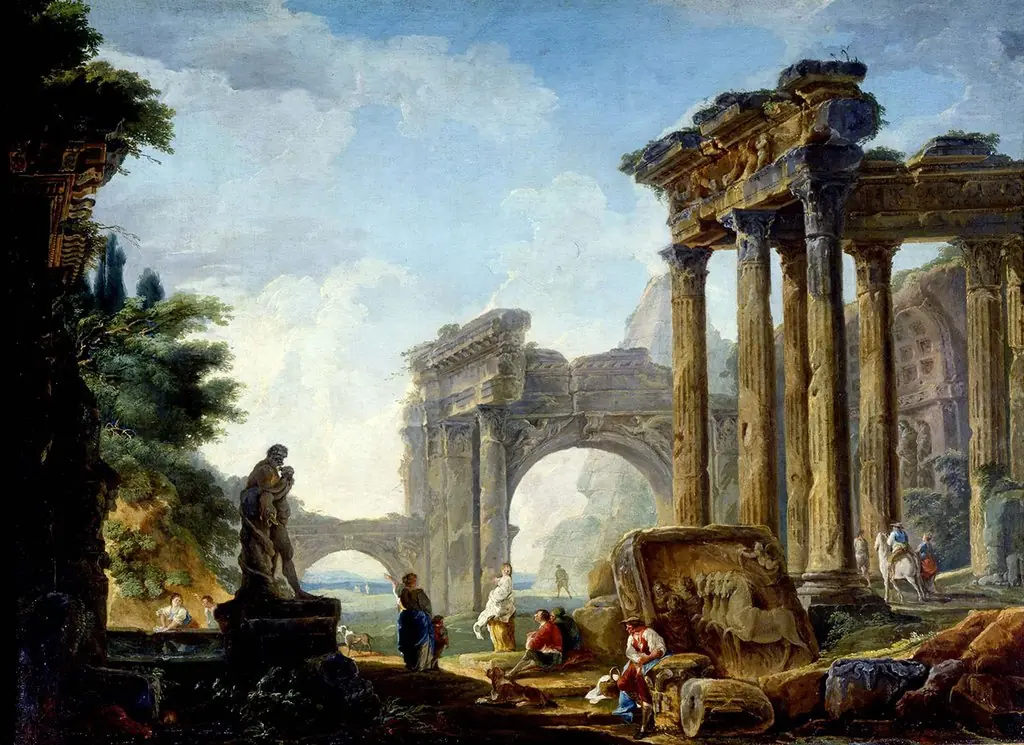 Paysage avec ruines romaines
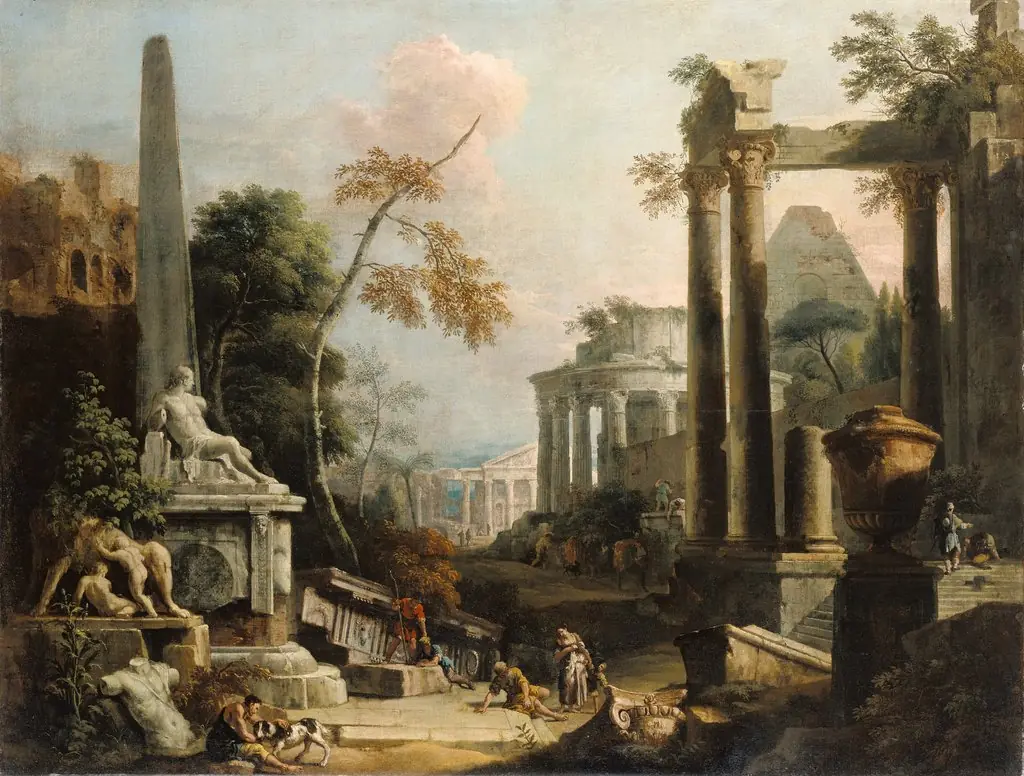 Landscape with Classical Ruins and Figures
 Apollo and Diana Kill Niobe's Children
- Bacchanale