Artwork
The Choristers
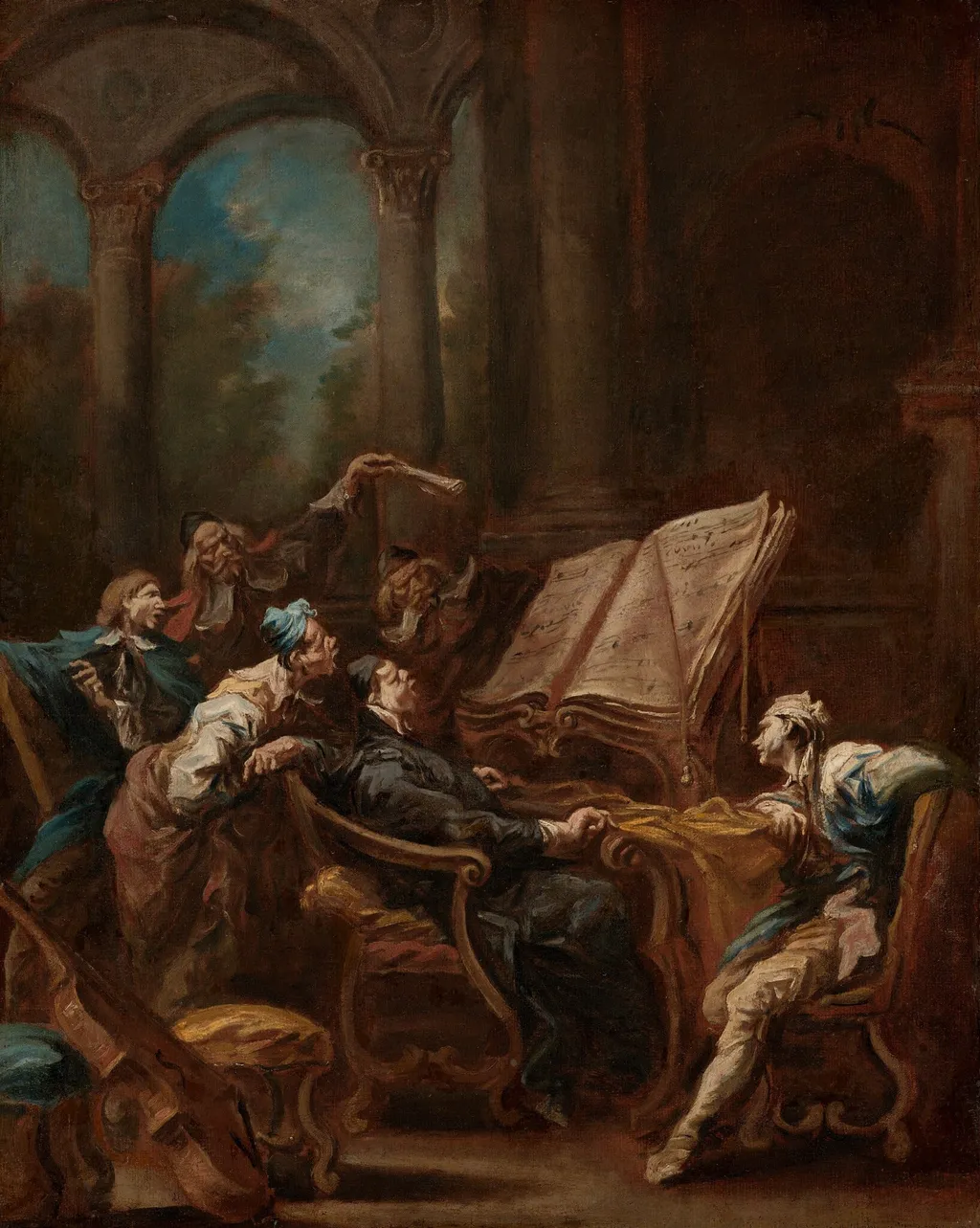
The Choristers is an oil painting by the Baroque artist Alessandro Magnasco. It dates from 1742 and is held in the collection of the National Gallery of Art.
About this work
Subject & Meaning
The work reflects an early 18th-century fascination with monastic music and the emotive power of sacred performance, a theme recurring in the artist's oeuvre.
The painting depicts a group of young singers in a dimly lit interior, their gestures suggesting a moment of devotional harmony. Magnasco emphasizes the contrast between the illuminated figures and the surrounding darkness, using dramatic chiaroscuro to heighten the spiritual intensity of the scene. The work reflects an early 18th-century fascination with monastic music and the emotive power of sacred performance, a theme recurring in the artist's oeuvre.
The composition draws on iconographic conventions of choir members engaged in liturgical chant, symbolizing communal worship and the transmission of sacred music. By portraying the singers in a semi-realistic yet expressive manner, Magnasco conveys both the human element of devotion and the ethereal quality of sacred sound.
Technique & Style
The Choristers is executed in oil on canvas, a standard support for Alessandro Magnasco's easel paintings. The work is relatively modest in scale, measuring 68 cm in height by 54.5 cm in width, an intimate format suited to its subject of figures in a confined interior.
Magnasco's mature style is characterized by rapid, nervous brushwork and a dark, earthy palette punctuated by flickers of white, traits consistent with his production around 1742. The composition gathers small, animated figures within a shadowy ecclesiastical setting, rendered with calligraphic strokes that emphasize movement and atmospheric gloom over precise finish.
No condition issues or restoration history are documented in the available records.
History & Provenance
The Choristers was created by Alessandro Magnasco in 1742 as an oil on canvas. The painting was brought to the United States by John Rolfe, who transported it from England before 1825 and passed it down within his family to Emily Floyd Gardiner of McLean, Virginia. In 1972 the work was gifted to the National Gallery of Art in Washington, D.C., where it entered the collection under its current inventory designation. No specific exhibition history is detailed in the provided sources.
Overview
Alessandro Magnasco created The Choristers in oil on canvas around 1742. Executed during the late Baroque period, the work displays the artist’s characteristic use of rapid brushwork and atmospheric light, presenting a small group of figures within an interior space framed by arched windows.
Context
Although often linked to the Rococo for its decorative qualities, The Choristers aligns more closely with late Baroque sensibilities, reflecting the period’s interest in theatricality and emotional expression. Magnasco’s work contrasts with the polished elegance of his contemporaries, favoring a more chaotic, almost theatrical vision.
Own this work as a print
Artist & collection

Artist
Alessandro Magnasco (February 4, 1667 – March 12, 1749), also known as il Lissandrino, was an Italian late-Baroque painter active mostly in Milan and Genoa.

- Regele David cântând la harpă
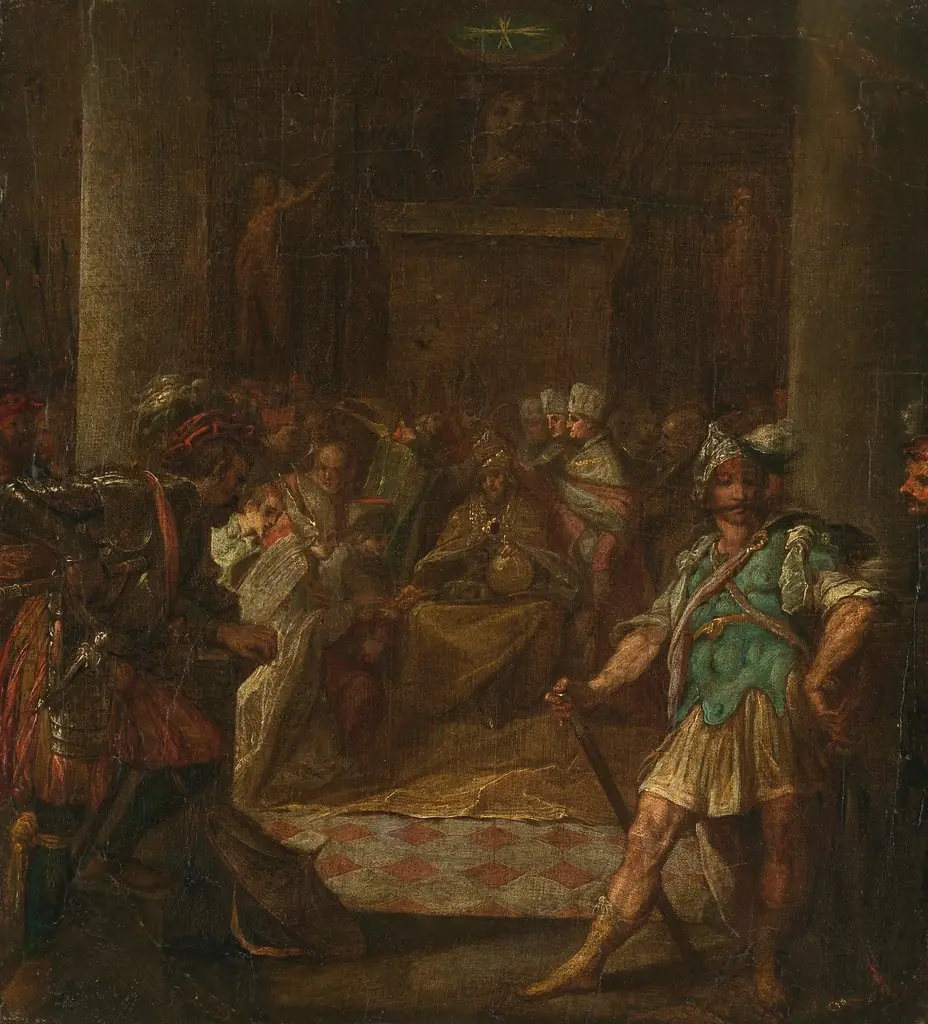 Imperial Coronation
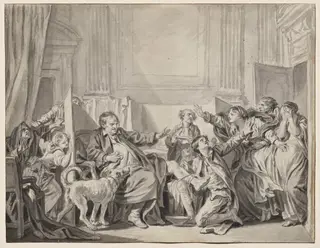 The Guilty and Repentant Daughter
 Evangelist Matthäus und Hl. Gregor
 Funeral Procession of a Saint with Angels
 Le juge de mesle
 Saint Augustine Subdues Heresy with Lightning Bolts from His Pen
 Night Banquet and Masquerade
 Saint Ambrose appointed Governor of Liguria and Emilia
 The Marriage of Placidia and Constantius
 Before the Conclave
 Martyrdom of Saint Andrew