Artwork
Three Camaldolese Monks in Meditative Prayer
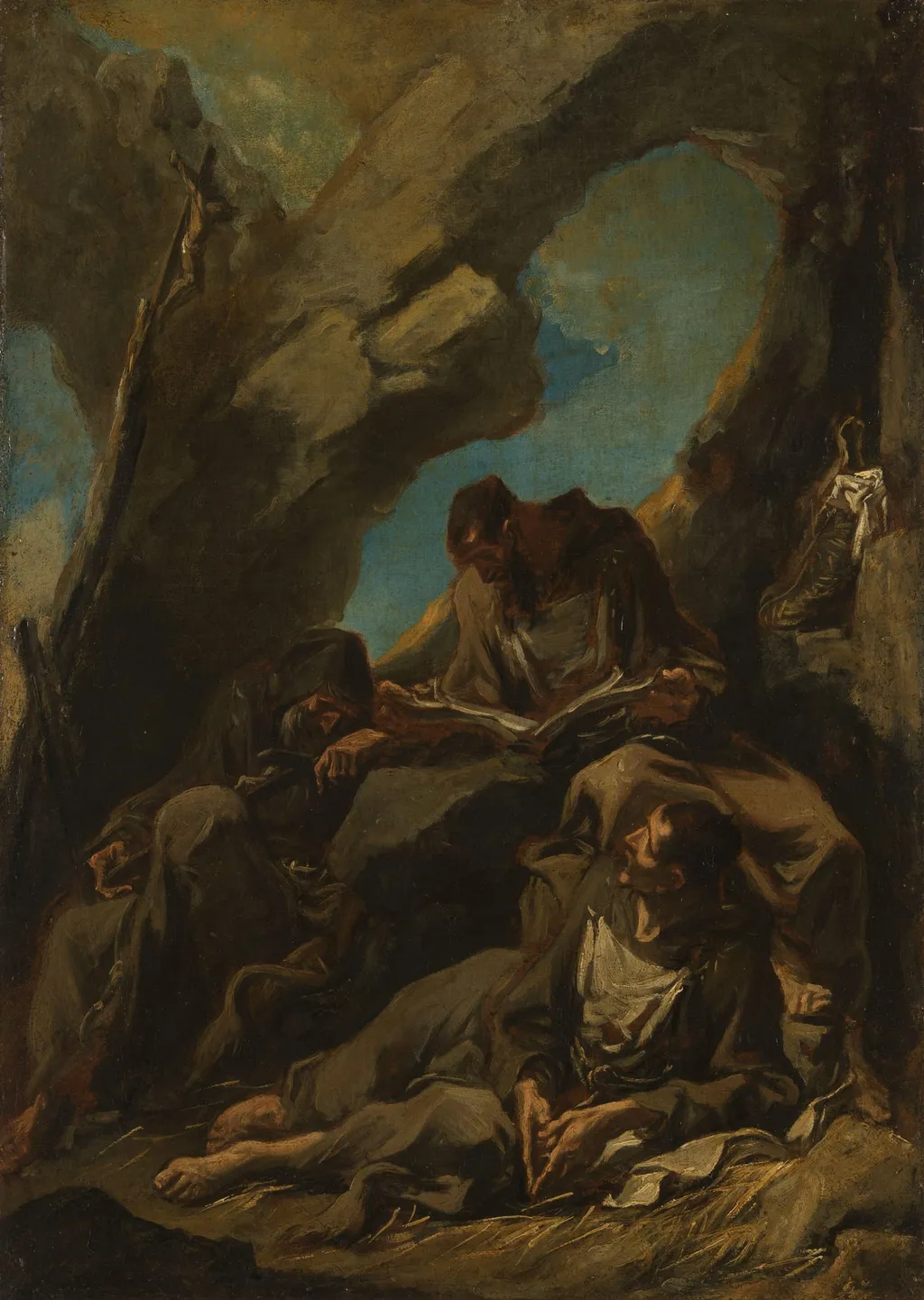
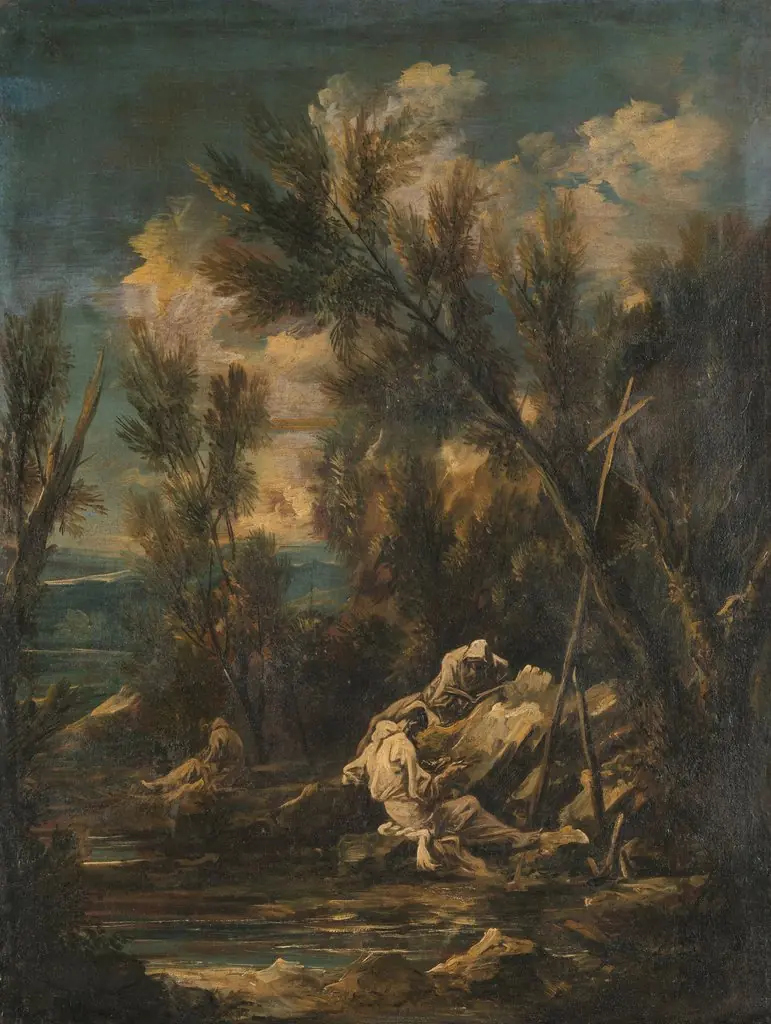
Three Camaldolese Monks in Meditative Prayer is an unspecified painting by the Baroque artist Alessandro Magnasco. It dates from 1725 and is held in the collection of the Rijksmuseum. The work depicts three Camaldolese monks kneeling in a dimly lit cave, each engaged in silent devotion.
About this work
Subject & Meaning
The painting's mood and technique underscore the artist's intent to capture the spiritual essence of monastic devotion, rather than merely documenting a ritual.
The painting depicts three Camaldolese monks engaged in meditative prayer, rendered in Magnasco's characteristic style of fragmented forms and swift brushstrokes that convey a sense of spiritual intensity. The composition features small, elongated figures set against a dark, atmospheric landscape, reflecting the artist's focus on mysticism and contemplative religious subjects. The work symbolizes the quiet devotion of monastic life, with the monks' gestures and expressions suggesting an ecstatic, almost otherworldly communion with the divine.
This subject aligns with Magnasco's broader exploration of unusual religious scenes, including hermitages, saints, and liturgical moments, often imbued with a sense of solemnity and quietude.
Magnasco's depiction emphasizes the Camaldolese Order's contemplative traditions, using visual elements to evoke a sense of sacred stillness. The painting's mood and technique underscore the artist's intent to capture the spiritual essence of monastic devotion, rather than merely documenting a ritual. This focus on interior spirituality, rather than external narrative, is central to the work's meaning and represents a key aspect of Magnasco's mature style, where religious themes are rendered with psychological depth and visual immediacy.
Technique & Style
Three Camaldolese Monks in Meditative Prayer is an oil on canvas measuring 54 × 139 cm, executed between 1710 and 1735 in Magnasco's mature style. The work reflects his signature approach of small, elongated figures set against gloomy, hypochromatic landscapes, rendered with swift, flickering brushstrokes and darting flashes of light that produce fragmented forms. Magnasco's dense, nervous handling builds shadowy apparatuses around distorted, cartoonishly attenuated characters, with a subdued palette dominated by grays and browns.
The painting belongs to his late-Baroque idiom, in which monks and nuns frequently occupy eerie, tenebrous conventual scenographies, and aligns with the al tocco manner of rapid, sketch-like touch that characterizes his Milanese period.
History & Provenance
Attributed to Alessandro Magnasco, Three Camaldolese Monks in Meditative Prayer is dated broadly between 1710 and 1740. This timeframe aligns with the artist's mature period in Milan, where he frequently depicted religious figures such as monks within dark, atmospheric landscapes. During these decades, Magnasco often collaborated with landscape specialists like Antonio Francesco Peruzzini and Clemente Spera, who provided the architectural or natural settings for his small, elongated figures.
The work reflects the style Magnasco developed after 1710, characterized by hypochromatic canvases and swift, nervous brushstrokes. While specific early provenance records for this particular canvas are not detailed in available sources, it is currently held in the collection of the Rijksmuseum in Amsterdam. The painting exemplifies the artist's focus on solitary, meditative subjects favored by patrons in Milan and Florence during the early eighteenth century.
Context
Three Camaldolese Monks in Meditative Prayer belongs to the mature phase of Alessandro Magnasco's career, a period in which he produced small, hypochromatic canvases populated by elongated, flickering figures set within eerie landscapes or monastic interiors, a body of work that art historian Rudolf Wittkower characterized as "solitary, tense, strange, mystic, ecstatic, grotesque, and out of touch with the triumphal course of the Venetian school." The painting fits within a broader monastic and devotional subgenre that Magnasco explored throughout his life, including depictions of monks and nuns of various orders praying in landscapes or cloisters, as well as a documented commission for Count Colloredo between 1719 and 1725 of monastery scenes such as a Capuchin refectory and library.
Magnasco's late-Baroque idiom, with its swift brushstrokes and darting flashes of light, situates the work within a wider Italian tradition of fantastic genre and landscape painting, while also linking him to the Bamboccianti circle and to predecessors such as Salvator Rosa in his romantic, ruin-strewn settings. The Italian Wikipedia entry further compares his distorted figures and dense chiaroscuro to the visionary manner of Monsù Desiderio and to certain coloristic traits of El Greco, positioning him as a singular, anti-academic voice in the Settecento whose eccentric subjects, monks, inquisitorial interrogations, synagogue services, set him apart from his Genoese contemporaries, who, as Luigi Lanzi noted, preferred a smoother finish.
Legacy
Magnasco's painting Three Camaldolese Monks in Meditative Prayer has been cited as an influence on later artists including Marco Ricci, Giuseppe Bazzani, Francesco Maffei, and the Guardi brothers in Venice. Critics have noted his pioneering use of small, elongated figures in religious settings, with Rudolf Wittkower describing his work as 'solitary, tense, strange, mystic, ecstatic, grotesque' from 1710 onward. His depictions of monastic prayer and contemplative scenes, such as this work, were unusual for Italian Baroque art and contributed to a legacy of stylized, emotionally charged genre scenes that bridged Baroque and Rococo traditions.
Overview
The work depicts three Camaldolese monks kneeling in a dimly lit cave, each engaged in silent devotion. Two of the figures have opened books before them, while the third cradles a small crucifix. A larger carved crucifix is affixed to the rock behind them, anchoring the composition within a simple, contemplative setting.
Own this work as a print
Artist & collection

Artist
Alessandro Magnasco (February 4, 1667 – March 12, 1749), also known as il Lissandrino, was an Italian late-Baroque painter active mostly in Milan and Genoa.

 Carthusian Monks in a Landscape
 Eremiter
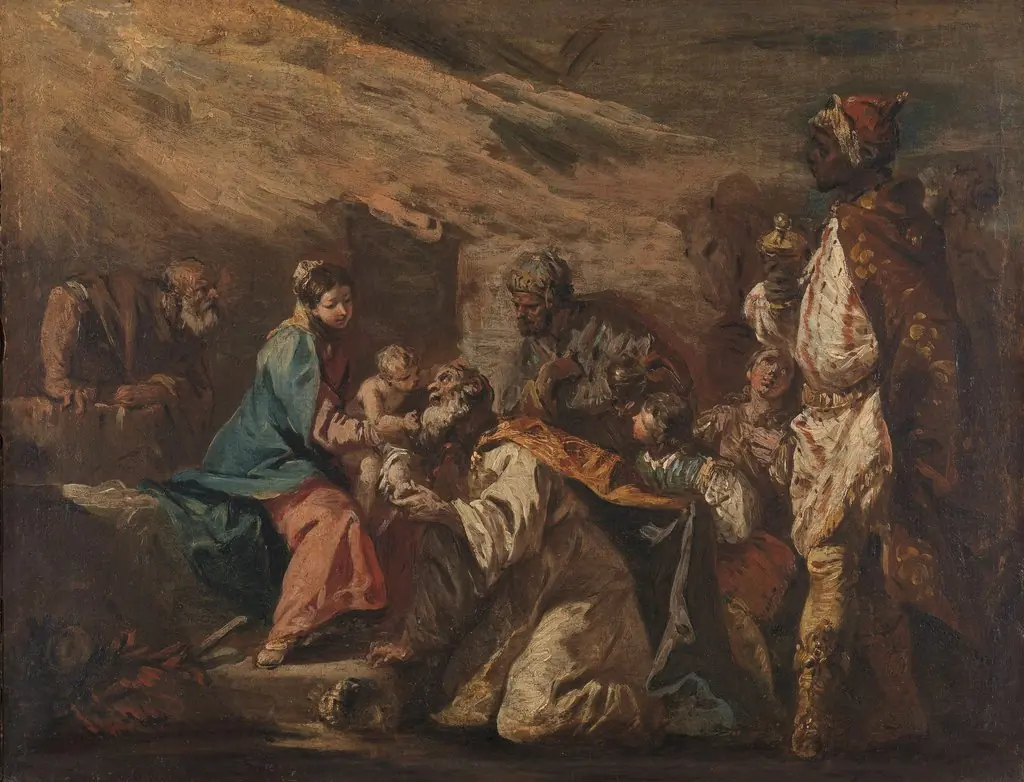 Adoration of the Magi
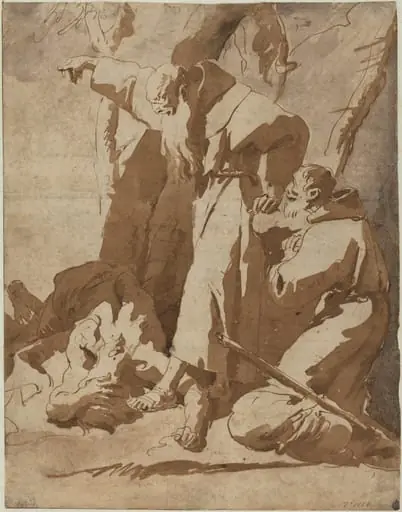 Two Monks with a Prostrate Man
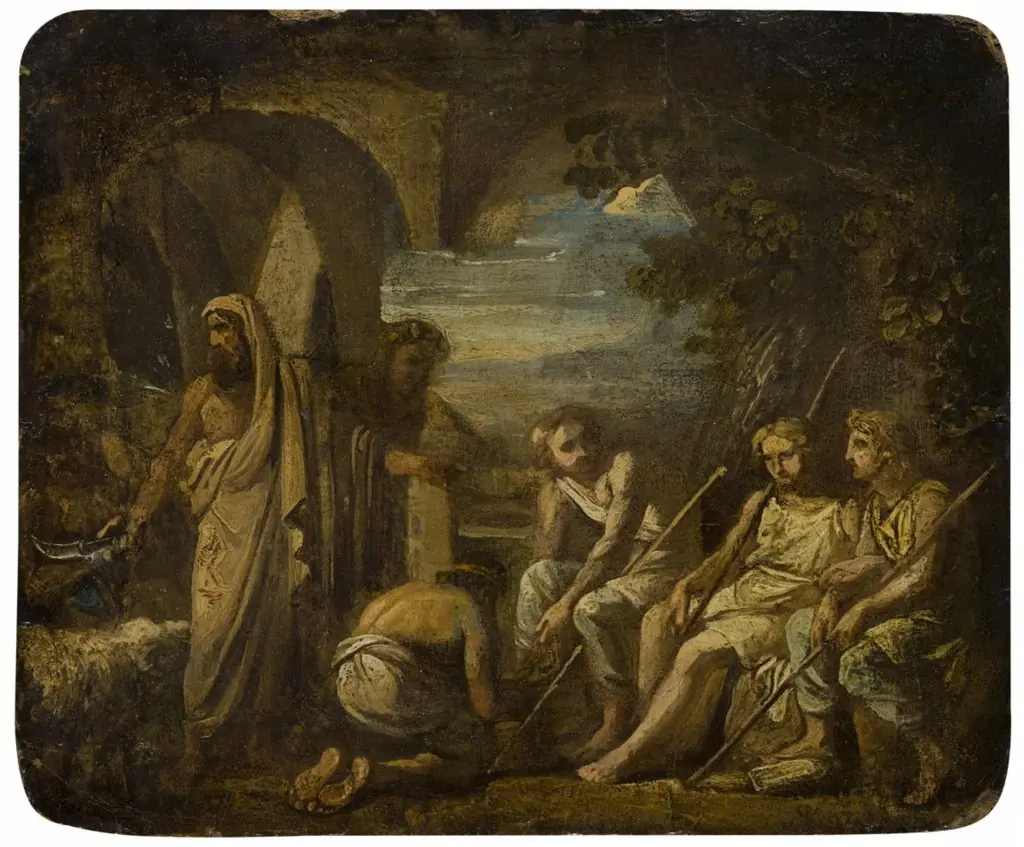 Sketch on the Subject of the Trinity Beneath the Oak of Mambre
 Annunciation to the Shepherds
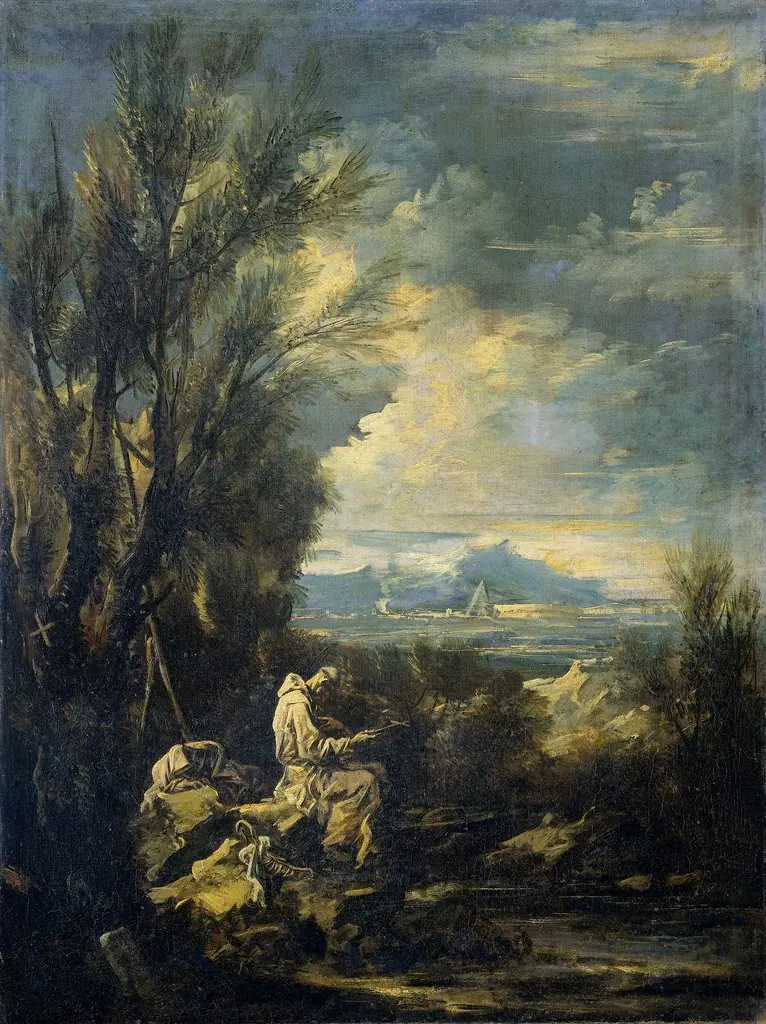 Landscape with Saint Bruno ?
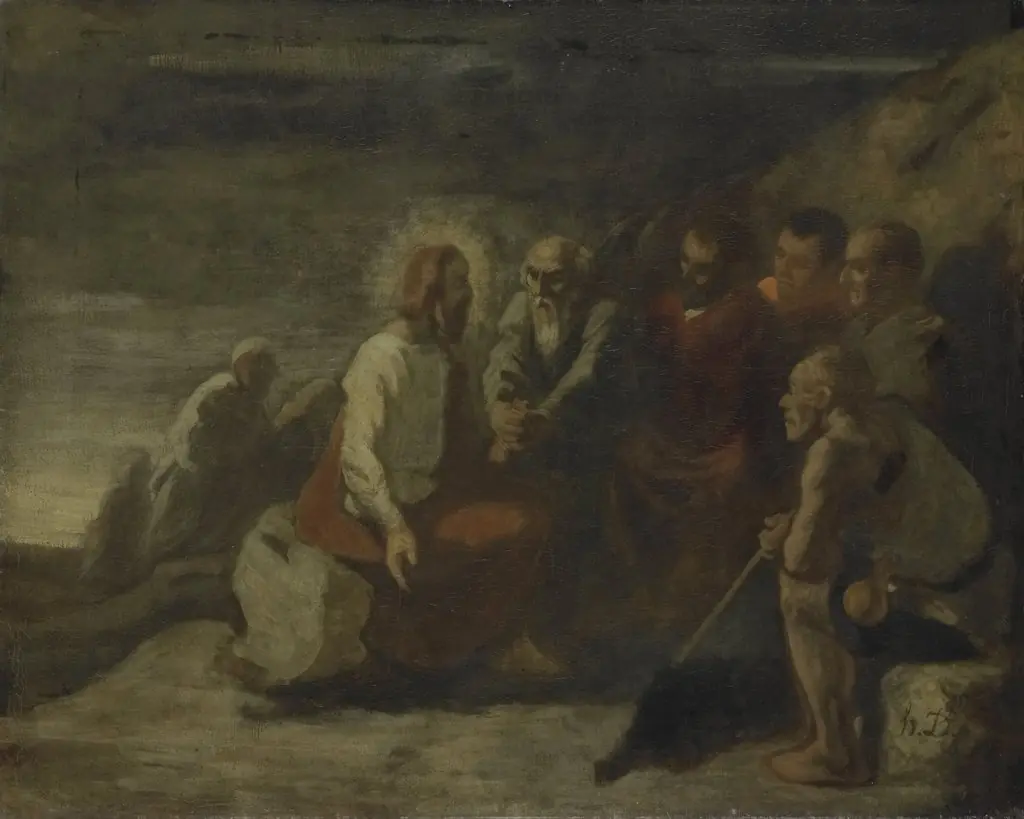 Christ and His Disciples
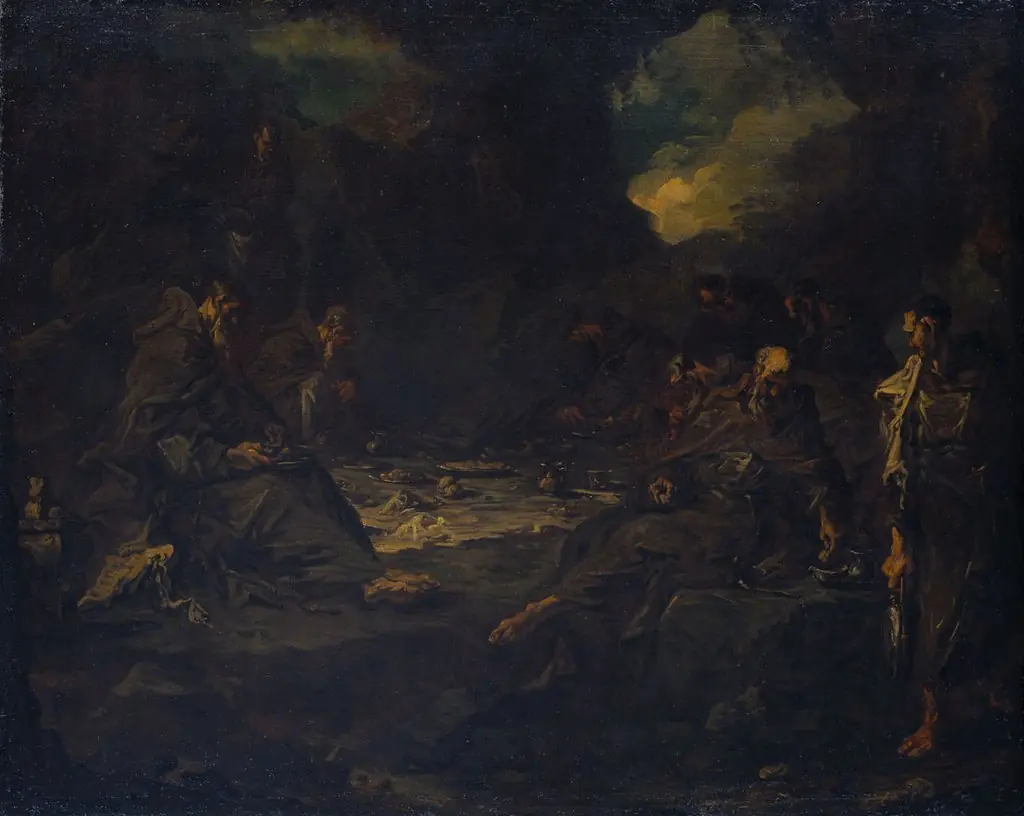 Mahl der Einsiedler in einer Höhle
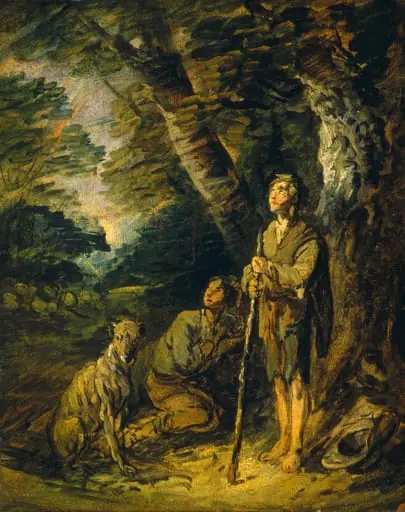 Shepherd Boys and Dog Sheltering from a Storm