Artwork
The penitent Saint Jerome
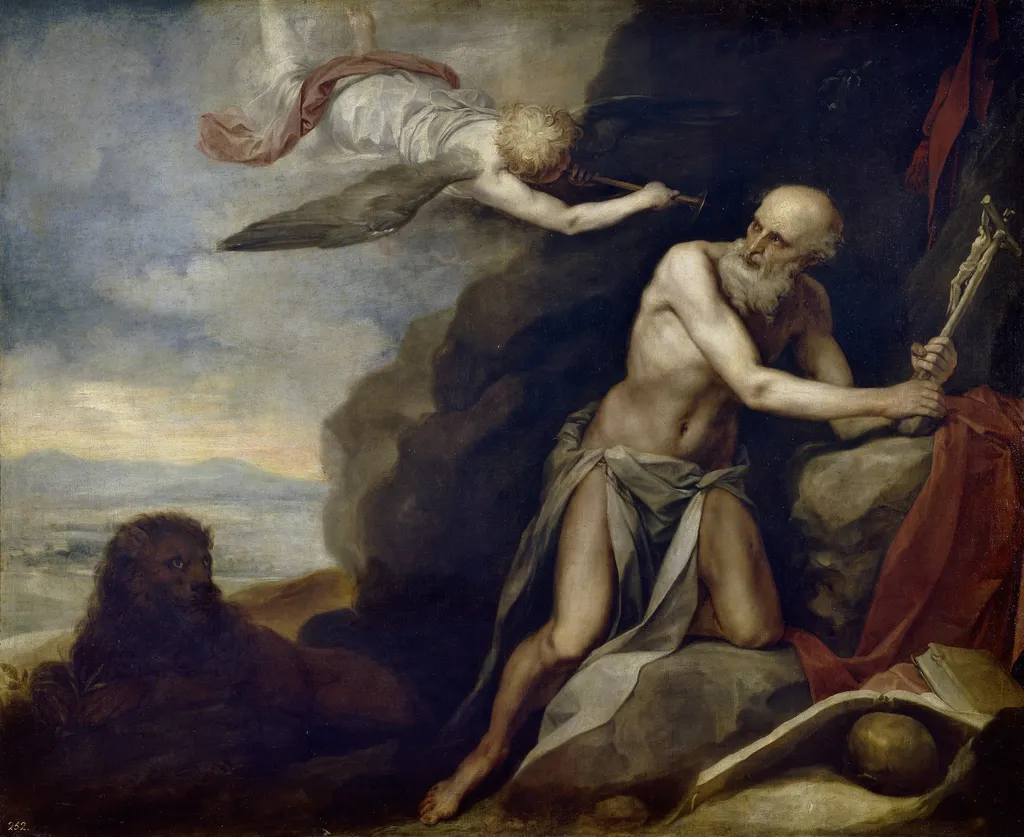
The penitent Saint Jerome is an oil painting by the Early Baroque Italian artist Alonso Cano. It dates from 1660 and is held in the collection of the Museo del Prado.
About this work
Subject & Meaning
The skull and crucifix underscore themes of mortality and redemption, while the trumpet signals the eschatological call to judgment and conversion.
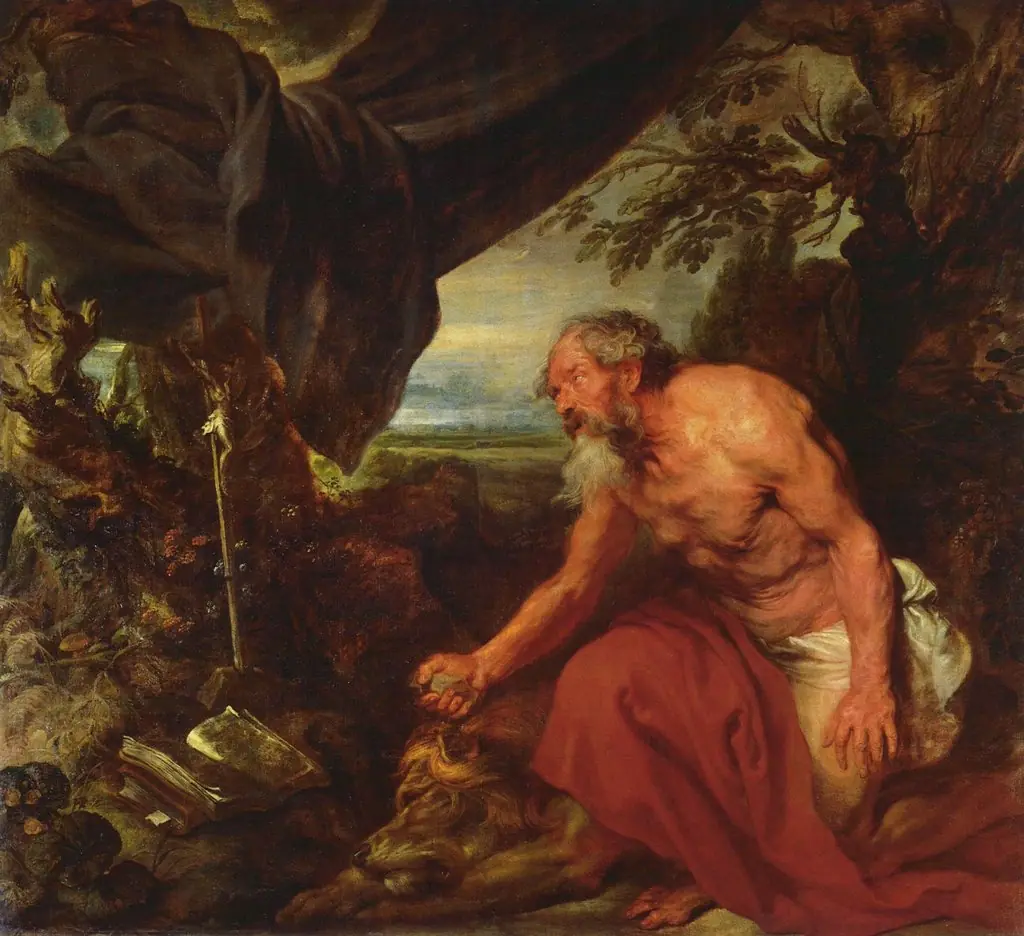
The work depicts Jerome of Stridon in the wilderness as a penitent ascetic, shown in three-quarter view seated on a rocky outcrop. He is marked by the attributes of his desert solitude: a small skull at his feet, a crucifix held before him, and a natural trumpet lying nearby, evoking the trumpet of the Last Judgment traditionally associated with his visions.
The composition emphasizes the saint’s interior struggle and spiritual renewal, aligning with Counter-Reformation iconography that valorized eremitic penance as a model of Christian atonement. The skull and crucifix underscore themes of mortality and redemption, while the trumpet signals the eschatological call to judgment and conversion.
Technique & Style
Executed in 1660, this religious painting by Alonso Cano utilizes oil paint applied to a canvas support. The work measures 177 cm in height and 209 cm in width. Visually, the composition depicts Saint Jerome in a wilderness setting, incorporating specific iconographic elements such as a skull, a natural trumpet, and a crucifix to convey the penitent theme.
History & Provenance
The work titled The penitent Saint Jerome was painted by Alonso Cano in 1660 as an oil on canvas religious composition. It entered the collection of Ferdinand VII of Spain before being accessioned by the Museo del Prado, where it remains on display.
The painting measures 177 cm by 209 cm and portrays Jerome in the wilderness with a skull, natural trumpet and crucifix. Its creation history is documented as dating to 1660, and it was originally owned by the Spanish monarch before entering the royal collection that formed the core of the Prado’s holdings.
The Penitent Saint Jerome is held by the Museo del Prado, where it is catalogued under inventory number P00968. The work entered the Spanish royal collection through ownership by Ferdinand VII of Spain and remains on display in the museum's galleries. It has been featured in exhibitions focused on Spanish Baroque painting, including the Prado's own presentations of its 17th-century religious works.
Context
Alonso Cano's 1660 oil painting The penitent Saint Jerome, housed in the Museo del Prado, reflects Baroque-era spiritual intensity through its stark depiction of Jerome's ascetic contemplation amid wilderness motifs. Scholars have examined its theological resonance within Counter-Reformation discourse, particularly how the skull and crucifix underscore meditative mortality. The work's provenance, originally owned by Ferdinand VII of Spain, underscores its royal significance, while stylistic analyses position Cano's approach within Spanish devotional art traditions.
Its composition, blending naturalistic detail with symbolic elements, invites ongoing study of genre conventions in 17th-century Spanish religious painting.
Legacy
The painting The penitent Saint Jerome by Alonso Cano exerted influence through its profound religious depiction that resonated with Spanish devotional practices. Its reputation grew within the corpus of Spanish Baroque art, particularly noted for the stark, contemplative portrayal of Saint Jerome in the wilderness, a subject that inspired later artists to explore similar themes of asceticism and penitence. The work's legacy is anchored in its presence at the Museo del Prado, where it remains part of the collection, preserving its status as a reference point for studies of 17th‑century Spanish spirituality and artistic technique.
Overview
Alonso Cano’s oil on canvas, dated 1660, presents a solitary, aged figure kneeling on a rugged surface. The composition centers on the saint, his weathered skin and simple cloth emphasizing humility, while a crucifix rests nearby. A small creature peeks from the stones, adding a touch of naturalism to the devotional scene.
Own this work as a print
Artist & collection

- Saint Jerome
 Saint Jerome
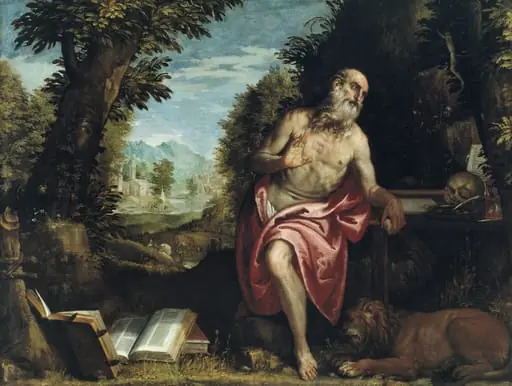 Saint Jerome in the Wilderness
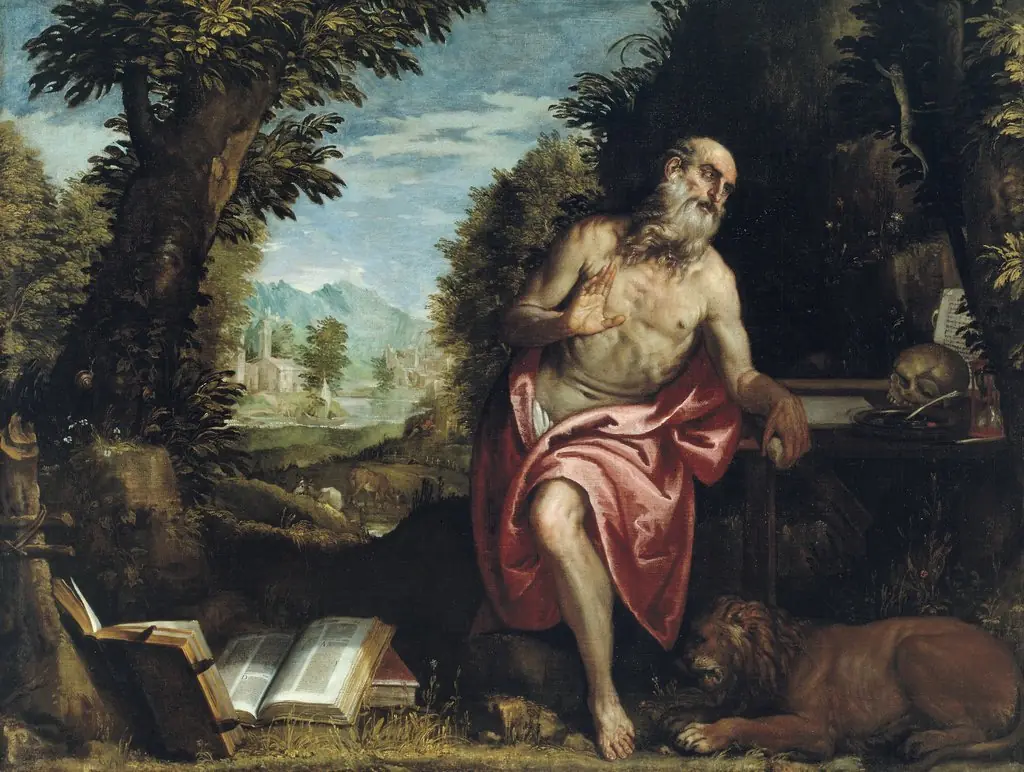 Saint Jerome in the Wilderness
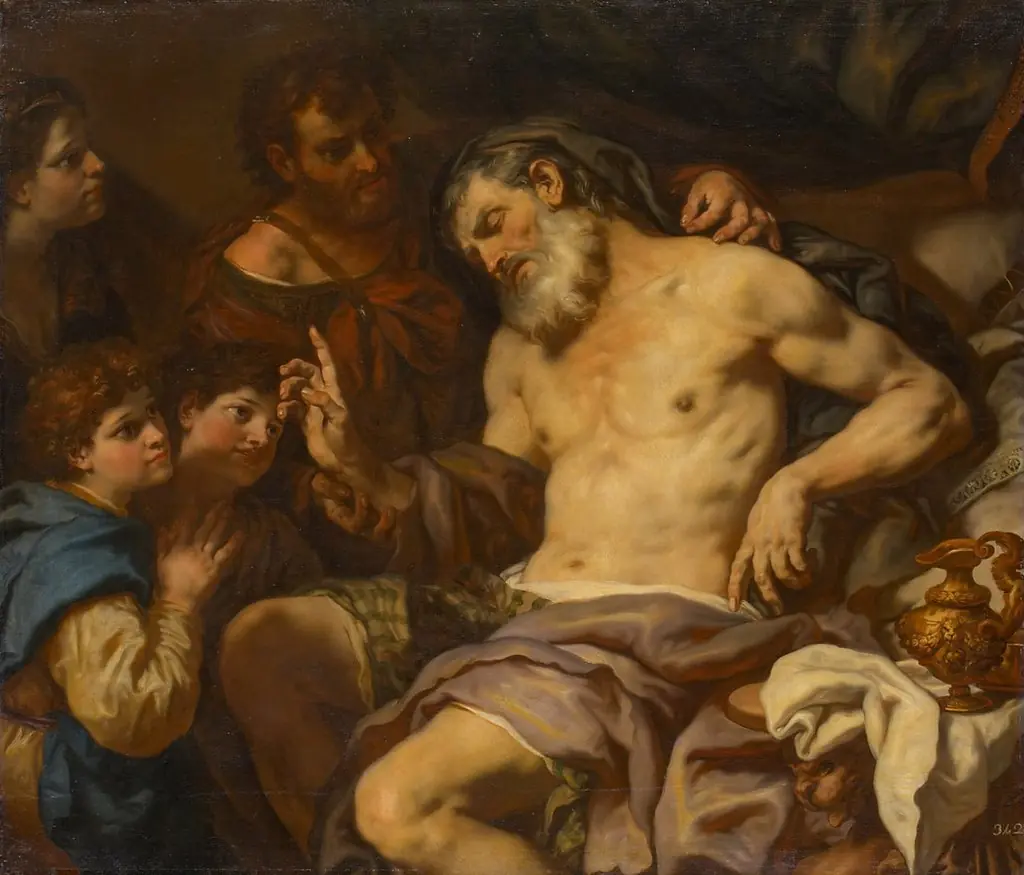 Jacob Blesses Ephraim and Manasseh
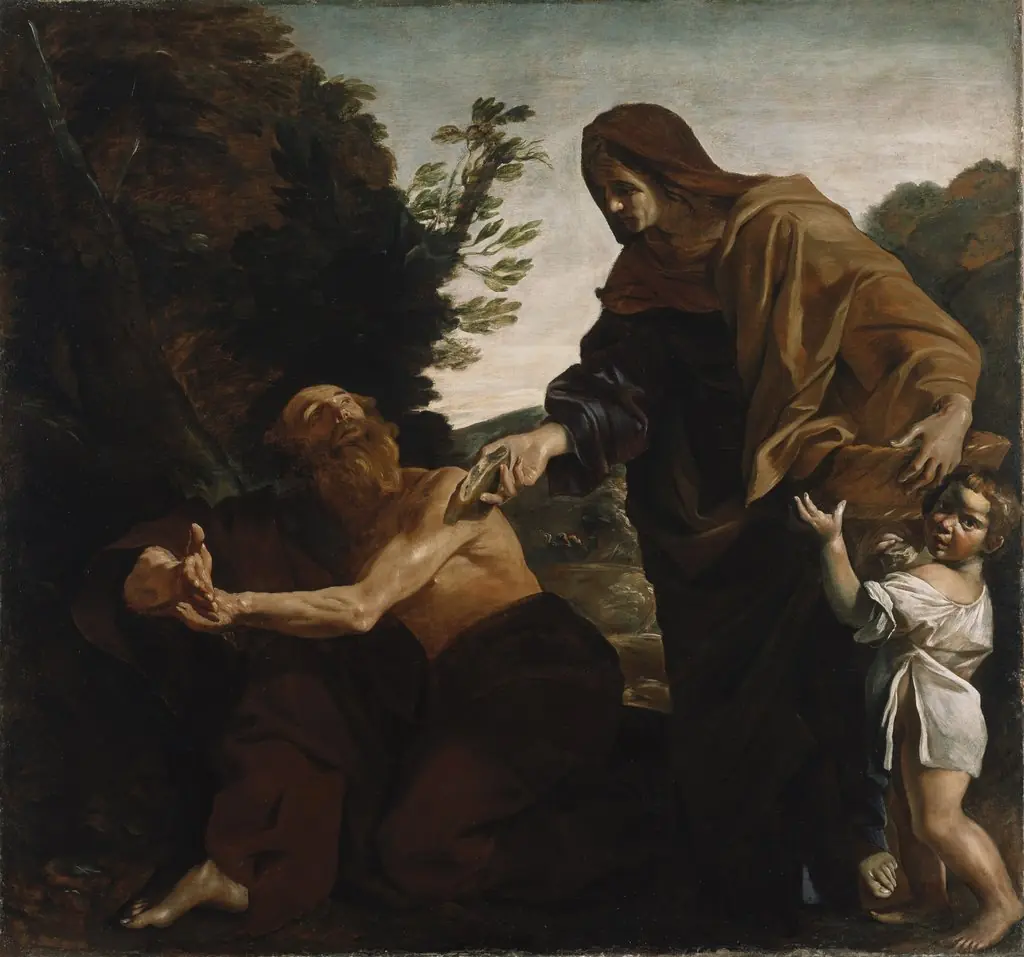 Elijah Receiving Bread from the Widow of Zarephath
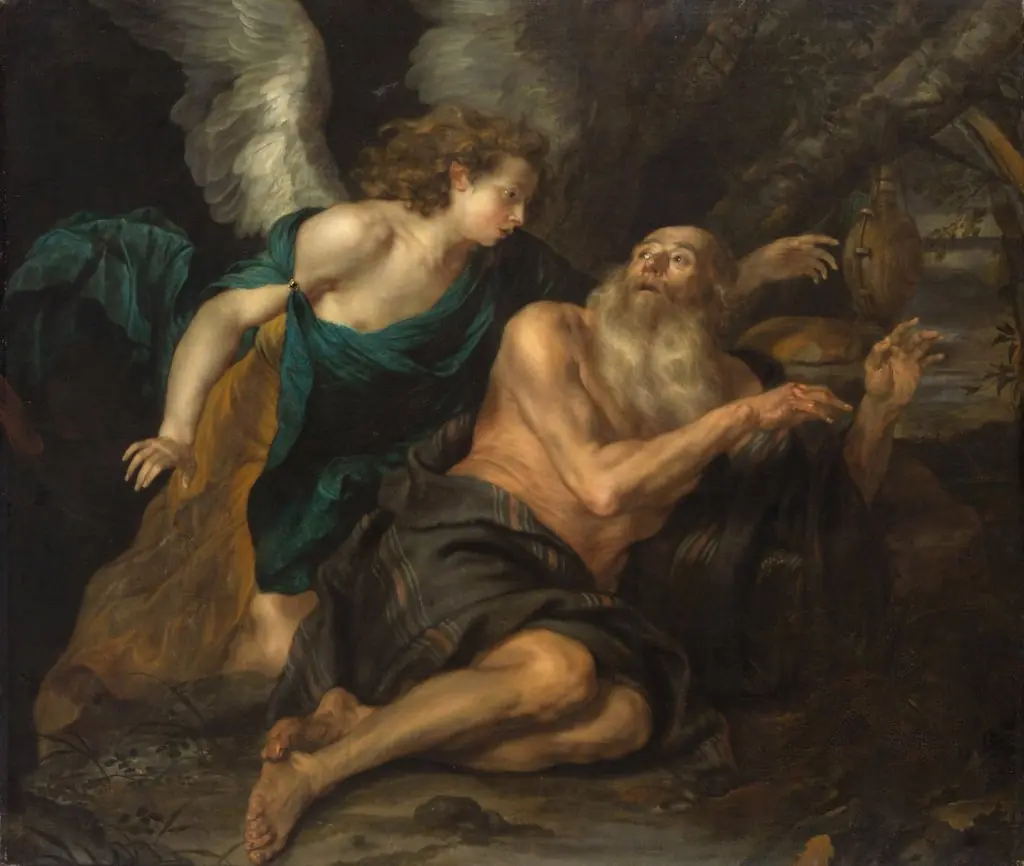 The prophet Elijah awakened by the angel on Mount Horeb (I Kings 19:5-6)
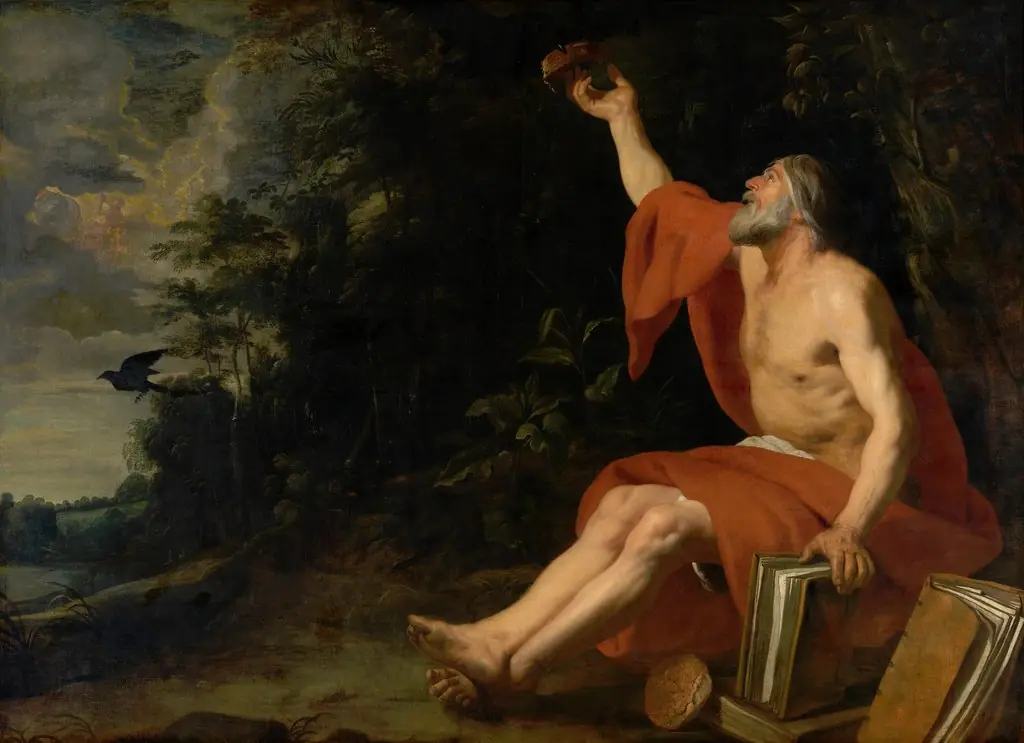 Elijah Fed by the Raven
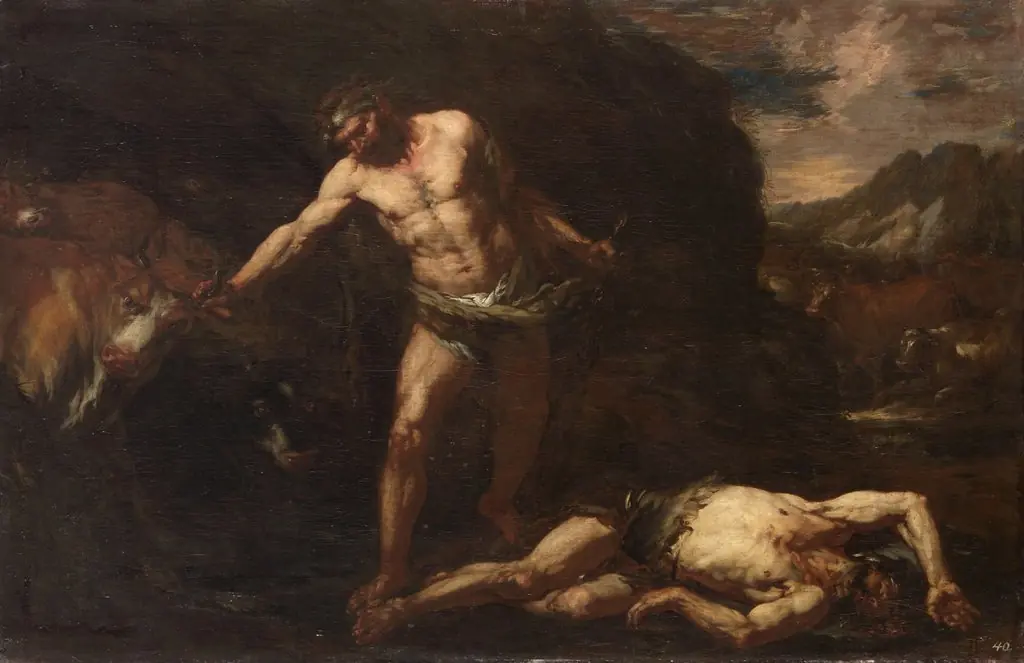 Hercules tötet den Riesen Cacus und raubt die Rinder des Geryoneus
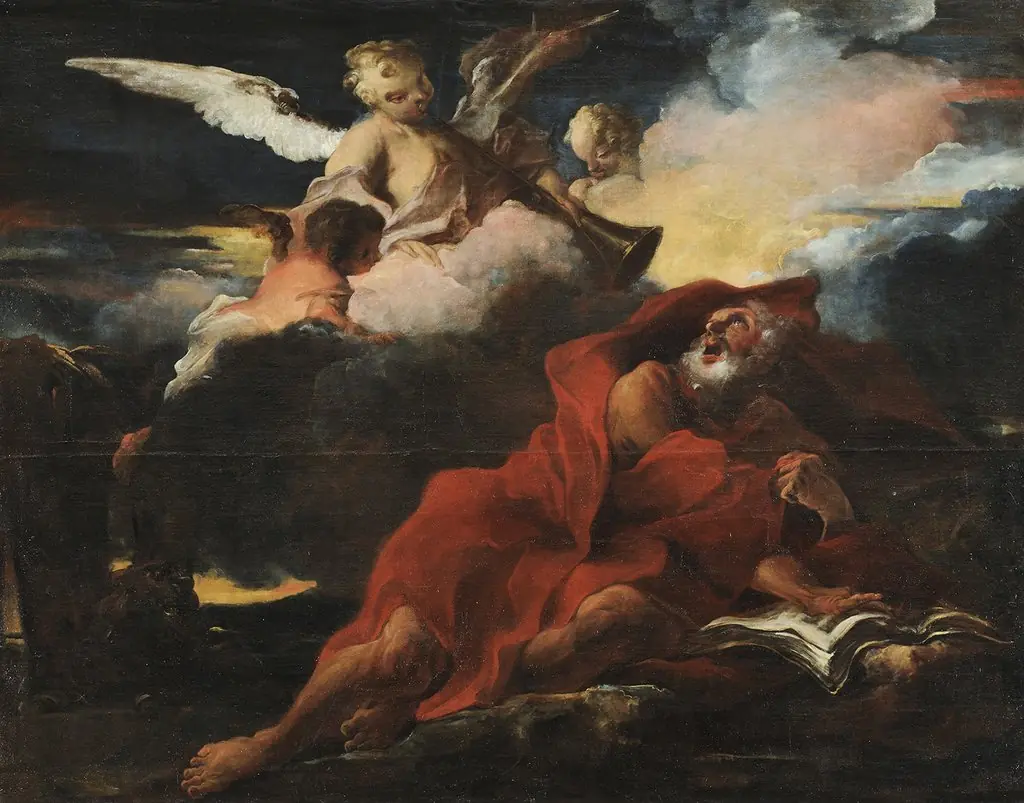 La vision de saint Jérôme
 Saint John Chrysostom
 Abraham's Sacrifice of Isaac