Artwork
Saint Benedict's Vision of the Globe and the three Angels
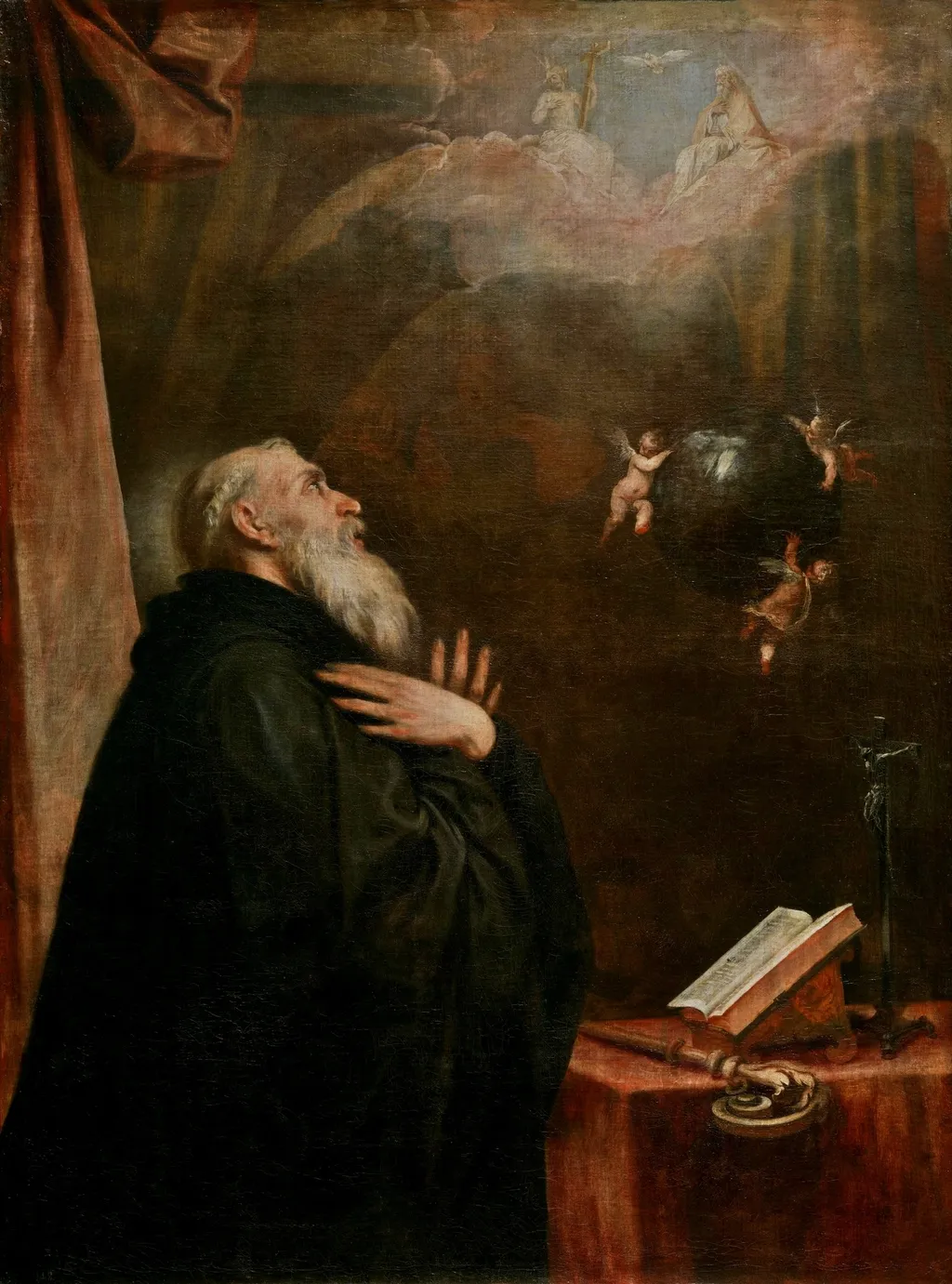
Saint Benedict's Vision of the Globe and the three Angels is an oil painting by the Early Baroque Italian artist Alonso Cano. It dates from 1658 and is held in the collection of the Museo del Prado.
About this work
Subject & Meaning
The composition conveys themes of divine revelation, spiritual guidance, and the sanctification of earthly dominion within Christian iconography.
The painting depicts Saint Benedict of Nursia experiencing a vision in which he sees a globe and three angels, a scene drawn from the Benedictine tradition of mystical revelation. The central figure of Benedict holds a book and a crosier, symbols of his monastic authority and scholarly legacy, while a crucifix lies nearby, underscoring his piety and the centrality of Christ’s sacrifice. The globe, often interpreted as the world entrusted to the Church, is presented as the object of divine contemplation, while the three angels represent spiritual messengers or guardians accompanying the saint’s visionary encounter.
The composition conveys themes of divine revelation, spiritual guidance, and the sanctification of earthly dominion within Christian iconography.
Technique & Style
Alonso Cano executed Saint Benedict's Vision of the Globe and the three Angels using oil paint applied to a canvas support. The work measures 166 cm in height and 123 cm in width. As a religious painting from the mid-seventeenth century, the piece depicts specific iconographic elements including a book, crucifix, crosier, and orb.
The handling of the medium serves to illustrate the visionary experience of Saint Benedict, characterized by the presence of the globe and three angels.
History & Provenance
Painted by Alonso Cano in 1658, the work entered the Spanish royal collection during the reign of Ferdinand VII, who owned it by the early nineteenth century. By 1819 it was recorded at the Museo del Prado in Madrid, where it has remained since. The canvas measures 166 cm in height and 123 cm in width.
The work is held in the Museo del Prado, Royal Palace of Madrid, where it is inventoried as accession P001109.
It was first recorded in the Spanish royal collection under Ferdinand VII of Spain, whose ownership is documented in the Prado’s holdings.
Overview
Alonso Cano’s oil painting Saint Benedict’s Vision of the Globe and the Three Angels, executed in 1658, is part of the collection of the Museo del Prado. The work presents a solemn, bearded figure in dark monastic robes, arms outstretched, gazing upward toward a celestial scene that includes a dark cloud and three diminutive angels.
Own this work as a print
Artist & collection

- The Vision of Saint Francis of Paola
 Heilige, die eine Monstranz anbeten
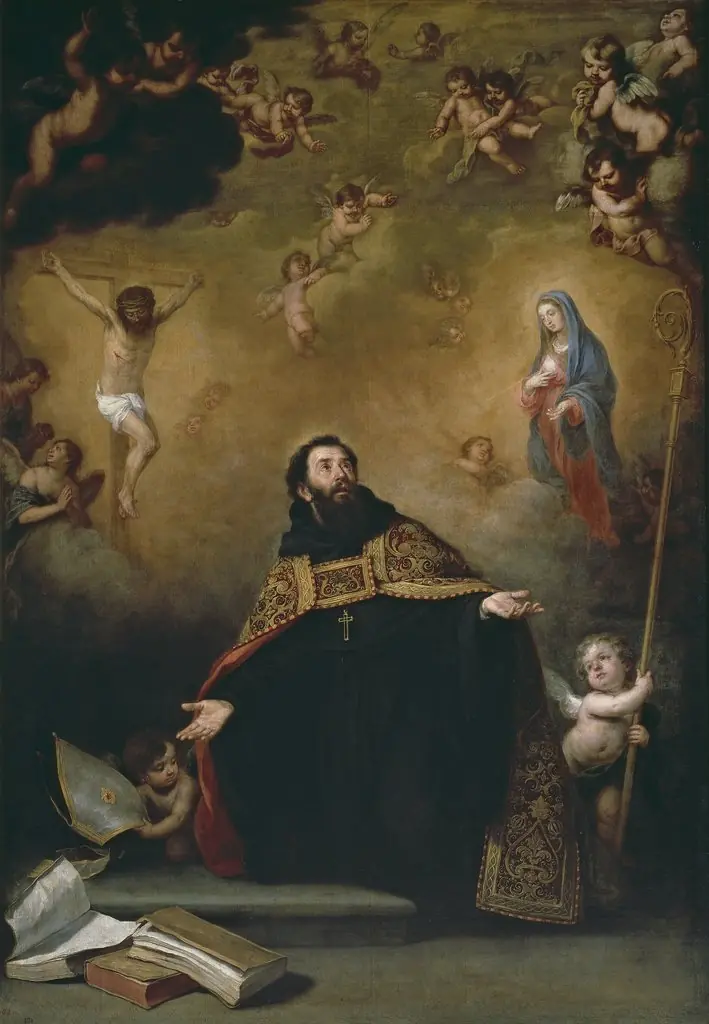 Saint Augustine between Christ and the Virgin
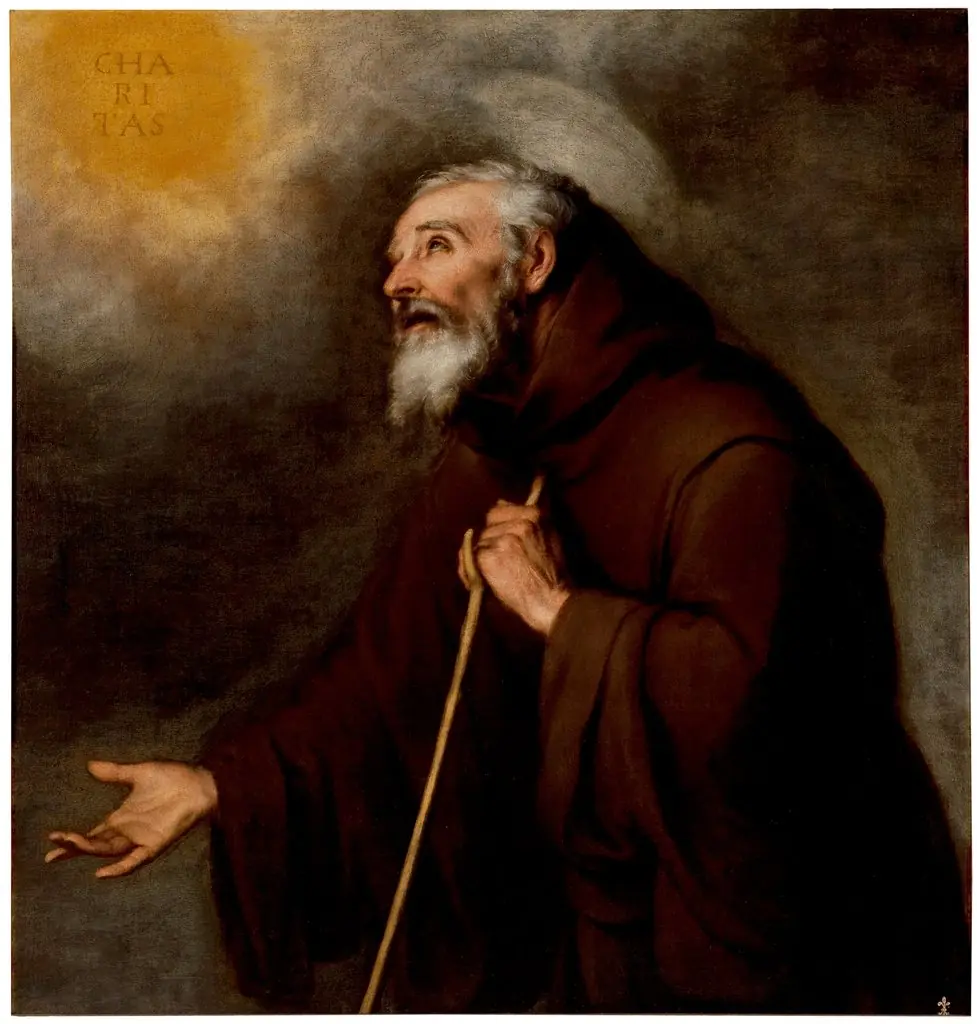 Saint Francis of Paola
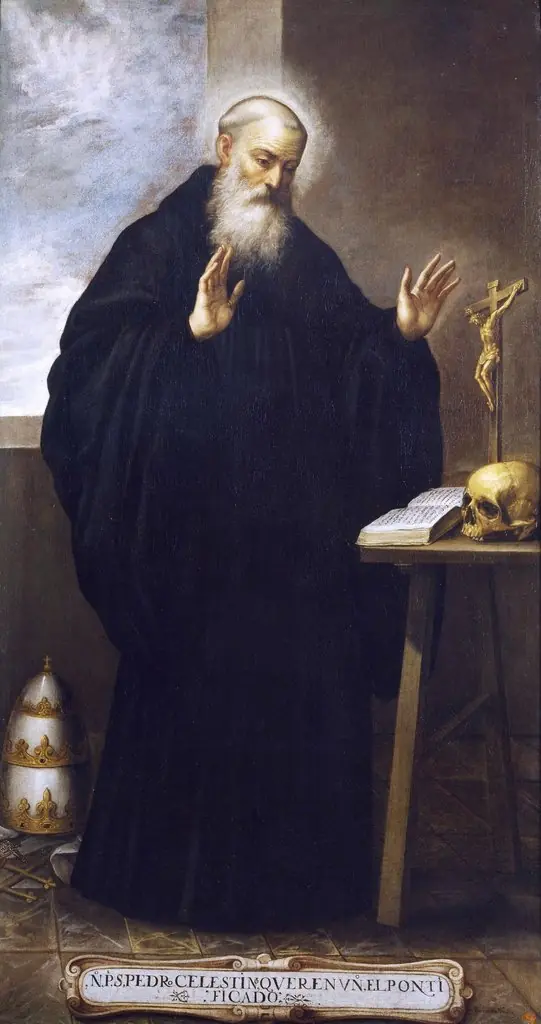 San Pedro Celestino papa
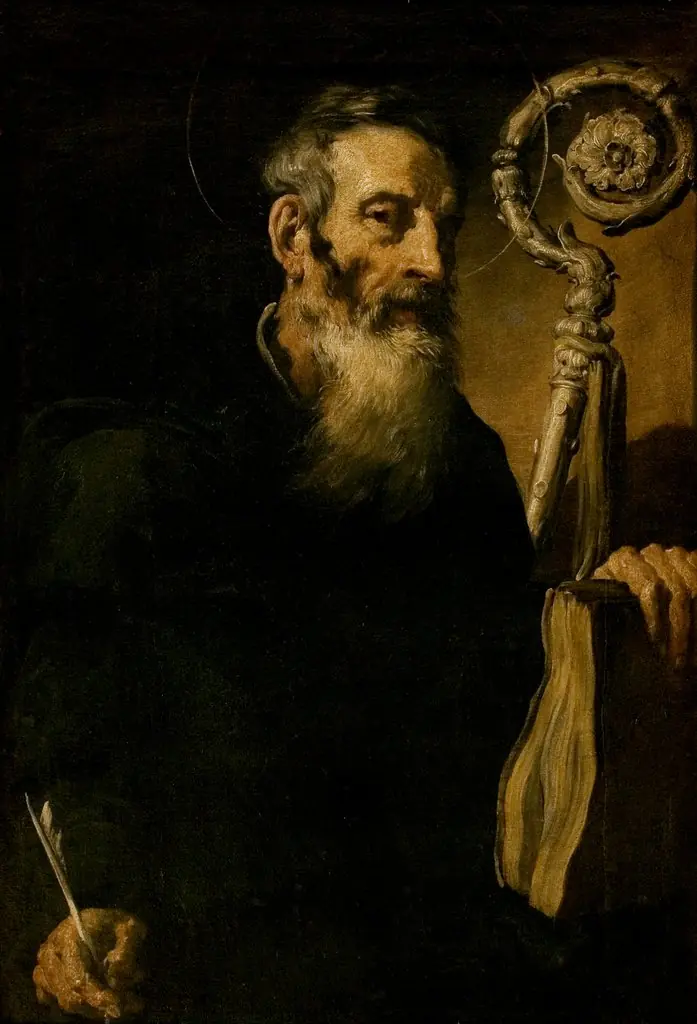 Unknown Saint Abbot (Saint Benedict?)
 San Francisco recibiendo los estigmas
 San Gil abad
 Saint Peter of Alcántara
 Charitas
 Visión de San Agustín
 Saint Benedict