Artwork
Saint John the Evangelist in Patmos
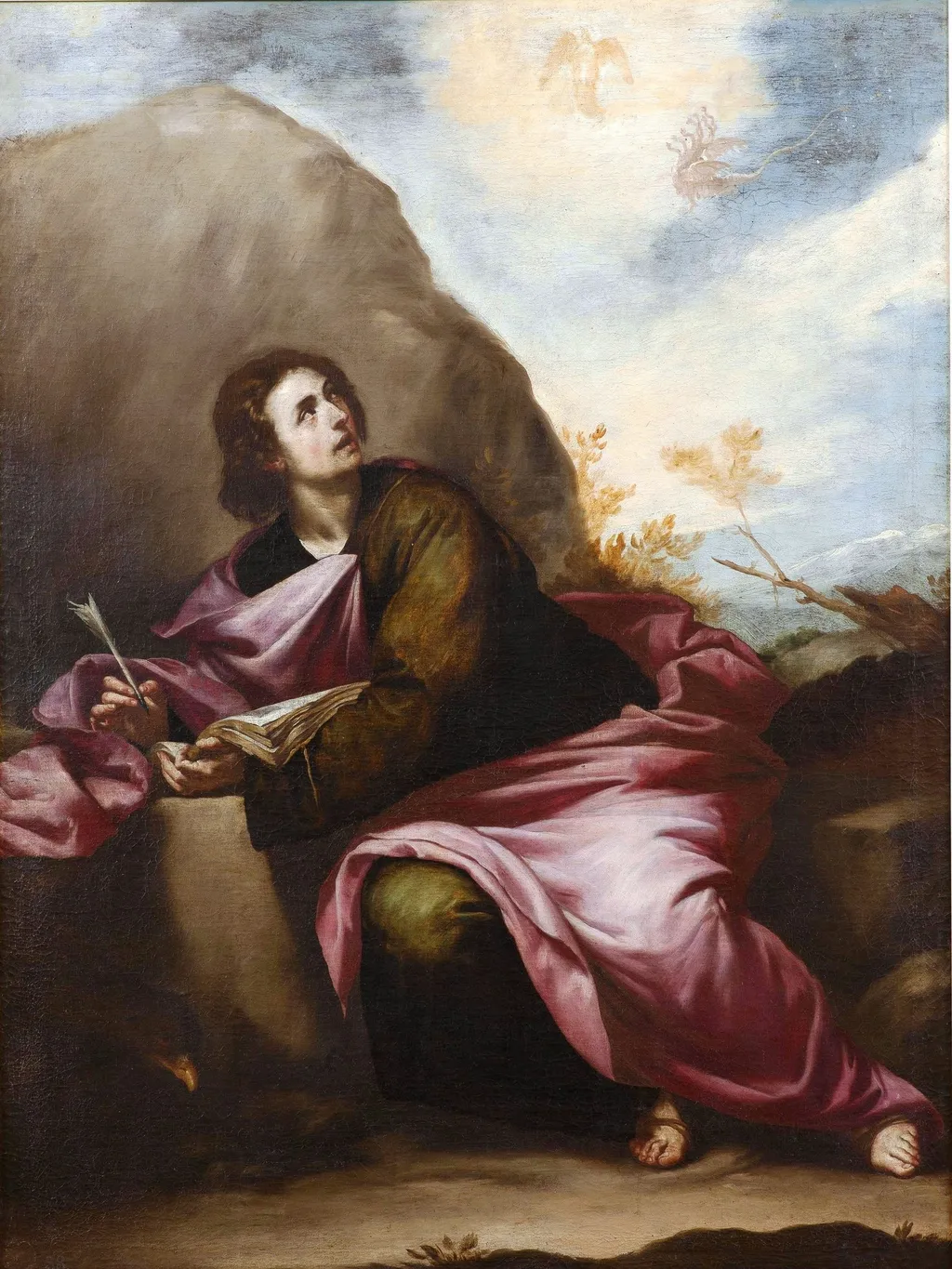
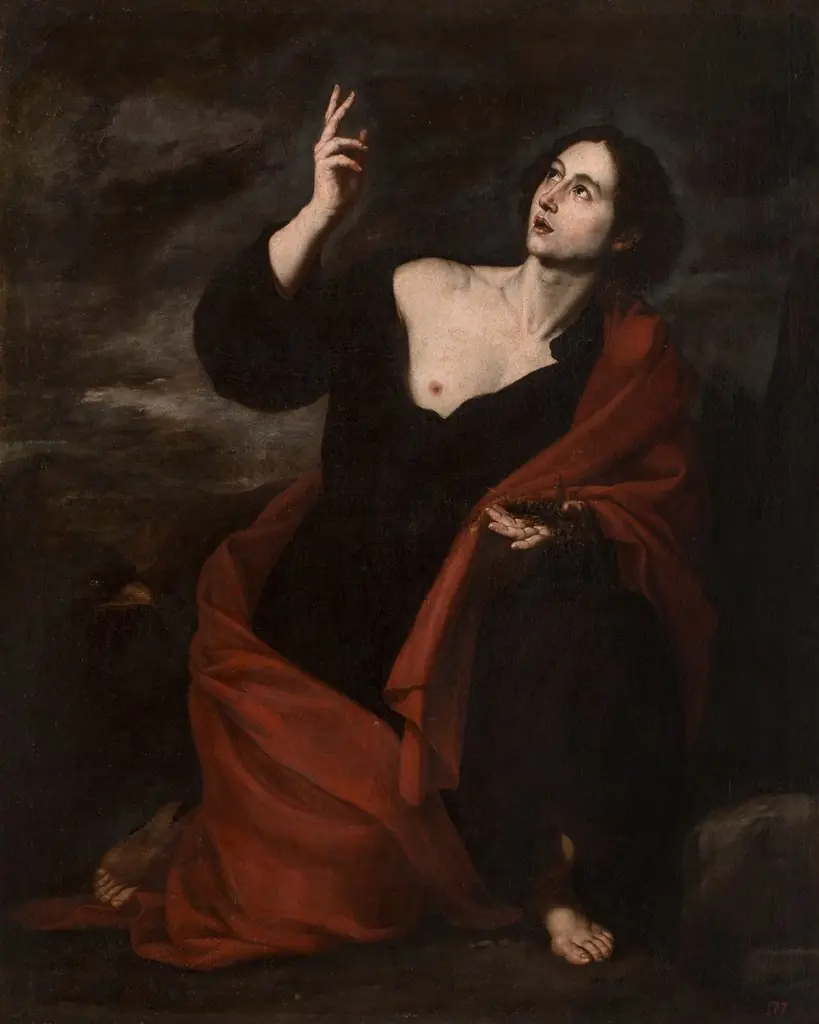
Saint John the Evangelist in Patmos is an oil painting by the Early Baroque Italian artist Alonso Cano. It dates from 1651 and is held in the collection of the Museo del Prado.
About this work
Subject & Meaning
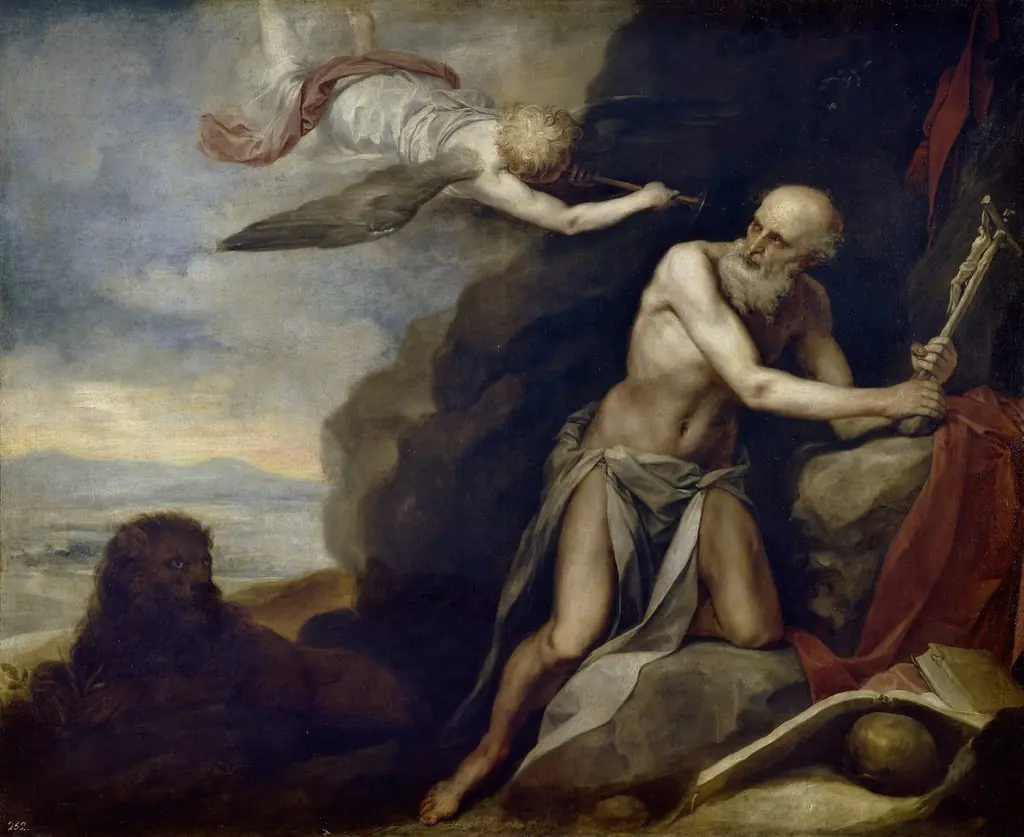
The work portrays Saint John the Evangelist on the island of Patmos, a scene drawn from apocryphal tradition in which the apostle receives divine revelation.
The work portrays Saint John the Evangelist on the island of Patmos, a scene drawn from apocryphal tradition in which the apostle receives divine revelation. The composition emphasizes his role as the author of the Book of Revelation, with the figure holding a writing instrument and a book that symbolize prophetic vision. The inclusion of the island setting underscores themes of exile and contemplation, reflecting the saint's banishment and his prophetic mission.
The painting's religious function aligns with Counter-Reformation ideals of visual instruction, inviting viewers to meditate on divine inspiration and the transmission of sacred text.
Technique & Style
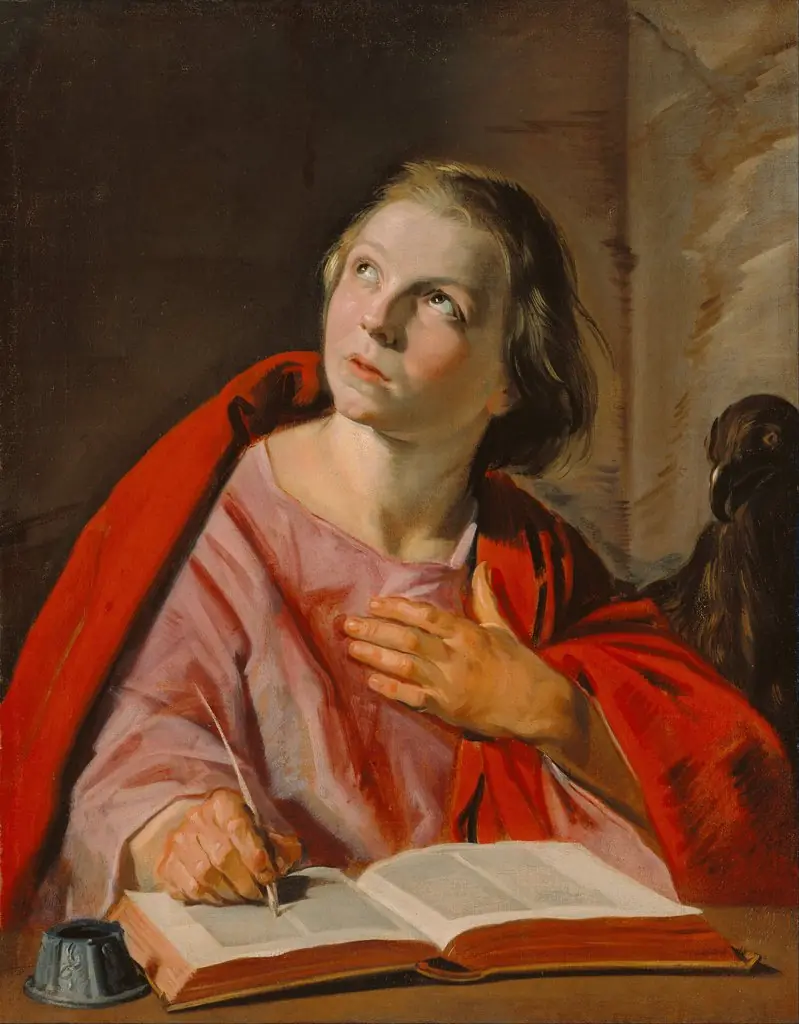
Alonso Cano executed Saint John the Evangelist in Patmos in 1651 using oil paint on canvas. The work measures 132 cm in height and 100 cm in width, depicting the apostle on the island of Patmos holding a book and pen. It is classified as a religious painting within the broader category of religious art.
The composition reflects the stylistic conventions of 17th‑century Spanish religious painting, emphasizing chiaroscuro and intimate figure modeling. The piece was originally owned by Ferdinand VII of Spain before entering the collection of the Museo del Prado in Madrid, where it remains on display.
The canvas support and oil medium contribute to a durable surface that has retained its formal qualities, including balanced spatial arrangement and naturalistic facial expression. Current condition reports note no significant damage, preserving the artist’s handling of light and texture as originally intended.
History & Provenance
Alonso Cano created the oil painting Saint John the Evangelist in Patmos in 1651 for Ferdinand VII of Spain, who originally owned the work. The painting entered the collection of the Museo del Prado in Madrid, where it remains on display. Its dimensions are 132 cm in height and 100 cm in width, matching the specifications recorded for the work.
The painting Saint John the Evangelist in Patmos by Alonso Cano is held in the collection of the Museo del Prado, Royal Palace of Madrid. Its accession number is not specified in the provided sources. The work was created in 1651 and has been part of the museum's holdings since at least the reign of Ferdinand VII of Spain, who originally owned it.
It was exhibited in the Prado's display of Spanish religious art, though specific exhibition dates are not documented in the available records.
Context
Painted by Alonso Cano in 1651, Saint John the Evangelist in Patmos represents a significant religious work from the Spanish Baroque period. The canvas, measuring 132 cm by 100 cm, depicts the evangelist on the island of Patmos with his characteristic attributes of a book and pen. Currently held in the collection of the Museo del Prado in Madrid, the work was formerly owned by Ferdinand VII of Spain.
As a religious painting executed in oil on canvas, it contributes to the understanding of Cano's output during the mid-seventeenth century within the broader context of Spanish religious art.
Overview
Alonso Cano’s oil on canvas, Saint John the Evangelist in Patios, dates from 1651 and is part of the Prado Museum’s collection. The composition presents the apostle seated on a craggy slope, his garments rendered in rich reds and greens. He holds an open codex in one hand and a feathered pen in the other, suggesting the act of writing or contemplation.
Own this work as a print
Artist & collection