Artwork
Studiu pentru „Vechiul regim din Iași”
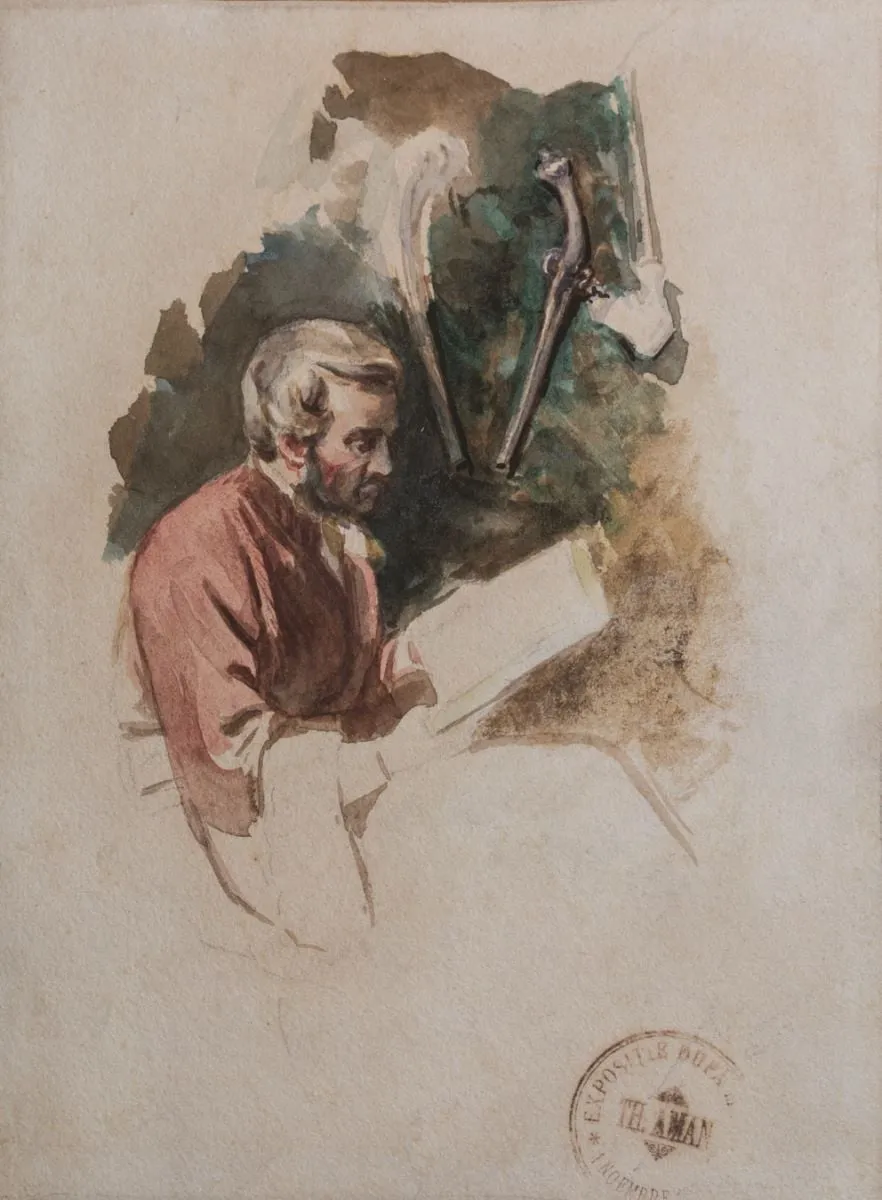
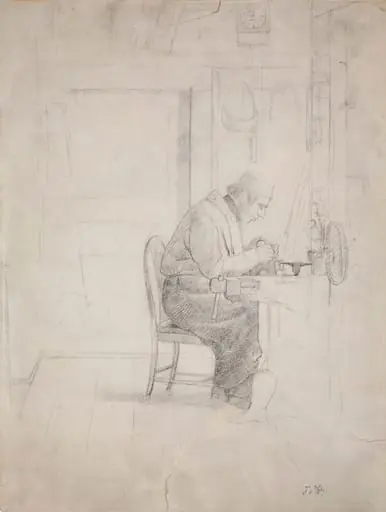
Studiu pentru „Vechiul regim din Iași” is a print by Theodor Aman. It dates from 1850 and is held in the collection of the Bucharest Municipality Museum.
About this work
Overview
This preparatory sketch by Theodor Aman, dated around 1850, was created as part of the research for his larger composition 'Vechiul regim din Iași.
This preparatory sketch by Theodor Aman, dated around 1850, was created as part of the research for his larger composition 'Vechiul regim din Iași.' Executed in a fluid, tonal medium, it captures a moment of quiet concentration within a historical setting. Aman, a key figure in Romanian art, used such studies to refine his depictions of 19th-century social life, grounding his narratives in observed detail rather than idealization.
Subject & Meaning
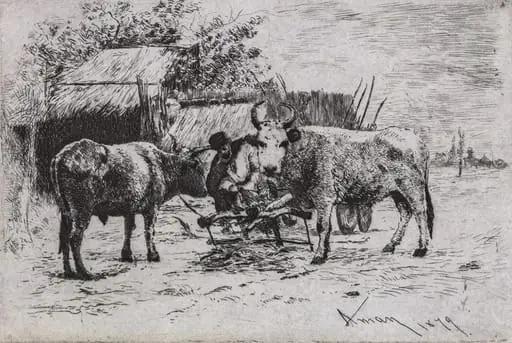
The scene portrays a man in a red coat, seated at a table, engaged in writing or record-keeping. His focused expression suggests bureaucratic or administrative activity, possibly tied to the administrative structures of pre-modern Iași. The horse’s head, peering over the table, introduces an element of everyday coexistence between human labor and animal presence, subtly reinforcing the domestic and institutional textures of the era.
Technique & Style
Aman employed a light, aqueous medium with loose brushwork, allowing washes to suggest form rather than define it. The man’s face is rendered with careful attention to expression and contour, while the horse’s head is sketched with rapid, almost spontaneous strokes. The interplay of soft shadows and pale edges creates a sense of depth through chiaroscuro, demonstrating Aman’s sensitivity to light and his ability to convey volume with minimal means.
History & Provenance
The sketch remains in the collection of the Museum of Ethnography, where it is preserved as part of Romania’s artistic and cultural record. Its survival as a study rather than a finished piece underscores its function in Aman’s creative process. It reflects the institutional interest in documenting the visual development of national art during the mid-19th century, a period of emerging cultural identity.
Context
In the 1850s, Romanian artists began turning to local history and everyday life as subjects, moving away from imported academic styles. Aman’s focus on Iași, a former capital with layered social hierarchies, aligned with broader efforts to define a distinct national visual language. This study, though intimate, contributes to a larger project of documenting the customs and environments of a society in transition.
Legacy
Aman’s preparatory works, including this sketch, remain valuable for understanding his method and the evolution of Romanian genre painting. They reveal how historical narratives were constructed through observation and revision. As one of the first Romanian artists to systematically document local life, his studies laid groundwork for later generations committed to realism and national themes.
Artist & collection
Artist
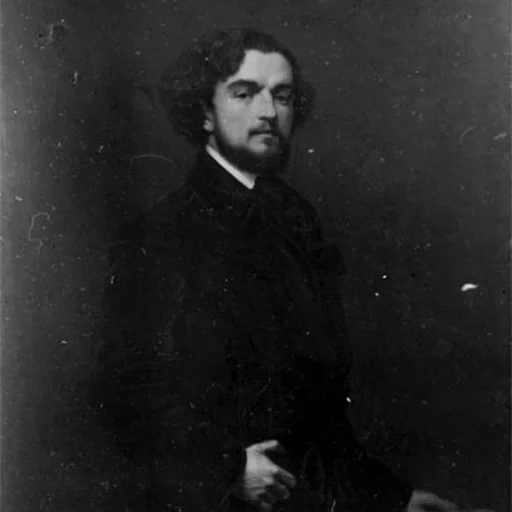
Theodor Aman (20 March 1831 – 19 August 1891) was a Romanian painter, engraver and art professor. He mostly produced genre and history scenes.
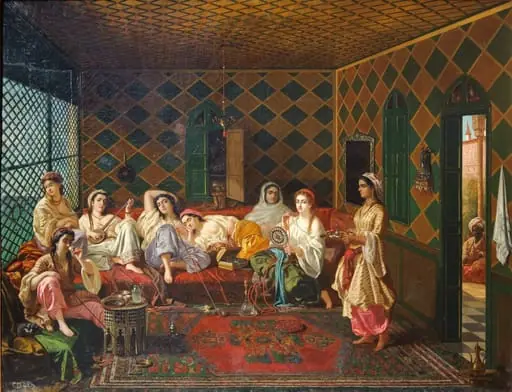
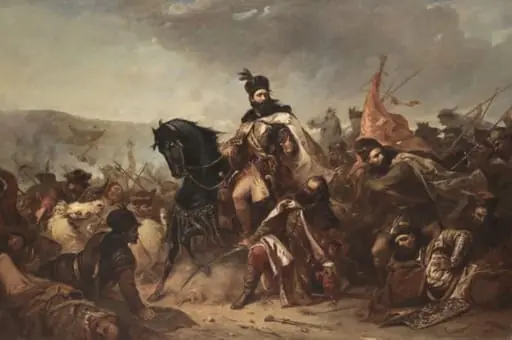
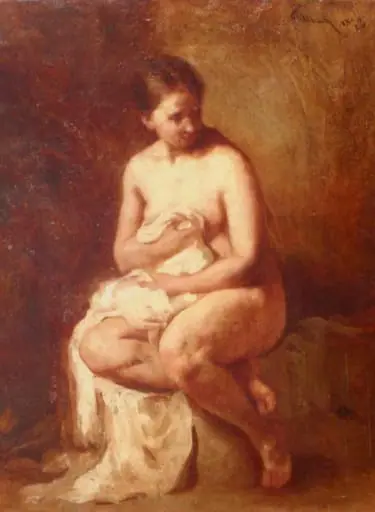
- Sketches made during the Campaign of 1854-55 in the Crimea, Circassia and Constantinople
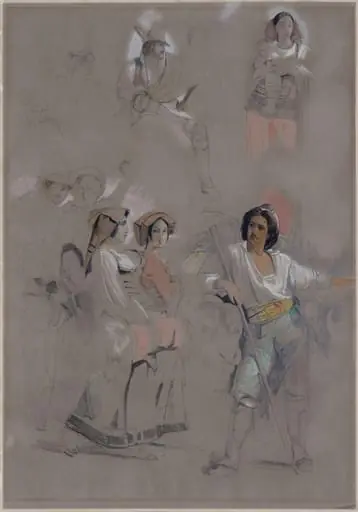 Figures in Italia Costume
 The Russian Schube
 Study No. 1: Mr. Thomas Way
 Joseph Pennell, No. 2
![Shepard Alonzo Mount, Age Twenty-Three [recto], by William Sidney Mount](https://artifactworldgallery.com/img/william-sidney-mount--shepard-alonzo-mount-age-twenty-three-recto--adf0b3e0763f0137-w320.webp) Shepard Alonzo Mount, Age Twenty-Three [recto]
Shepard Alonzo Mount, Age Twenty-Three [recto] Man Smoking a Pipe
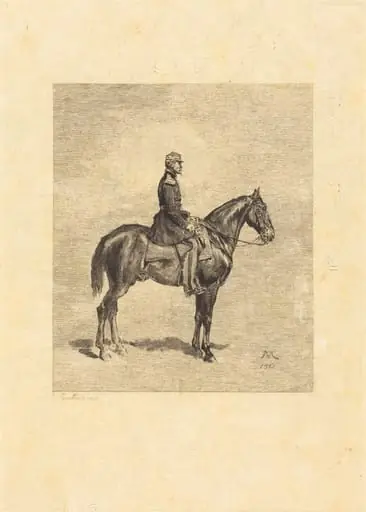 Horseman
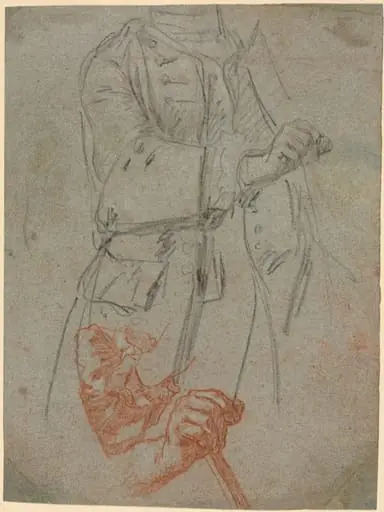 Studies of a Costume, Sleeve, and Hand
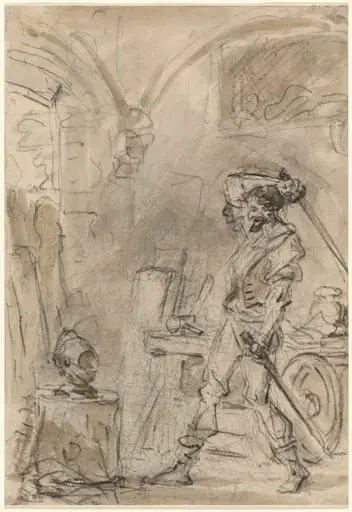 Don Quixote about to Strike the Helmet
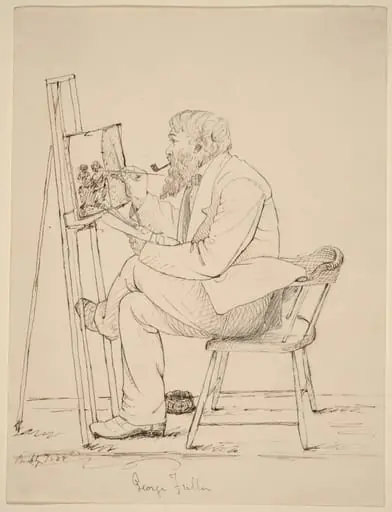 Sketching - George Fuller
 Wilhelm von Wright höyläpenkin ääressä, piirustus "Mariebergin verstas" -maalausta varten