Artwork
Attack on Bunker's Hill, with the Burning of Charles Town
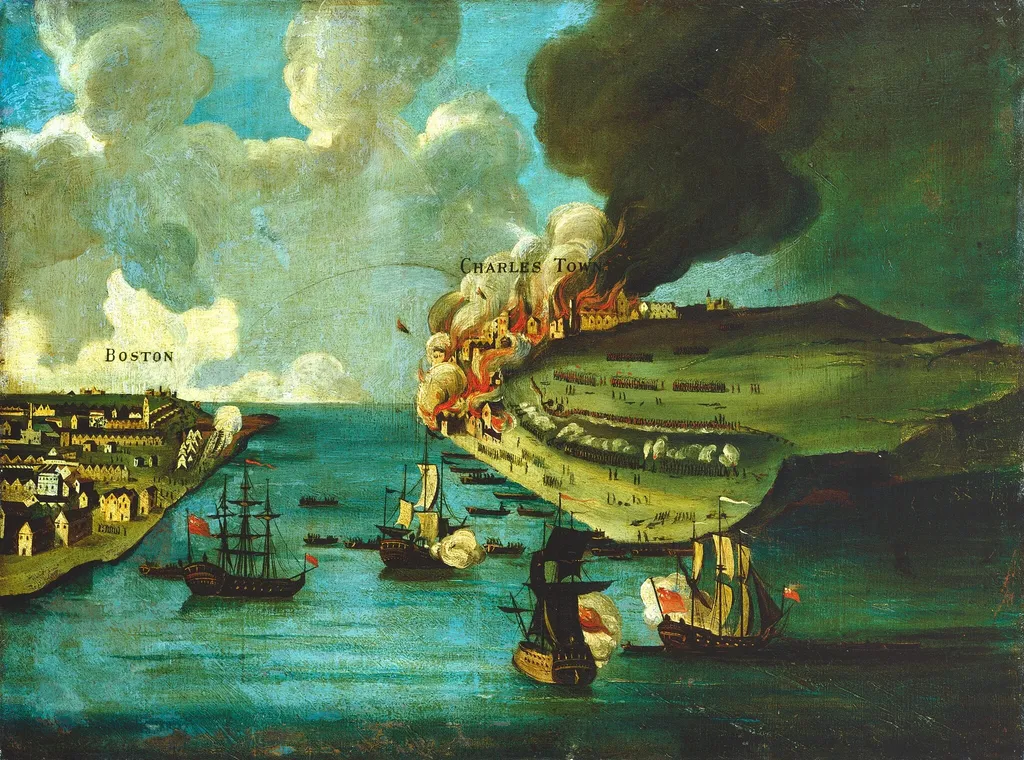
Attack on Bunker's Hill, with the Burning of Charles Town is an oil painting. It dates from 1783 and is held in the collection of the National Gallery of Art. The canvas depicts a tumultuous waterfront battle, divided between two towns labeled Boston and Charles Town.
- Inscription
- Inscribed:center left: BOSTON; upper right: CHARLES TOWN
About this work
Technique & Style
No specific information about handling, brushwork, surface condition, or conservation history is documented in the available sources.
The work is an oil painting executed on canvas, a standard support for late 18th-century American history painting. Its modest dimensions, 53.3 cm in height by 70.8 cm in width, indicate an intimate cabinet-scale format rather than a large public display piece.
Stylistically, the painting belongs to the commemorative tradition of depicting the American Revolutionary War, rendered by an artist working in the idiom of American 18th-century history painting. The horizontal orientation of the canvas suits the panoramic subject of the attack and the burning of Charles Town.
No specific information about handling, brushwork, surface condition, or conservation history is documented in the available sources.
History & Provenance
Created in 1783 or later by an unidentified American artist of the eighteenth century, this oil on canvas was recorded as originating from New York. By 1943, the work was in the possession of the Harry Stone Gallery in New York, which lent it to exhibitions at the Lyman Allyn Museum and the Museum of Fine Arts, Boston, during that year.
In 1949, the gallery sold the painting to collectors Edgar William and Bernice Chrysler Garbisch. The couple subsequently donated the artwork to the National Gallery of Art in Washington, D.C., in 1953, where it remains part of the permanent collection.
The painting is held in the collection of the National Gallery of Art in Washington, D.C., having entered the institution in 1953 as a gift from Edgar William and Bernice Chrysler Garbisch. Prior to this donation, the work was sold by the Harry Stone Gallery in New York to the Garbisches in 1949. While at the Stone Gallery, the painting was lent to exhibitions at the Lyman Allyn Museum in New London, Connecticut, and the Museum of Fine Arts, Boston, during 1943.
Context
The work was praised for its dramatic narrative and technical skill in the 19th century, with early commentators noting the artist's ability to render fire and smoke with striking realism. Contemporary scholarship situates it within the broader tradition of American Revolutionary art, highlighting its rare depiction of urban destruction alongside military conflict. The painting's provenance through New York dealers and acquisition by the National Gallery of Art in 1953 cemented its role in public collections, influencing later interpretations of early American historical painting.
Its formal qualities, particularly the composition of the burning town, have been cited in studies of how 18th-century artists processed war's aftermath.
Overview
The canvas depicts a tumultuous waterfront battle, divided between two towns labeled Boston and Charles Town. Boston appears relatively calm amid flames, while Charles Town is consumed by fire and smoke. Soldiers are positioned on a hill, firing upon ships below, some bearing red flags, as additional vessels approach the shoreline. The composition conveys a sense of immediacy and disorder.
Subject & Meaning
The work portrays a naval engagement in which opposing forces clash near the water, highlighting the devastation of urban centers caught in conflict. The contrasting treatment of the two towns suggests differing fates or perspectives on the same event, while the presence of red‑flagged ships may indicate a particular allegiance or warning. The overall scene underscores the chaos and human cost of warfare.
Artist & collection

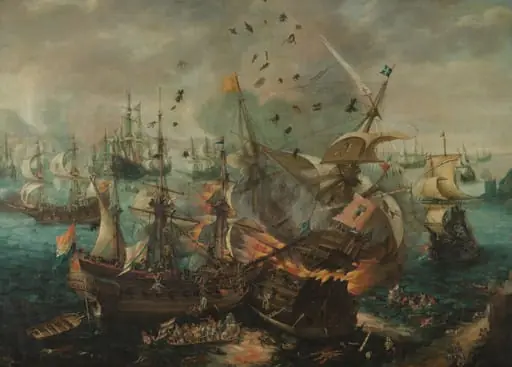 Battle of Gibraltar in 1607
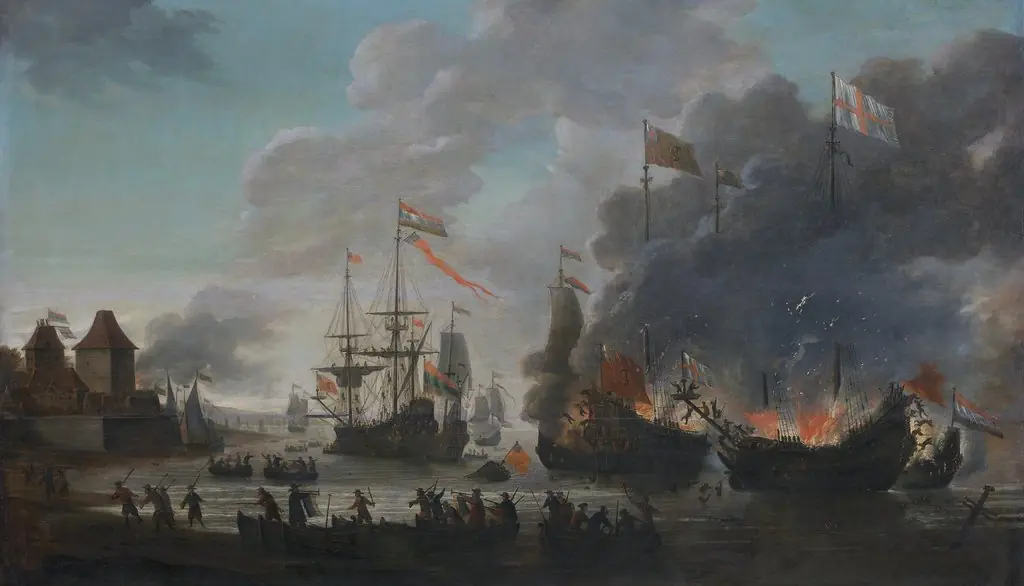 The Dutch Burn English Ships during the Expedition to Chatham, 20 June 1667 (Raid on the Medway)
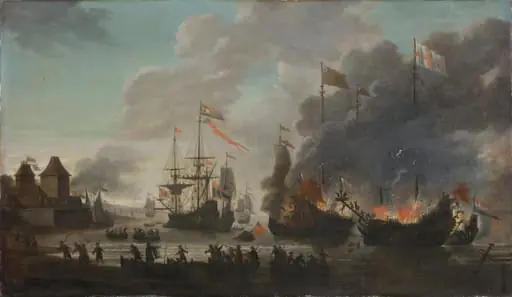 Untitled
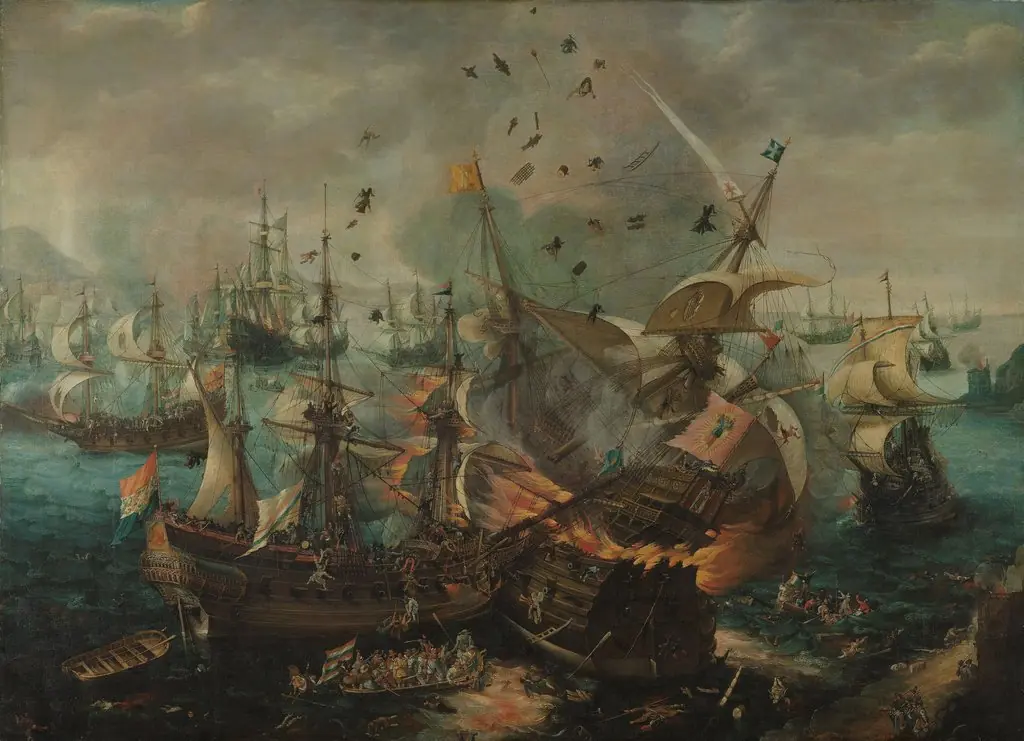 The Explosion of the Spanish Flagship during the Battle of Gibraltar
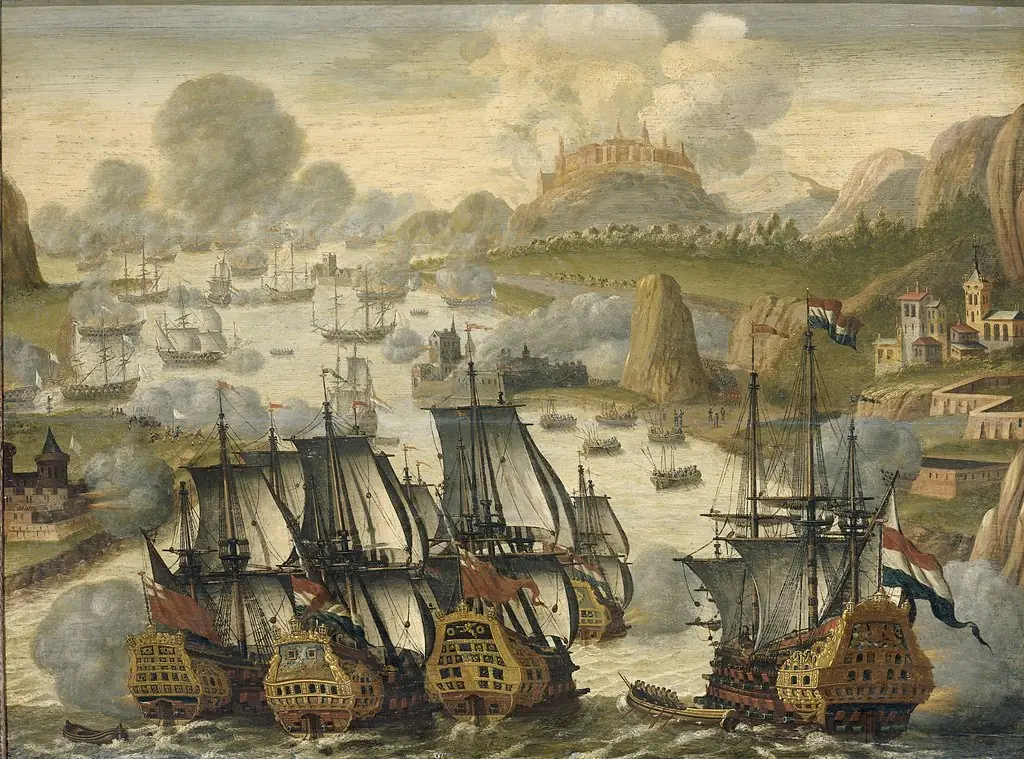 Naval Battle of Vigo Bay, 23 October 1702. Episode from the War of the Spanish Succession
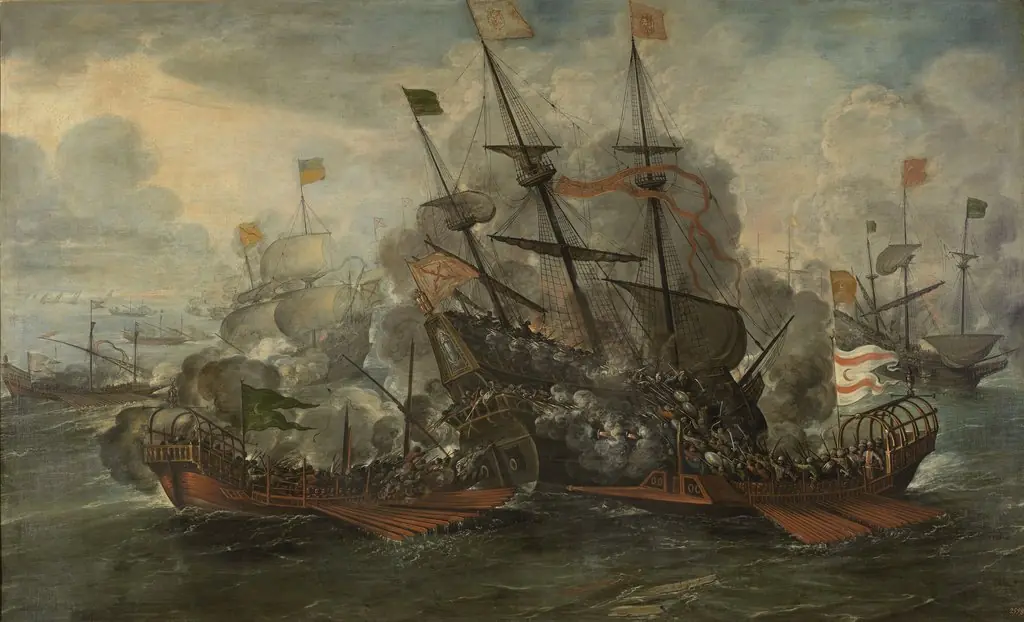 A naval battle scene between the Spaniards and Turks.
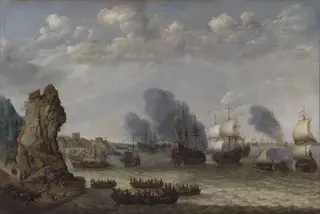 The Four Day's Battle, 11-14 June 1666
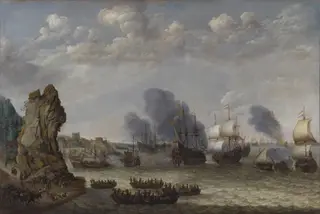 A Battle near a Coast between Spaniards and Disembarking Dutchmen
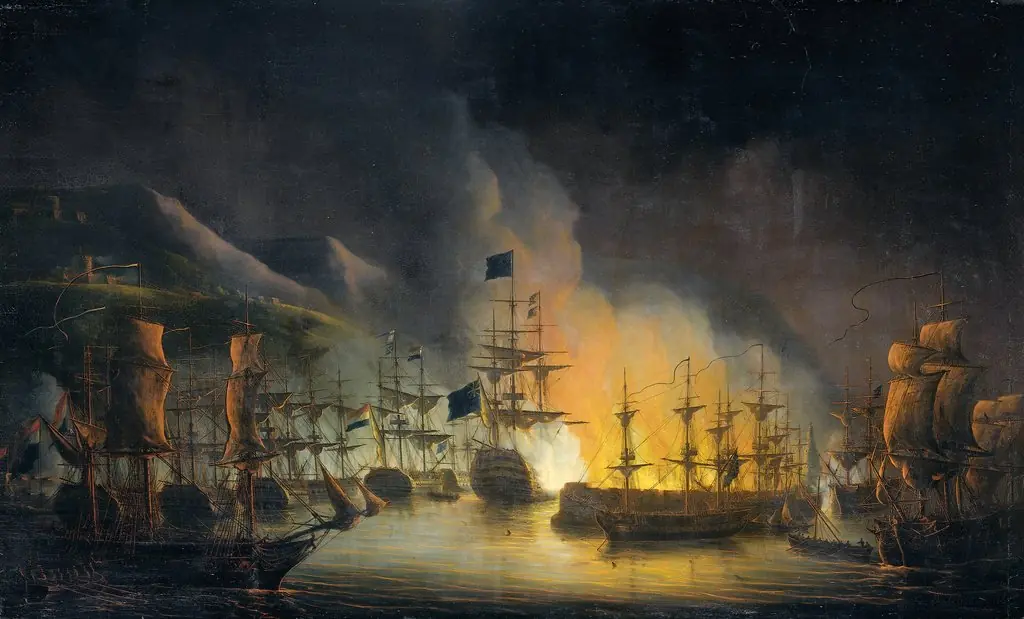 Bombardment of Algiers, in Support of the Ultimatum to Release White Slaves, 26-27 August 1816
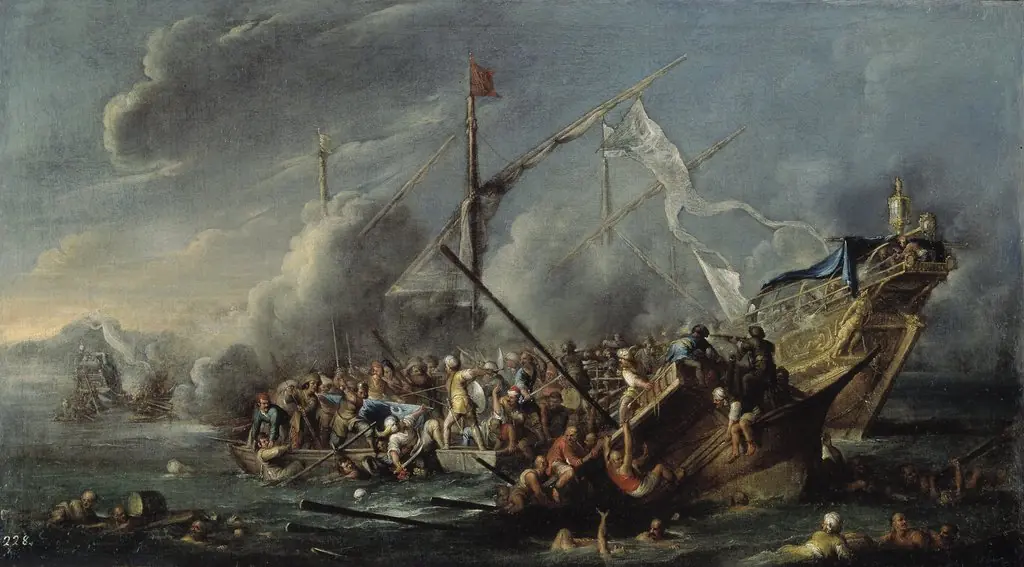 Combate naval entre españoles y turcos
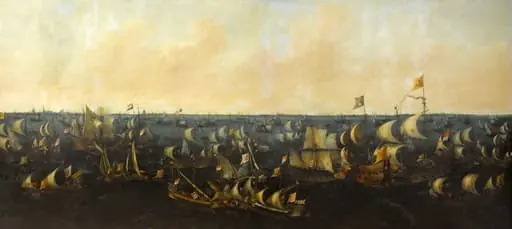 Untitled
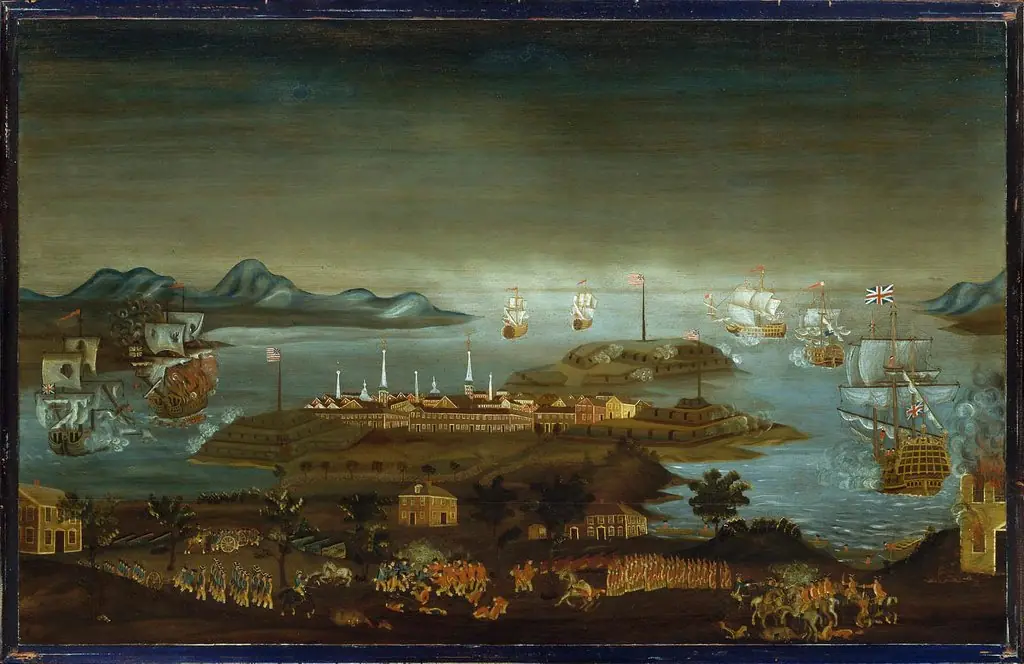
- The Battle of Bunker Hill