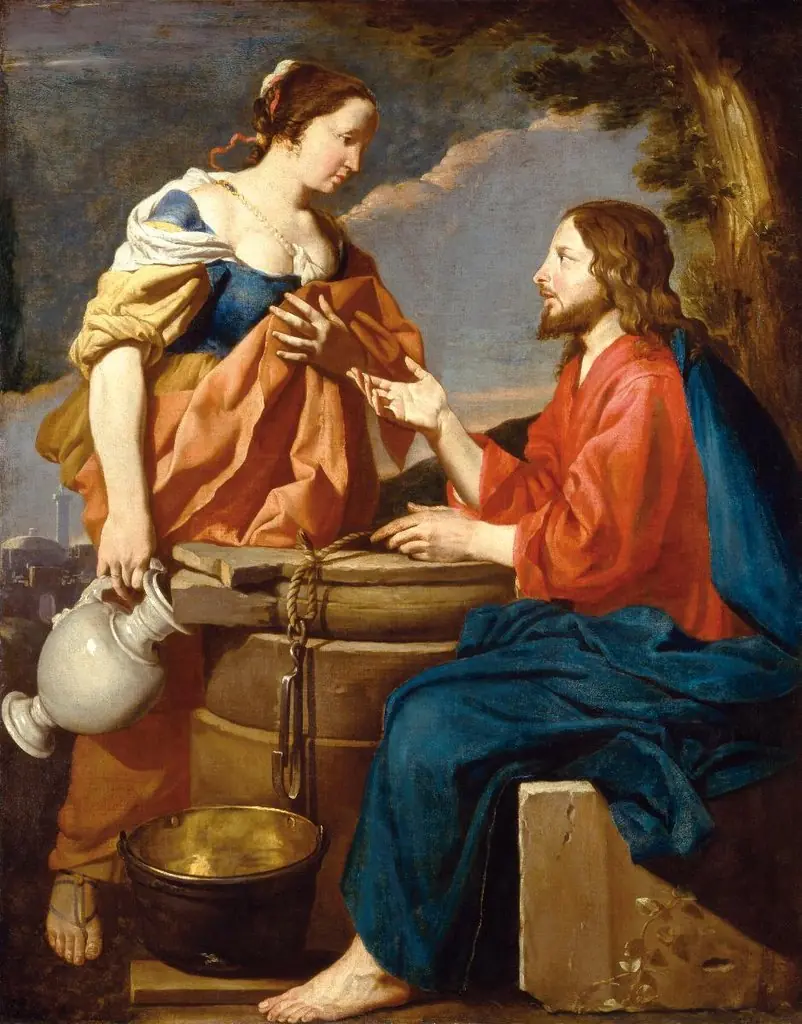
Artwork
Christ and the Woman of Samaria
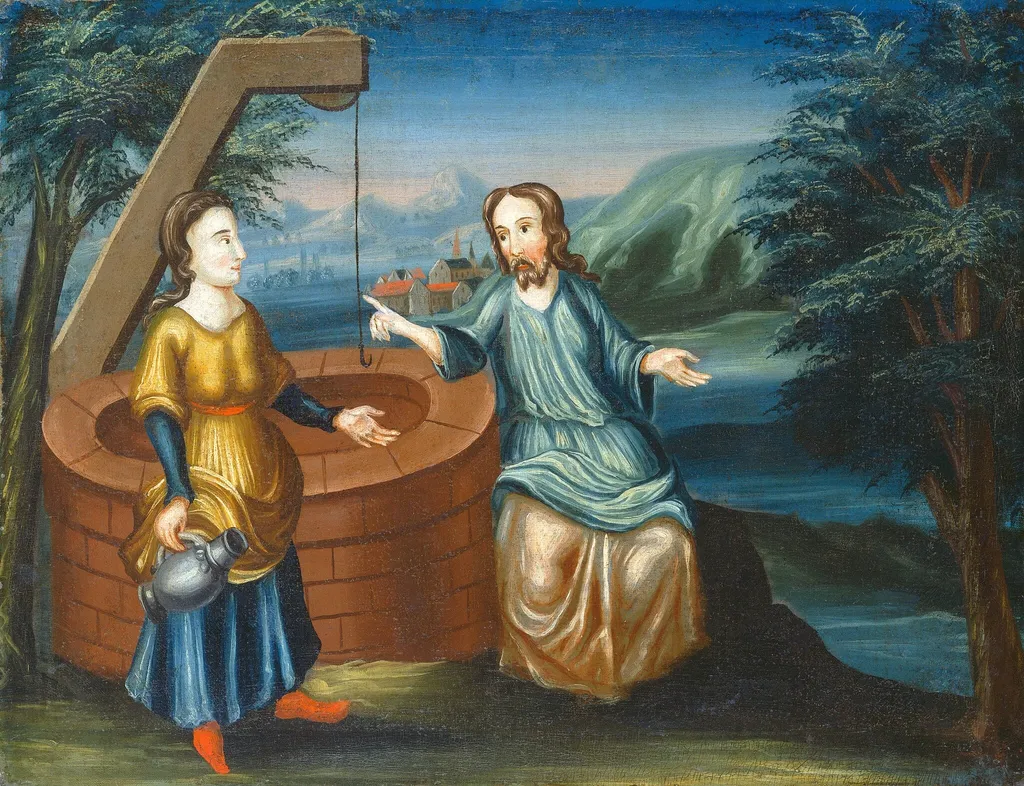
Christ and the Woman of Samaria is an oil painting. It dates from 1730 and is held in the collection of the National Gallery of Art. The canvas presents a quiet encounter between Jesus and a Samaritan woman beside a well.
About this work
Subject & Meaning
Its depiction emphasizes the spiritual equality offered by Christ, as highlighted by the woman's role as the first to receive the revelation of the Messiah.
The painting shows the biblical moment when Jesus meets a Samaritan woman at Jacob's well, a scene from John 4 in the New Testament. The work belongs to the religious art genre, reflecting 18th-century American colonial interest in biblical narratives. Its depiction emphasizes the spiritual equality offered by Christ, as highlighted by the woman's role as the first to receive the revelation of the Messiah. The composition captures the encounter with symbolic depth, illustrating themes of divine revelation and cross-cultural communion.
Technique & Style
This work is an oil painting executed on canvas, a medium typical of 18th-century American religious art. The surface retains the flatness and direct modeling characteristic of early American portraiture, with restrained chiaroscuro modeling the figures and a shallow spatial depth that emphasizes the narrative encounter. The handling of light on drapery and the simplified facial features reflect the artist’s adaptation of European engravings within an indigenous visual vocabulary.
The composition is tightly framed, focusing on the interaction between Christ and the Samaritan woman, rendered with a degree of linearity and symbolic clarity that aligns with contemporary devotional practices. The painting’s condition is stable, with no documented structural issues or previous restorations noted in the provenance record.
History & Provenance
The painting was created in 1720 by an unidentified American artist of the eighteenth century, executed in oil on canvas. Its early ownership is traced to John Sanders of Scotia, New York, who likely held the work before it passed to his son, John Sanders II. From him it descended to his daughter Mary Elizabeth Sanders, who married Harold Wilson of Germantown, New York, and subsequently to their daughters Anne and Jane Wilson.
The painting was later acquired by Thurston Thacher of Hyde Park, New York, who sold it in 1952 to Edgar William and Bernice Chrysler Garbisch. The Garbisches donated the work to the National Gallery of Art in 1953, where it remains in the collection.
The painting is held by the National Gallery of Art in Washington, D.C., where it entered the collection in 1953 as a gift from Edgar William and Bernice Chrysler Garbisch. Its documented provenance traces back through the Wilson family of Germantown, New York, beginning with Mary Elizabeth Sanders, wife of Harold Wilson, who inherited the canvas from her father John Sanders II, himself the son of John Sanders of Scotia, New York. The work passed to Mary Elizabeth's daughters Anne and Jane Wilson before being acquired by Thurston Thacher of Hyde Park, New York, who sold it in 1952 to the Garbisches, who in turn donated it to the National Gallery of Art the following year.
No exhibition history is recorded in the available sources.
Legacy
The canvas depicting Christ and the Woman of Samaria, painted in 1720 by an American 18th-century hand, entered the collection of the National Gallery of Art in 1953 as a gift from Edgar William and Bernice Chrysler Garbisch. Its provenance traces a path from the Sanders family of Scotia, New York, through several generations and a sale to Thurston Thacher before reaching the museum. The work remains recognized as a significant example of early American religious painting within the institution’s holdings.
Overview
The canvas presents a quiet encounter between Jesus and a Samaritan woman beside a well. The figures stand in a pastoral landscape, with the woman in a yellow tunic and blue skirt holding a silver jug, while Jesus, clad in a blue robe over a white tunic, gestures as if speaking. Red‑brick well structures, a wooden frame, and distant hills complete the setting under a clear blue sky.
Context
While the artist’s identity is not specified, the composition aligns with 19th‑century religious genre painting, a period when biblical narratives were frequently rendered in domestic, accessible settings. The inclusion of detailed architectural elements and a naturalistic landscape reflects contemporary interests in historicism and the moral didacticism of biblical scenes.

Artist & collection

- Christ and the Woman of Samaria
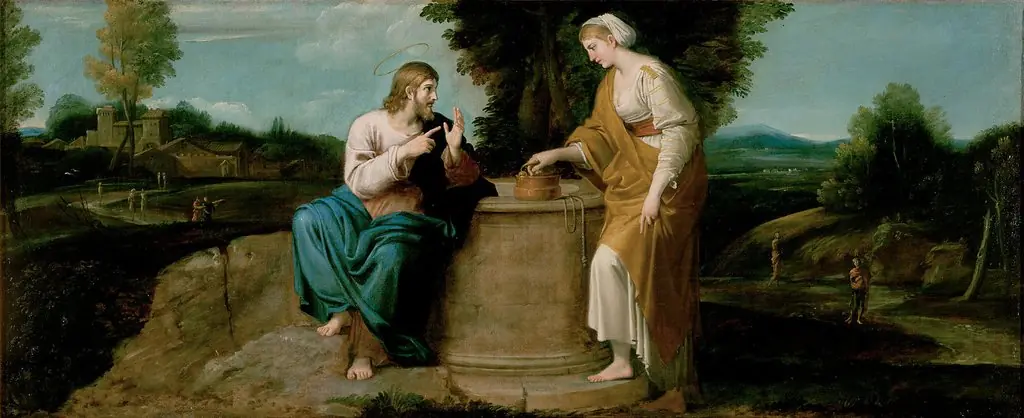 Christ and the Woman of Samaria
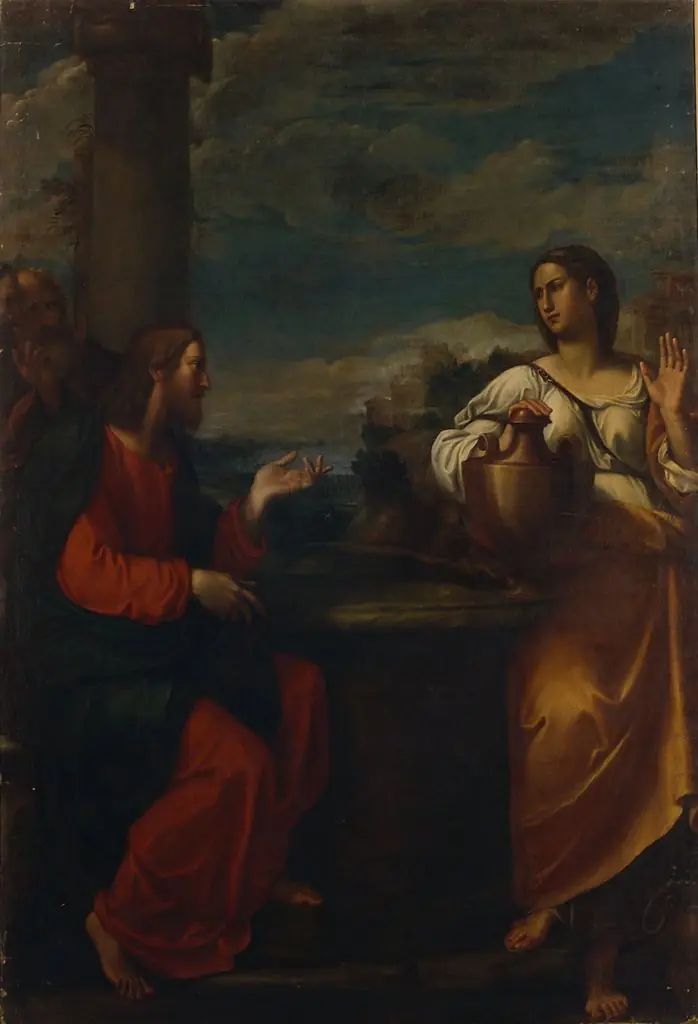 Christ and the Woman of Samaria
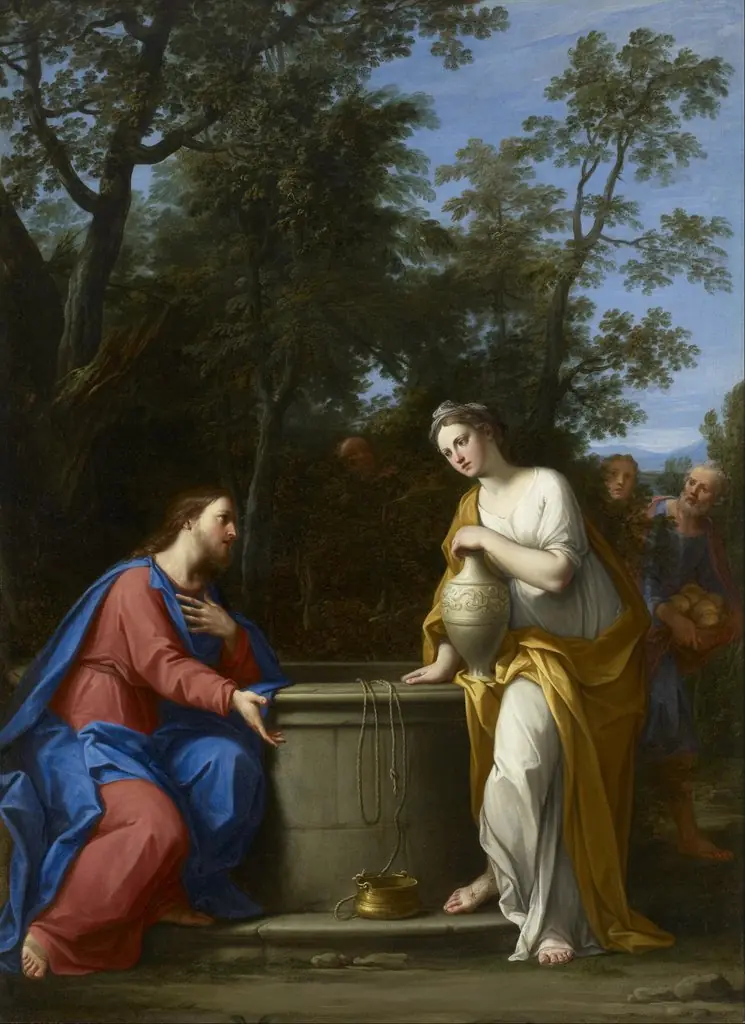 Christ and the Woman of Samaria
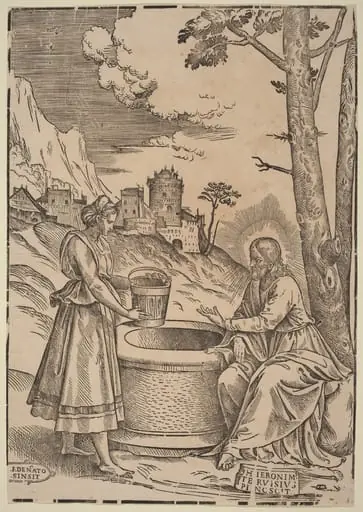 Christ and the Woman of Samaria
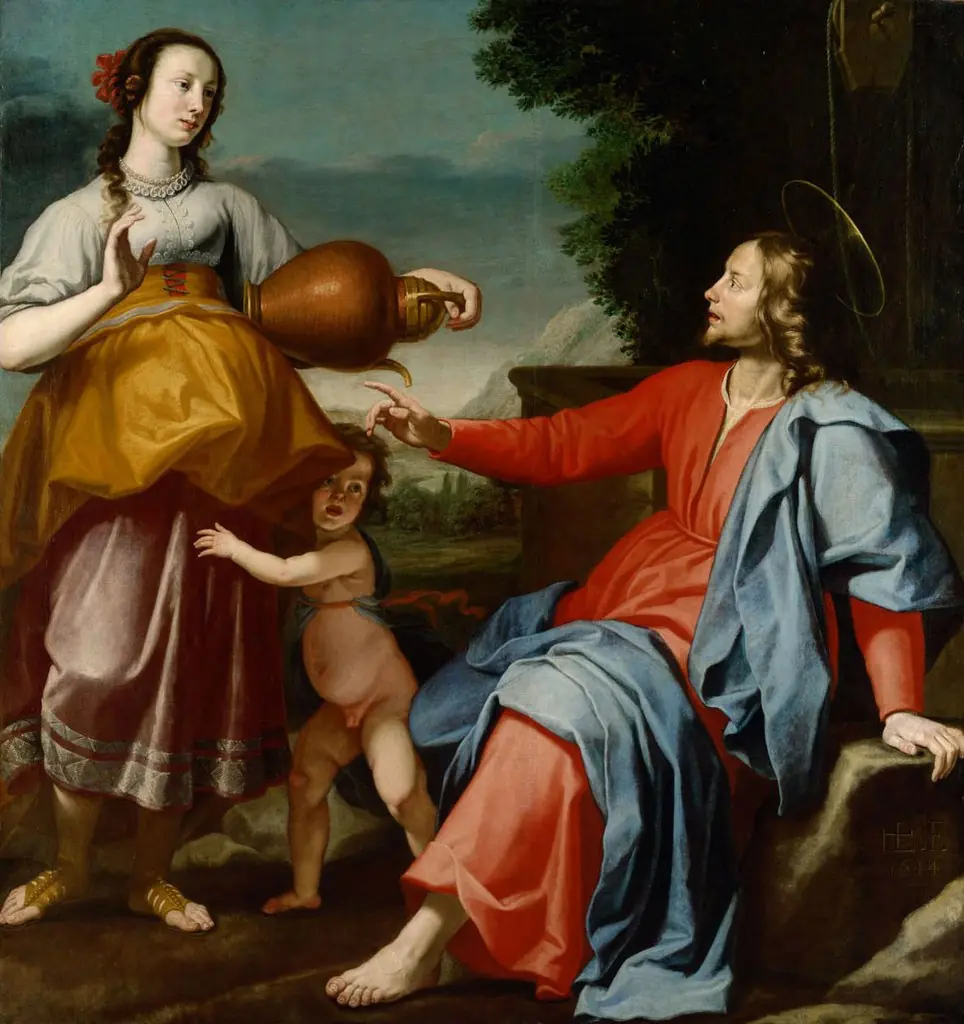 Christ and the Woman of Samaria
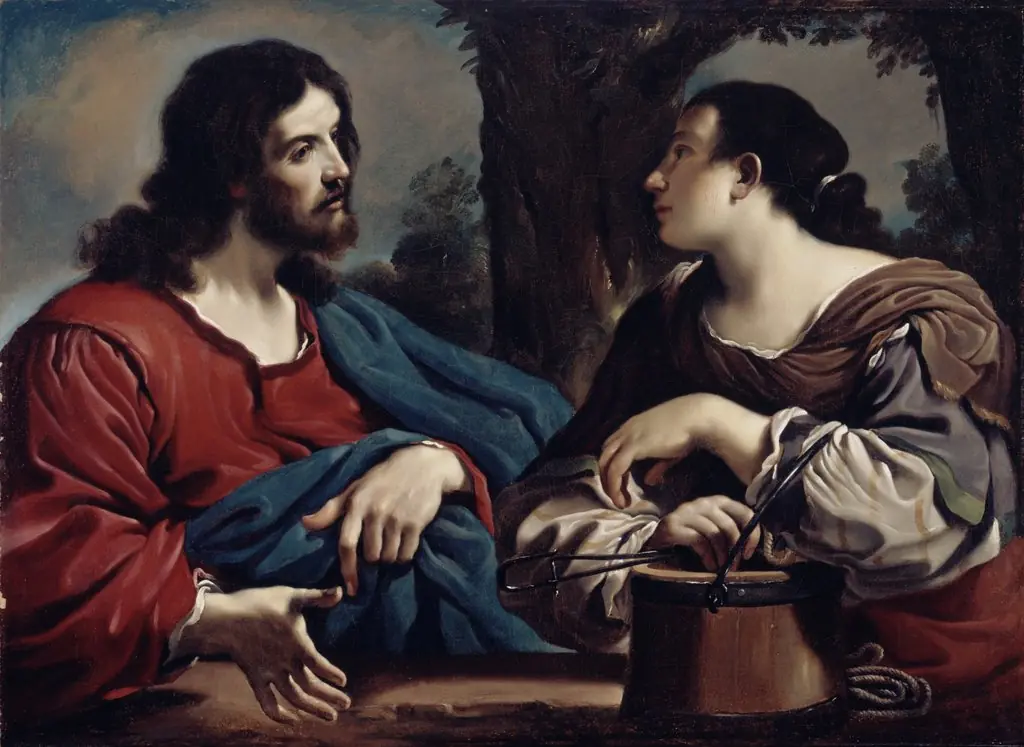 Christ and the Woman of Samaria
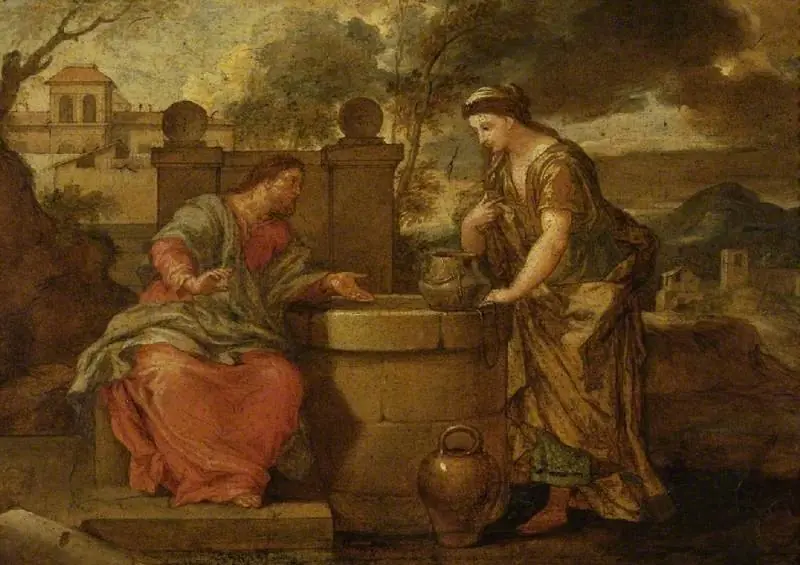 Christ and the woman of Samaria
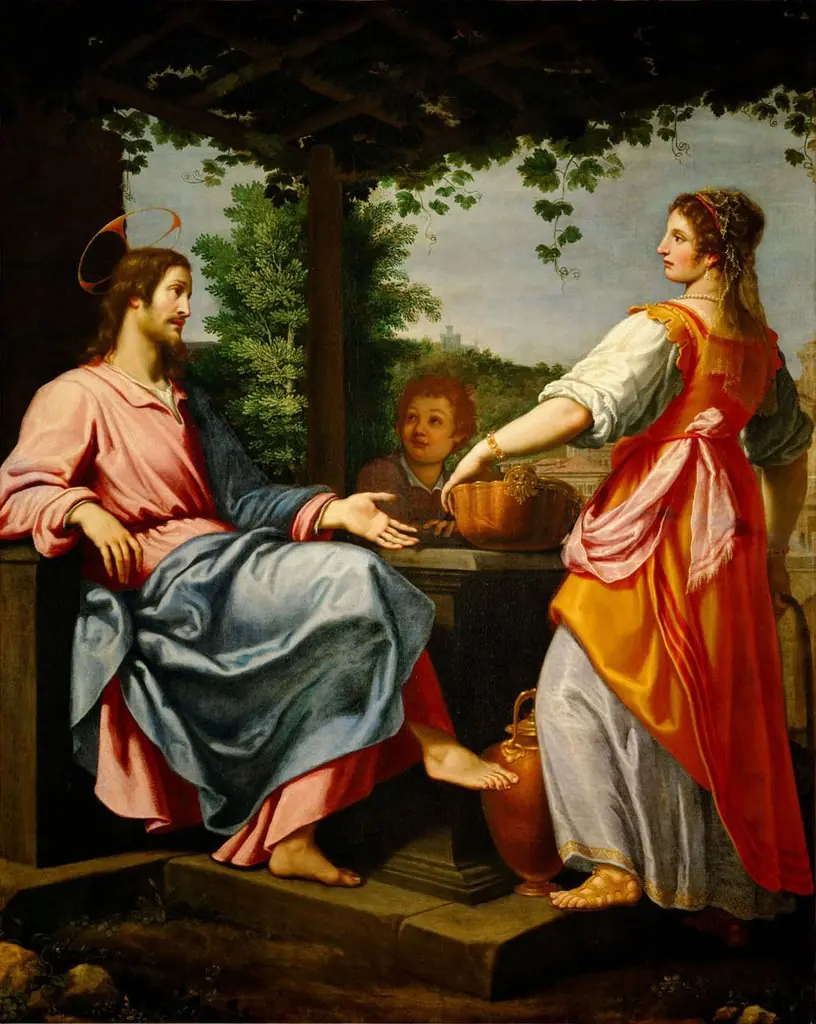 Christ and the Woman of Samaria
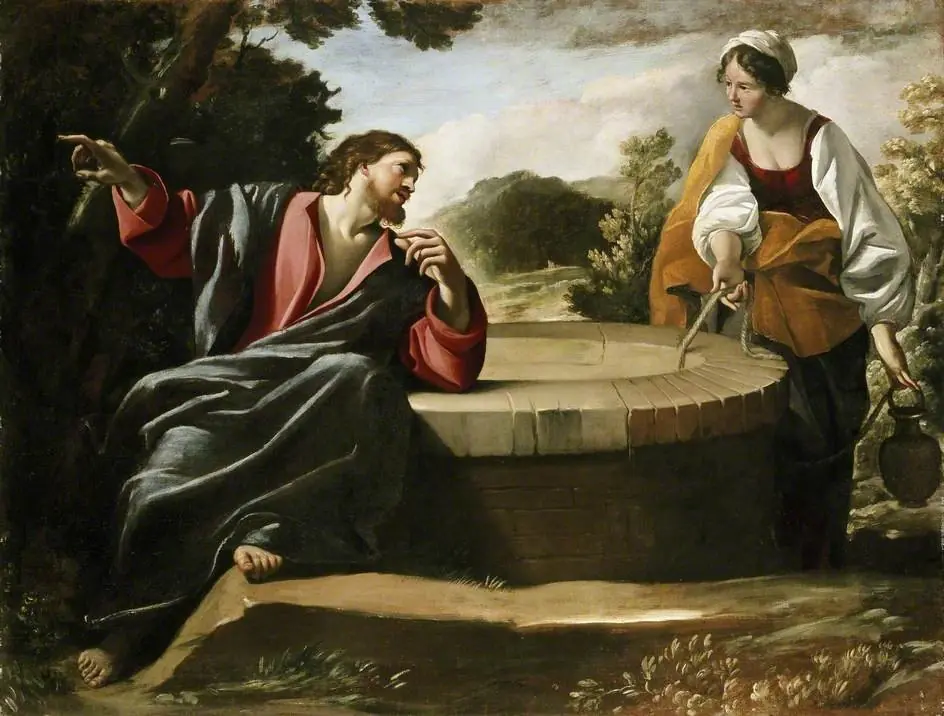 Christ and the Woman of Samaria
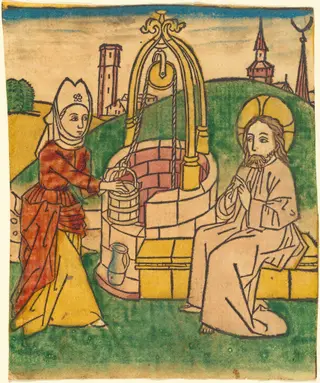 Christ and the Woman of Samaria