Artwork
Christ and the Woman of Samaria
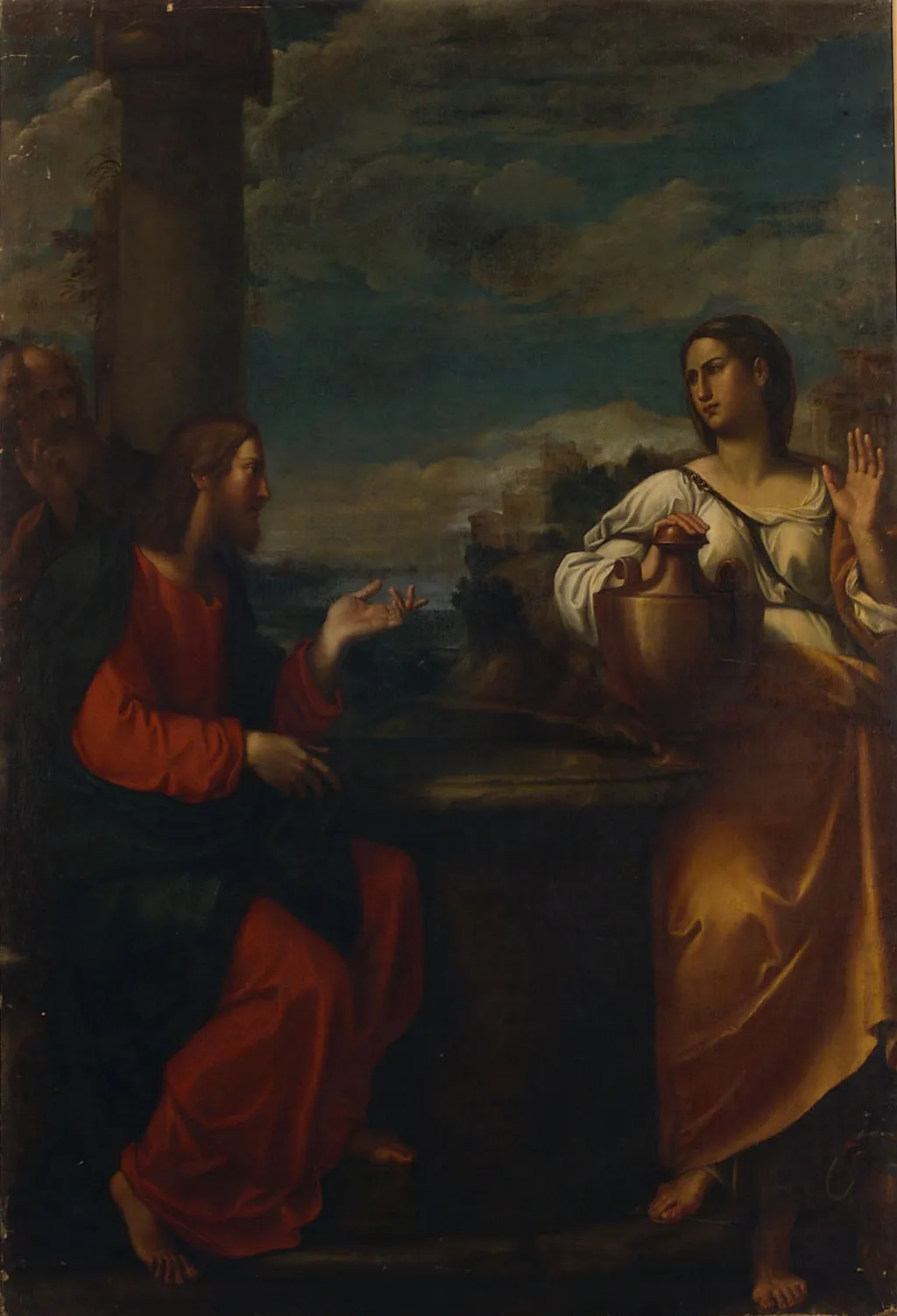
Christ and the Woman of Samaria is an unspecified painting by the Early Baroque Italian artist Francesco Albani. It dates from 1610 and is held in the collection of the Kunsthistorisches Museum.
About this work
Subject & Meaning
Francesco Albani’s Christ and the Woman of Samaria is a religious painting completed in 1610.
Francesco Albani’s Christ and the Woman of Samaria is a religious painting completed in 1610. The work is housed in the Kunsthistorisches Museum and forms part of its collection. As indicated by its title and cataloguing, the painting’s main subject is the encounter between Jesus Christ and the Samaritan woman at the well, a scene taken from the Gospel of John. The artwork is classified as a painting and belongs to the genre of religious art.
History & Provenance
Christ and the Woman of Samaria is a religious painting executed by Francesco Albani in 1610. The work depicts the biblical encounter between Jesus Christ and the Samaritan woman at the well and is currently housed in the Kunsthistorisches Museum. Its creation dates to the early 17th century, aligning with Albani’s activity in Rome during the first decade of the 1600s.
The painting’s provenance and ownership chain are not detailed in the available sources, and no commissioning details are recorded. The work’s dating is anchored to the year 1610, as reflected in its inception metadata and classification as a 1610 painting by the artist.
Christ and the Woman of Samaria by Francesco Albani, dated 1610, is held in the collection of the Kunsthistorisches Museum. The work forms part of the museum's holdings of religious paintings, with its subject drawn from the encounter between Jesus Christ and the Samaritan woman at the well.
No specific inventory or accession number is recorded in the available sources, and no exhibition history beyond its placement within the Kunsthistorisches Museum's collection is documented.
Overview
Francesco Albani’s 1610 oil painting Christ and the Woman of Samaria presents a quiet encounter at a well, with the two figures occupying the foreground against a muted landscape. The work is part of the collection of the Kunsthistorisches Museum in Vienna and exemplifies the artist’s late‑Mannerist approach to biblical narrative.
Technique & Style
Albani employs a pronounced chiaroscuro, allowing light to strike the faces and hands of the protagonists, creating a subtle three‑dimensionality that separates them from the darker, less detailed background. The figures are rendered in soft, luminous tones, red for the kneeling Christ and white for the woman, while the distant rocky wall and faint boats recede into atmospheric perspective.
Context
Created during Albani’s mature period, the work reflects the Counter‑Reformation’s emphasis on didactic religious imagery. By choosing a moment of dialogue rather than overt drama, Albani aligns with contemporary preferences for intimate, contemplative scenes that invite personal reflection on faith and redemption.
Artist & collection

Artist
Francesco Albani or Albano was an Italian Baroque painter of Albanian descent who was active in Bologna, Rome, Viterbo (1609–1610), Mantua (1621–1622) and Florence (1633).

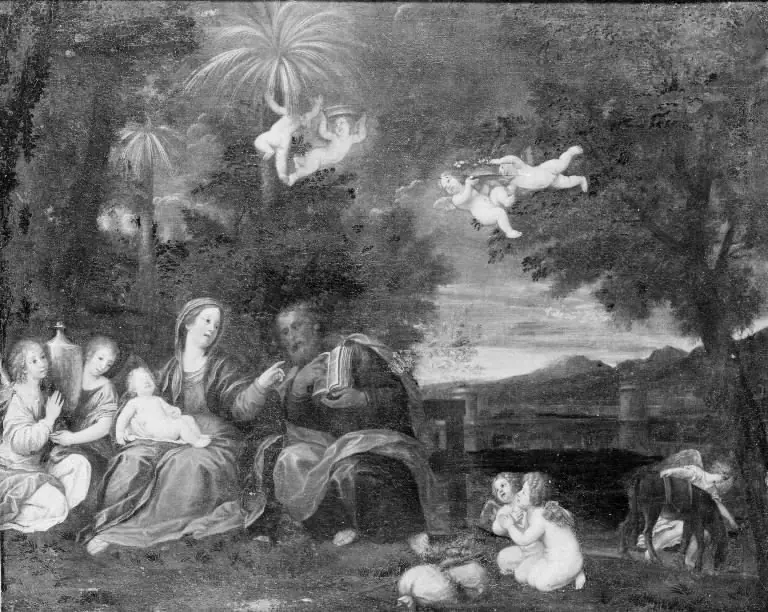
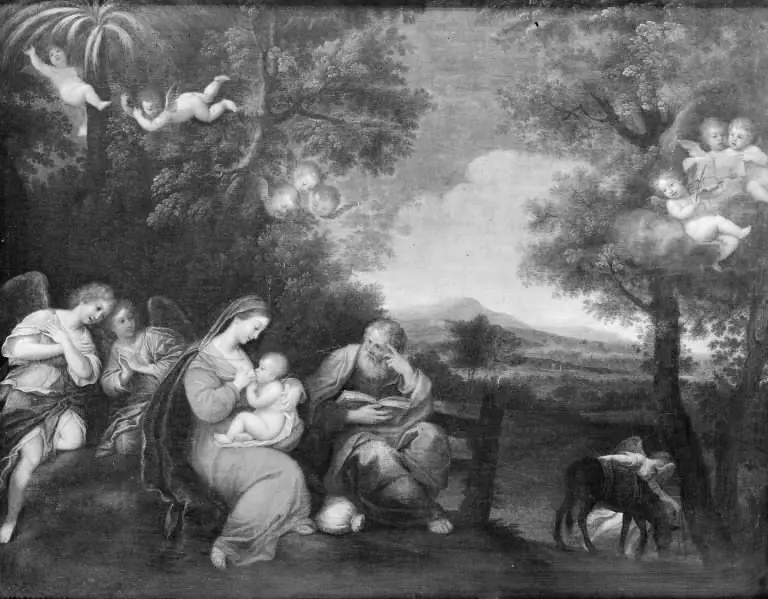
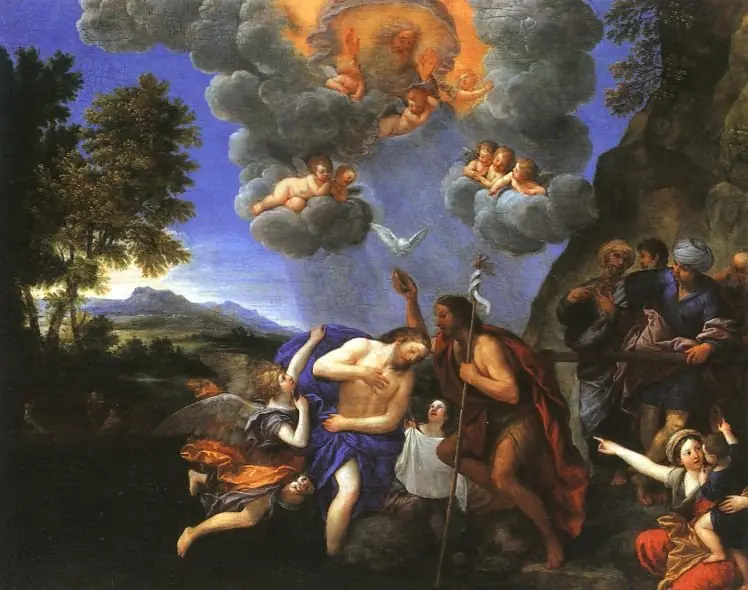
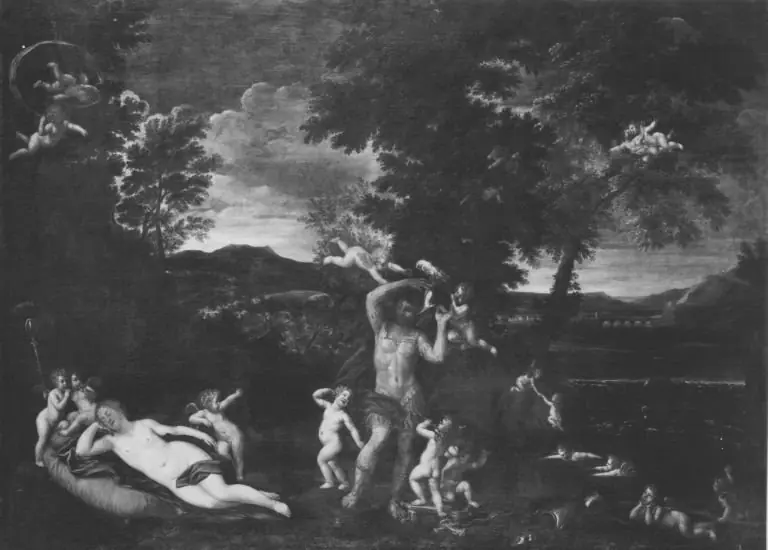
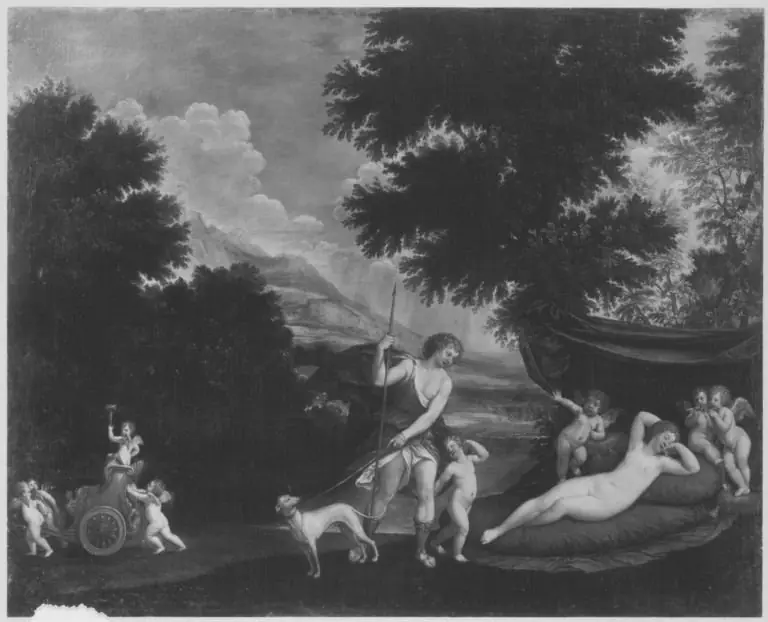
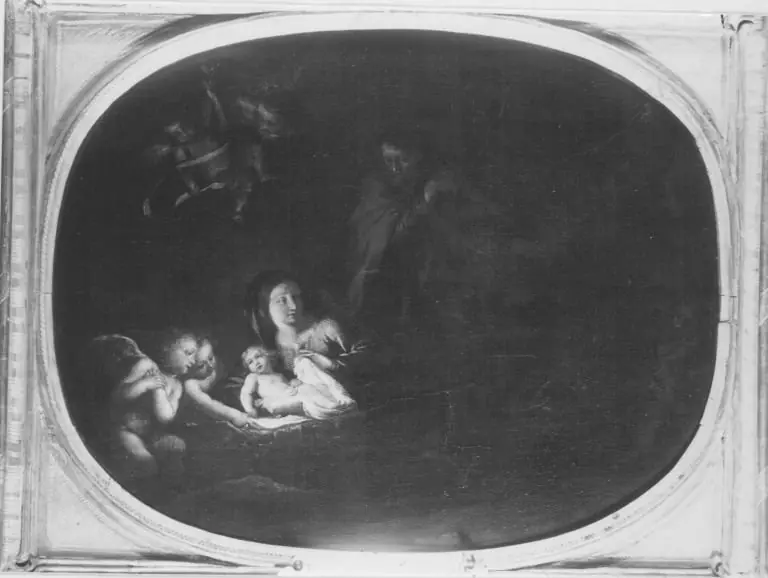
- Christ and the Woman of Samaria
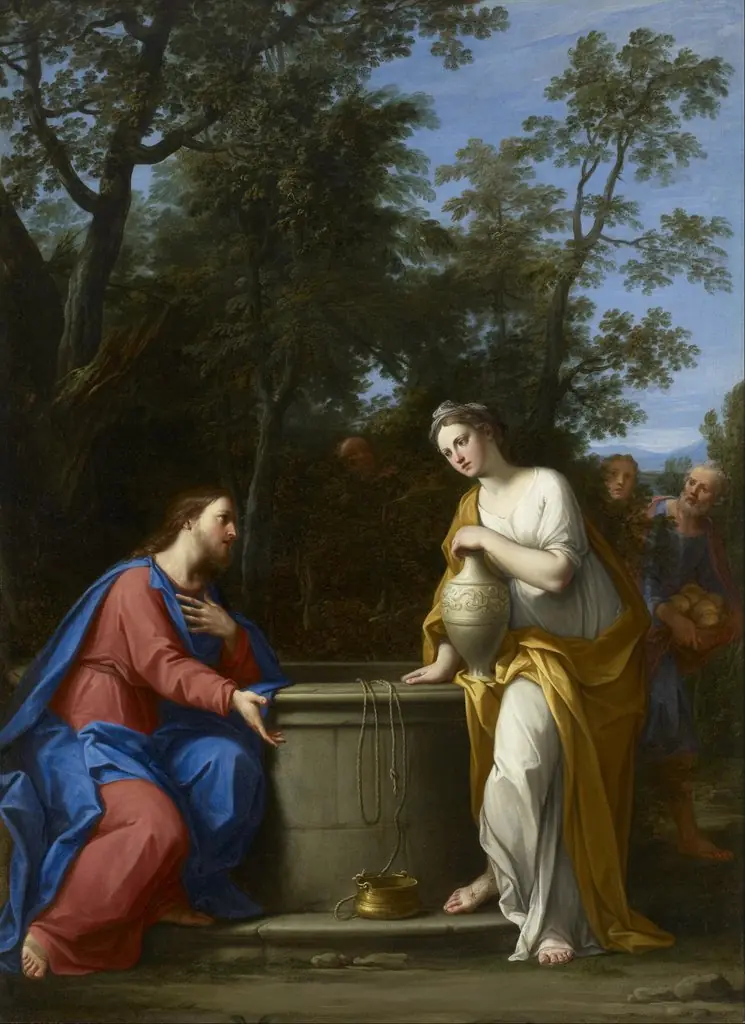 Christ and the Woman of Samaria
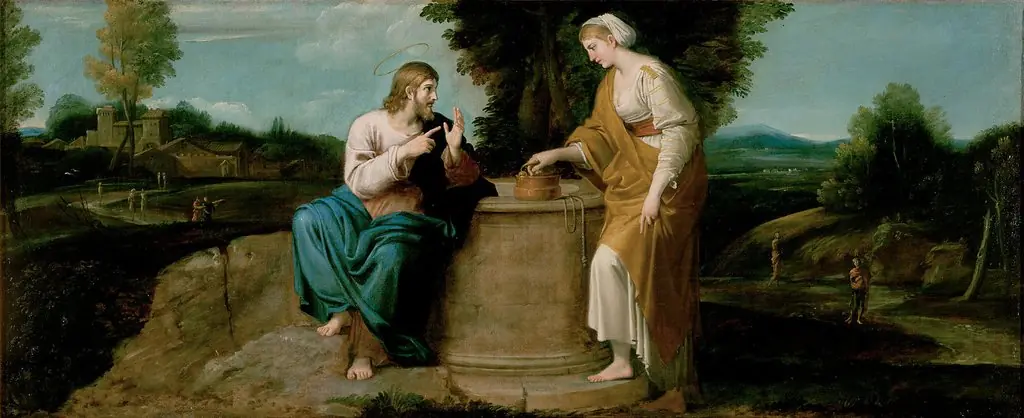 Christ and the Woman of Samaria
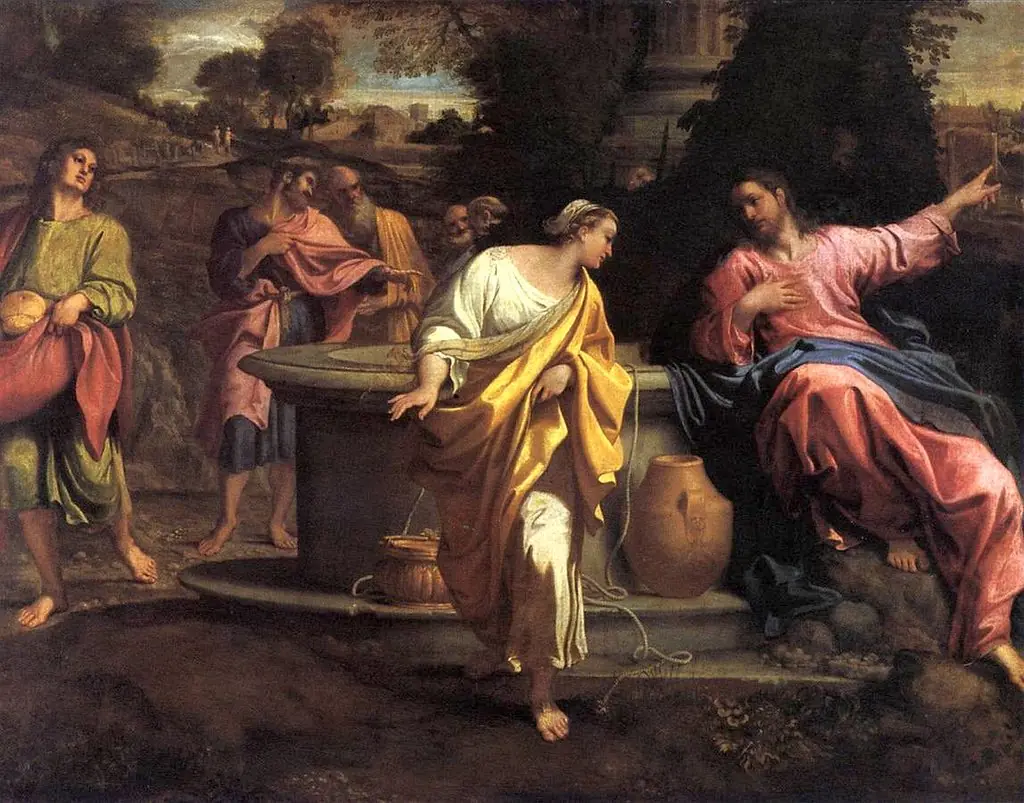 Christ and the Woman of Samaria
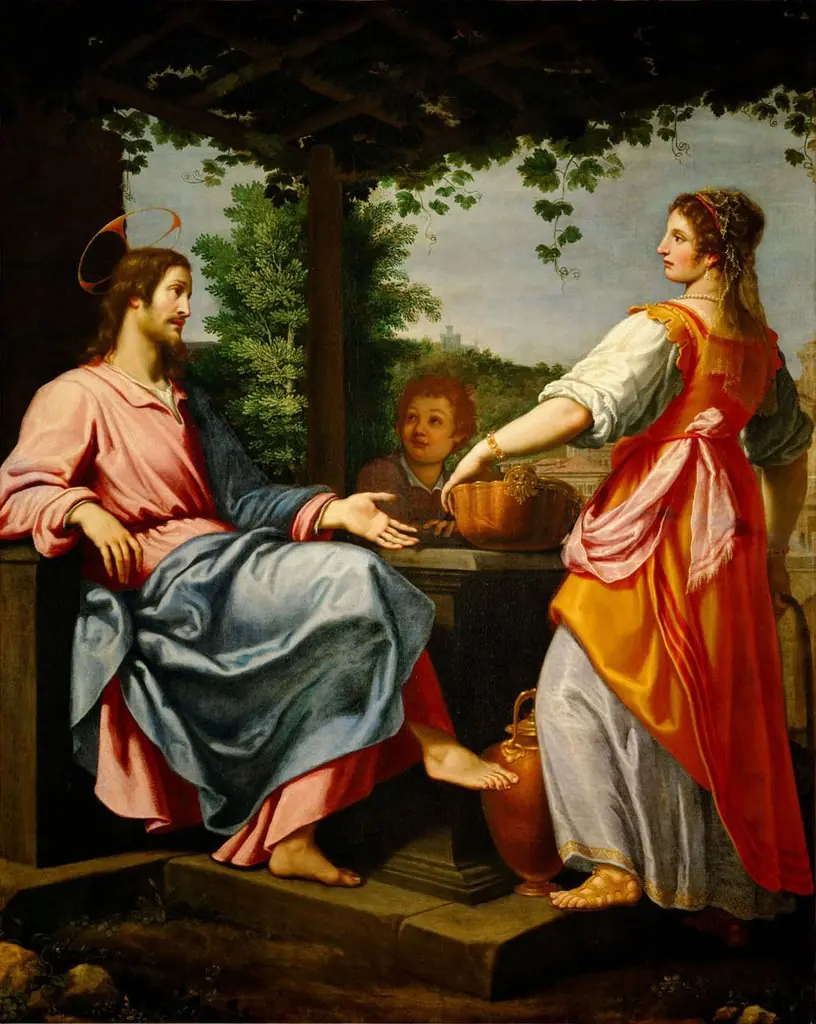 Christ and the Woman of Samaria
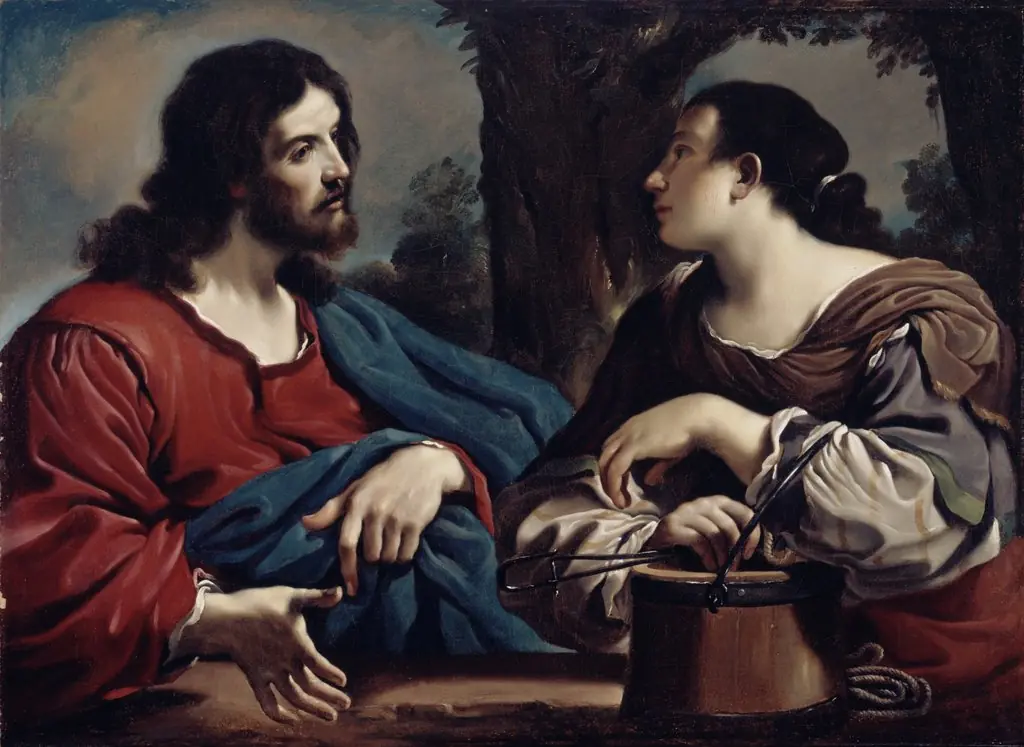 Christ and the Woman of Samaria
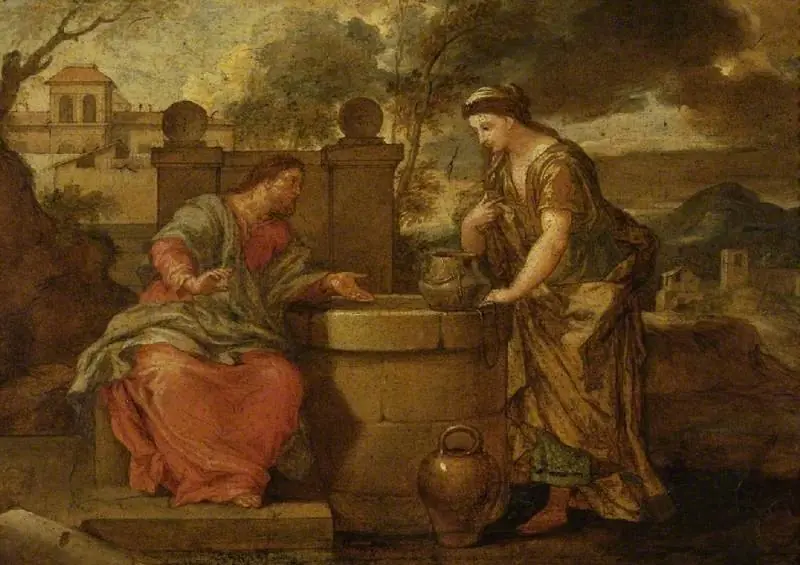 Christ and the woman of Samaria
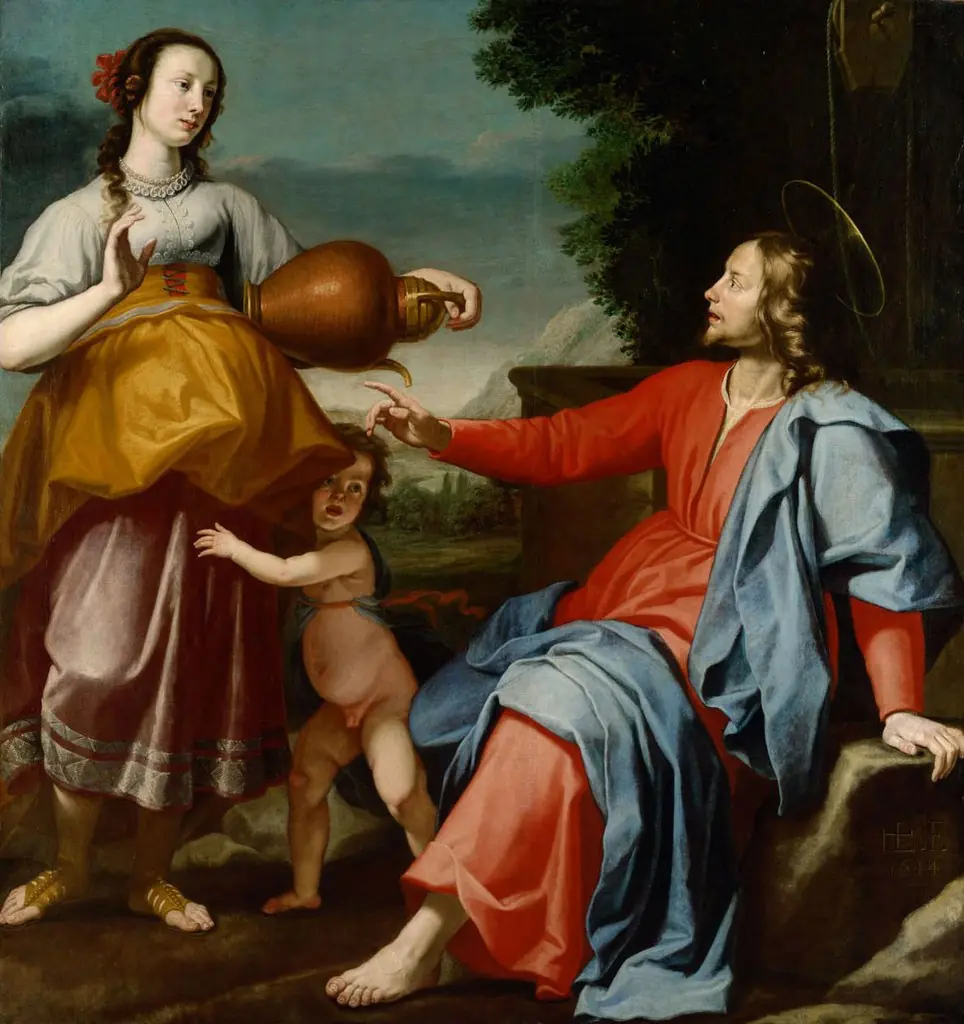 Christ and the Woman of Samaria
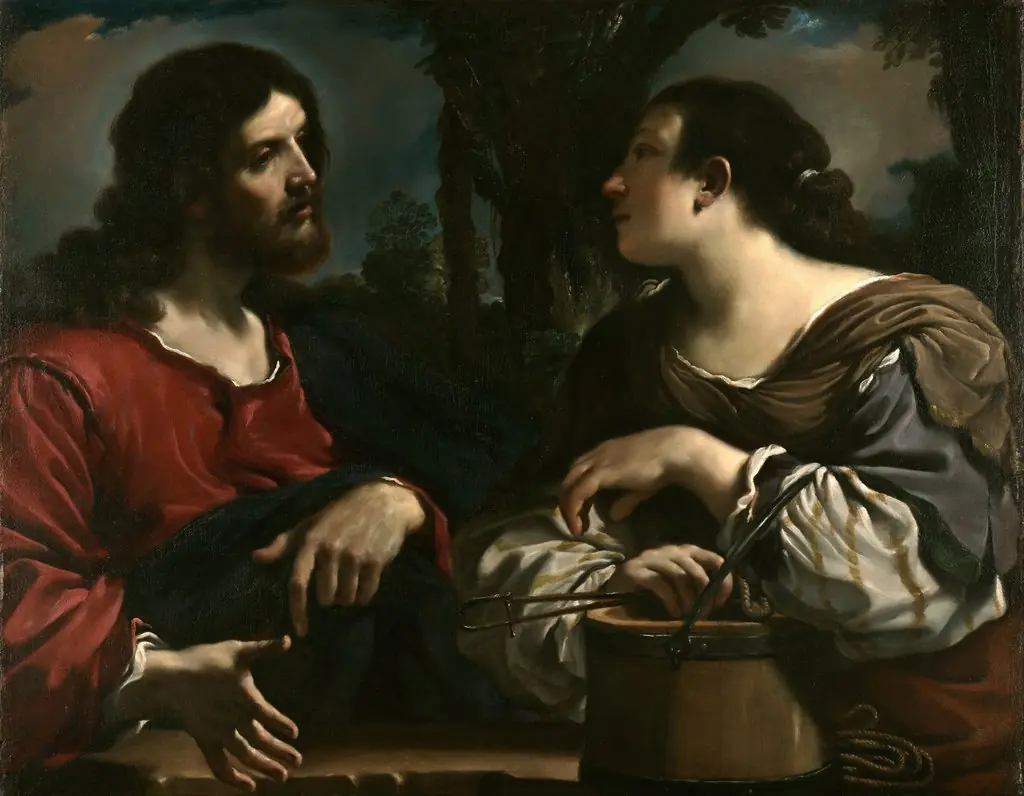 Christ and the Woman of Samaria
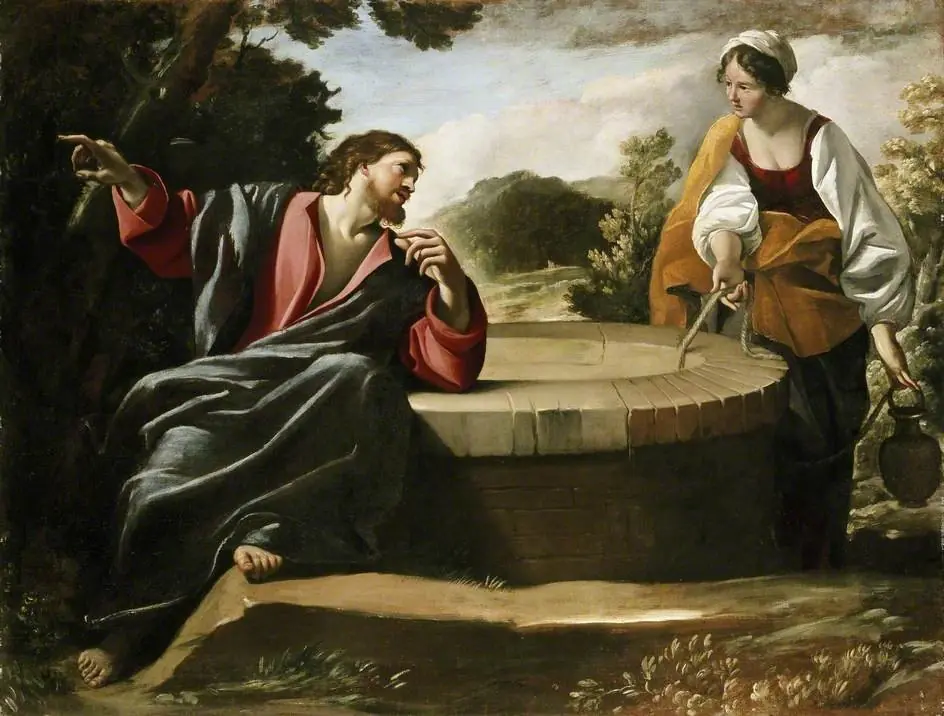 Christ and the Woman of Samaria