Artwork
Anonymous Man
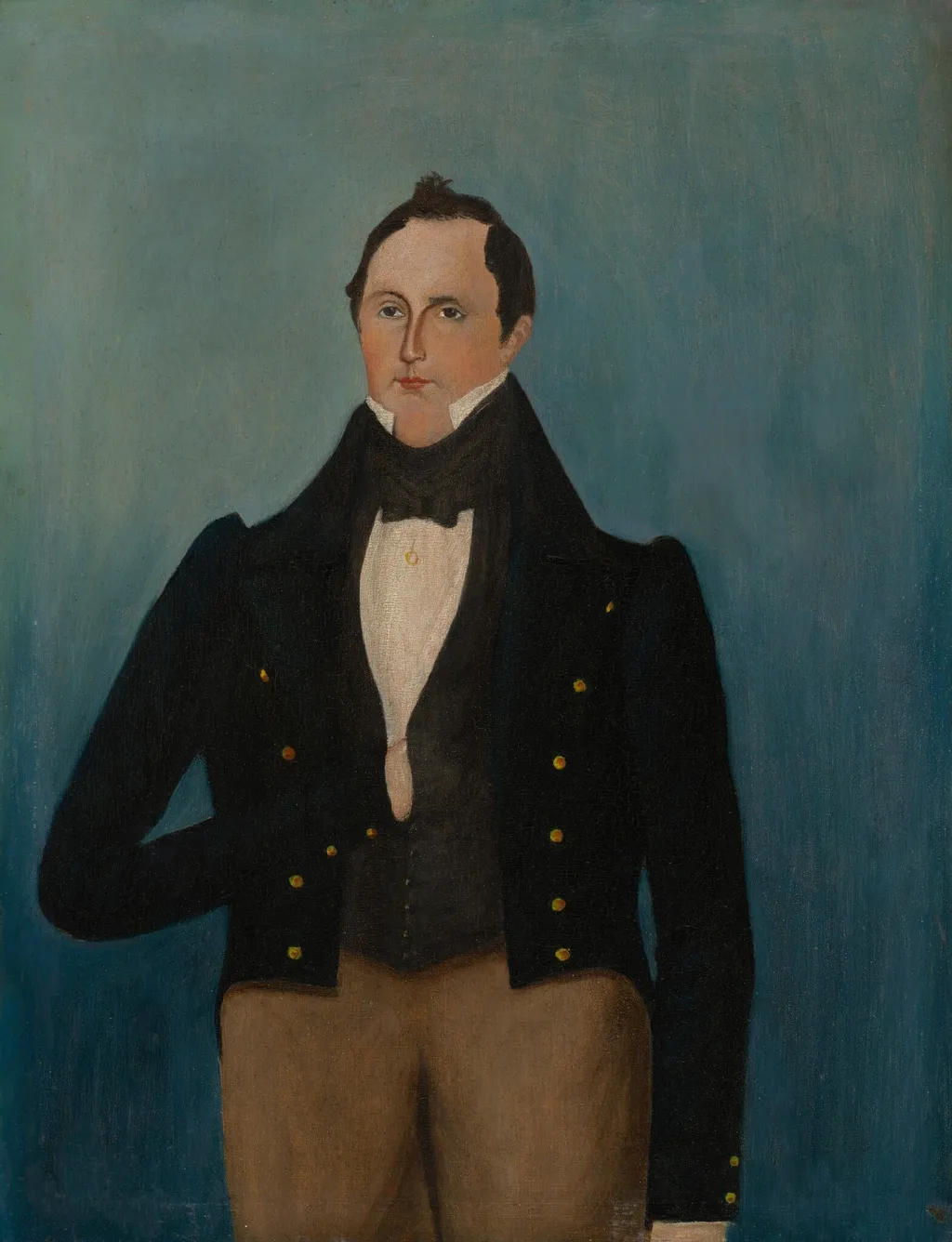
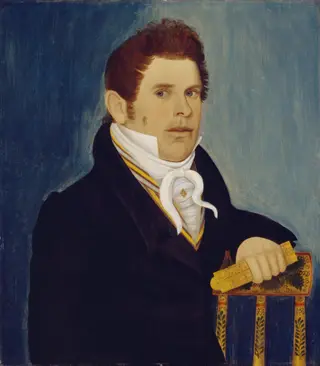
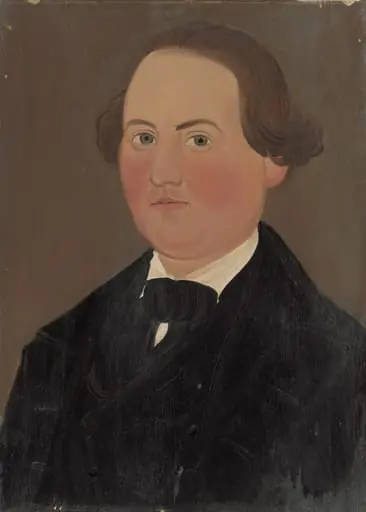
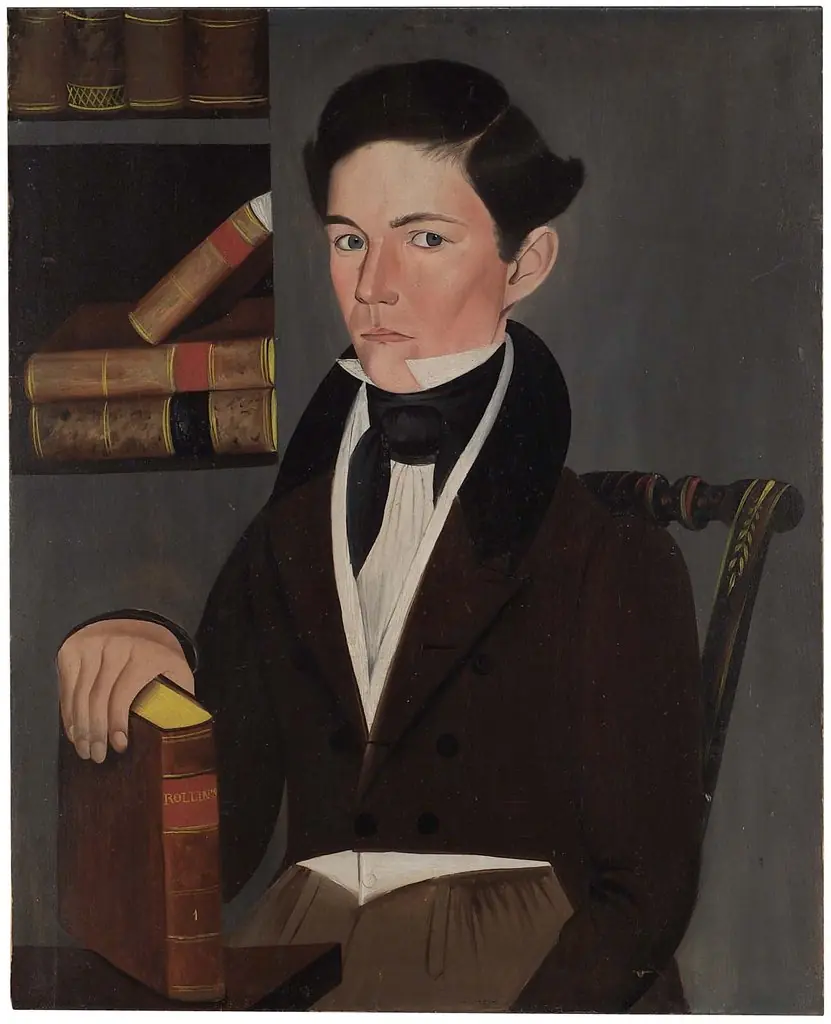
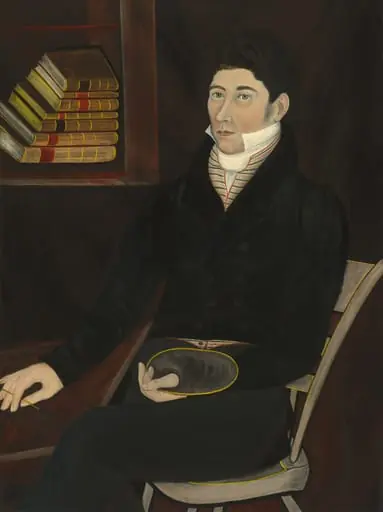
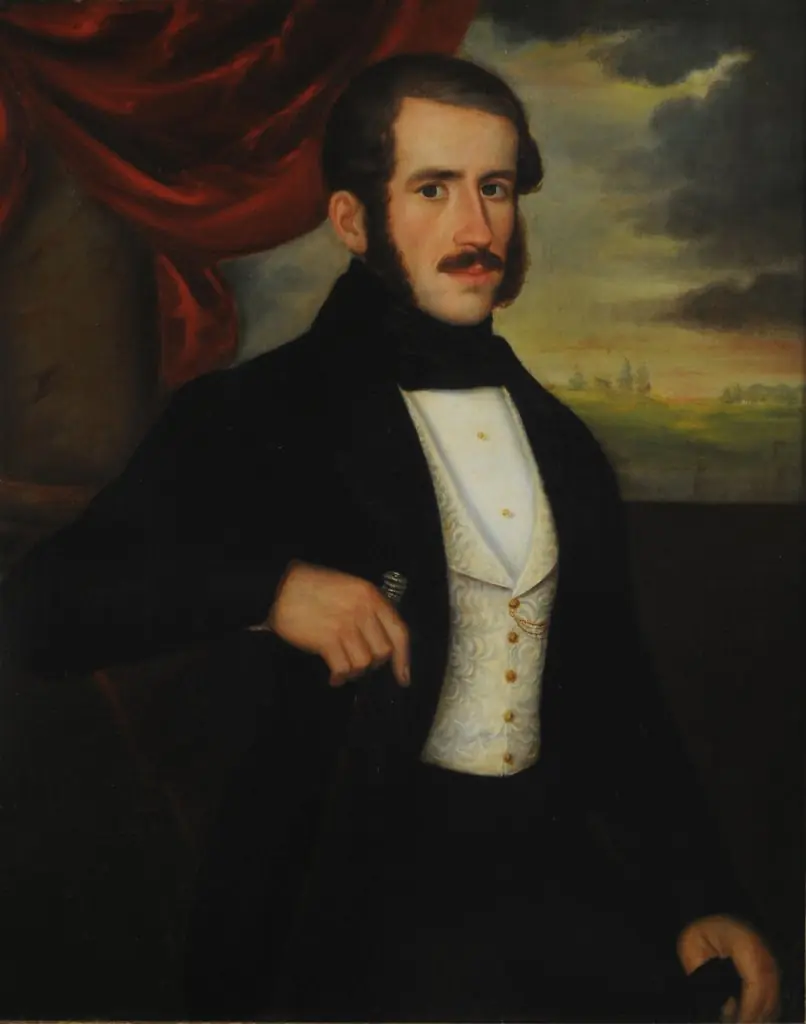
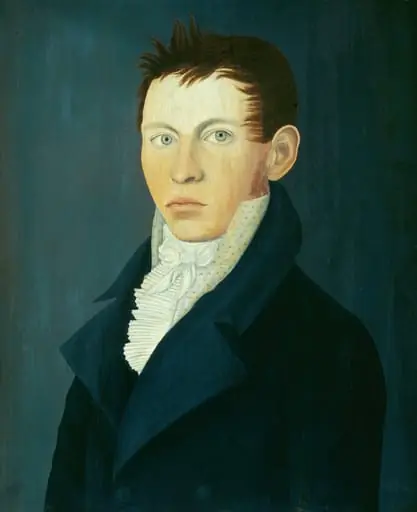
Anonymous Man is an oil painting. It dates from 1830 and is held in the collection of the National Gallery of Art. The work is an oil painting on wood portraying a formally dressed man set against a uniform blue backdrop.
About this work
Subject & Meaning
The painting depicts an unidentified male sitter rendered in a straightforward portrait format typical of early 19th-century American art.
The painting depicts an unidentified male sitter rendered in a straightforward portrait format typical of early 19th-century American art. Its iconography is minimal, focusing on the figure’s direct gaze and plain attire, which together suggest a generic representation rather than a specific individual. The work is interpreted as a study of anonymity, emphasizing the subject’s lack of distinguishing features and inviting contemplation of identity within the broader context of 19th-century portraiture.
The painting measures 46.7 cm in height and 36 cm in width and is part of the National Gallery of Art’s collection in Washington, D.C.
Technique & Style
The work is an oil painting executed on wood panel, measuring 46.7 cm in height by 36 cm in width. It belongs to the portrait genre and is attributed to an anonymous American artist of the 19th century. The painting’s surface and handling reflect conventional 19th‑century portrait techniques, though specific details of brushwork or stylistic characteristics are not elaborated in the sources.
The piece was acquired by Edgar William and Bernice Chrysler Garbisch in 1951 and subsequently gifted to the National Gallery of Art in 1953.
History & Provenance
Created in 1830 by an unidentified American artist of the nineteenth century, this oil-on-wood portrait lacks documentation regarding its original commission or early ownership history. The painting entered the collection of the National Gallery of Art in Washington, D.C., following its acquisition in 1951 by collectors Edgar William and Bernice Chrysler Garbisch. Curatorial records indicate that the specific origin of the work prior to the Garbisches' purchase remains unknown. The couple subsequently donated the piece to the museum in 1953.
The painting is held by the National Gallery of Art in Washington, D.C., where it has been part of the collection since 1953. It was acquired through the gift of Edgar William and Bernice Chrysler Garbisch in that year, following its purchase in 1951. The work is cataloged with the accession number 1953.6.44.
Exhibition history includes its display in the "American Painting and Sculpture" exhibition at the National Gallery of Art in 1954, and later in "American Naïve Painting, 1800-1900," which traveled to the Museum of Modern Art in New York in 1965.
The dimensions of the piece are 46.7 cm in height and 36 cm in width.
Overview
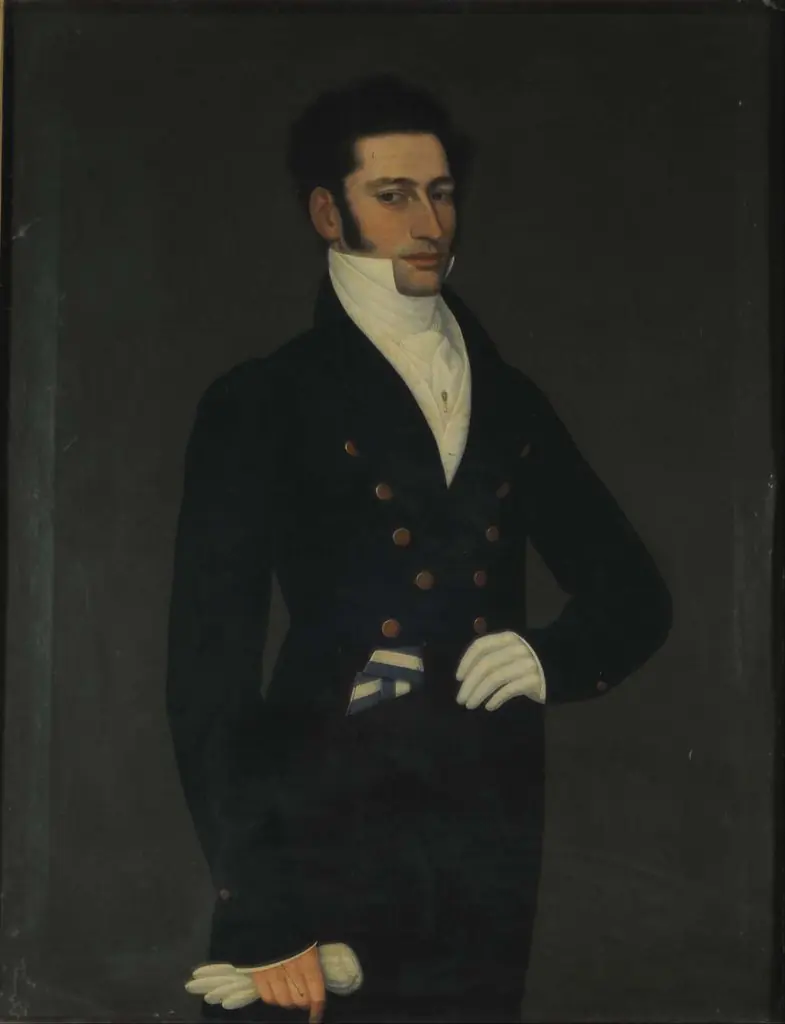
The work is an oil painting on wood portraying a formally dressed man set against a uniform blue backdrop. He is attired in a black jacket with gold‑button detailing, a white shirt, and a black bow tie. The figure stands with his right hand on his hip and his left arm relaxed at his side, presenting a composed stance.
Context
While the artist remains unidentified, the composition aligns with Romantic-era portraiture that prioritized individual character and emotional nuance. The formal attire and compositional simplicity reflect contemporary conventions for depicting members of the educated or professional class during the period.
Artist & collection