Artwork
Husband
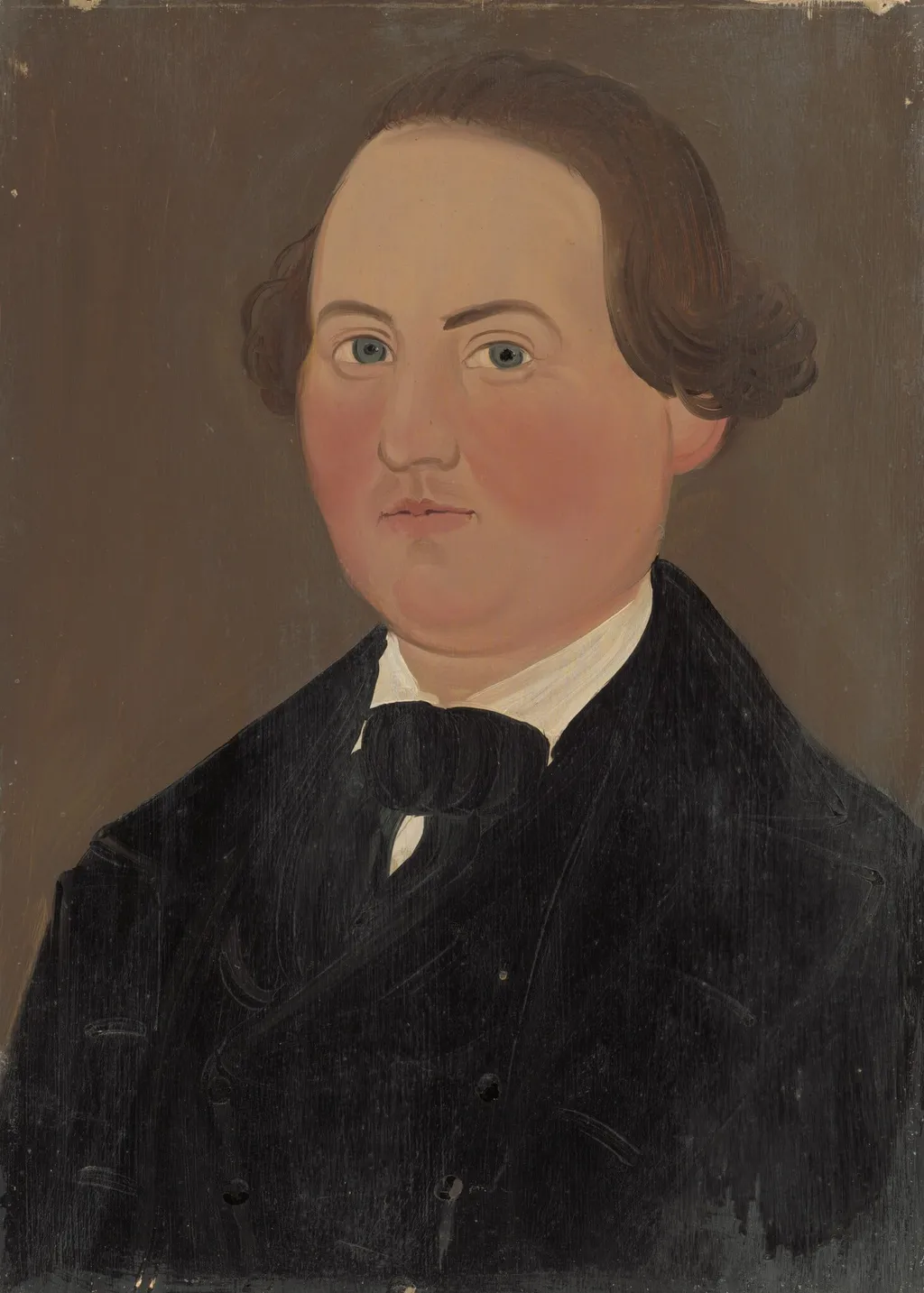
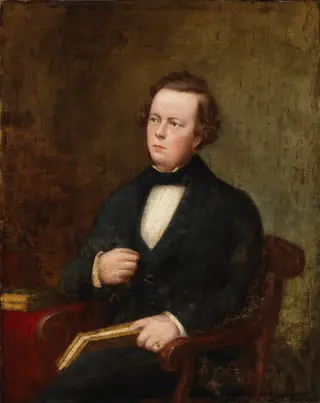
Husband is an oil painting. It dates from 1845 and is held in the collection of the National Gallery of Art.
About this work
Subject & Meaning
The painting Husband shows a married couple in a domestic interior, emphasizing marital partnership and the quiet stability of 19th‑century household life.
The painting Husband shows a married couple in a domestic interior, emphasizing marital partnership and the quiet stability of 19th‑century household life. The couple is rendered with careful attention to clothing and posture, suggesting social status and familial harmony. The work belongs to the Prior‑Hamblin School and exemplifies portraiture that combines realistic likeness with idealized representation of married companionship.
The subject therefore conveys themes of unity and domestic tranquility, reflecting contemporary values of family cohesion and middle‑class respectability.
Technique & Style
Created in 1845 by the Prior-Hamblin School, this portrait is executed in oil paint. While one record identifies the support as canvas, the primary corpus description specifies the work as oil on cardboard. The painting measures 36.4 cm in height and 26 cm in width.
As a genre portrait, the piece reflects the folk art style characteristic of its makers, utilizing a modest support material often favored for its affordability and availability during the mid-19th century.
History & Provenance
The portrait titled Husband, attributed to the Prior-Hamblin School, was created in 1845. Executed in oil on cardboard, the work has been recorded as originating from Springfield, Massachusetts. Its documented ownership chain begins with a 1946 acquisition by collectors Edgar William and Bernice Chrysler Garbisch.
The painting subsequently entered the public domain as a gift from the Garbisch collection to the National Gallery of Art in Washington, D.C., in 1953.
The painting is in the collection of the National Gallery of Art, Washington, D.C.
It is accessioned as Inventory number 1953.3.1, a gift of Edgar William and Bernice Chrysler Garbisch in 1953.
The work has no recorded exhibition history in the provided sources.
Overview
Created around 1845, this oil portrait originates from the Prior‑Hamblin School, a mid‑nineteenth‑century American workshop known for its modestly priced works. Executed on cardboard rather than canvas, the piece measures a modest size and presents a solitary male figure against a uniform brown backdrop, reflecting the period’s penchant for intimate, privately commissioned likenesses.
Context
During the 1840s, American portraiture was transitioning from elite patronage toward a broader middle‑class demand. The use of inexpensive supports such as cardboard allowed artists to meet this market while still employing oil, a medium that conferred a sense of permanence and respectability despite the work’s modest material base.
Artist & collection

- Retrato de Guillermo Rawson
 Portrait of a man
 Anonymous Man
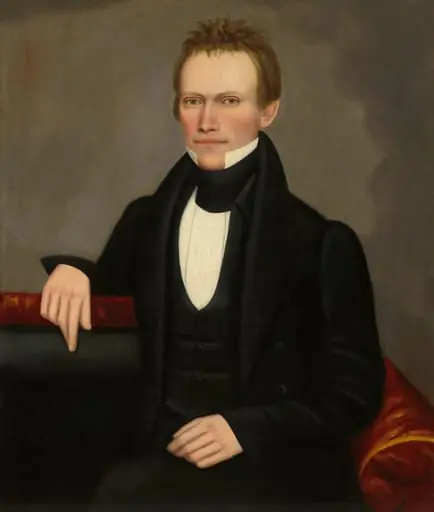 Paul Smith Palmer
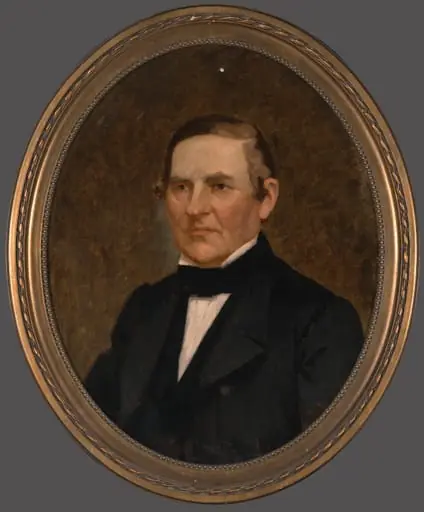 Johan Lindroos vanhana.
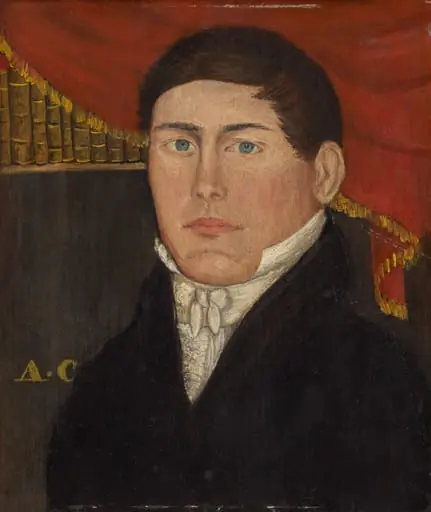 Dr. Alvah Cook
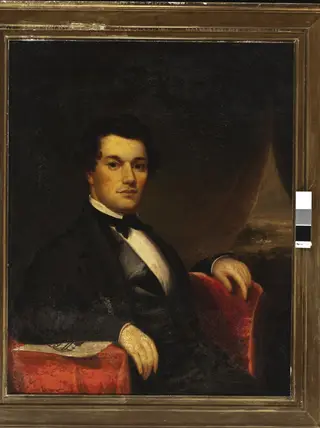 Portrait of Captain William J. Ferrell
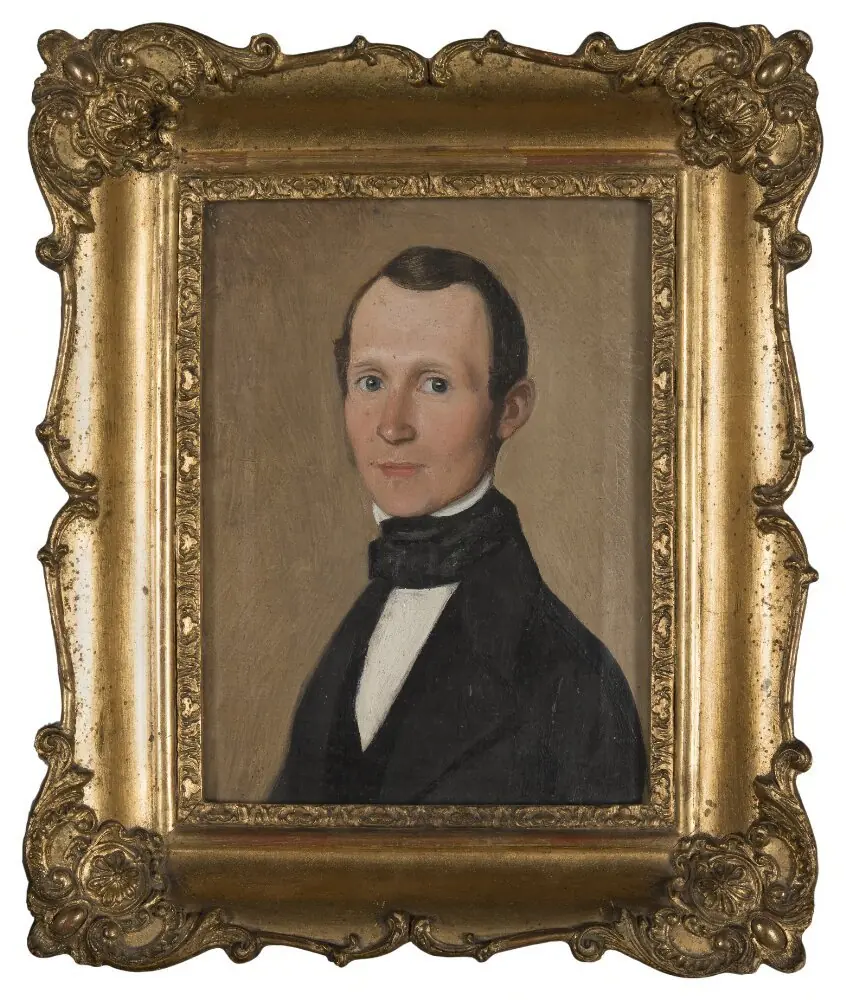 Fredrik Signeul (1810 - 1890), Paint Manufacturer, Director of an Orphanage in Uddevalla
 Thos Williams, JP, Gwaelodygarth 1823-03
 Portrait of man with red waistcoat
 Mr. Clark of Chester, New York
 Portrait of Denis Florence McCarthy (1817-1882), Poet