Artwork
Brother and Sister
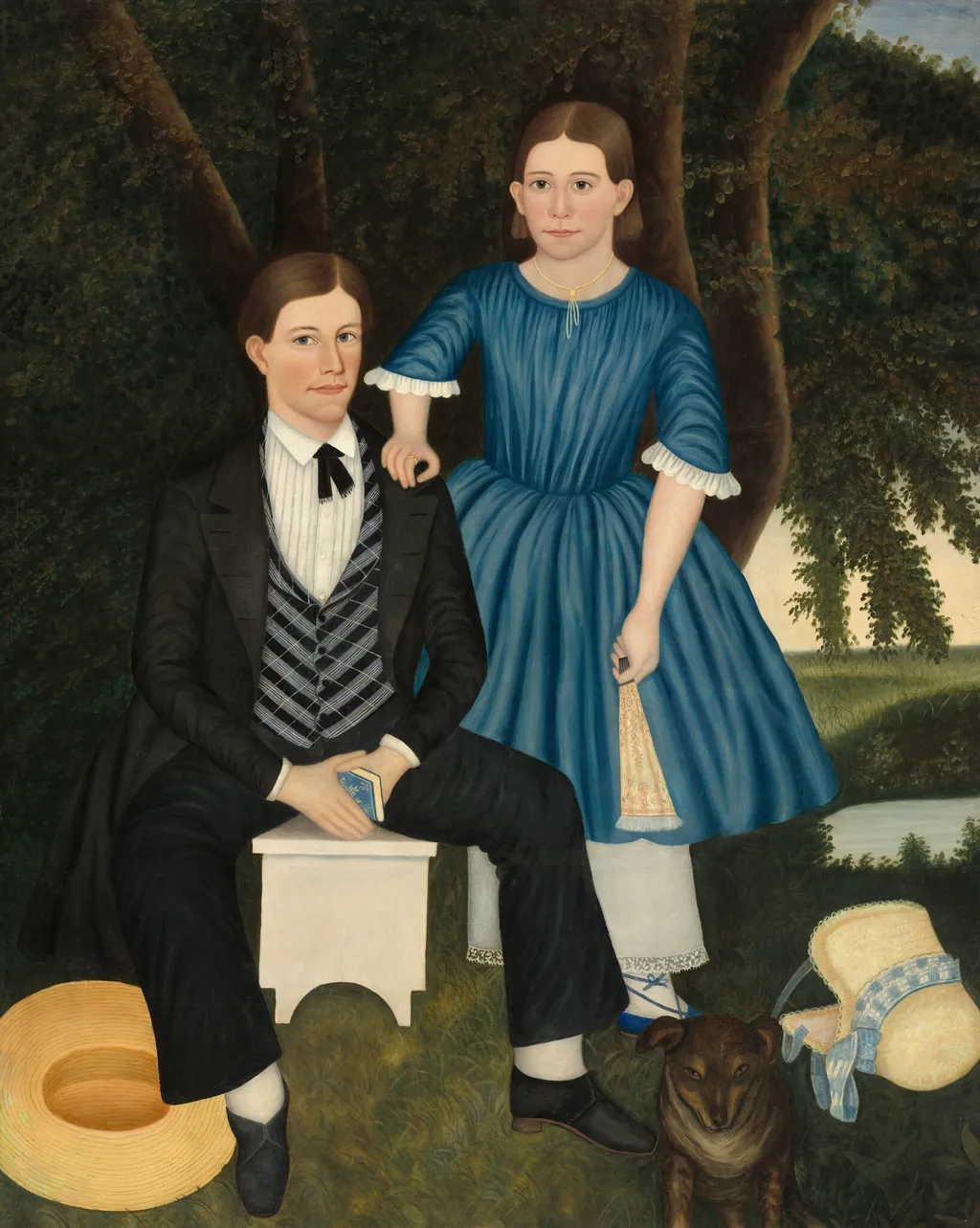
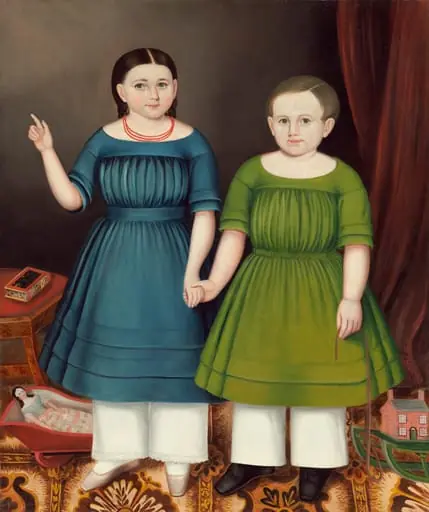
Brother and Sister is an oil painting. It dates from 1845 and is held in the collection of the National Gallery of Art.
About this work
Technique & Style
Executed in oil on canvas in 1845, the portrait presents the figures with smooth, blended handling typical of academic portraiture of the period.
Executed in oil on canvas in 1845, the portrait presents the figures with smooth, blended handling typical of academic portraiture of the period.
The composition emphasizes clarity and restraint, using a muted palette to render the siblings’ features with understated realism. The canvas measures 127.2 cm in height by 101.6 cm in width, and the paint surface appears well-preserved with no reported structural issues.
History & Provenance
The work entered the collection of Edgar William and Bernice Chrysler Garbisch in 1952, who subsequently gifted it to the National Gallery of Art in 1953, as recorded in the corpus. The painting was created in 1845 by an American artist, as indicated by its date and classification. It remains part of the National Gallery of Art's collection in Washington, D.C., where it is catalogued with dimensions of 127.2 cm by 101.6 cm.
Brother and Sister is held by the National Gallery of Art in Washington, D.C., where it entered the collection in 1953 as a gift from Edgar William and Bernice Chrysler Garbisch, who had purchased it the previous year. The work had previously been recorded as from New Jersey. No exhibition history beyond its acquisition by the Garbisches and subsequent donation to the NGA is documented in the available sources.
Source IDs: [1, 2]
Overview
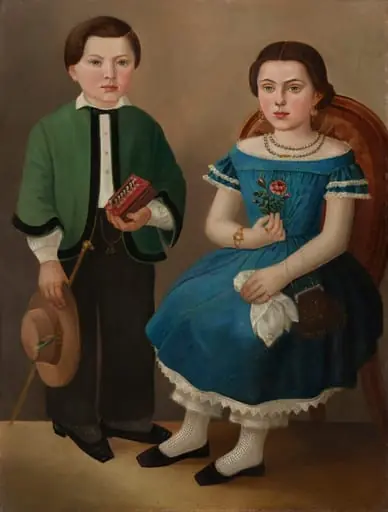
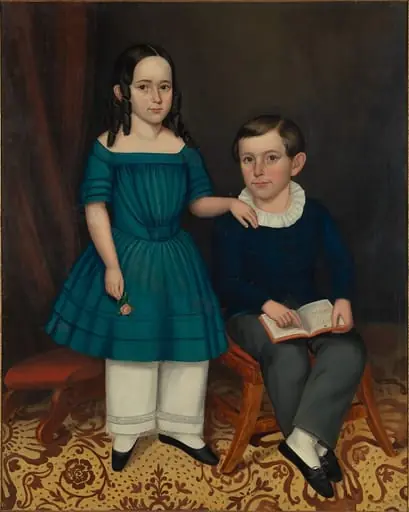
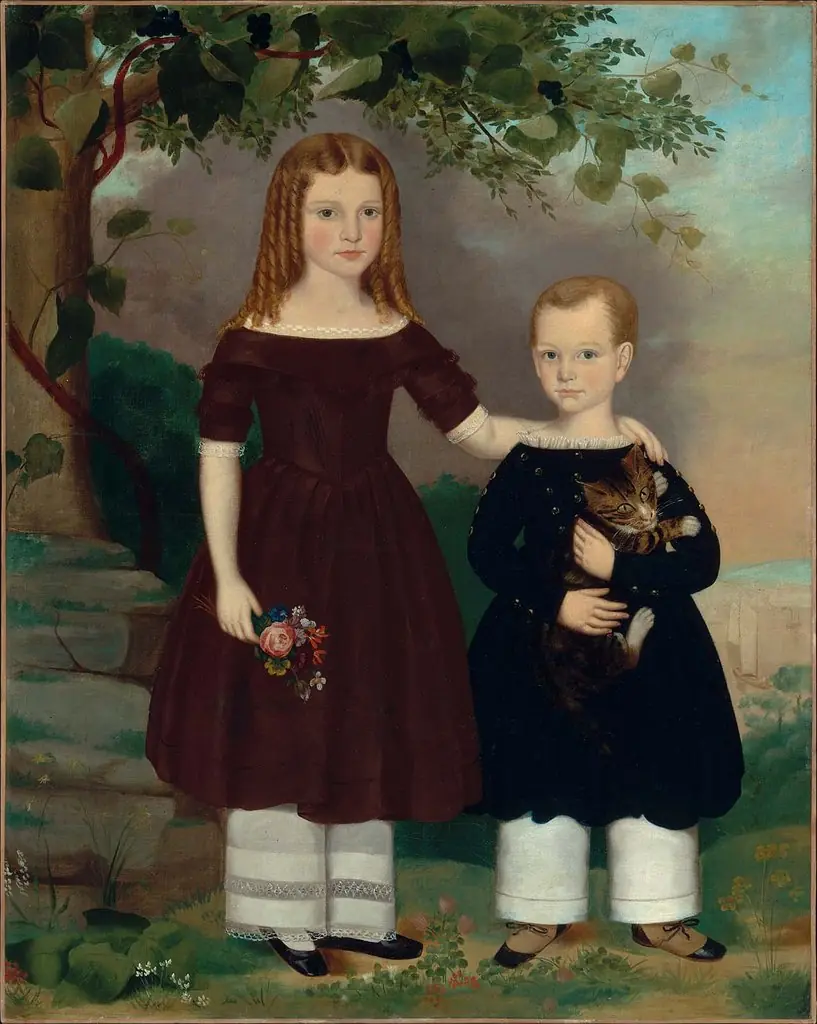
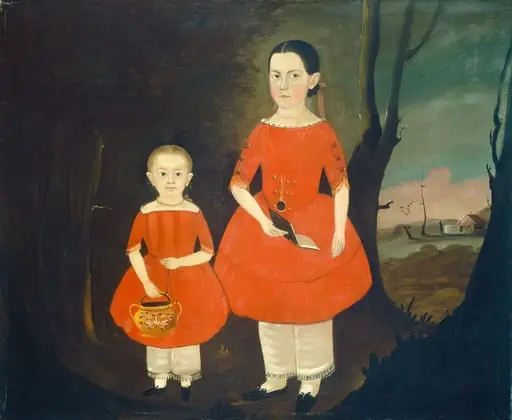
The canvas portrays a brother and sister positioned in a tranquil outdoor scene. The boy, attired in a dark suit with a white shirt and tie, is seated on a modest white bench while holding a book. Adjacent to him, the girl in a blue dress with white trim stands, her right hand resting on his shoulder. A dog lies at her feet, and a straw hat rests on the ground nearby.
Subject & Meaning
The composition emphasizes familial intimacy, suggesting a moment of shared leisure or study. The boy’s book and the gentle contact between the siblings convey an atmosphere of quiet companionship, while the surrounding nature reinforces a sense of harmony between human relationships and the environment.
Context
The painting aligns with Romantic sensibilities that valued the emotional resonance of everyday scenes set within nature. By situating ordinary domestic figures within an idyllic landscape, the artist reflects the period’s interest in personal feeling and the restorative qualities of the natural world.
Artist & collection