Artwork
Horizon of the New World
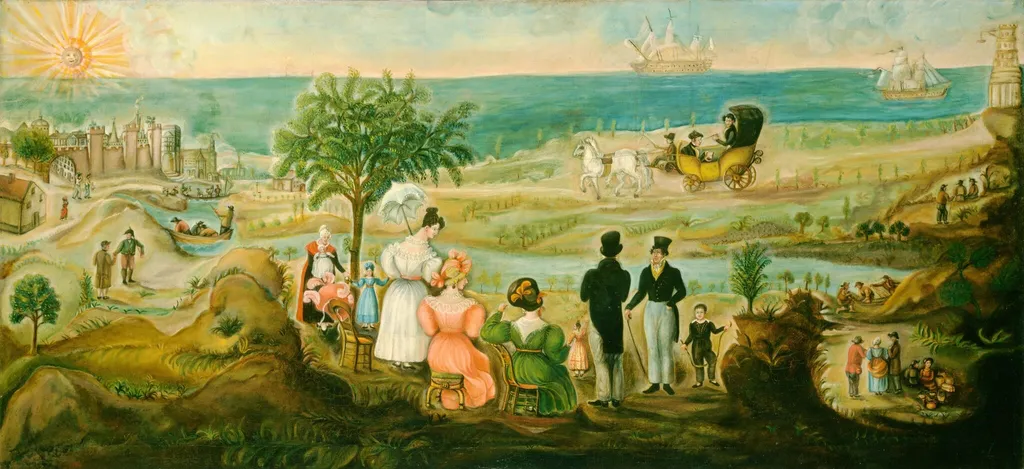
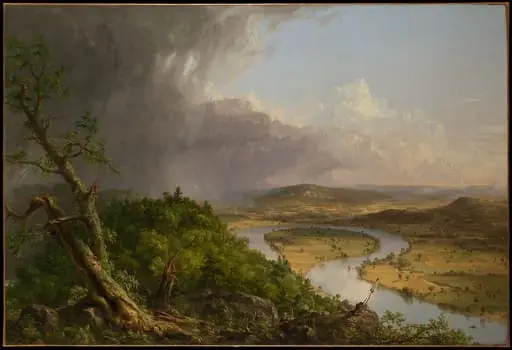
Horizon of the New World is an oil painting. It dates from 1830 and is held in the collection of the National Gallery of Art.
About this work
Technique & Style
The composition's clarity and restrained palette reflect the period's preference for legible naturalism and picturesque framing.
The work is painted in oil on canvas, with the support measuring 77.6 cm in height and 167 cm in width. The handling aligns with early nineteenth-century American landscape traditions, employing smooth, blended brushwork to render atmospheric recession and luminous sky effects. Foliage and distant terrain are articulated through delicate glazes and controlled impasto in foreground accents, while the horizon line is subtly elevated to emphasize spatial breadth. The composition's clarity and restrained palette reflect the period's preference for legible naturalism and picturesque framing.
History & Provenance
Created in 1830, Horizon of the New World is an oil-on-canvas landscape painting attributed to an American artist of the nineteenth century. The work's earliest recorded provenance places it in New York before it entered the collection of H. Gregory Gulick in Middletown, New Jersey. Gulick sold the painting in 1948 to Edgar William and Bernice Chrysler Garbisch.
Following their ownership, the Garbisch couple bequeathed the artwork to the National Gallery of Art in Washington, D.C., in 1980, where it remains part of the permanent collection. The work measures 77.6 cm by 167 cm.
Overview
Horizon of the New World is an oil on canvas painting depicting a solitary tree within a sparse landscape. The composition emphasizes the tree as the central element, set against an uncluttered backdrop. The artist employed a restrained palette, contributing to the work's serene and contemplative atmosphere. This piece exemplifies a focused approach to natural forms, highlighting a single subject with deliberate clarity.
Subject & Meaning
The artwork presents a single tree standing in isolation, dominating the visual field. Its solitary presence against a simplified horizon draws the viewer's attention directly to its form and stature. This singular focus suggests themes of endurance or individual presence within a vast, unadorned environment. The absence of other elements amplifies the tree's significance, inviting reflection on its symbolic weight.
Context
This painting aligns with the artist's broader exploration of simplified natural forms. The deliberate choice to isolate and emphasize a single element, such as this tree, reflects a recurring interest in the fundamental aspects of landscape and individual subjects. Such works often invite viewers to engage with the essential qualities of the depicted form, a characteristic approach evident in other pieces by the artist, including those held at the National Gallery of Art in Washington.
Artist & collection

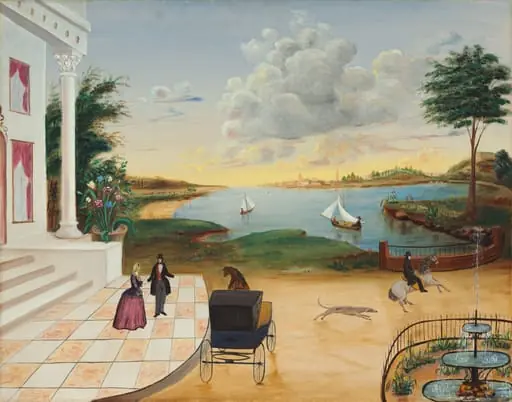 Leaving the Manor House
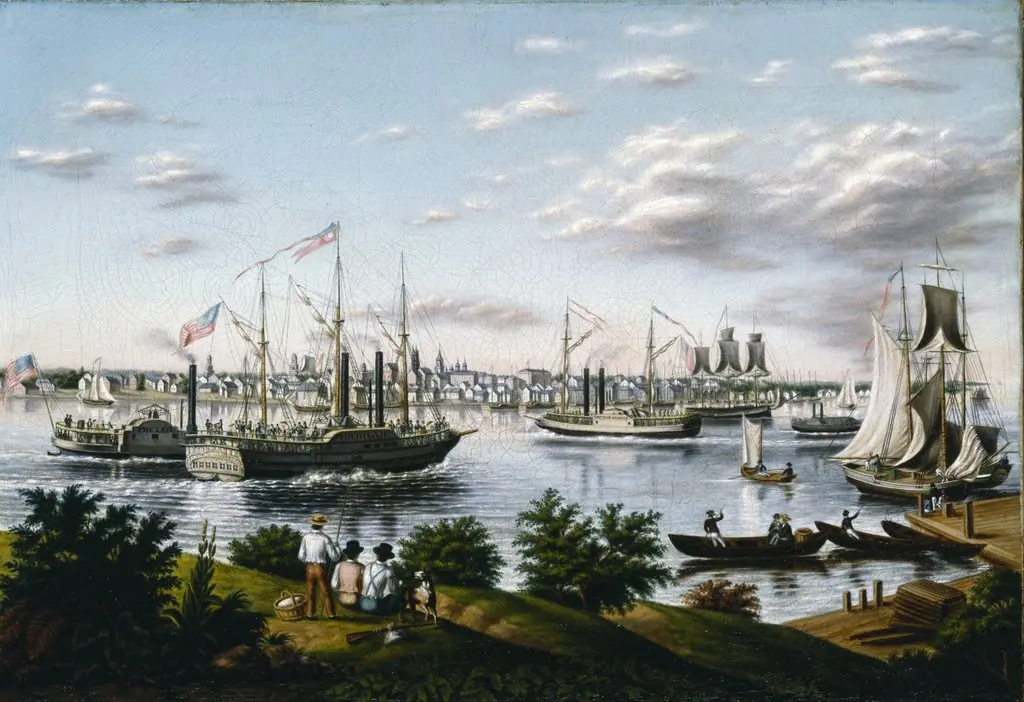 View of Detroit in 1836
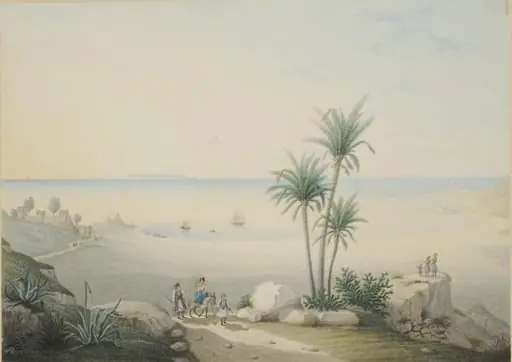 Λιμάνι της Πάρου
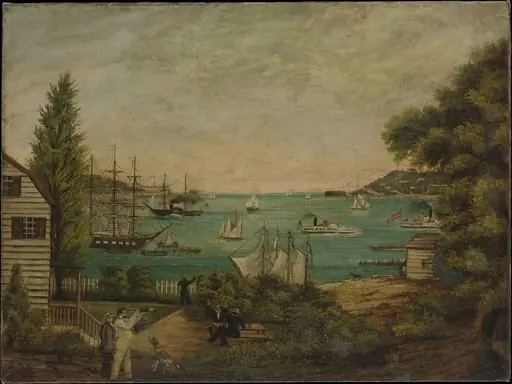 View from Staten Island
 Marion Feasting the British Officer on Sweet Potatoes
 View of the Delaware near Philadelphia
 Railroad Jubilee on Boston Common
 The City Outskirts
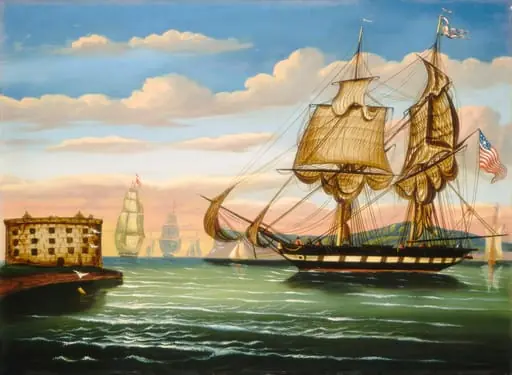 Bay of New York, Sunset
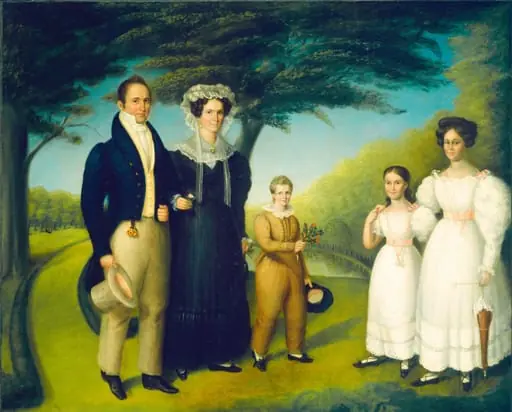 Dr. John Safford and Family
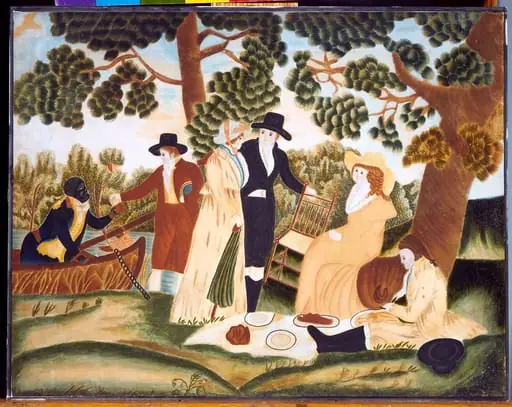 The Picnic
- Geese in Flight