Artwork
Portrait of a Man
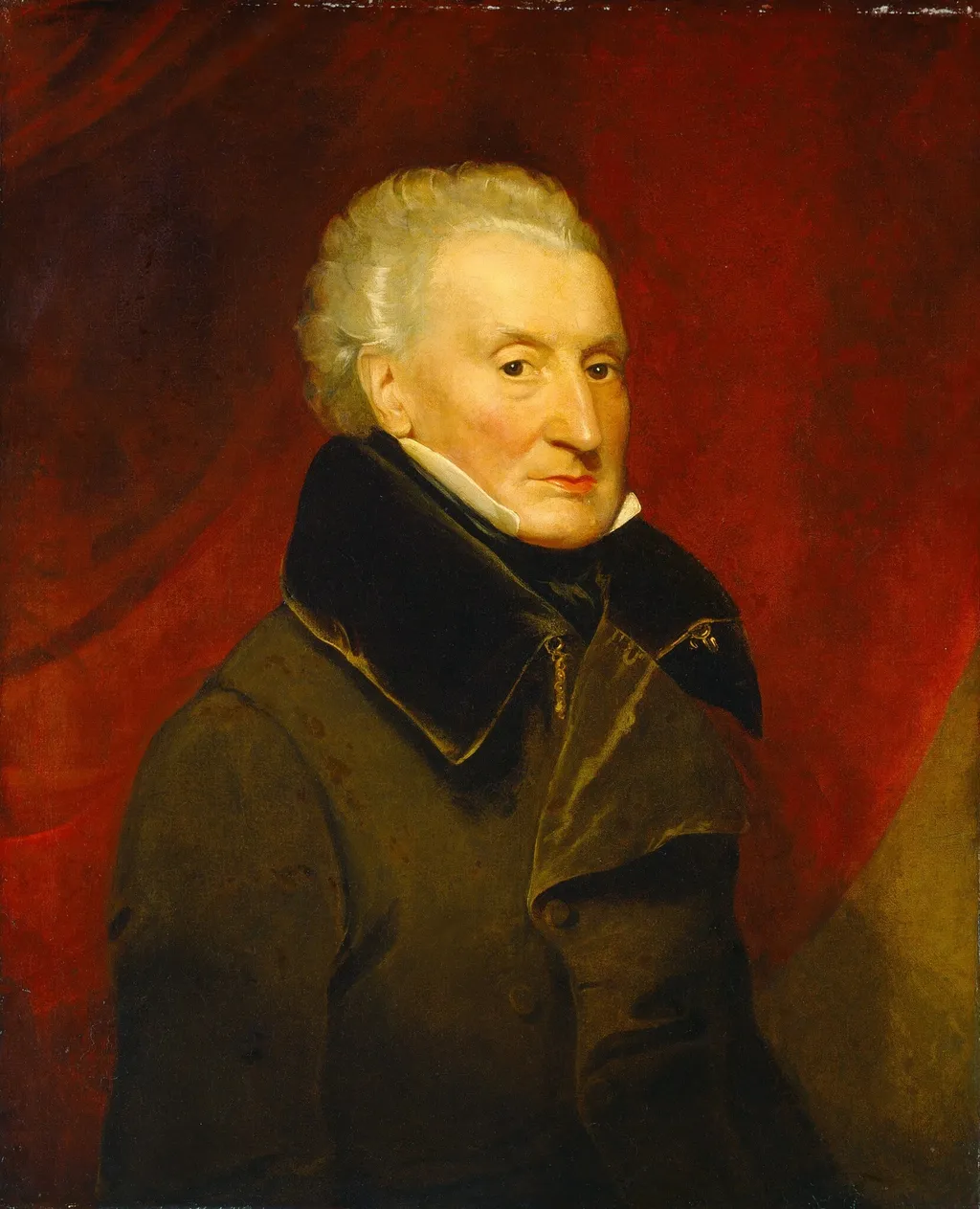
Portrait of a Man is an oil painting. It dates from 1835 and is held in the collection of the National Gallery of Art.
About this work
Technique & Style
The sitter’s features are rendered with smooth, blended brushwork, while the costume and background receive more abbreviated, linear treatment.
The portrait employs oil paint on a prepared canvas support, a standard medium for American portraiture in the early nineteenth century. The handling is fluid yet precise, with careful attention to facial modeling and subtle transitions in tone. The sitter’s features are rendered with smooth, blended brushwork, while the costume and background receive more abbreviated, linear treatment.
The composition is tightly framed, focusing attention on the subject’s head and shoulders. The painting’s scale, approximately 76.9 cm in height and 63.2 cm in width, reflects the intimate, bust-length format typical of early American portraiture. Stylistically, the work aligns with early Realist tendencies, emphasizing naturalistic representation over idealization.
History & Provenance
Portrait of a Man was created in 1835, executed in oil on canvas. The documented ownership chain begins with Augustus W. Oberwalder (also referred to as Augustus de Forest) in New York, followed by Charles X. Harris, also based in New York. On 5 June 1920, the painting was purchased by Thomas B. Clarke (1848–1931) of New York, after which it passed to his estate.
The work was then sold on 29 January 1936 as part of the Clarke collection through the New York dealers M. Knoedler & Co. to The A. W. Mellon Educational and Charitable Trust in Pittsburgh. In 1942, the trust transferred the painting to the National Gallery of Art as a gift, where it is recorded under accession number 1942.8.8 within the Andrew W. Mellon collection.
The painting is held by the National Gallery of Art in Washington, D.C., as part of the Andrew W. Mellon Collection, with the inventory number 1942.8.8. Its documented provenance traces from Augustus W. Oberwalder (also known as Augustus de Forest) in New York to Charles X. Harris, also in New York. It was purchased on 5 June 1920 by Thomas B. Clarke (1848–1931) of New York, and subsequently entered his estate.
On 29 January 1936 the work was sold as part of the Clarke collection through M. Knoedler & Co. of New York to The A. W. Mellon Educational and Charitable Trust in Pittsburgh. The painting was then gifted to the National Gallery of Art in 1942. No exhibition history beyond this provenance chain is recorded in the available sources.
Overview
This oil on canvas, titled "Portrait of a Man," presents a solitary male figure seated within a simple interior. Dressed in traditional clothing, the subject is rendered with a muted color palette that imbues the painting with a quiet, contemplative atmosphere. The man's serious demeanor and lack of outward expression invite viewers to consider his inner thoughts and the psychological depth conveyed through his gaze.
Subject & Meaning
The sitter in "Portrait of a Man" projects a profound sense of introspection. His unsmiling face and direct, yet reserved, gaze suggest a moment of deep thought rather than engagement with the viewer. The austere setting of the room reinforces the man's isolation, drawing focus to his pensive mood.
This portrayal encourages an exploration of the individual's internal state, emphasizing a quiet dignity and a sense of quietude.
Artist & collection

 Portrait of a Gentleman
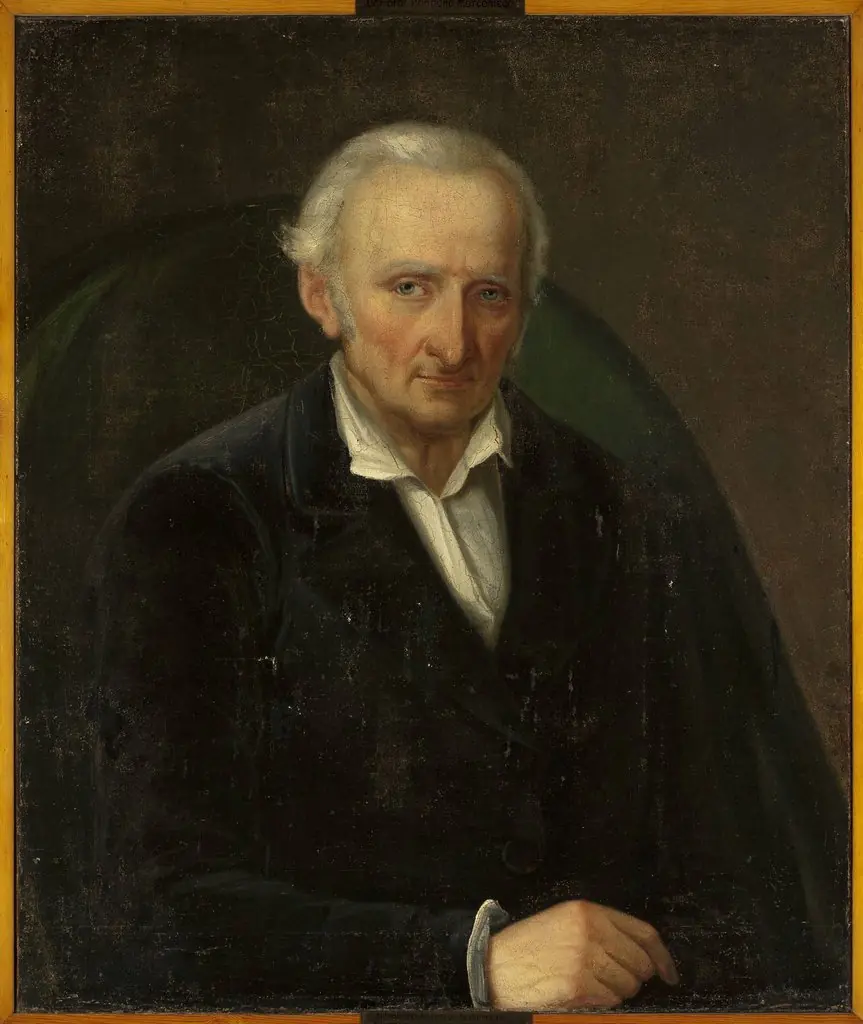 Self-portrait
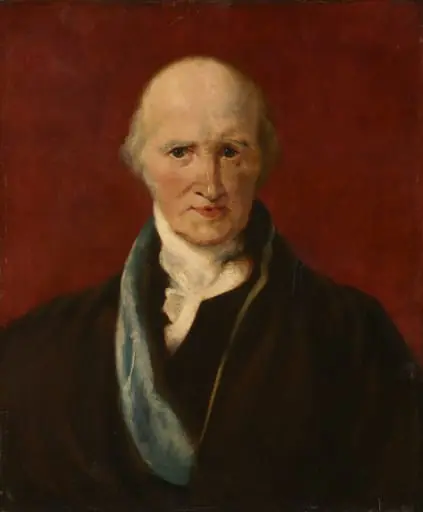 Portrait of Benjamin West
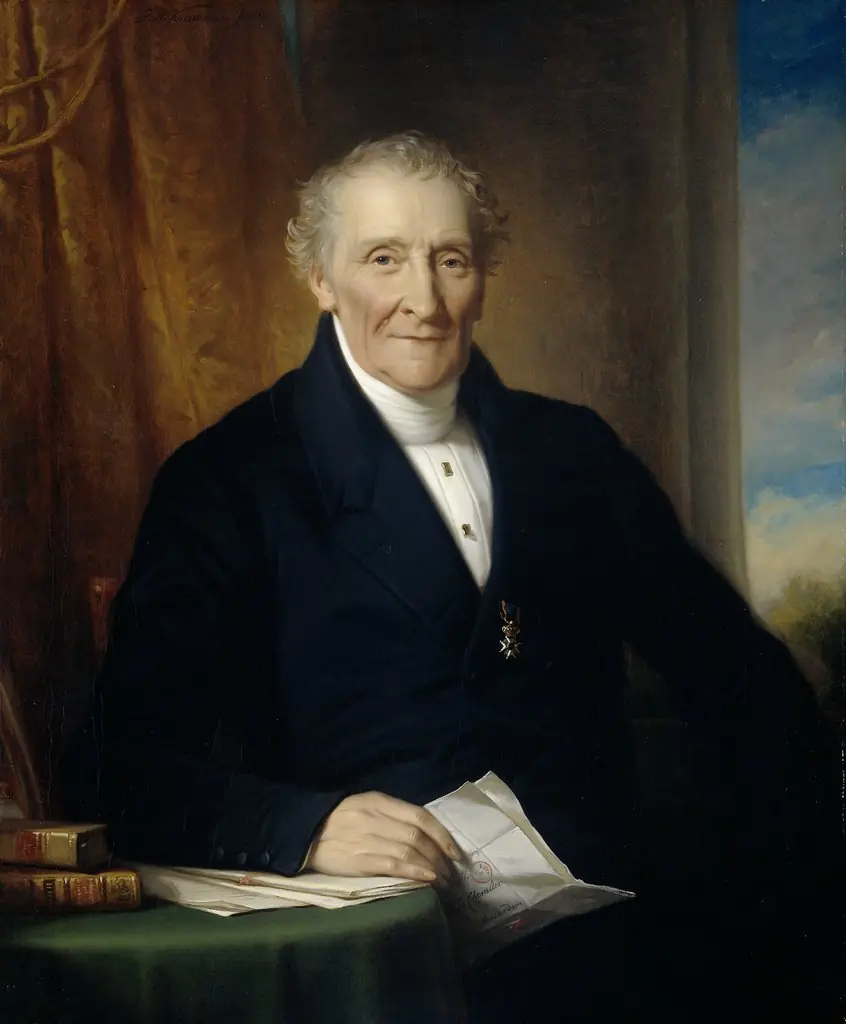 Portrait of Rodolphe le Chevalier, Merchant in Amsterdam and one of three Founders of the Holland Iron Railroad Company
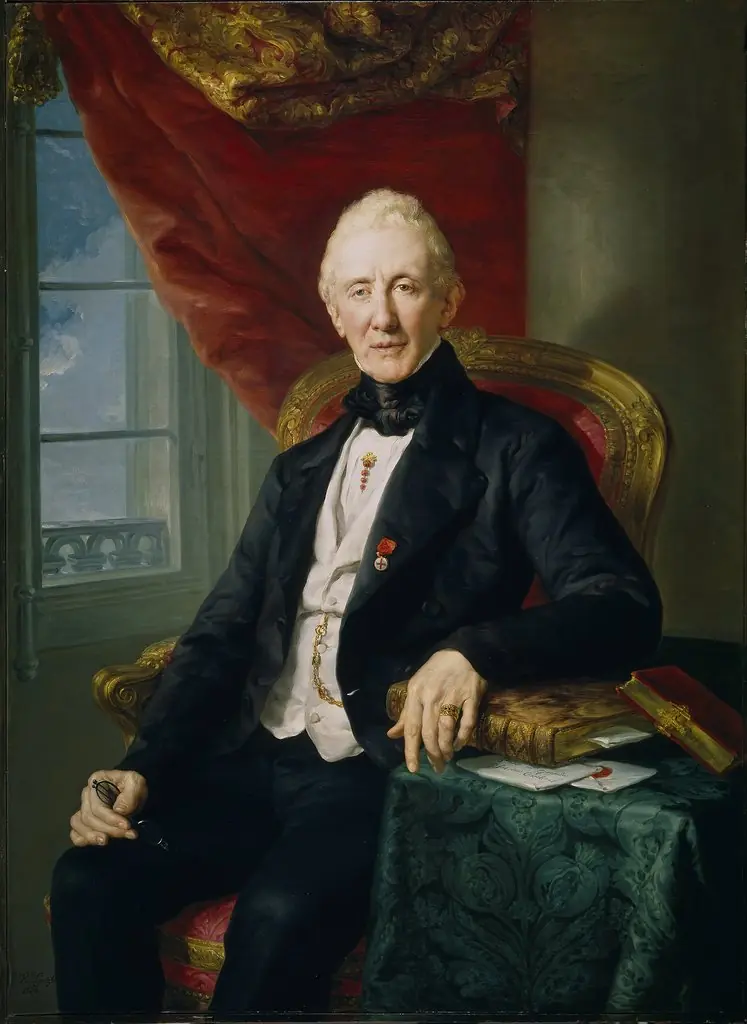 José Gutiérrez de los Ríos
 Self-portrait
 Portrait of Johann Wolfgang Goethe
 Portrait of Arthur Wellesley, Duke of Wellington (1769-1852)
 Portrait of a Gentleman
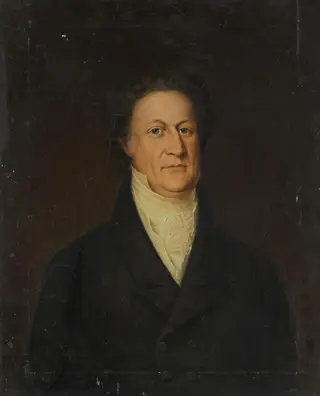 Portrait of Walter Petersen
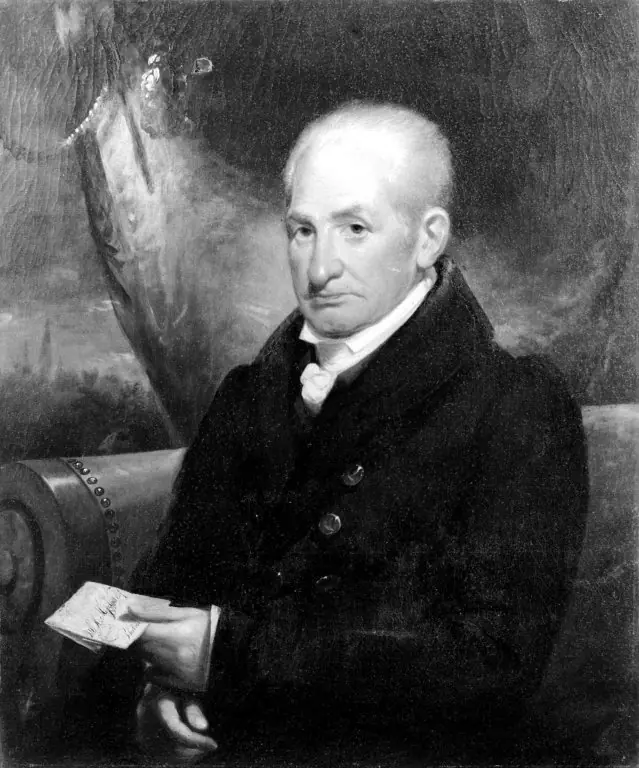 Matthew Huizinga Messchert
- Mr. Forbes