Artwork
Assumption of the Virgin
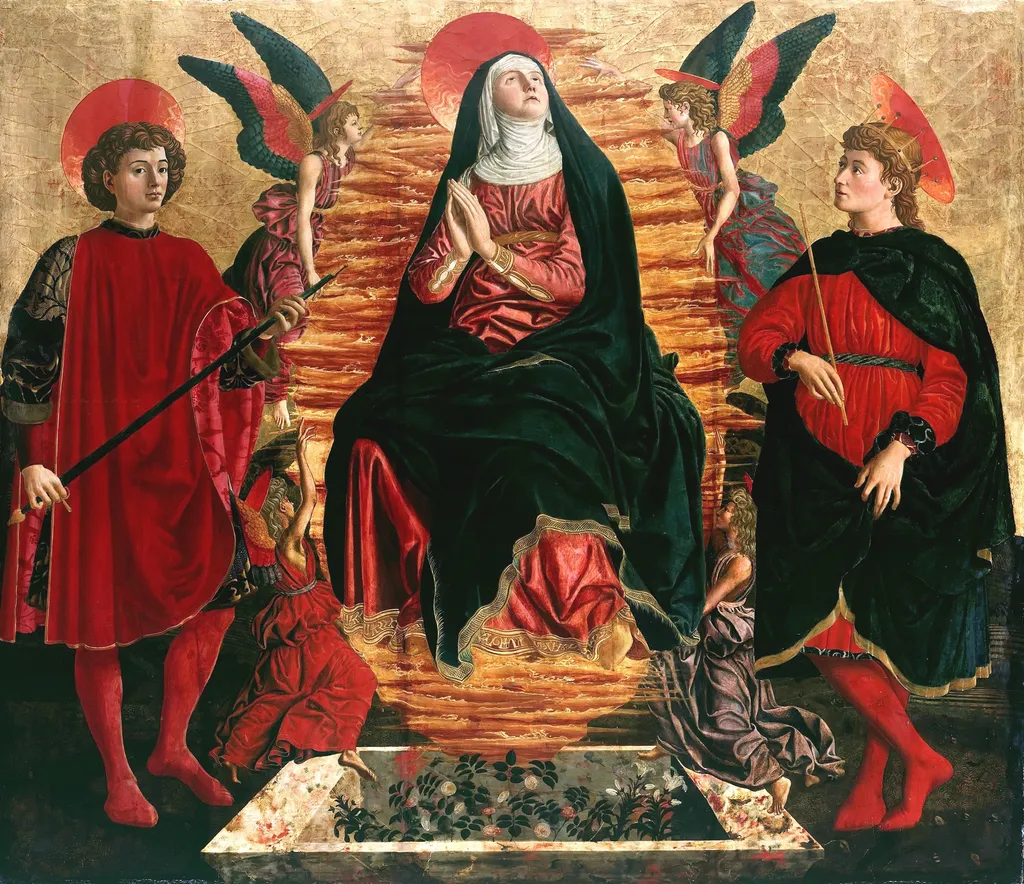
Assumption of the Virgin is a paint painting by the Early Renaissance artist Andrea del Castagno. It dates from 1449 and is held in the collection of the Gemäldegalerie Berlin.
About this work
Subject & Meaning
The painting depicts the Assumption of the Virgin Mary, who is shown ascending from a perspective-rendered sepulchre while enveloped in a voluminous blue cloak.
The painting depicts the Assumption of the Virgin Mary, who is shown ascending from a perspective-rendered sepulchre while enveloped in a voluminous blue cloak. She is carried upward within a brilliant mandorla of luminous clouds by four angels, her hands joined in prayer as she gazes heavenward. The tomb contains roses, a flower traditionally associated with the Virgin.
Flanking the central scene are Saint Minias of Florence, holding a crozier and crown, and Saint Julian the Hospitaller, depicted with a sword. These two saints, dressed in expensive contemporary damask fabrics, stand with a static, abstract presence that contrasts with the dynamic, realistic posture of the Virgin. The composition utilizes a gold leaf background and chiaroscuro modeling to emphasize the spiritual elevation of the subject.
Technique & Style
Executed in 1449–1450, the work is a tempera and gold painting on a poplar panel measuring 150.7 cm in height and 150 cm in width.
The composition emphasizes volumetric drapery and strong chiaroscuro, particularly in the Virgin’s wide blue mantle, which is lifted by four angels within a luminous mandorla. Her posture is naturalistic, with outstretched arms and upward gaze, while the flanking saints, Minias and Julian, are rendered in more static, stylized poses. The sepulcher below is depicted in perspective, containing roses associated with the Virgin, and the background is gilded in gold leaf.
The handling combines sharply observed figure modeling with refined gold detailing, especially in the red-tinged nimbus clouds, which appear as veiled marble-like surfaces.
History & Provenance
The Assumption of the Virgin was commissioned by Leonardo di Francesco di Nardo Falladanzi, rector of the church of San Miniato tra le Torri in Florence, as recorded in an inscription cited by Filippo Baldinucci dating to 20 November 1449. Payment of 104 lire to "maestro Andrea, pintore" was noted by Falladanzi in April 1450, confirming the work’s completion and delivery. The painting was created in 1449–1450 and executed in tempera and gold on poplar panel.
Following the demolition of San Miniato tra le Torri around 1888 during the Mercato Vecchio redevelopment, the altarpiece entered the collection of the Gemäldegalerie, Berlin, having previously been part of the dispersed heritage of the church. It entered the museum’s holdings as part of the Solly Collection.
The painting is held in the Gemäldegalerie, Berlin, accessioned as part of the Solly Collection. It was originally commissioned for the high altar of the church of San Miniato tra le torri, Florence, where it remained until the church’s demolition around 1888.
It has not been recorded in any major loan exhibitions since its transfer to Berlin.
Context
Executed around 1449–1450, Andrea del Castagno's Assumption of the Virgin stands as a significant example of early Renaissance religious art. The work is noted for its innovative depiction of the Virgin's free, fluid gestural language, which contrasts sharply with the more static and abstract presence of the flanking saints, St. Julian and St. Minias. Contemporary scholarship highlights the painting's dramatic use of chiaroscuro on the Virgin's voluminous blue mantle and the calculated poses of the four angels, features that Giorgio Vasari later admired for creating a convincing sense of aerial suspension.
The composition integrates a realistic, perspective-rendered sepulchre with a traditional gold-leaf background, blending naturalistic observation with sacred iconography. This synthesis of dynamic movement and formal elegance marks the piece as a distinctive contribution to mid-15th-century Florentine painting.
Legacy
The painting's later trajectory was shaped by the demolition of its original setting. The church of San Miniato tra le Torri in Florence was razed around 1888 during the redevelopment of the old market district, after which the altarpiece's heritage was dispersed and the work entered Berlin's Gemäldegalerie. Its earlier critical reception is reflected in Giorgio Vasari's noted admiration for the carefully calculated poses of the angels carrying the Virgin, designed to convey the sensation of hovering in the air, a feature singled out as a hallmark of Andrea del Castagno's innovation within mid-Quattrocento Florentine painting.
Overview
Andrea del Castagno’s Assumption of the Virgin, painted circa 1449–1450, is an early Renaissance work executed in oil on panel. The composition presents the Virgin seated on a throne-like chair, encircled by four angels, against a backdrop of a rocky precipice and a luminous golden sky. The painting is part of the collection of the Gemäldegalerie in Berlin.
Own this work as a print
Artist & collection

Artist
Andrea del Castagno had a quick, sharp career in 15th-century Florence. He wasn’t the most famous painter of his time, but he stood out for his bold, almost sculptural figures that looked ready to step off the wall. His…


- The Assumption of the Virgin
 The Assumption of the Virgin
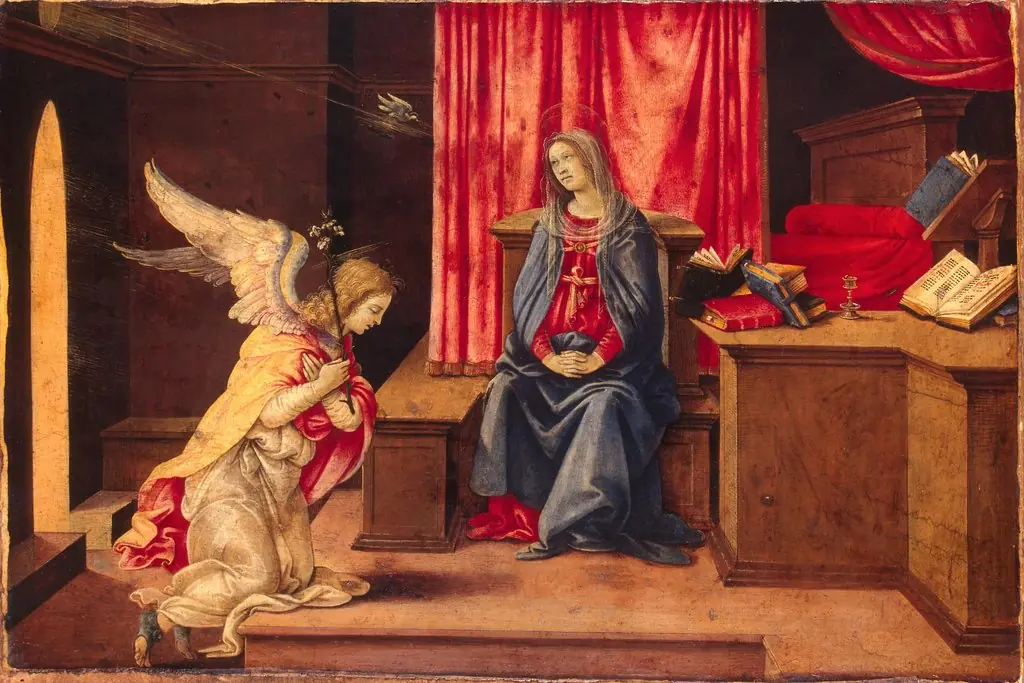 The Annunciation
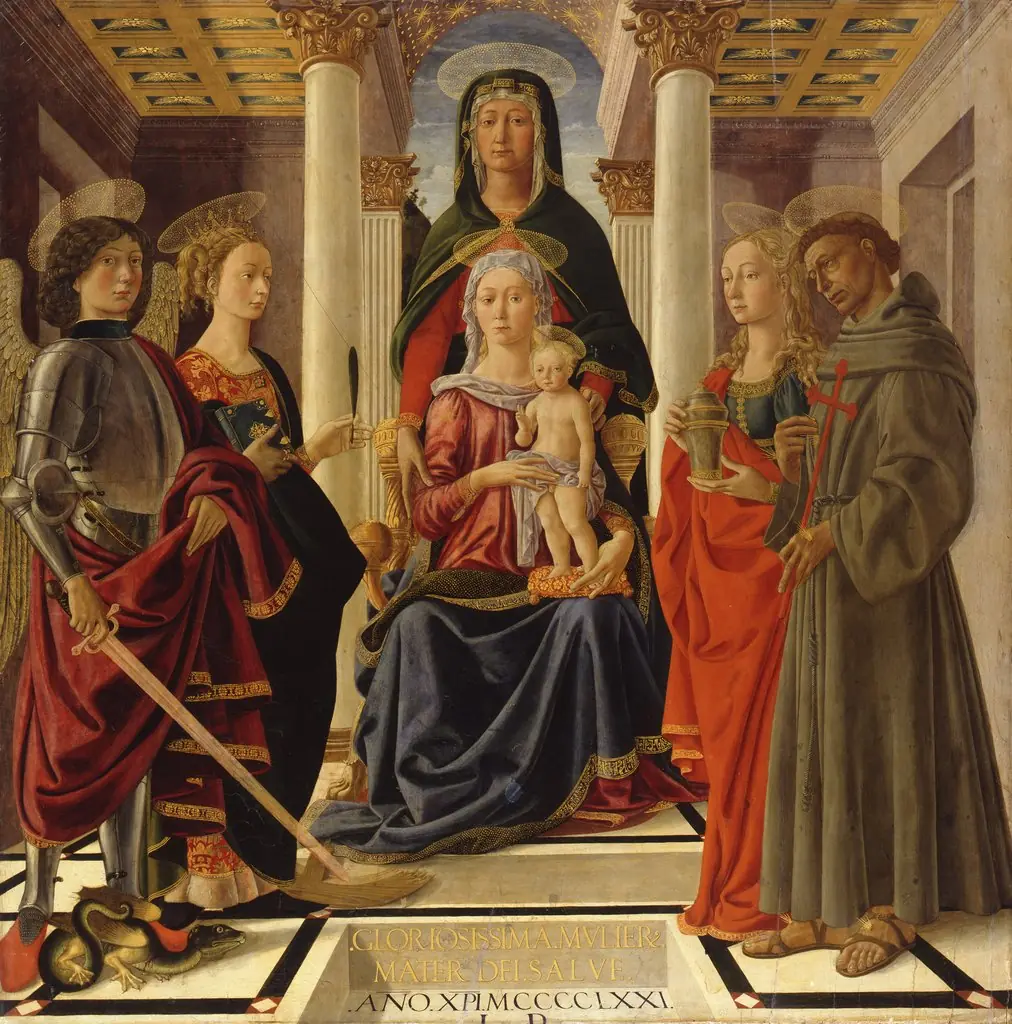 St. Anne Selbdritt with Archangel Michael and Saints
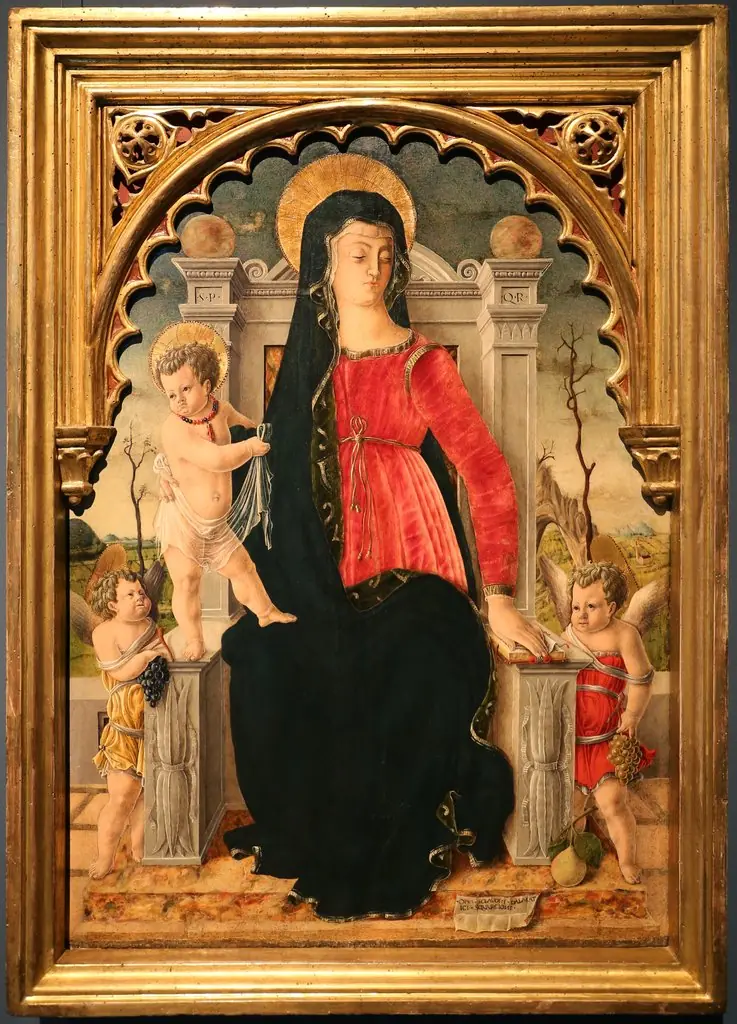 Virgin and Child enthroned with Angels
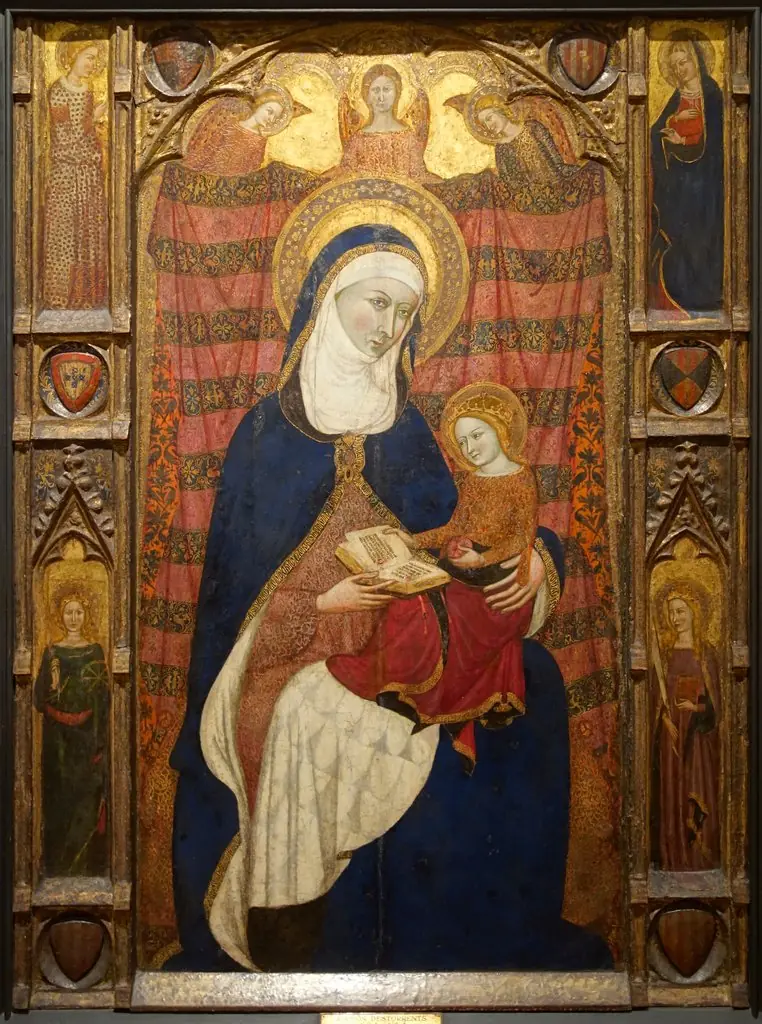 Retaule de Santa Anna i la Mare de Déu
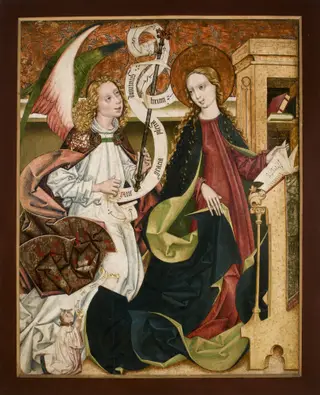 The Annunciation from the Church in Cięcina
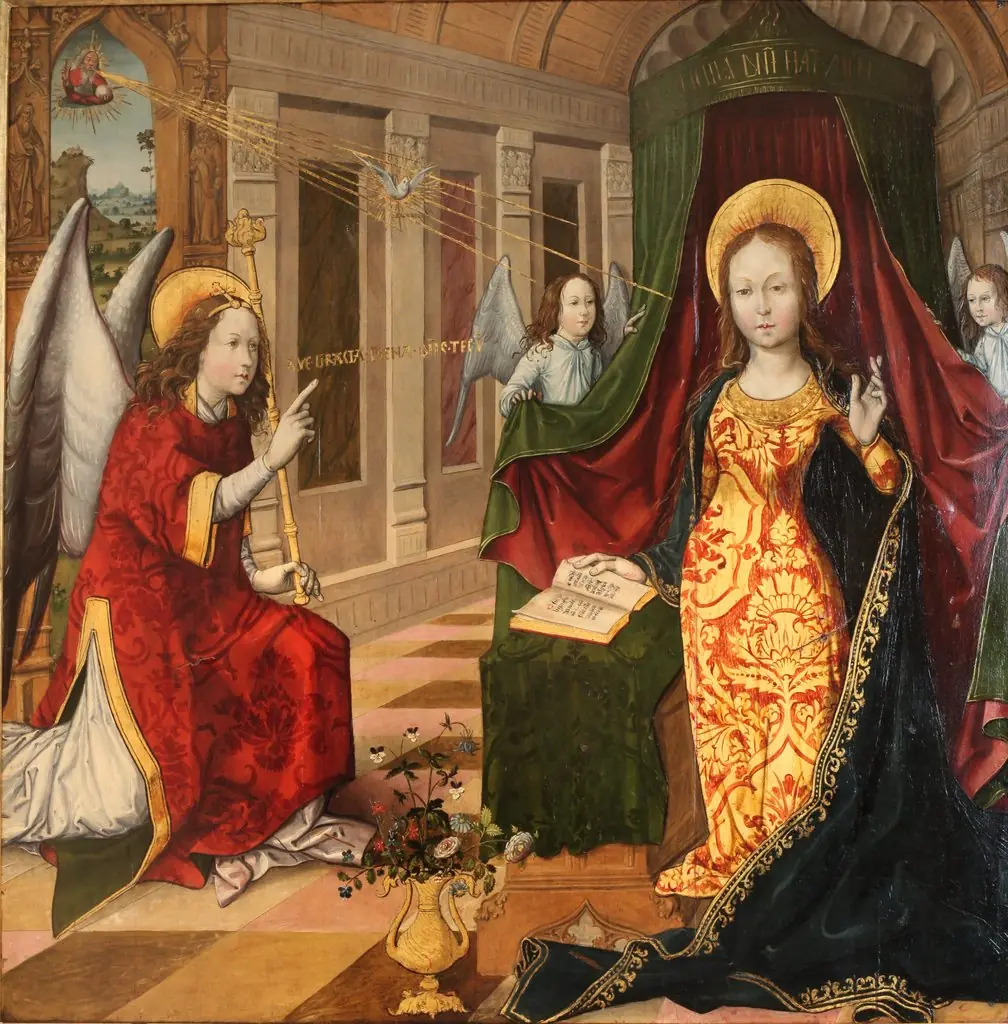 L'Annonciation
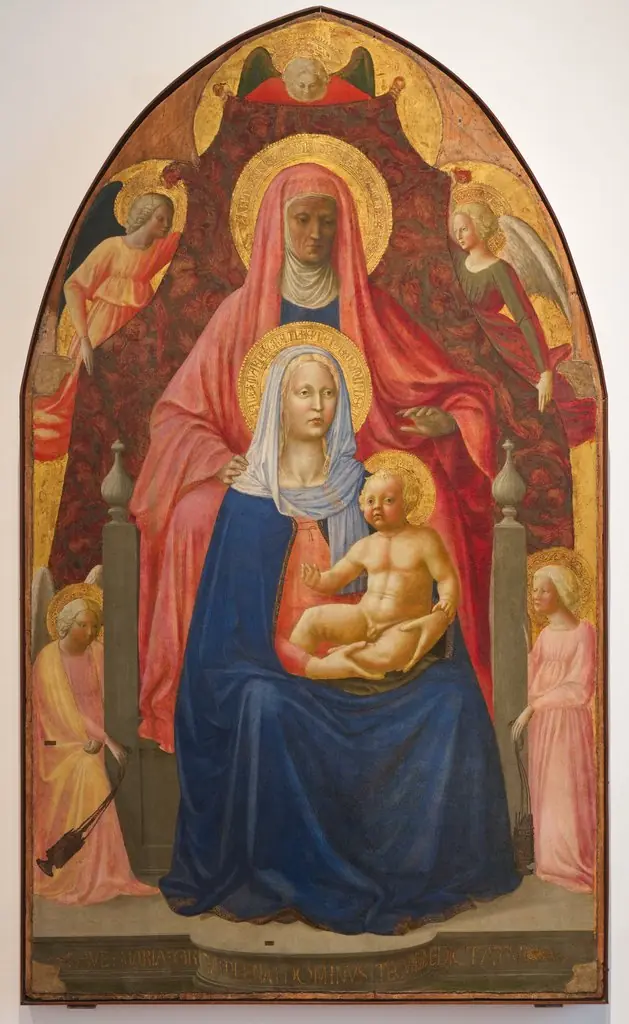 Virgin and Child with Saint Anne
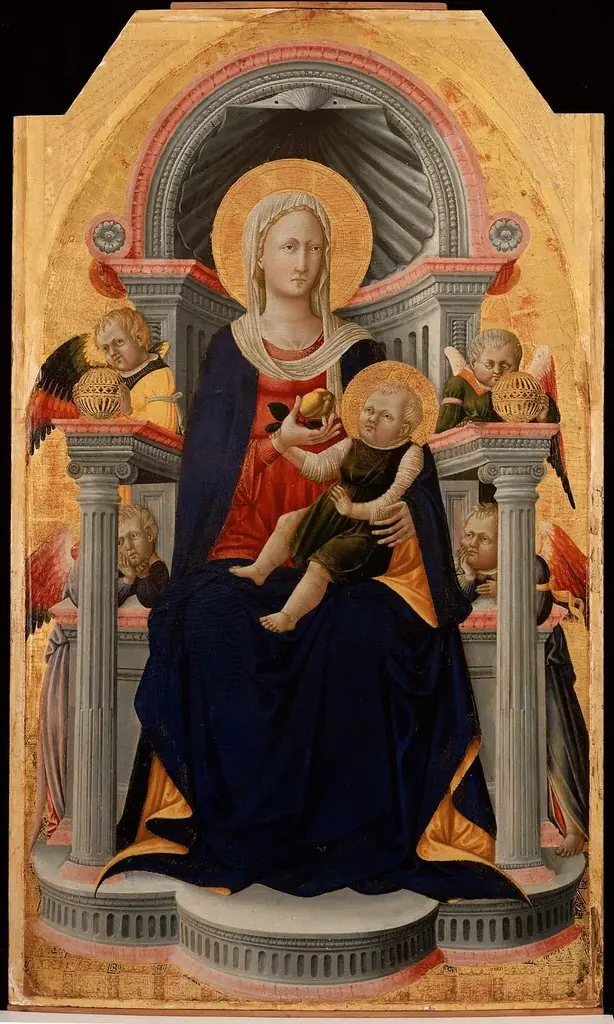 Virgin and Child Enthroned with Four Angels
 The Assumption of the Virgin with Saints Jerome and Francis
 Annunciation