Artwork
Portrait of a Man
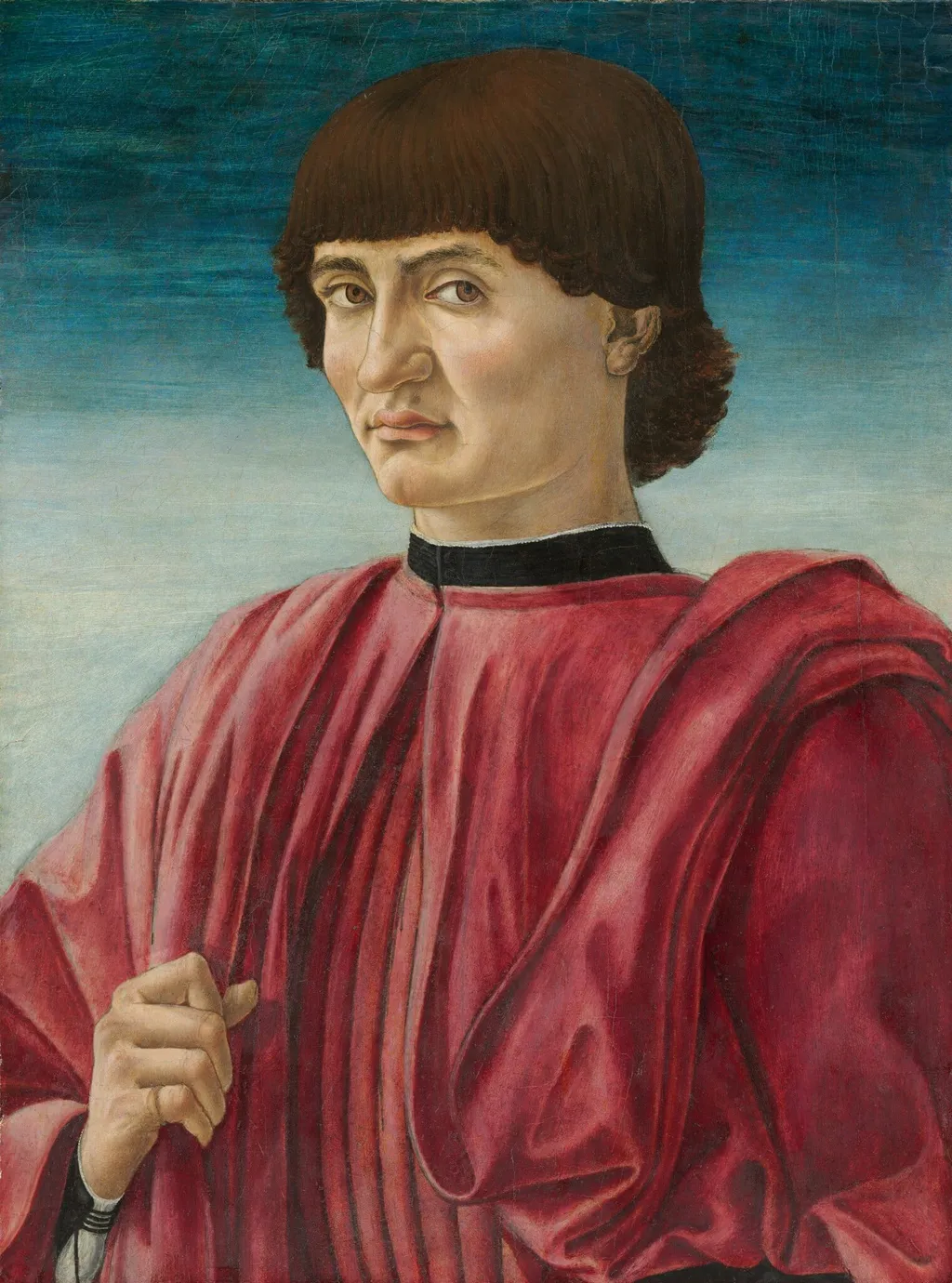
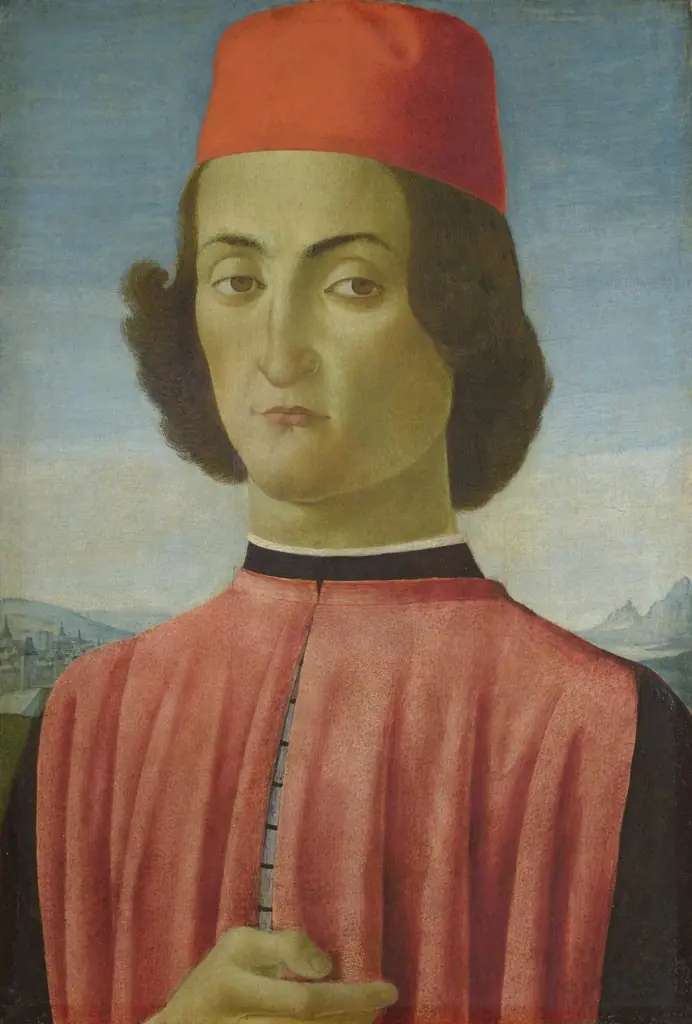
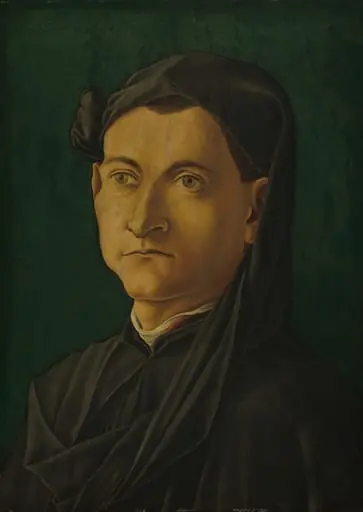
Portrait of a Man is a tempera painting by the Early Renaissance artist Andrea del Castagno. It dates from 1450 and is held in the collection of the National Gallery of Art.
About this work
Technique & Style
The three-quarter pose, rare in mid-fifteenth-century Italian portraiture, aligns with Netherlandish practice yet remains an isolated Florentine precedent.
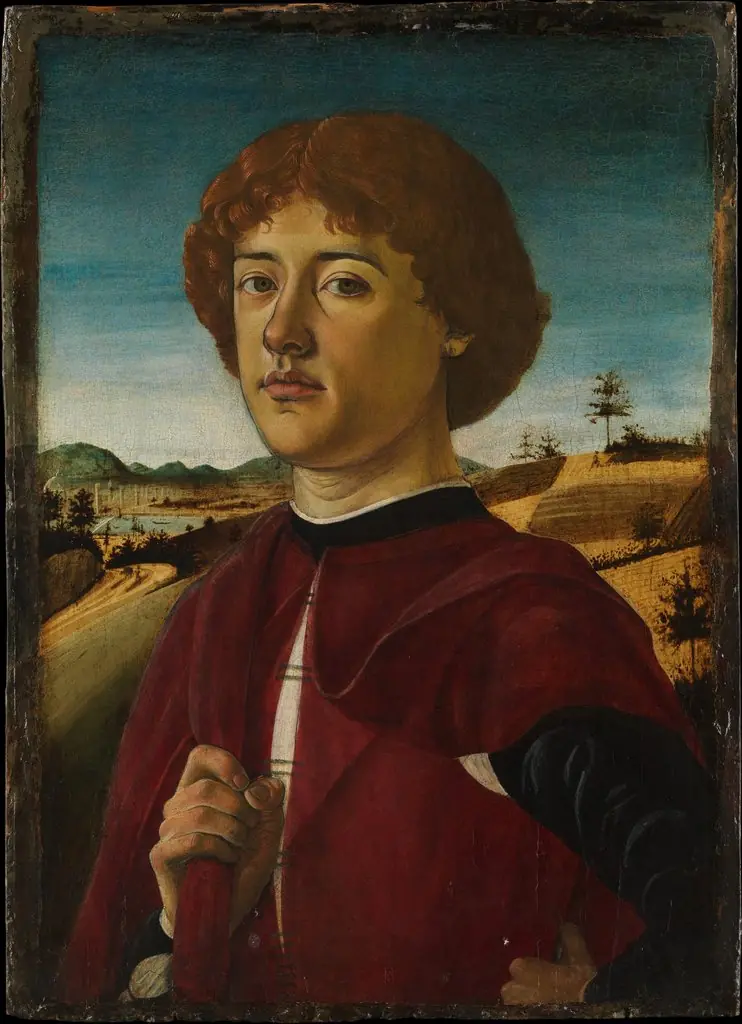
Executed around 1450–1457, the portrait is painted in egg tempera on a poplar panel support, measuring 54.2 × 40.4 cm. The handling emphasizes incisive light that plastically models the sitter's physiognomy, hair, and rich costume, while a horizon-lit sky recedes behind. A sharply drawn contour defines the facial features and silhouette, aligning the work with Florentine draftsmanship. The three-quarter pose, rare in mid-fifteenth-century Italian portraiture, aligns with Netherlandish practice yet remains an isolated Florentine precedent.
The sitter, rendered with individualized maturity and direct gaze, is arrayed in elaborate attire whose varied textures, lustrous flesh, soft fabric, dark hair, are meticulously described.
History & Provenance
Created circa 1450–1457 by Andrea del Castagno, this tempera-on-panel portrait likely originated within the Del Nero family collection in Florence. By the 18th century, the work passed through inheritance to the Torrigiani family, residing at the Palazzo Torrigiani-Del Nero through the 19th century. It was acquired by dealer Charles Fairfax Murray, who facilitated its entry into the Parisian art market.
Rodolphe Kann purchased the piece in 1896, and it was subsequently sold in 1907 to J. Pierpont Morgan in New York. Following Morgan's death, his son, J. Pierpont Morgan Jr., consigned the painting to M. Knoedler & Co. in 1935. Andrew W. Mellon acquired the work in February 1935, deeding it to the A.W. Mellon Educational and Charitable Trust in May 1937 before gifting it to the National Gallery of Art later that year.
The Portrait of a Man is currently held in the National Gallery of Art in Washington, D.C., specifically within Gallery 06 as part of the Andrew W. Mellon Collection. The panel was featured in the exhibition The Renaissance Portrait: From Donatello to Bellini, and the image gained wide circulation as the subject of the Italian 10,000 lira banknote issued between 1976 and 1984.
Context
Scholars generally attribute this work to the final phase of Andrea del Castagno's career, dating it between 1450 and 1457. Art historically, the painting is significant as the earliest known Italian example of a three-quarter view portrait, a compositional choice that diverged from the profile views typical of contemporary Florentine society, which favored classical imperial effigies. While three-quarter poses were common in Flanders by the 1430s, Castagno's approach combines this innovative perspective with a distinctly Florentine emphasis on rigorous plasticity and sharp contour lines.
The artist achieves a strong physiognomic individuality, using light to meticulously define textures ranging from fabric to skin. The work's prominence in modern times was cemented by its inclusion on the Italian 10,000 lira banknote issued from 1976 to 1984.
Legacy
The portrait's modern reputation is significantly defined by its selection as the primary image for the third series of the 10,000 Italian lira banknote, which circulated from 1976 to 1984. This national usage elevated the work from a specialized museum holding to a widely recognized symbol of Italian Renaissance art. Art historically, the painting is celebrated for introducing the three-quarter view to Italian portraiture, a pose previously common in Flanders but rare in Italy during the mid-15th century.
Scholars identify it as the earliest known Italian example of this compositional approach, marking a departure from the traditional profile views that mimicked classical imperial medals. Its inclusion in major exhibitions, such as 'The Renaissance Portrait: From Donatello to Bellini,' further cements its status as a pivotal work in the development of realist portraiture.
Overview
Andrea del Castagno's Portrait of a Man, created in tempera on panel around 1450
1457, depicts an unidentified individual. This work is currently housed in the National Gallery of Art in Washington, DC. The painting is notable for its direct portrayal of the sitter, reflecting a growing interest in individual representation during the mid-15th century Italian Renaissance.
Subject & Meaning
The painting features a man presented in a direct, frontal pose, engaging the viewer with a serious expression. His attire is modest, drawing attention to his features rather than his status. The artist's decision to focus intently on the individual's face, set against an unadorned background, underscores a developing trend in Renaissance art to explore and emphasize personal identity and presence.
Own this work as a print
Artist & collection

Artist
Andrea del Castagno had a quick, sharp career in 15th-century Florence. He wasn’t the most famous painter of his time, but he stood out for his bold, almost sculptural figures that looked ready to step off the wall. His…