Artwork
Virgin and Child with Saint Anne
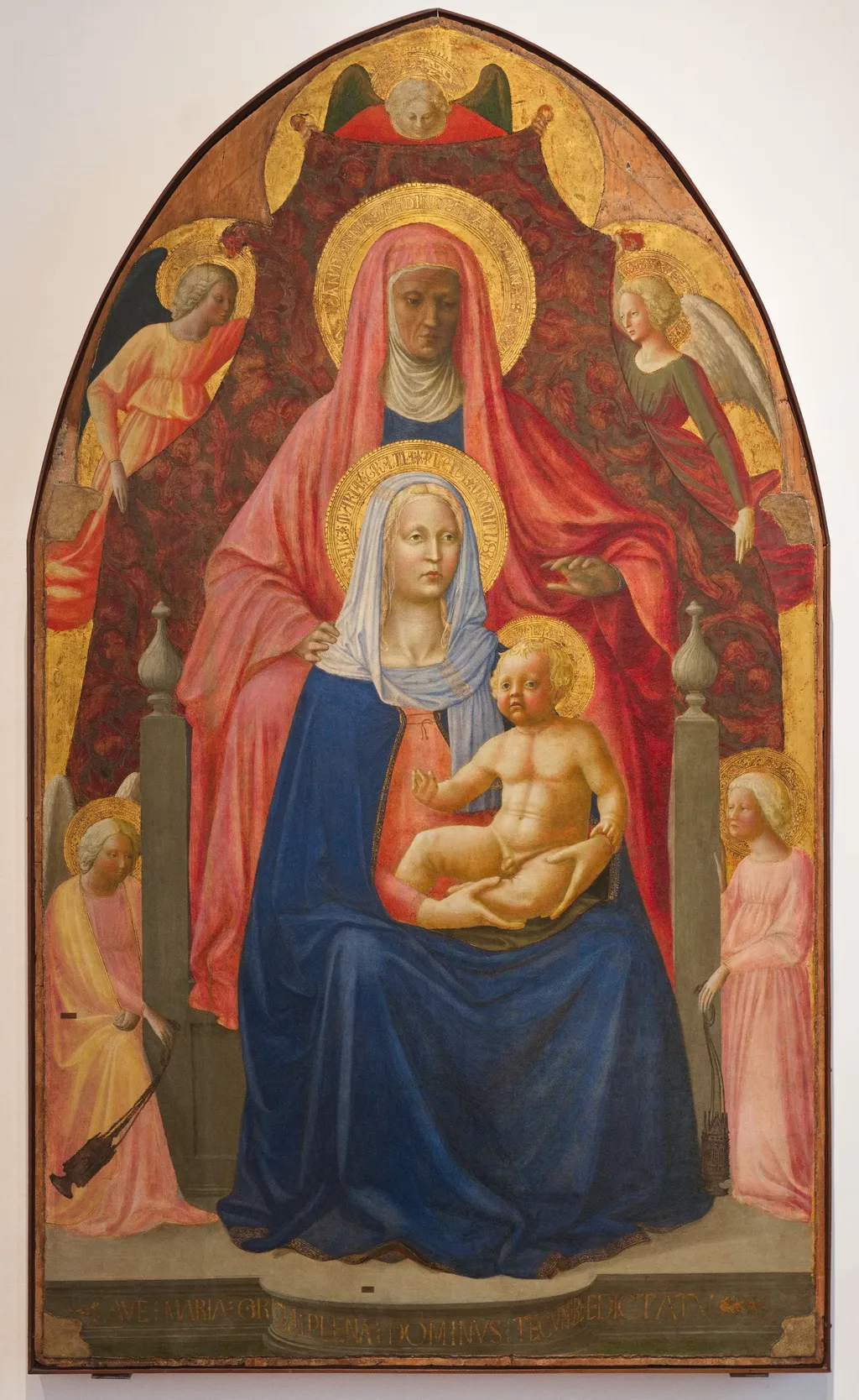
Virgin and Child with Saint Anne is a tempera painting by the High Renaissance artist Masaccio. It dates from 1424 and is held in the collection of the Uffizi Gallery.
About this work
Subject & Meaning
The painting depicts the Virgin Mary seated with the Christ Child on her lap, accompanied by her mother Saint Anne, arranged in a hierarchical composition that emphasizes Anne’s elevated status as both mother and grandmother within a sacred lineage. Known iconographically as a "Sainte Anne trinitaire," the figures are grouped on a draped throne beneath a canopy-like mandorla, with three curtain-holding angels framing the sacred group and two incense-bearing angels below, reflecting a traditional Florentine devotion to Saint Anne that grew after her feast day was established in 1343. Symbolically, the scene underscores the generational continuity of salvation, with Anne’s protective gesture, her hand extended toward the Christ Child, signaling her role as the matriarch of the Holy Family. The inclusion of inscribed aureoles and biblical phrases like the Ave Maria further anchors the image in liturgical and doctrinal meaning, while the innovative use of natural light to model the forms of Mary and the Child shifts visual emphasis away from hierarchical convention toward a more humanized, spatially coherent representation of the sacred figures.
Technique & Style
Although Saint Anne's form is significantly worn, her outstretched hand suggests an innovative attempt at spatial depth potentially conceived by Masaccio.
Executed in tempera on a wooden panel measuring 175 by 103 centimeters, this work displays a stylistic dichotomy resulting from the collaboration between Masaccio and Masolino da Panicale. Masaccio's contribution, evident in the Virgin and Child, utilizes strong chiaroscuro and natural light to create massive, sculptural forms with realistic textures, marking a departure from Gothic conventions toward Renaissance solidity. The Christ figure is rendered as a robust, realistic child rather than an ethereal cherub, while the Virgin's drapery reveals an underlying knowledge of anatomical structure.
In contrast, the surrounding angels and the figure of Saint Anne reflect Masolino's more delicate, Gothic approach, characterized by pale coloring and conventional linear folds that flatten the volume. Although Saint Anne's form is significantly worn, her outstretched hand suggests an innovative attempt at spatial depth potentially conceived by Masaccio. The composition employs a damask cloth backdrop instead of a traditional gold ground to project the sacred figures forward, while hierarchical scaling reduces the size of the ancillary angels.
History & Provenance
Commissioned for the church of Sant'Ambrogio in Florence, the panel was likely funded by Nofri d'Agnolo Buonamici, a drapery weaver who held patronage of the Saint Anne altar there. Giorgio Vasari recorded seeing the work in 1568, noting its placement near the chapel door leading to the nuns' parlor. The painting is dated to approximately 1424-1425 and represents an early collaboration between Masaccio and Masolino da Panicale. Around 1813, the artwork entered the collection of the Galleria dell'Accademia before transferring to the Uffizi Gallery in 1919. While Vasari attributed the piece solely to Masaccio, modern scholarship since 1940, initiated by Roberto Longhi, recognizes the distinct hands of both masters within the composition. The *Virgin and Child with Saint Anne* is currently held in the Uffizi Gallery in Florence, Italy. The work was originally commissioned for the church of Sant'Ambrogio in Florence, where it remained until around 1813. At that time, it entered the collection of the Galleria dell'Accademia. It was transferred to its present location, the Uffizi Gallery, in 1919. While Giorgio Vasari documented the painting in the 16th century at its original site, the provided sources do not list specific inventory numbers or a detailed chronological exhibition history beyond these institutional transfers.
Context
Widely recognized as a cornerstone of early Florentine Renaissance art, this panel marks a decisive stylistic break from the Gothic tradition through its introduction of natural light and volumetric solidity. Art historical consensus, solidified by Roberto Longhi in 1940, attributes the work to a collaboration between Masaccio and Masolino da Panicale. Masaccio is credited with the central Virgin and Child, whose realistic modeling and perspectival presence reflect the influence of Donatello, while Masolino likely executed the more conventional, delicate figures of Saint Anne and the surrounding angels.
Scholars note that the work's original iconography, which emphasized Saint Anne's hierarchical status, was visually subverted by Masaccio's innovative lighting, which shifted the focal point to the foreground figures. Originally commissioned for the church of Sant'Ambrogio in Florence, the painting is cited by Giorgio Vasari as an early masterpiece that profoundly influenced the trajectory of Italian painting by treating sacred figures with unprecedented human realism.
Legacy
Masaccio’s Virgin and Child with Saint Anne is credited with pioneering the modeling of figures through natural light and a clear perspectival structure, innovations that became foundational for Italian Renaissance painting. Its compositional solidity and volumetric treatment of the Virgin and Child were repeatedly cited as early evidence of Renaissance naturalism, shaping subsequent Florentine workshops and generations of painters.
By the mid-sixteenth century Giorgio Vasari recognized the panel’s importance, attributing it to Masaccio and noting its original placement in Sant’Ambrogio, Florence. Later scholarship consolidated the view that Masaccio’s hand appears in the principal figures, while Masolino contributed the more Gothicized angels and Saint Anne, a division of labor that became a touchstone in debates on collaborative practice in early Renaissance art.
Own this work as a print
Artist & collection


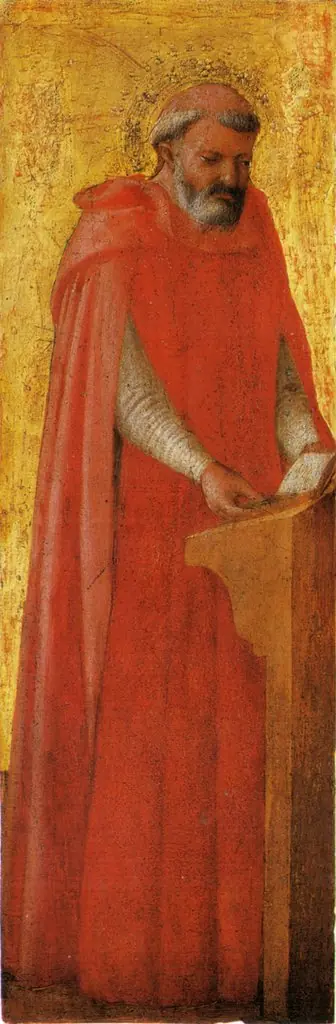
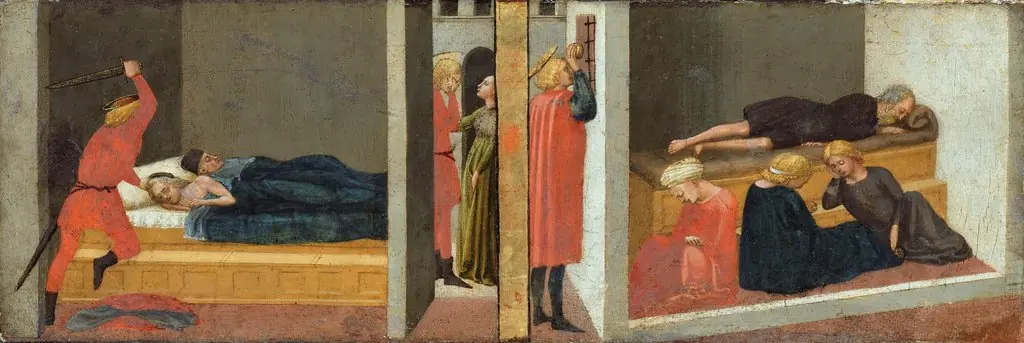
- Madonna of Humility
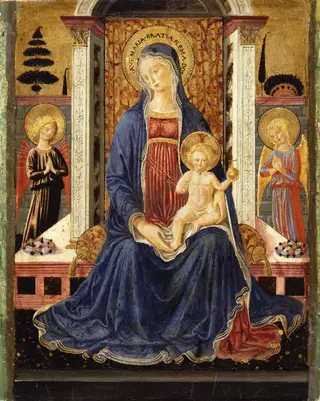 The Virgin and Child enthroned with two angels
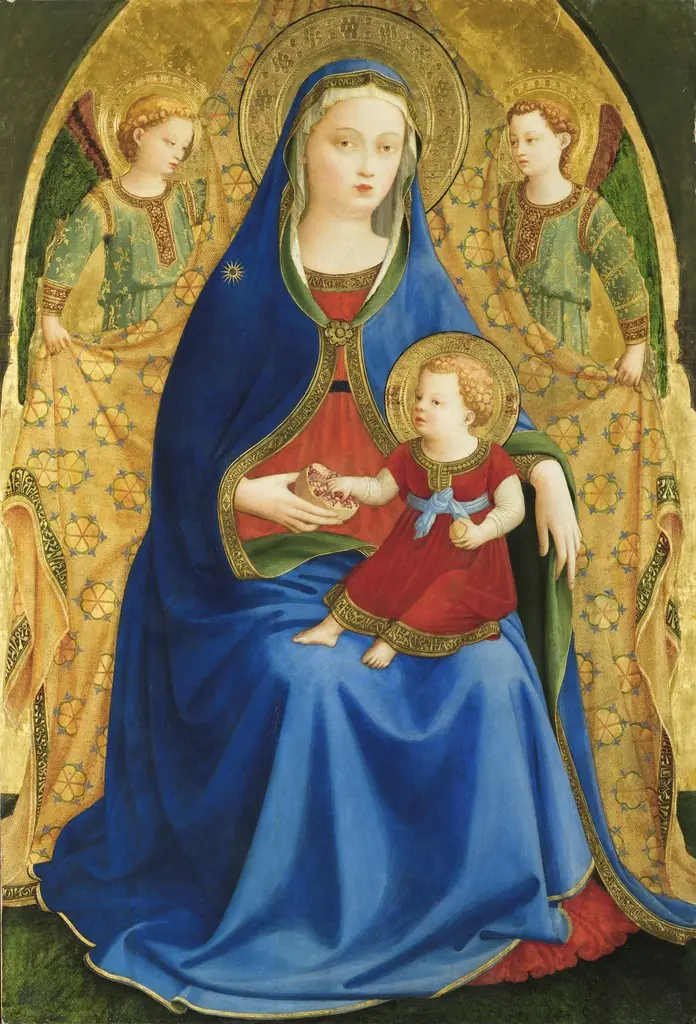 Madonna of the Pomegranate
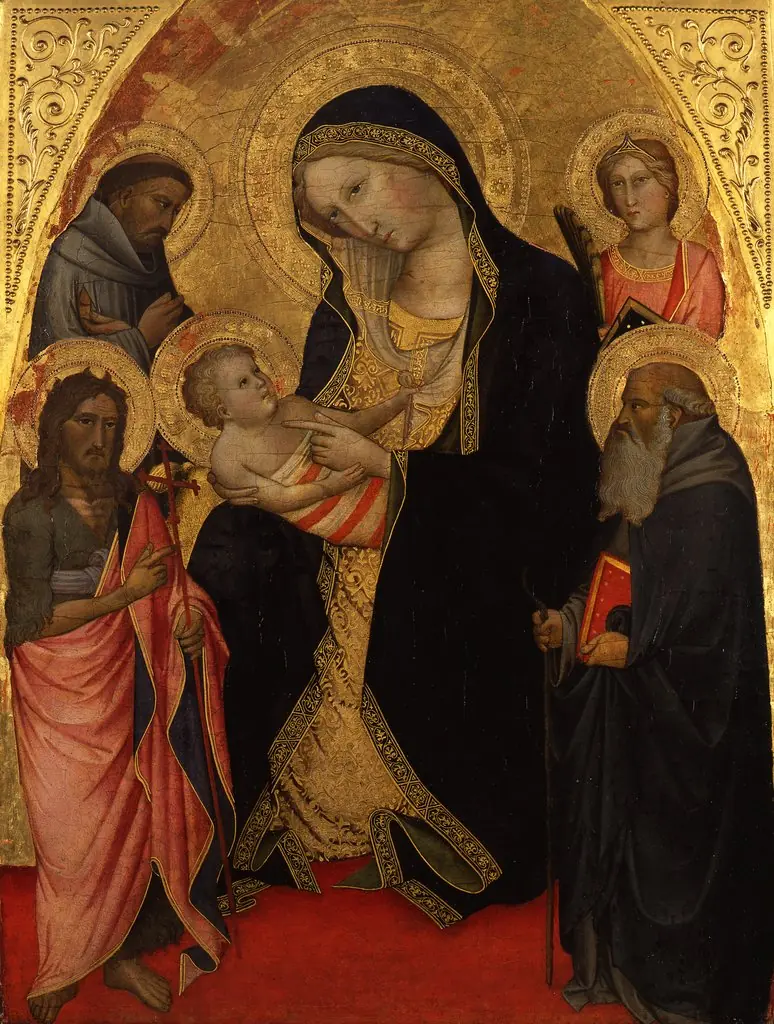 Madonna with the child, St. John the Baptist, St. Francis and St. Anthony and a martyr
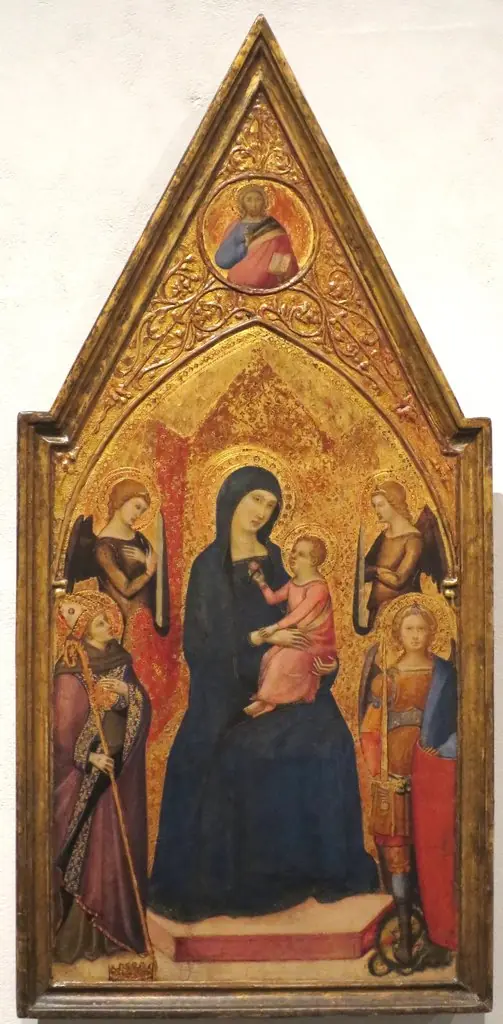 Virgin and Child with Sts. Louis of Toulouse and Michael
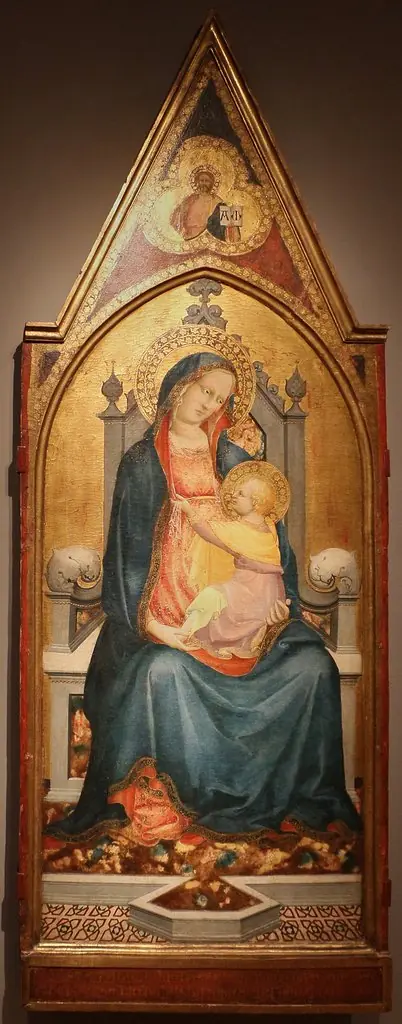 madonna col bambino in trono
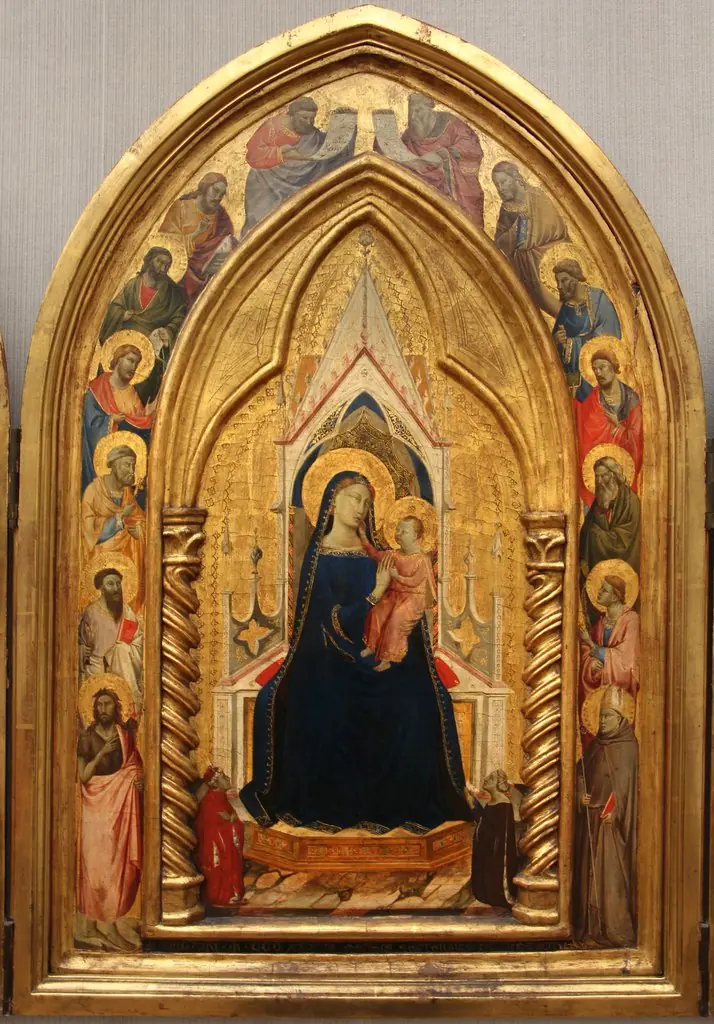 Central panel of the triptych
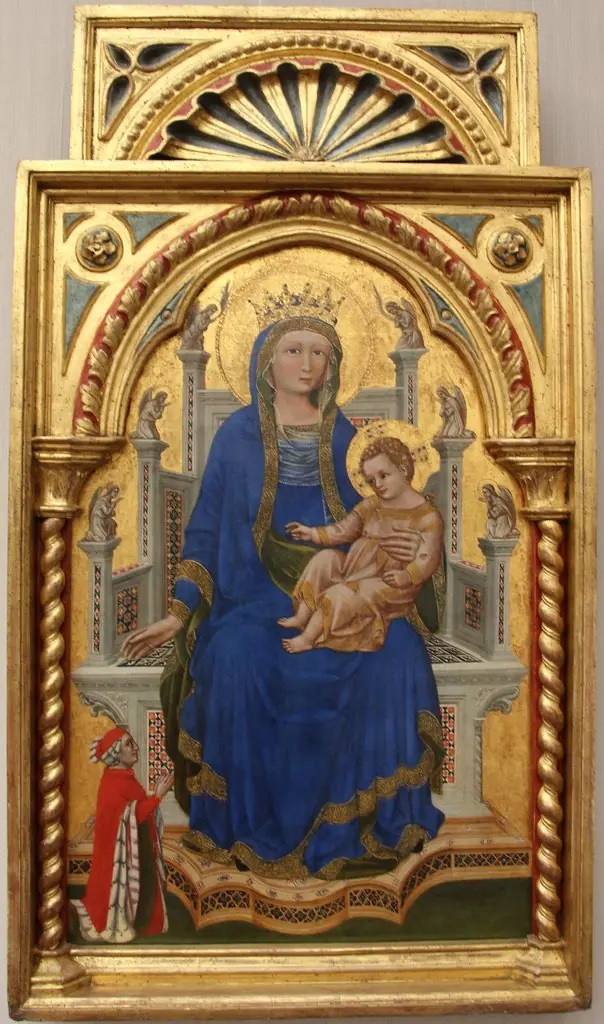 The Virgin and Blessing Child Enthroned with a Donor
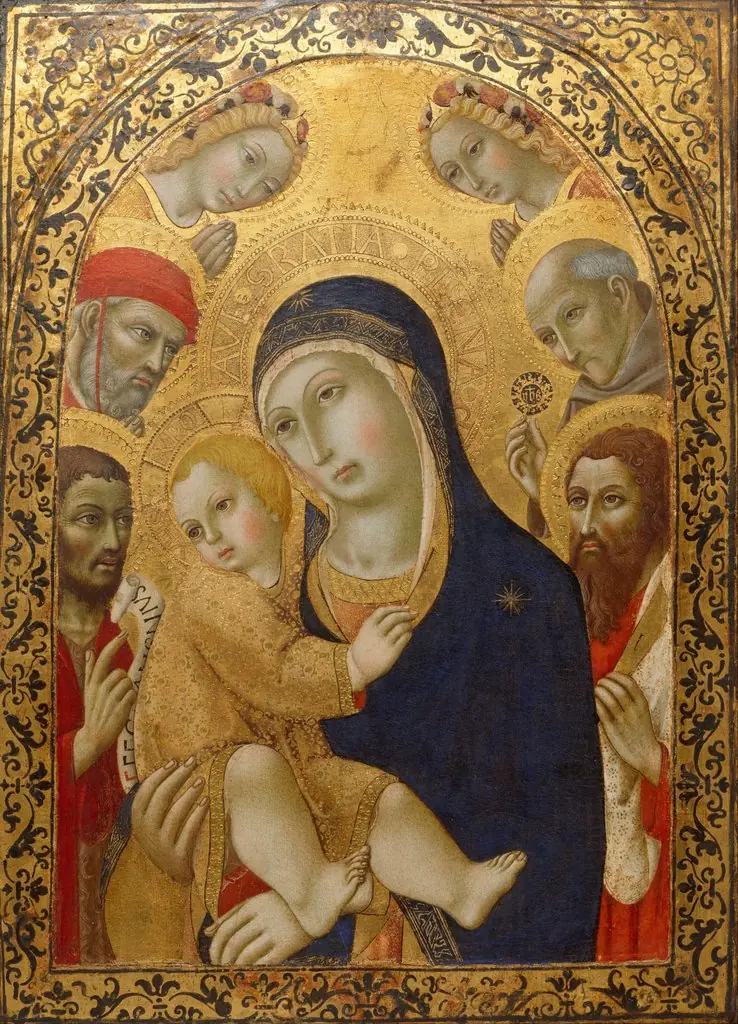 Madonna and Child with Saints Jerome, John the ...
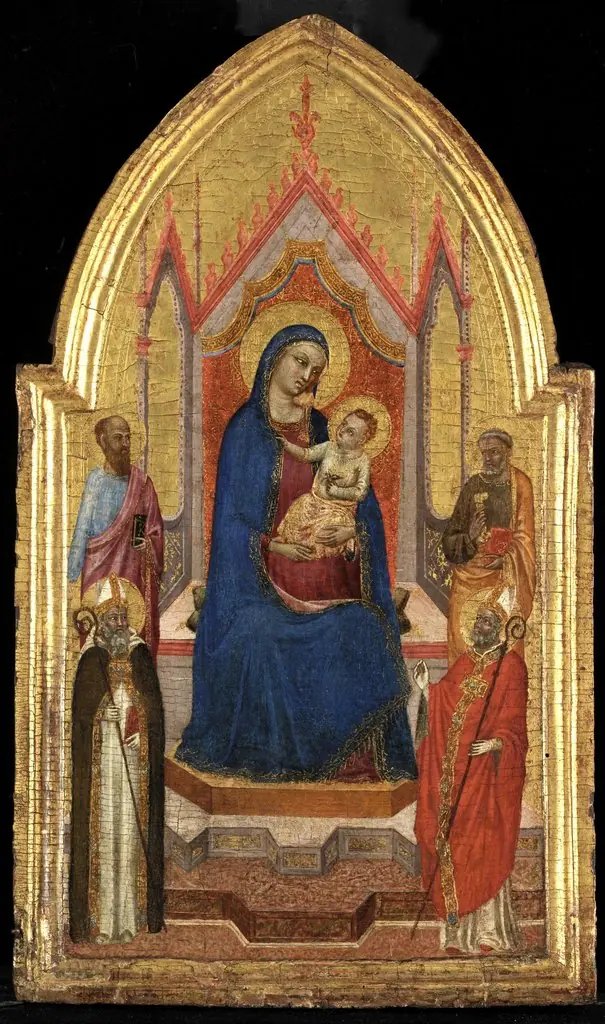 Madonna and Child Enthroned with Four Saints
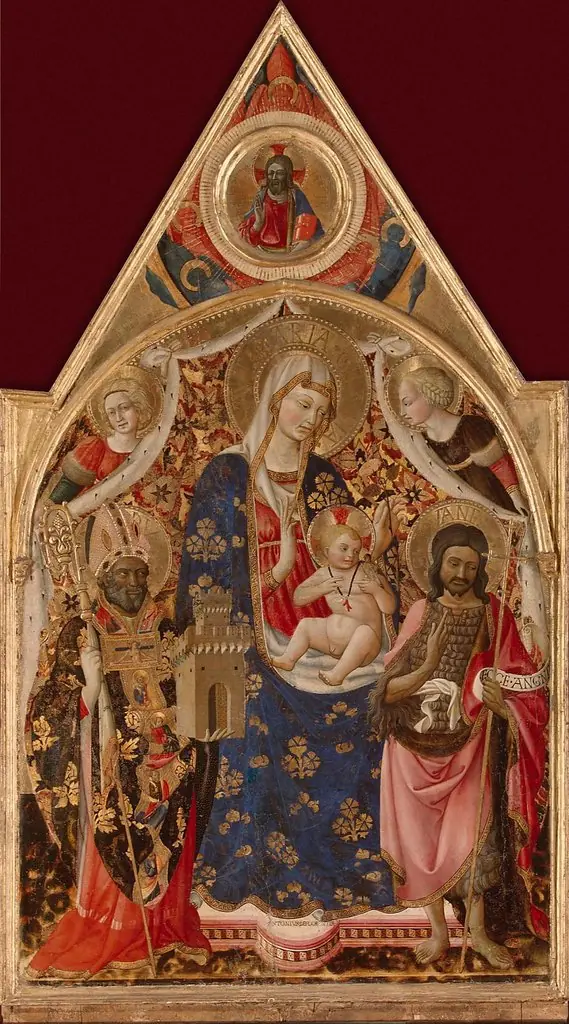 Madonna and Child, with a Bishop, St John The Baptist and Angels
 Virgin and Child with Butterflies