Artwork
Judit with the Head of Holofernes
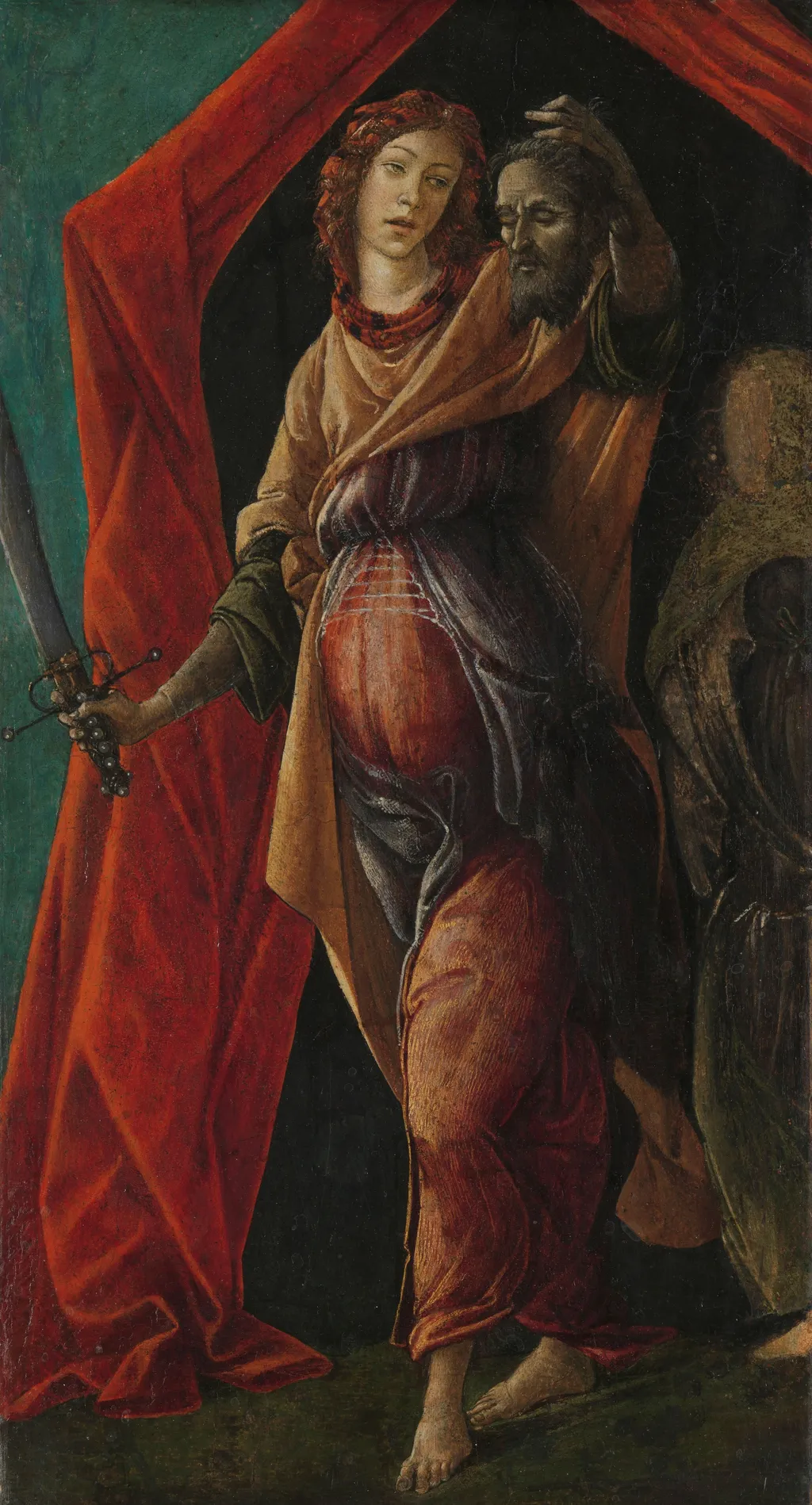
Judit with the Head of Holofernes is an oil painting by the Early Renaissance artist Sandro Botticelli. It dates from 1500 and is held in the collection of the Rijksmuseum.
About this work
Subject & Meaning
The painting shows the biblical heroine Judith holding the severed head of the Assyrian general Holofernes.
The painting shows the biblical heroine Judith holding the severed head of the Assyrian general Holofernes. She grips the head in her left hand at eye level while her right hand holds the sword used to behead him. As a religious work, the image illustrates the Old Testament story in which Judith’s courageous act saves her people, symbolizing the triumph of virtue and divine justice over oppression and tyranny. The composition emphasizes her calm resolve, presenting Judith as a model of righteous strength and faith.
Technique & Style
Sandro Botticelli’s Judit with the Head of Holofernes is executed in tempera on a wooden panel, measuring 36.5 cm in height and 20 cm in width. The support consists of a single poplar panel, a common choice for Florentine paintings of the period, providing a smooth yet absorbent surface for the medium.
The handling is precise and linear, characteristic of Botticelli’s late style. Contours are sharply defined, and the figures exhibit a delicate modeling of form through subtle gradations of tone rather than dramatic chiaroscuro. The tempera medium, applied in thin, opaque layers, allows for fine detailing, particularly in Judith’s drapery and the textural contrasts between skin, fabric, and metal.
The composition’s restrained palette and emphasis on elegant, elongated proportions reflect Botticelli’s continued engagement with classical ideals, tempered by the more austere and expressive tendencies of late 15th-century Florence.
History & Provenance
The painting was created by Sandro Botticelli around 1497–1500, as indicated by multiple sources converging on the late 1490s. The work is executed in tempera on wood, depicting Judith holding the severed head of Holofernes with her left hand while gripping a sword in her right.
It has been held in the collection of the Rijksmuseum in Amsterdam since at least the early 20th century, where it remains today.
Sandro Botticelli's painting Judith with the Head of Holofernes is held in the collection of the Rijksmuseum in Amsterdam, Netherlands. The work, created around 1498, is part of the museum's permanent holdings of religious art. Regarding its exhibition history, the painting was featured in the show titled Botticelli: artiste & designer at the institution.
Overview
Created around 1500, this oil on panel by Sandro Botticelli portrays the biblical heroine Judith clutching the severed head of Holofernes. The work is part of the collection of the Rijksmuseum in Amsterdam and exemplifies the artist’s late‑career interest in dramatic narrative subjects.
Context
In the early 16th century, depictions of Judith became popular in Florentine art as moral exemplars during a period of political turbulence. Botticelli’s treatment reflects contemporary interest in dramatic, morally charged subjects, aligning with the broader Renaissance trend toward heightened realism and emotional expression.
Artist & collection
Artist
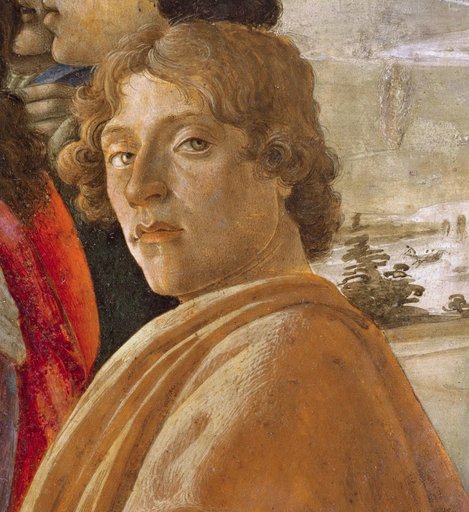
Alessandro di Mariano di Vanni Filipepi, better known as Sandro Botticelli or simply Botticelli, was an Italian painter of the Early Renaissance.


![The Archangel Gabriel [middle left panel], by Cosimo Tura](https://artifactworldgallery.com/img/cosimo-tura--the-archangel-gabriel-middle-left-panel--c900f72d54477be2-w320.webp)