Artwork
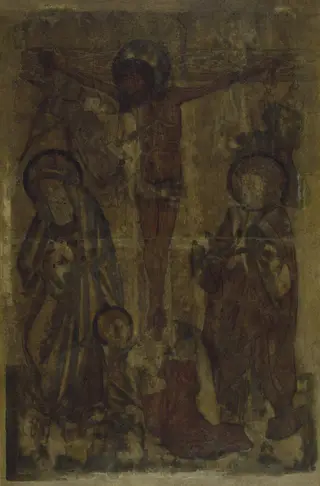
Christ on the Cross [reverse]
![Christ on the Cross [reverse], by Andrea di Bartolo, tempera, 1385](https://artifactworldgallery.com/img/andrea-di-bartolo--christ-on-the-cross-reverse--6bfe980f802a6327-w1024.webp)
Christ on the Cross [reverse] is a tempera painting by the Byzantine icon painting artist Andrea di Bartolo. It dates from 1385 and is held in the collection of the National Gallery of Art.
About this work
Technique & Style
The application of pigment using the tempera medium on wood was a standard technique for Italian panel paintings of the late fourteenth century.
Executed around 1385, this work is a tempera painting on a panel support. Created by Andrea di Bartolo, the piece depicts the crucifixion of Jesus Christ, adhering to the conventions of religious art from the period. The application of pigment using the tempera medium on wood was a standard technique for Italian panel paintings of the late fourteenth century.
While specific details regarding the artist's brushwork, the condition of the surface, or the precise handling of the form are not elaborated upon in the available records, the fundamental material composition is clearly established as tempera on panel. The work's classification as a painting within the religious genre underscores its devotional function and stylistic alignment with contemporary Sienese traditions.
History & Provenance
The Christ on the Cross reverse panel is attributed to Andrea di Bartolo and dated to around 1385. Its earliest documented ownership traces to an Italian private collection around 1920, where it was recorded by the art historian F. Mason Perkins. It later belonged to Count Alessandro Contini Bonacossi in Rome and was sold in October 1927 to the American collector Samuel H. Kress.
The painting was transferred to the Samuel H. Kress Foundation in 1929 and gifted to the National Gallery of Art, Washington, D.C., in 1939, where it remains part of the Samuel H. Kress Collection. No direct evidence of its original commission or early provenance has been established, and no exhibition history is recorded in the available documentation.
Overview
This tempera painting on panel, titled Christ on the Cross [reverse], was created by Andrea di Bartolo around 1385. It presents a devotional image of Jesus Christ, characteristic of religious art from the late 14th century. The work exemplifies the artistic conventions prevalent in Sienese painting during this period, serving as a focal point for contemplation.
Subject & Meaning
The artwork centrally depicts Jesus Christ crucified, a fundamental theme in Christian iconography. This portrayal emphasizes the sacrificial aspect of Christ's death, inviting viewers to engage in spiritual reflection. The singular focus on the figure of Christ underscores the theological significance of the event, a common practice in devotional images intended for private or public veneration.
Own this work as a print
Artist & collection


![Madonna of Humility, The Blessing Christ, Two Angels, and a Donor [obverse], by Andrea di Bartolo](https://artifactworldgallery.com/img/andrea-di-bartolo--madonna-of-humility-the-blessing-christ-two-angels-and-a-don--d37c382429905539-w320.webp)
- Christ on the Cross
 Christ on the Cross
 Christ on the Cross
 Crucifixion with the Virgin and Saint John the Evangelist
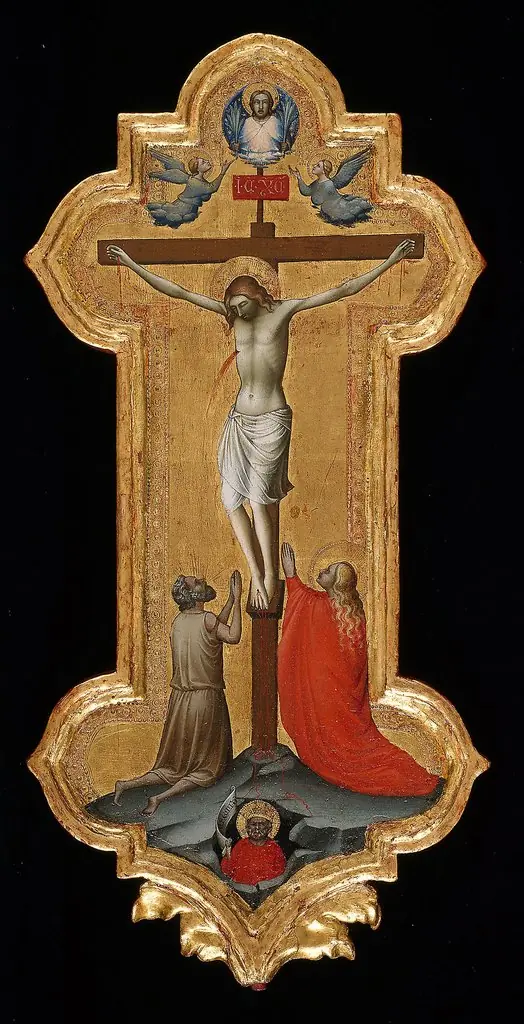 Processional Cross
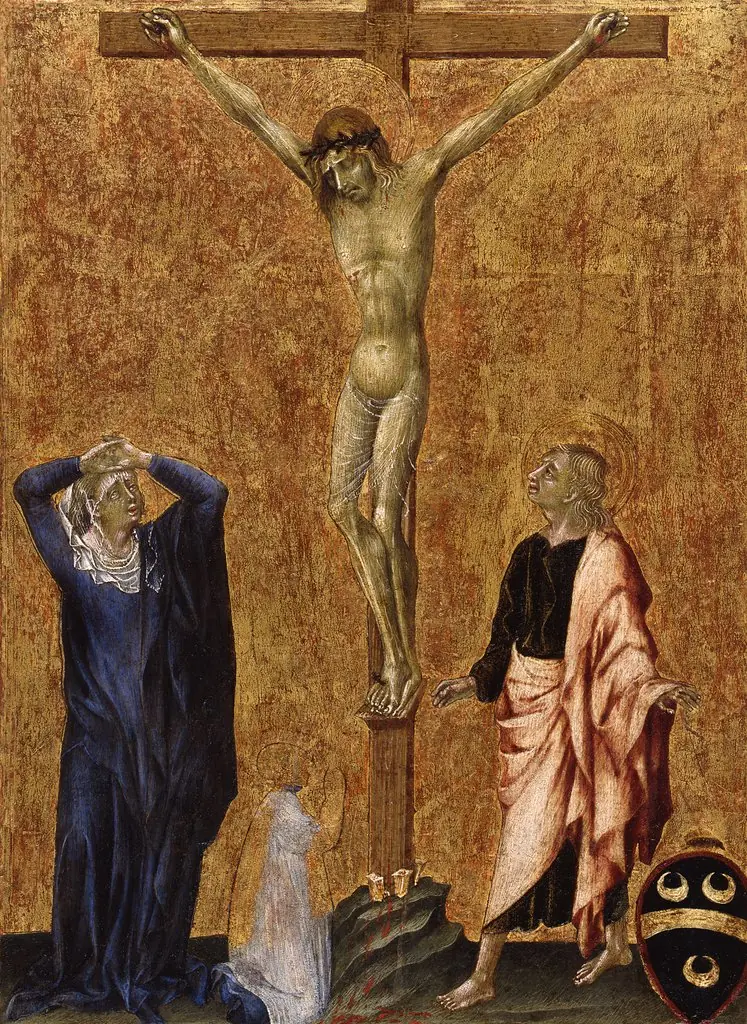 Christ on the cross between Mary and John with a kneeling Dominican
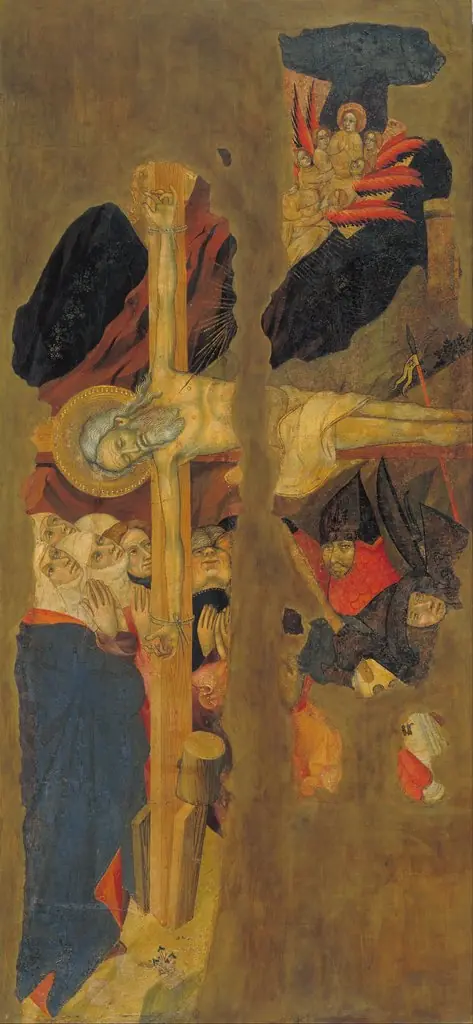 Crucifixion of Saint Andrew
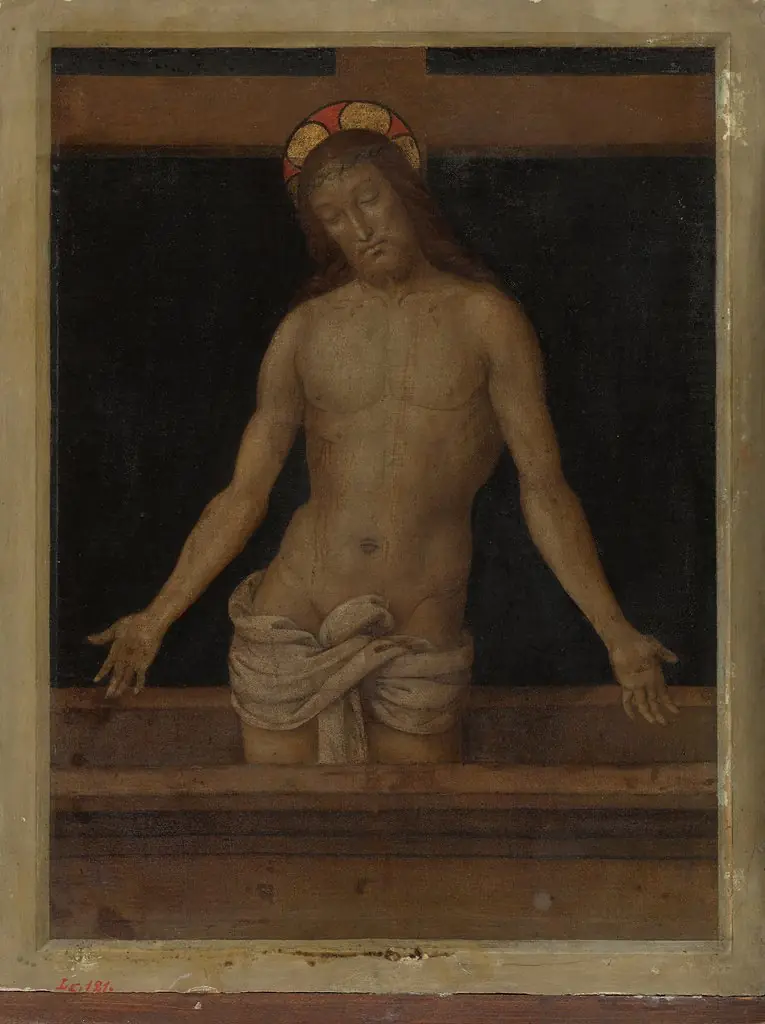 Christ in the tomb
 The Good Thief (Saint Dismas)
 The Crucifixion
 The Crucifixion
 Crucifixion