Artwork
The Nativity of the Virgin
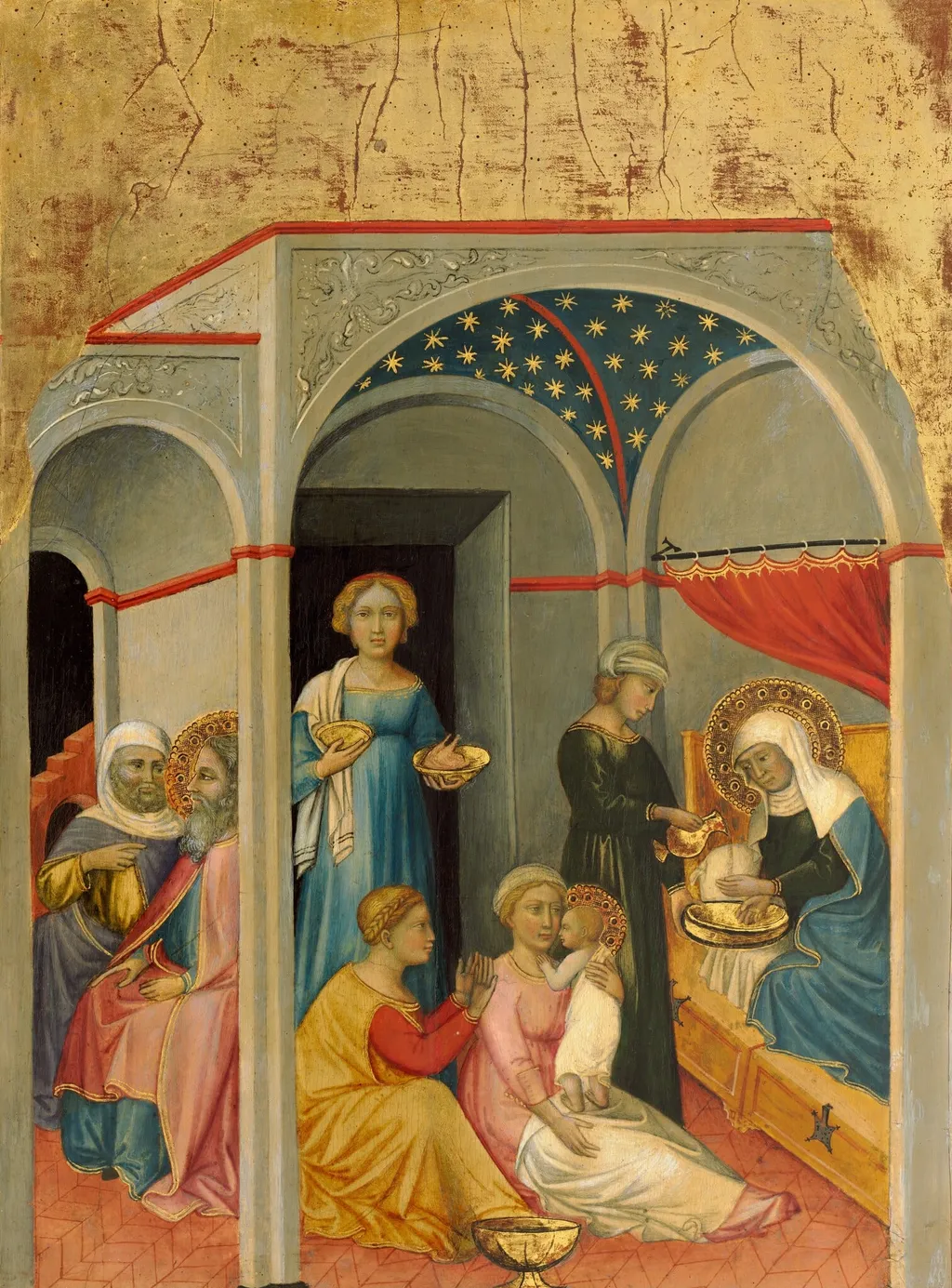
The Nativity of the Virgin is a tempera painting by the Renaissance artist Andrea di Bartolo. It is held in the collection of the National Gallery of Art.
About this work
Subject & Meaning
Executed in tempera on a poplar panel around 1400, the work belonged to the Giustiniani collection in Genoa before being sold in 1930 to the Samuel H.
The Nativity of the Virgin portrays the moment of the Virgin Mary’s birth, a traditional scene in late‑medieval Marian iconography that emphasizes the miraculous nature of her conception and the divine favor surrounding her arrival. In this panel Andrea di Bartolo renders the newborn Mary cradled by her mother Saint Anne, with angels and a radiant heavenly light underscoring the sacred event. The composition follows established symbolic conventions: the presence of a modest interior, simple furnishings, and a focus on the intimate family group convey humility and purity.
Executed in tempera on a poplar panel around 1400, the work belonged to the Giustiniani collection in Genoa before being sold in 1930 to the Samuel H. Kress Foundation and gifted to the National Gallery of Art, where it remains part of the Kress Collection.
Technique & Style
The Nativity of the Virgin is executed in tempera on a poplar panel, a technique typical of early fifteenth‑century Italian devotional painting. The surface bears the fine, matte finish characteristic of tempera, with delicate modeling achieved through layered washes of pigment. As a religious work, the composition focuses on the Virgin’s birth, rendered with clear outlines and a restrained palette that emphasizes symbolic clarity over naturalistic depth.
The panel’s small scale and wooden support suggest it was intended for private contemplation, and its formal handling reflects the linear elegance of Sienese art, where emphasis rests on graceful figures and decorative detail rather than spatial illusion.
History & Provenance
The Nativity of the Virgin is dated 1400 and executed in tempera on poplar panel. According to the National Gallery of Art records, the panel was once associated with a contessa Giustiniani of Genoa, together with two companion panels (NGA 1939.1.41 and 1939.1.43). Scholarship suggests that the contessa Giustiniani was more likely a dealer or agent than a collector, since the works attributed to her name appear to have been acquired on the art market shortly before 1930.
The painting passed through the Roman collection of Count Alessandro Contini Bonacossi, who sold it in July 1930 to the Samuel H. Kress Foundation in New York, as documented on a bill of sale dated 15 July 1930. The Kress Foundation subsequently gifted the work in 1939 to the National Gallery of Art in Washington, D.C., where it remains in the Samuel H. Kress Collection.
No information on an original commission is recorded in the available sources.
The Nativity of the Virgin is currently held by the National Gallery of Art in Washington, D.C., where it forms part of the Samuel H. Kress Collection. The work's accession number is 1939.1.42, having entered the museum in 1939 as a gift from the Kress Foundation. Prior to this acquisition, the panel was sold to the foundation by Count Alessandro Contini Bonacossi in July 1930.
Before reaching Bonacossi, the painting was associated with a Contessa Giustiniani in Genoa, though sources suggest she likely acted as a dealer rather than a long-term collector. The work has no recorded exhibition history in the provided sources.
Context
The Nativity of the Virgin by Andrea di Bartolo (c. 1400) has received scholarly attention as part of the National Gallery of Art's systematic catalogue of fifteenth‑century Italian paintings, where it is discussed by Miklós Boskovits and David Alan Brown (2003). Its provenance, traced from a putative Giustiniani collection through dealer Count Alessandro Contini Bonacossi to the Samuel H. Kress Foundation and finally to the NGA in 1939, has been examined in provenance research, highlighting the work's entry into major American collections. These factors situate the panel within the broader study of early‑15th‑century Sienese painting and its reception in twentieth‑century museum collecting.
Legacy
The Nativity of the Virgin entered the Samuel H. Kress Collection in 1930 and has been part of the National Gallery of Art’s holdings since 1939, a status that has sustained scholarly interest and public display. Its inclusion in the Kress bequest, documented in the 1930 bill of sale and subsequent gift, placed the work alongside other early Italian panels that Kress promoted, contributing to a renewed appreciation of 15th‑century Tuscan painting in mid‑20th‑century American museums. The painting’s provenance, traced to the contested Giustiniani collection and later identified through curatorial files, has been cited in studies of collector dynamics and the art market of the 1930s, reinforcing its historical significance.
Overview
This painting, titled The Nativity of the Virgin, was created by Andrea di Bartolo around 1402. Executed in tempera on a poplar panel, the work illustrates the birth of the Virgin Mary. It presents a scene of quiet domesticity, characteristic of religious narratives from the early 15th century, rendered with a delicate palette and careful attention to detail.
Own this work as a print
Artist & collection


![Christ on the Cross [reverse], by Andrea di Bartolo](https://artifactworldgallery.com/img/andrea-di-bartolo--christ-on-the-cross-reverse--6bfe980f802a6327-w320.webp)
![Madonna of Humility, The Blessing Christ, Two Angels, and a Donor [obverse], by Andrea di Bartolo](https://artifactworldgallery.com/img/andrea-di-bartolo--madonna-of-humility-the-blessing-christ-two-angels-and-a-don--d37c382429905539-w320.webp)
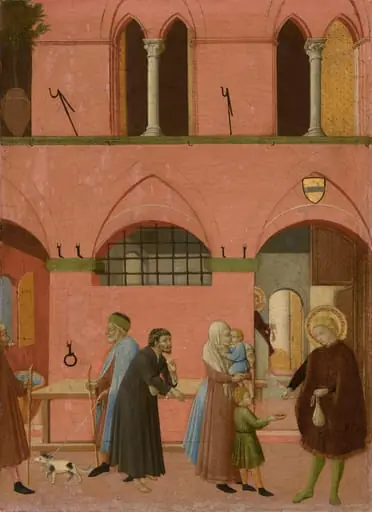 Saint Anthony Distributing His Wealth to the Poor
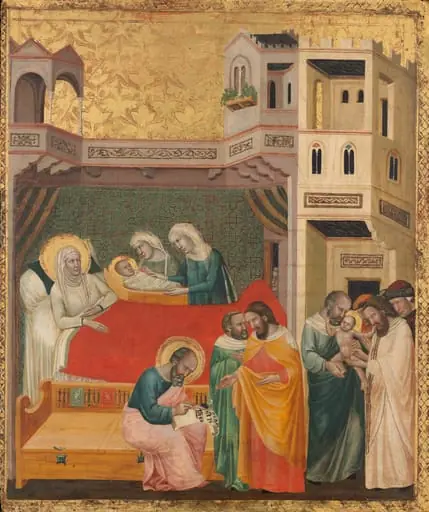 The Birth, Naming, and Circumcision of Saint John the Baptist
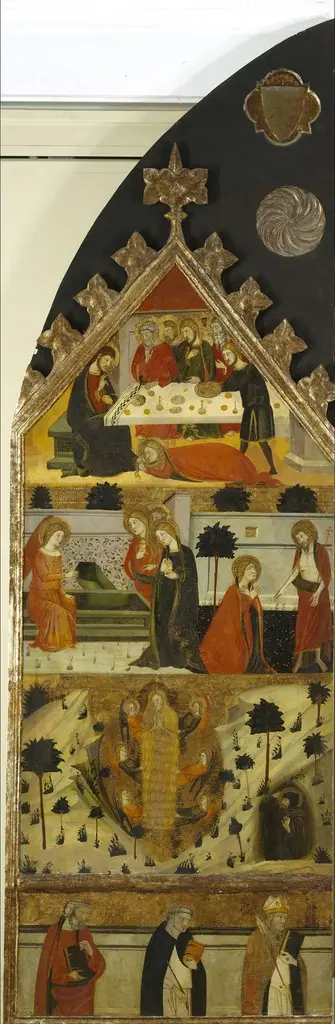 Episodes from the Lives of Mary Magdalen and Saint John the Baptist
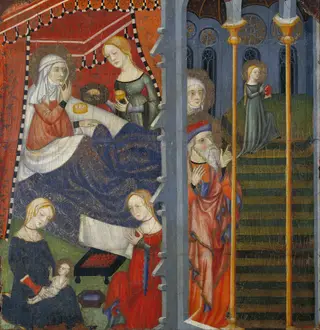 Birth of the Virgin and Presentation at the Temple
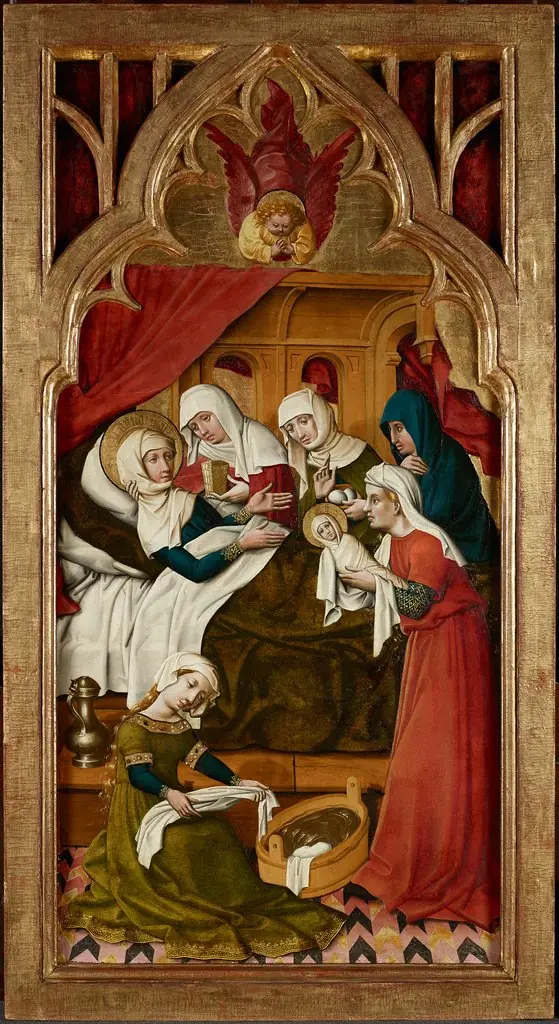 Geburt Mariens
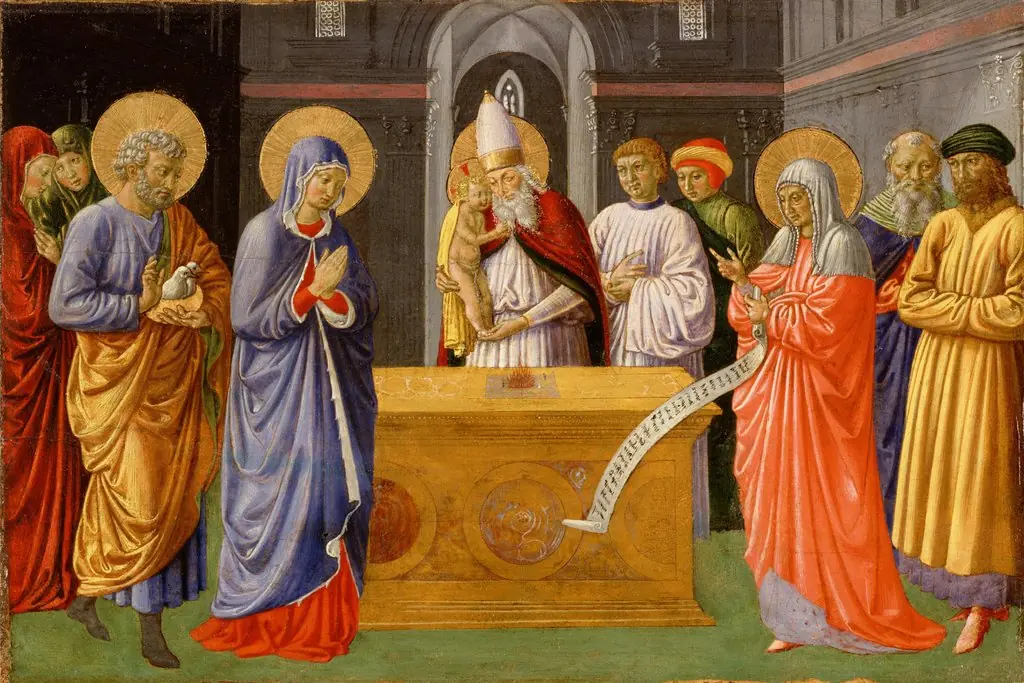 Purification of the Virgin
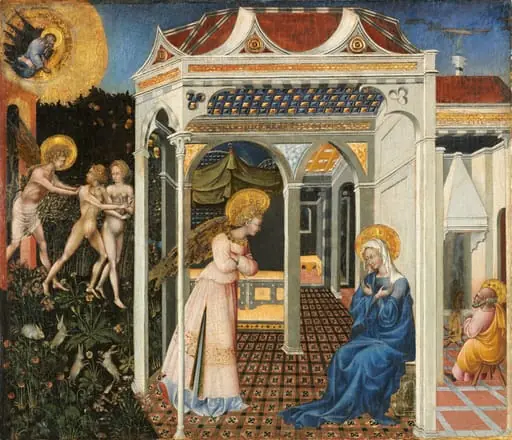 The Annunciation and Expulsion from Paradise
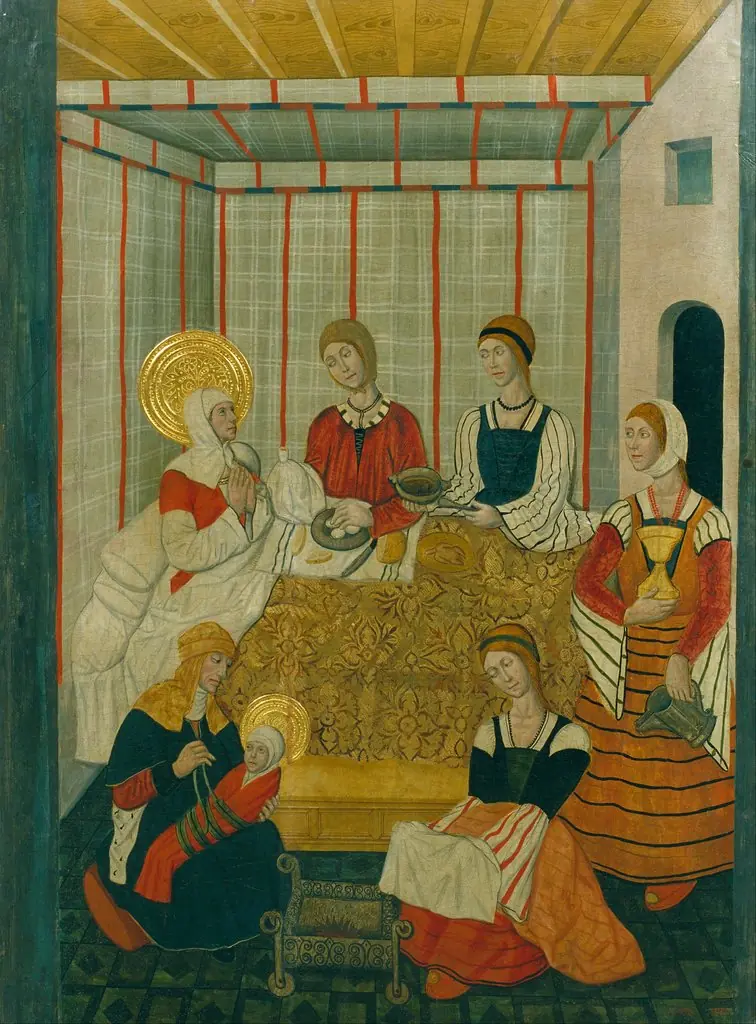 Birth of the Virgin
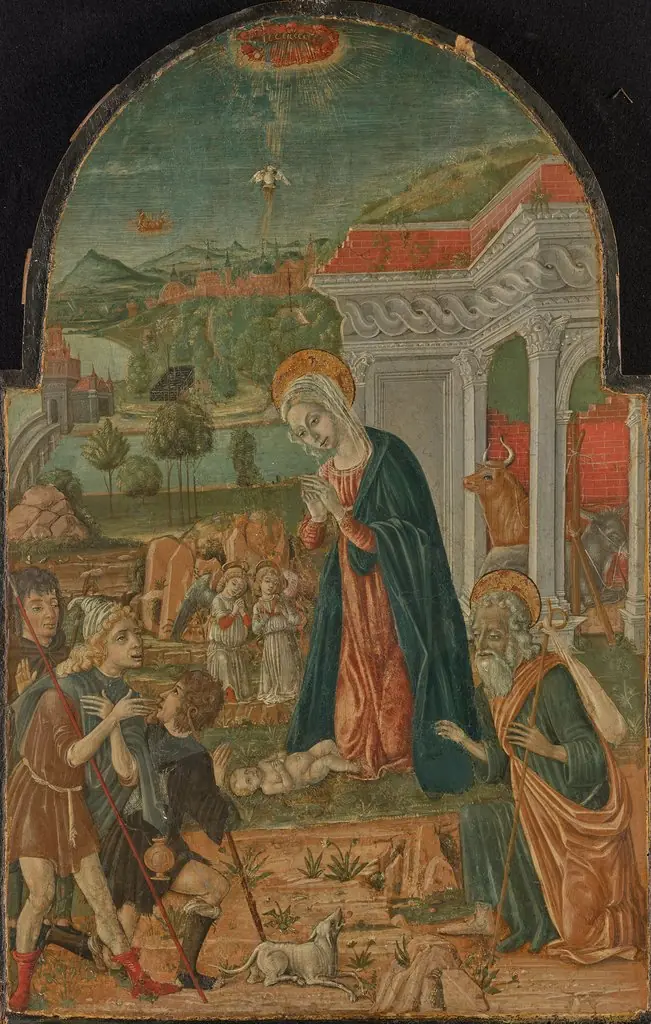 The adoration of the Shepherds
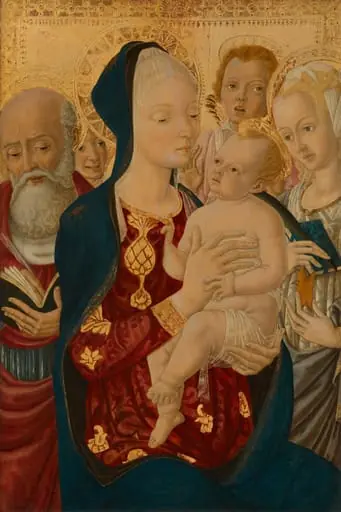 Madonna and Child with Saint Jerome, Saint Catherine of Alexandria, and Angels