Artwork
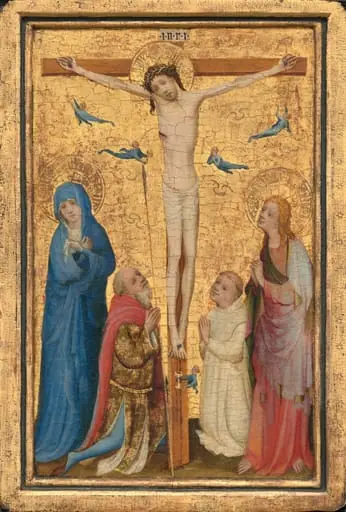
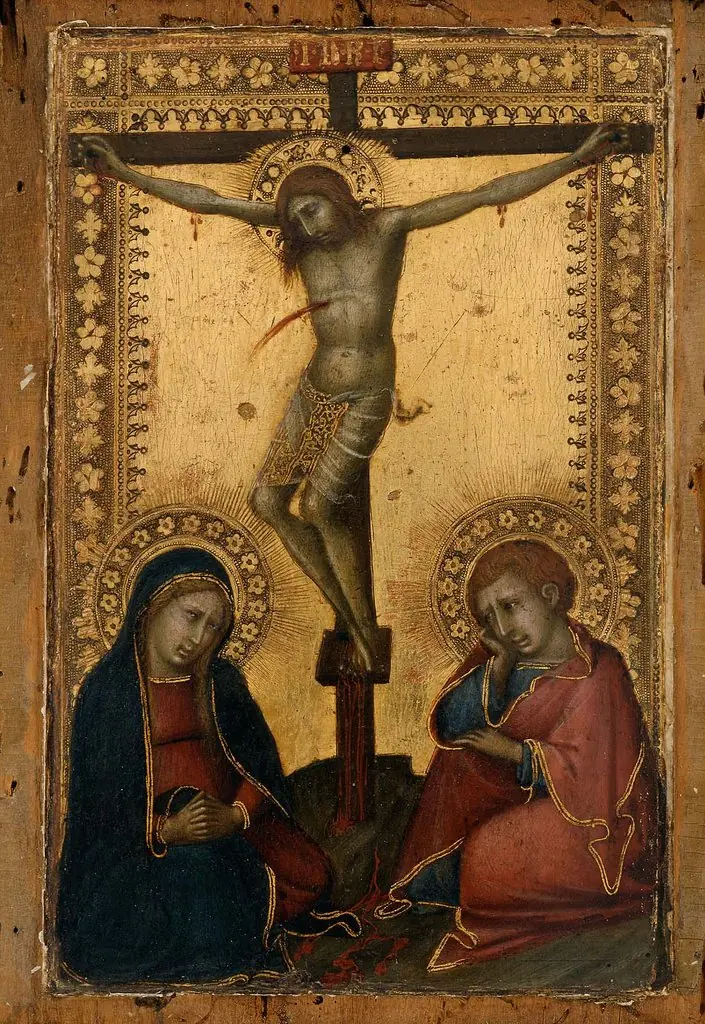
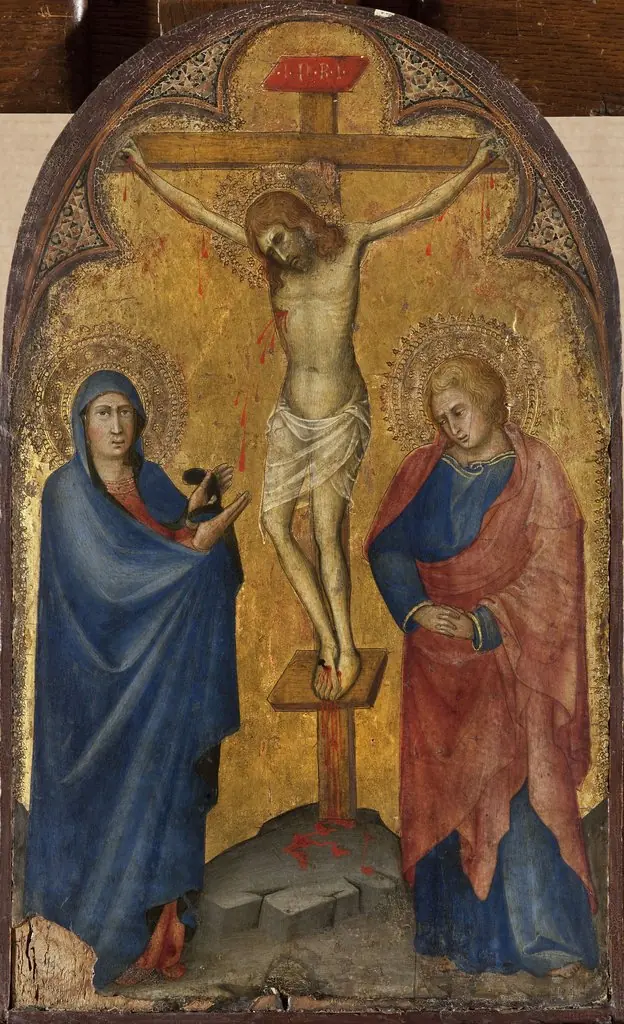
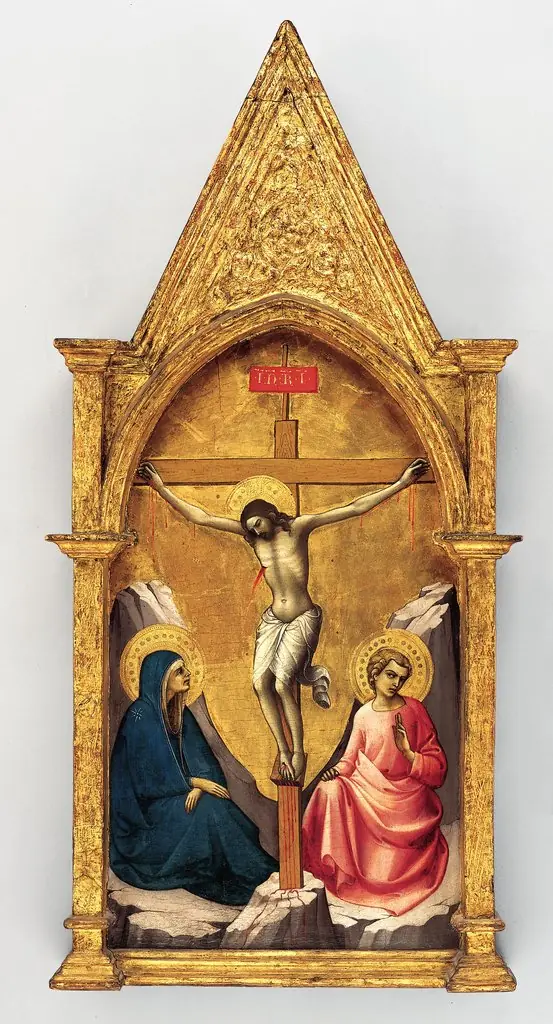
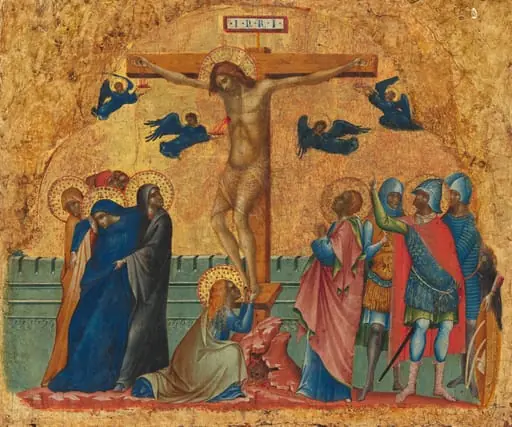
The Crucifixion
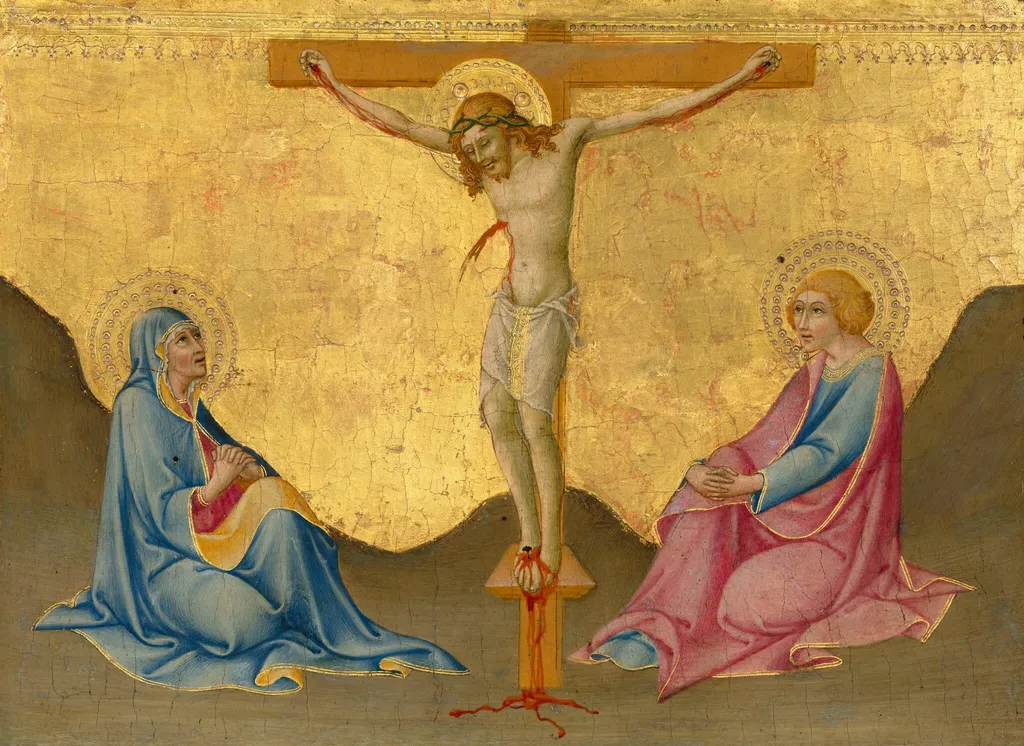
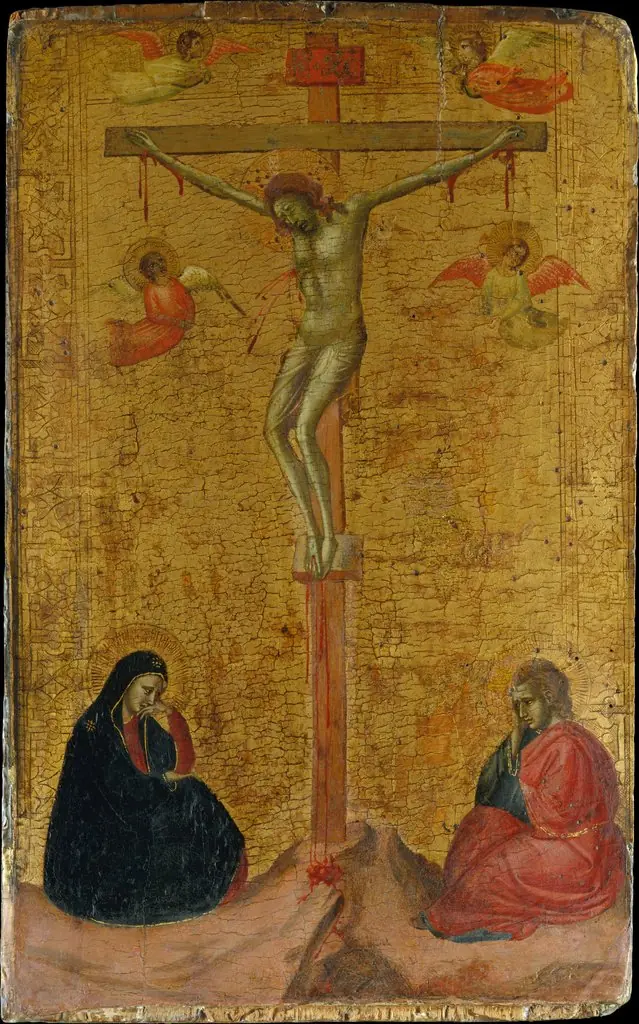
The Crucifixion is a tempera painting by the Early Renaissance artist Sano di Pietro. It dates from 1448 and is held in the collection of the National Gallery of Art.
About this work
Subject & Meaning
The representation focuses on the pivotal biblical event of the crucifixion, aligning with the devotional traditions of the mid-15th century Italian school.
The work depicts the crucifixion of Jesus Christ, serving as a central subject of religious art. Created in 1455 by Sano di Pietro, the painting presents the main subject of Christ's execution on the cross. While the specific iconographic details of the surrounding figures or symbolic elements are not elaborated in the provided records, the depiction is firmly categorized within the genre of religious art.
The representation focuses on the pivotal biblical event of the crucifixion, aligning with the devotional traditions of the mid-15th century Italian school. The subject matter identifies the artwork's primary function as a visual representation of this specific theological narrative.
Technique & Style
Created in 1455, The Crucifixion by Sano di Pietro is executed in tempera on a poplar panel support. The work measures 24.1 cm in height and 33.6 cm in width, presenting a compact format typical of devotional objects from the period. As a religious painting depicting the crucifixion of Jesus Christ, the piece utilizes the traditional Sienese medium of egg tempera, which allows for precise linear definition and luminous color application on the rigid wood ground.
The survival of this small-scale panel suggests careful handling and preservation over the centuries, allowing the formal qualities of the mid-15th-century style to remain visible. The physical dimensions and material choices reflect the artist's adherence to established workshop practices for religious imagery intended for private or domestic devotion.
History & Provenance
Sano di Pietro executed this tempera on poplar panel depicting the Crucifixion in 1455. The work's early ownership history suggests it belonged to a member of the Giustiniani family in Genoa, likely identified as Contessa Giustiniani, though records from 1930 indicate male family members held the title of Count. By 1930, the painting was in the collection of Count Alessandro Contini Bonacossi in Rome.
In July of that year, Contini Bonacossi sold the piece to the Samuel H. Kress Foundation in New York. The foundation subsequently gifted the artwork to the National Gallery of Art in Washington, D.C., in 1939, where it remains part of the Samuel H. Kress Collection.
The Crucifixion by Sano di Pietro is held by the National Gallery of Art in Washington, D.C., as part of the Samuel H. Kress Collection. It entered the Kress Foundation in July 1930 through a purchase from Count Alessandro Contini Bonacossi in Rome, and was subsequently given to the NGA in 1939. Earlier provenance traces the panel possibly to Contessa Giustiniani in Genoa, whose collection is documented in connection with several works that passed through the same Contini Bonacossi-to-Kress transaction in 1930.
No exhibition history is recorded in the available sources.
Overview
This painting, titled The Crucifixion, was created by Sano di Pietro around 1448. Executed in tempera on a poplar panel, the work presents a religious scene centered on Jesus Christ. Despite its modest size, measuring approximately one foot in height, the panel is densely filled with intricate elements, characteristic of the artist's meticulous approach to devotional imagery.
Own this work as a print
Artist & collection
Artist
Sano di Pietro or Ansano di Pietro di Mencio (1405–1481) was an Italian painter of the Sienese school of painting.

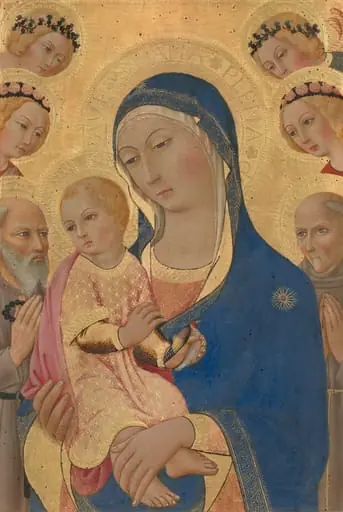 Madonna and Child with Saint Jerome, Saint Bernardino, and Angels
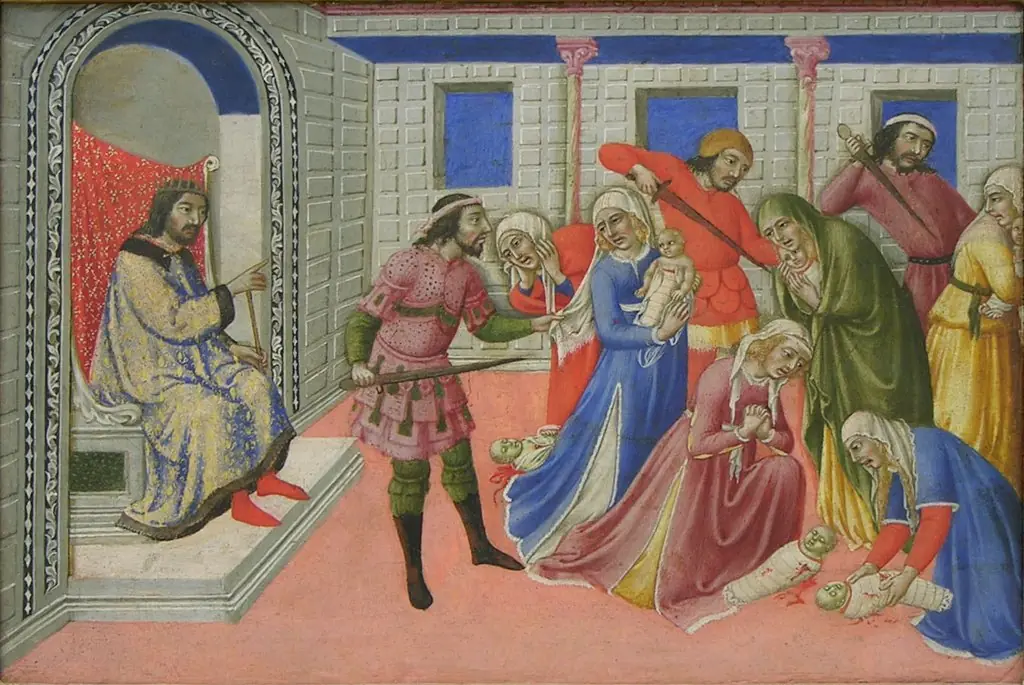 The Massacre of the Innocents
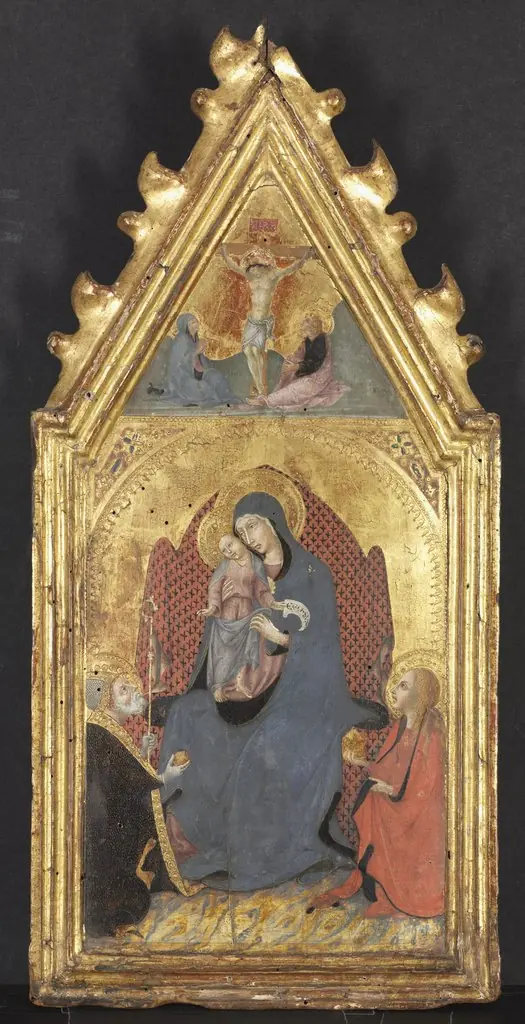 Virgin and Child Adored by Saints Mary Magdalene and Nicolas of Bari; Christ Crucified with the Virgin and Saint John the Evangelist
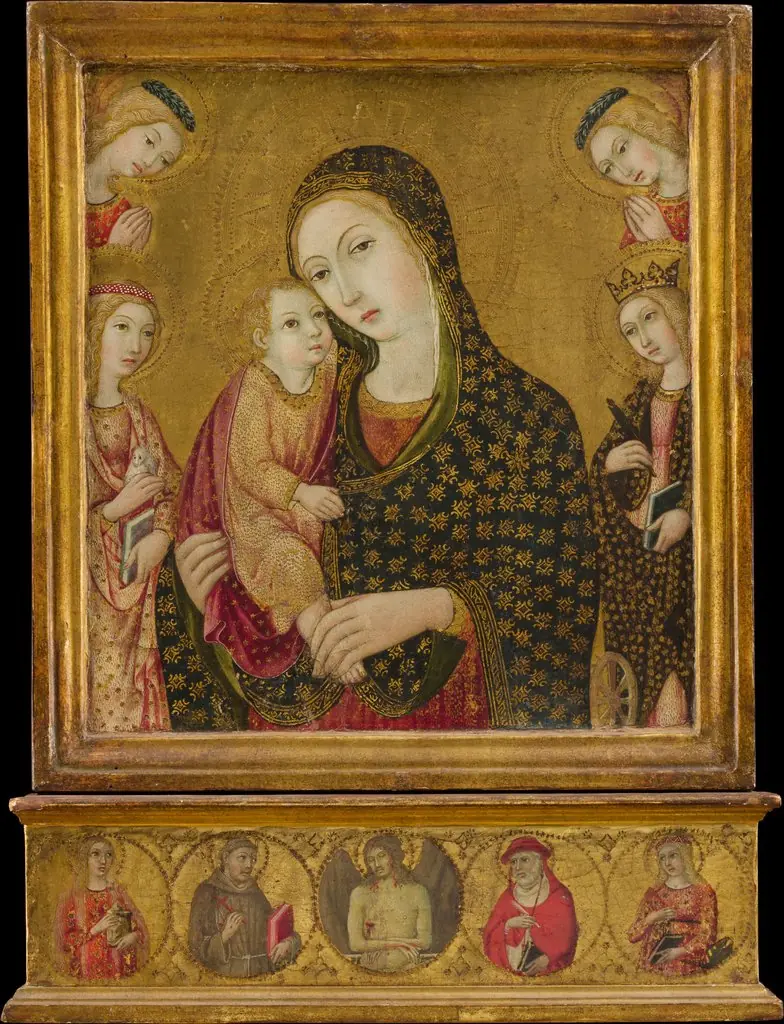 Madonna and Child with the Dead Christ, Saints Agnes and Catherine of Alexandria, and Two Angels
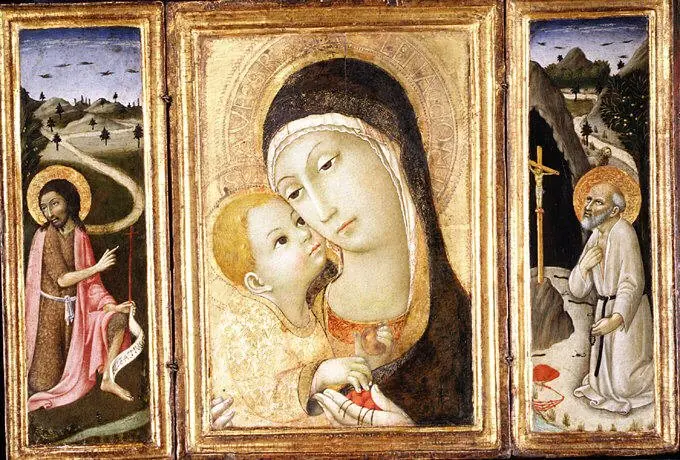 Madonna and Child; Saint John the Baptist; Saint Jerome
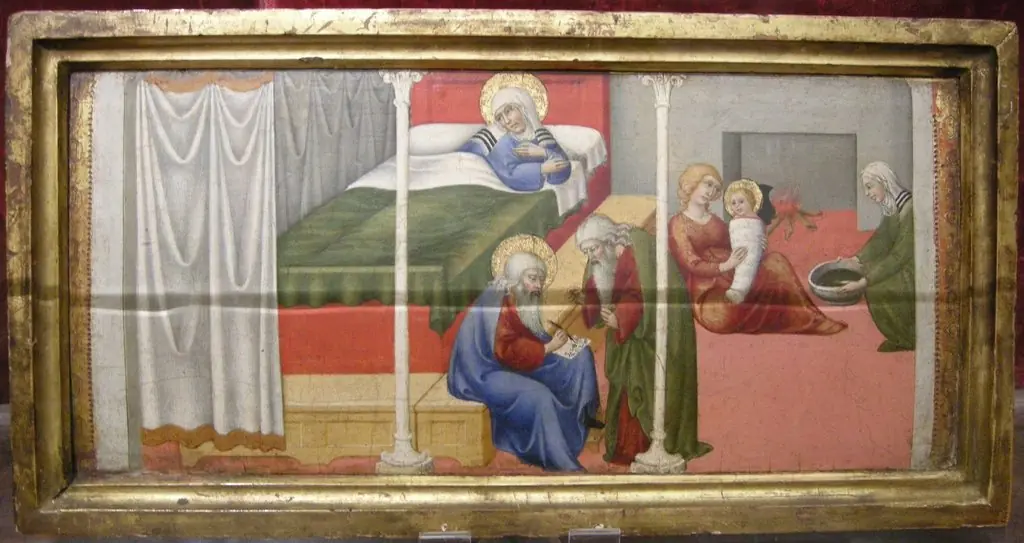 The Birth and Naming of Saint John the Baptist
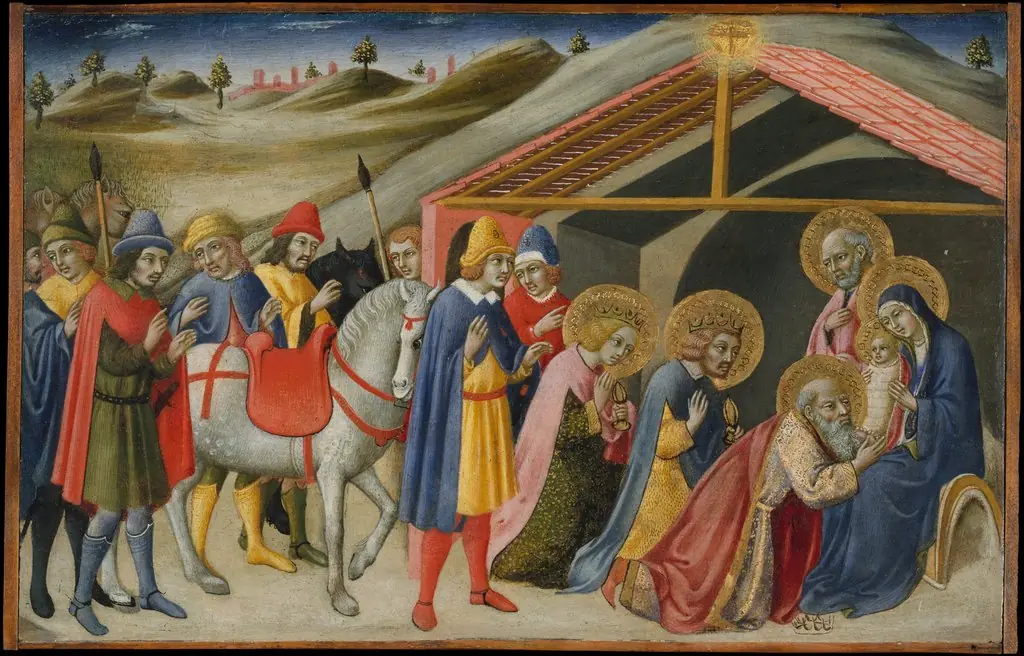 The Adoration of the Magi
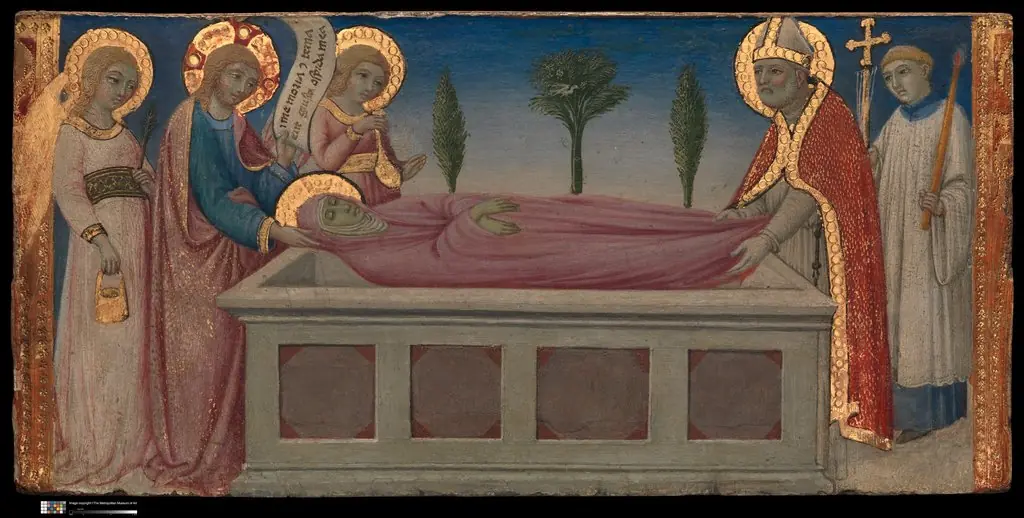 The Burial of Saint Martha