Artwork
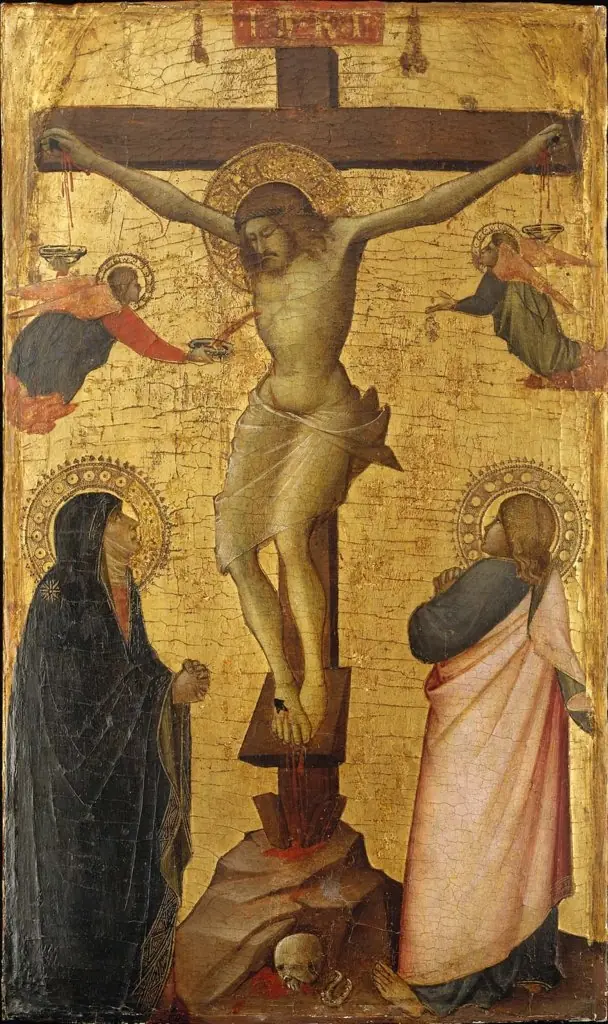
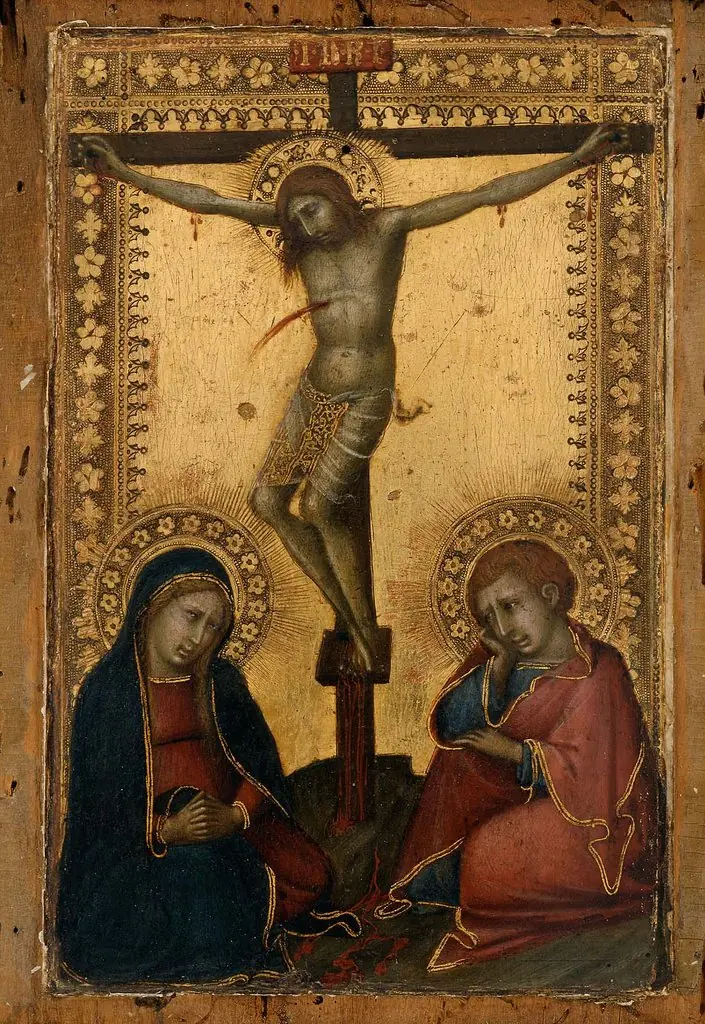
Crucifixion with the Virgin and Saint John the Evangelist
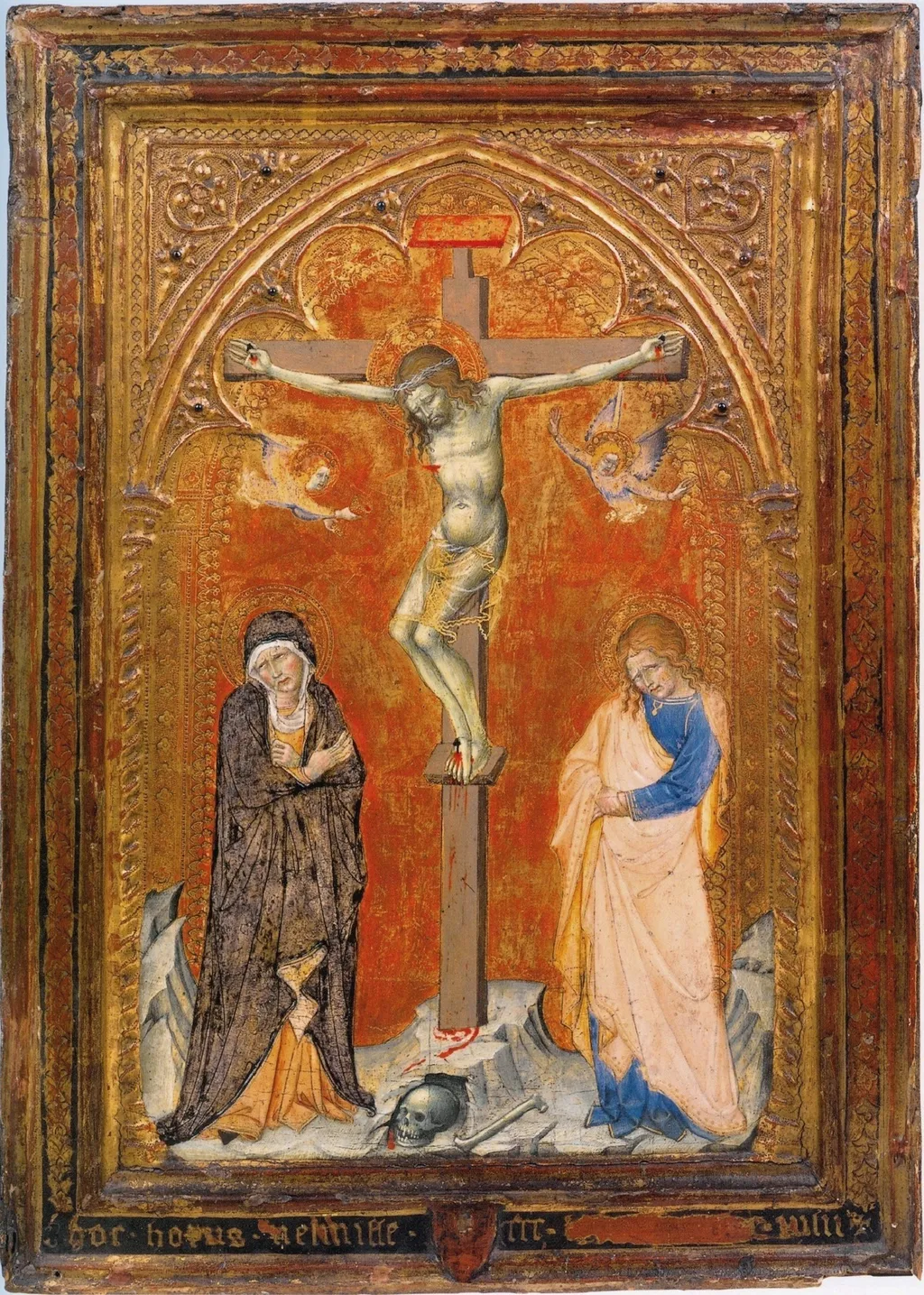
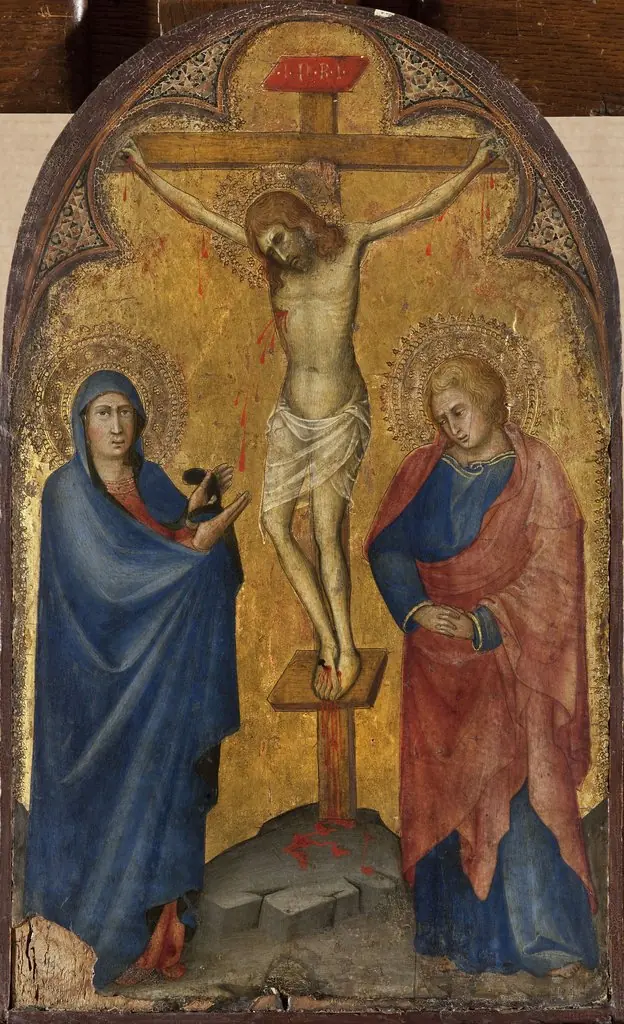
Crucifixion with the Virgin and Saint John the Evangelist is an unspecified painting by the Sienese School artist Francesco di Vannuccio. It is held in the collection of the Philadelphia Museum of Art.
About this work
Overview
Today it belongs to the collection of the Philadelphia Museum of Art, where it is displayed as an example of late Gothic devotional painting.
Francesco di Vannuccio, a Sienese painter active in the late fourteenth century, completed the panel Crucifixion with the Virgin and Saint John the Evangelist in 1394. The work measures modestly in size but commands attention through its vivid coloration and ornamental framing. Today it belongs to the collection of the Philadelphia Museum of Art, where it is displayed as an example of late Gothic devotional painting.
Subject & Meaning
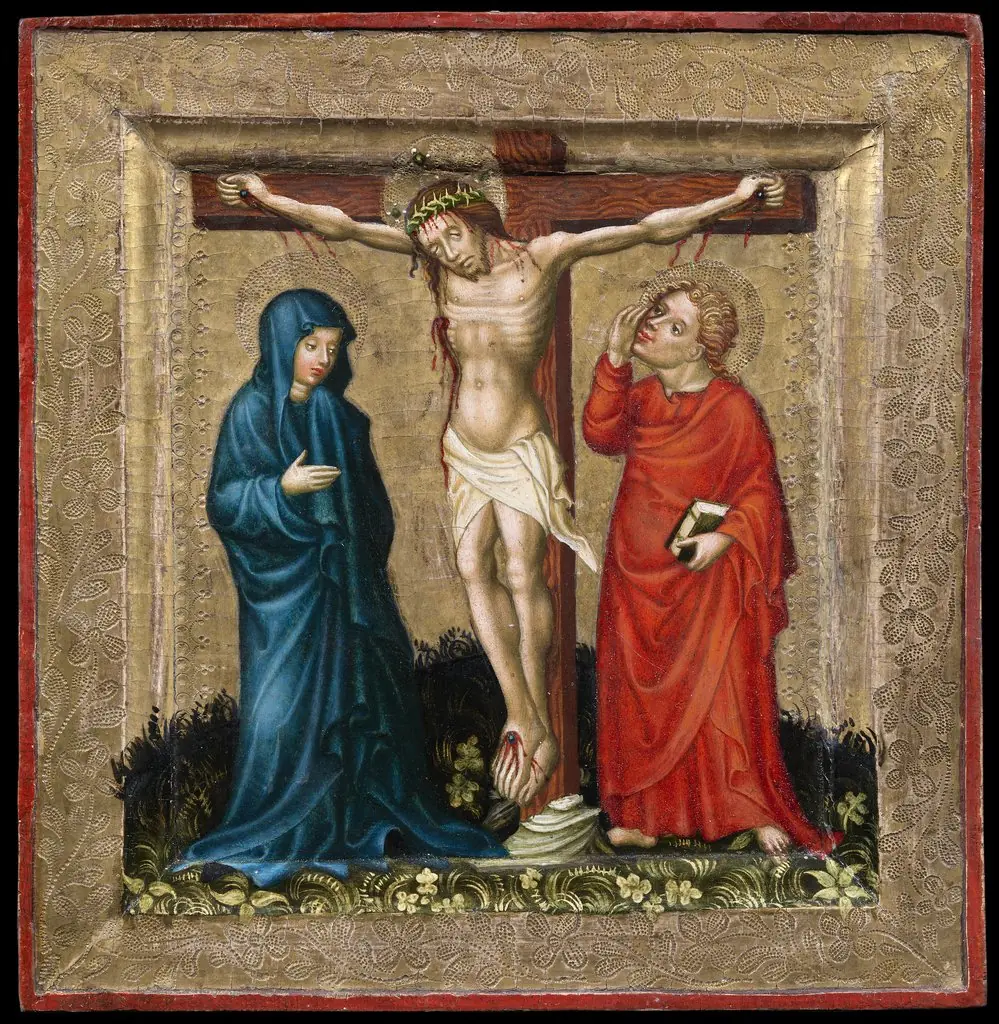
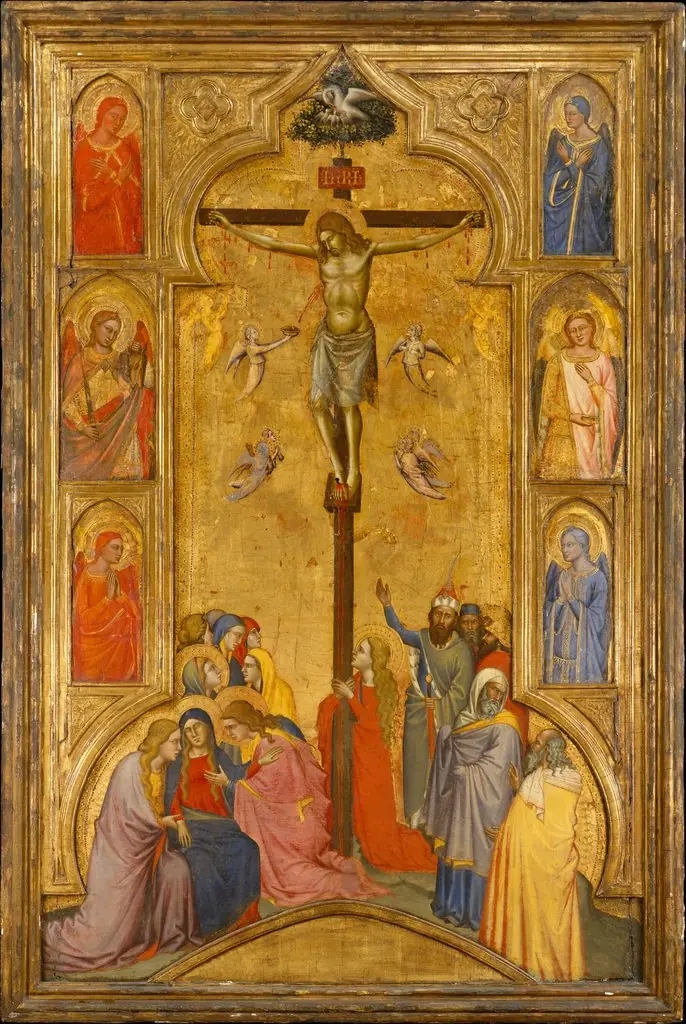
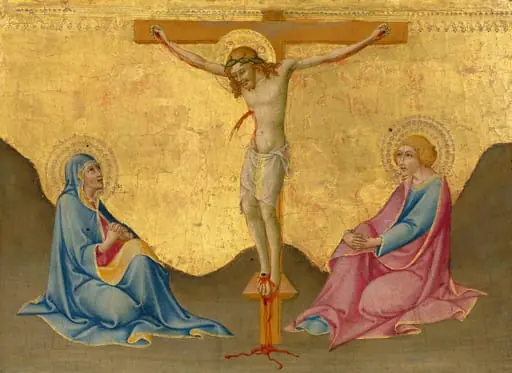
The composition centers on the crucified Christ, whose pallid form stands against a deep red ground. To his left, the Virgin Mary is shown in dark robes, hands clasped in prayer, while Saint John the Evangelist kneels nearby in blue, his head bowed. A skull rests at the foot of the cross, serving as a traditional memento mori that reminds viewers of mortality and the promise of resurrection.
Technique & Style
Di Vannuccio employs the decorative vocabulary typical of Siena, favoring flat, saturated colors and a pattern-like surface treatment. Figures appear rigid, lacking the volumetric modeling that later Renaissance artists would develop. Gold leaf outlines the panel’s edges, and small angels peek from the upper corners, adding a delicate ornamental touch characteristic of the city’s artistic lineage.
History & Provenance
Created toward the end of the fourteenth century, the painting entered the European art market in the nineteenth century before being acquired by the Philadelphia Museum of Art. Its documented provenance traces a path from private collections in Italy to American hands, reflecting the broader movement of medieval Italian panels into North American institutions during that period.
Context
The work reflects the influence of earlier Sienese masters such as Simone Martini, whose emphasis on elegant line and intricate detail shaped di Vannuccio’s approach. Operating within a city renowned for its refined decorative aesthetic, the artist’s limited output nonetheless demonstrates the persistence of Gothic visual conventions on the eve of the early Renaissance.
Own this work as a print
Artist & collection
Artist
Francesco di Vannuccio (documented 1356–1389; died before 1391) was an Italian painter born in Siena.