Artwork
The president of republic-prince frees Abd-el-Kader, Amboise castle, october 16, 1852.
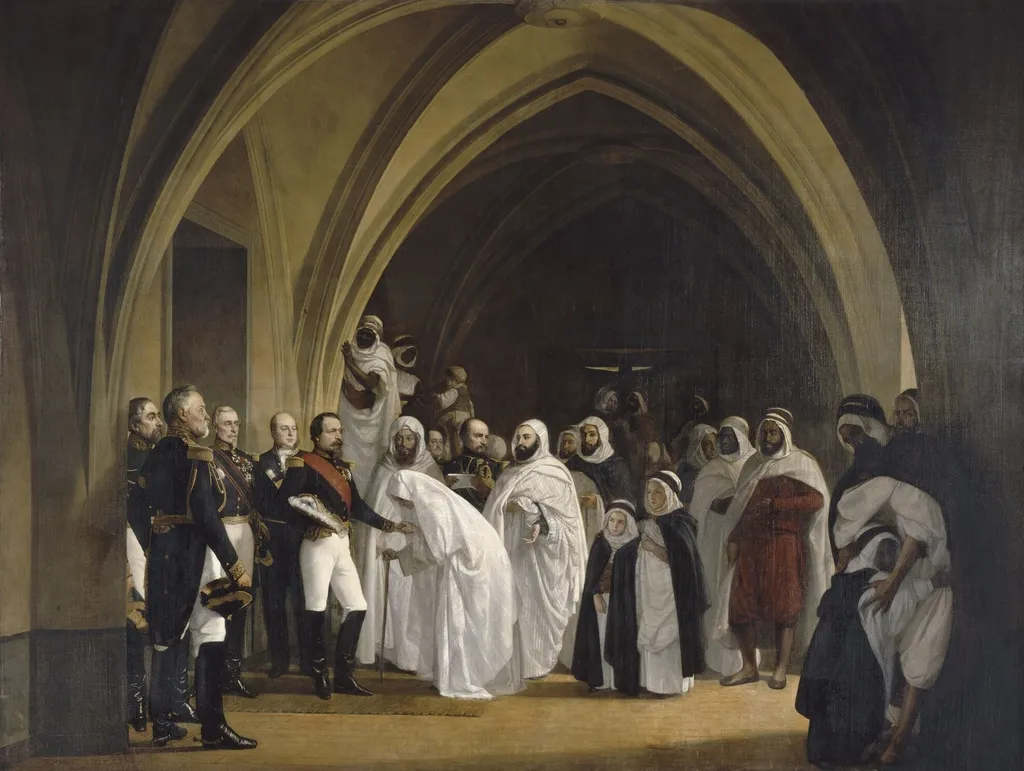
The president of republic-prince frees Abd-el-Kader, Amboise castle, october 16, 1852. is an oil painting by Ange Tissier. It dates from 1861 and is held in the collection of the Palace of Versailles.
About this work
Overview
Painted in 1861 by Jean-Baptiste-Ange Tissier, this oil work documents the release of Abd-el-Kader from house arrest at Amboise Castle on October 16, 1852.
Painted in 1861 by Jean-Baptiste-Ange Tissier, this oil work documents the release of Abd-el-Kader from house arrest at Amboise Castle on October 16, 1852. Commissioned during the Second Empire, the painting serves as a state-sanctioned record of a politically significant act. Tissier, appointed as an official artist, rendered the scene with attention to ceremonial detail and spatial grandeur, aligning the event with imperial narratives of clemency and authority.
Subject & Meaning
The scene centers on Abd-el-Kader, an Algerian emir and resistance leader, being assisted from his seat by a French official, likely Louis-Napoléon Bonaparte. The gesture symbolizes a calculated act of mercy, framing the French state as magnanimous rather than oppressive. Surrounding figures, military officers, courtiers, and attendants, observe in silence, reinforcing the ritualized nature of the moment. The white robes of Abd-el-Kader contrast with dark uniforms, visually isolating him as both subject and symbol.
Technique & Style
Tissier employed Romantic conventions to elevate the historical moment: dramatic chiaroscuro directs focus to the central figures, while the dim interior, lit by a distant doorway, enhances the solemnity. Figures are rendered with precise detail, particularly in fabric and posture, reflecting Tissier’s skill in portraiture. The architectural setting, with its high arches and vaulted ceiling, lends a sense of institutional permanence, grounding the event in a space associated with French royalty.
History & Provenance
Commissioned after the 1852 release of Abd-el-Kader, the painting was completed nearly a decade later as part of a broader effort to legitimize the Second Empire’s policies. It entered the collection of the Palace of Versailles, where it was displayed among other state portraits and historical scenes. Its placement there underscores its role as official propaganda, intended to reinforce the regime’s image of enlightened governance and moral authority.
Context
Abd-el-Kader had led a prolonged resistance against French colonization in Algeria before surrendering in 1847. His subsequent detention in France was a source of international attention. His release in 1852, following political shifts and diplomatic pressure, was framed by the regime as a humanitarian gesture.
Tissier’s painting translates this complex moment into a visual narrative of reconciliation, masking colonial violence under the guise of royal benevolence.
Legacy
The painting remains a key artifact of 19th-century French imperial ideology, illustrating how art was mobilized to sanitize colonial encounters. While historically significant, its portrayal of Abd-el-Kader as a passive recipient of mercy has been critiqued for erasing his agency and the broader context of Algerian resistance. It continues to be studied as an example of state-sponsored visual rhetoric rather than objective documentation.
Own this work as a print
Artist & collection
Artist
Jean-Baptiste-Ange Tissier (6 March 1814, in Paris – 4 April 1876, in Nice) was a French painter in the Romantic style. He was primarily a portraitist and was an official artist of the Second Empire.

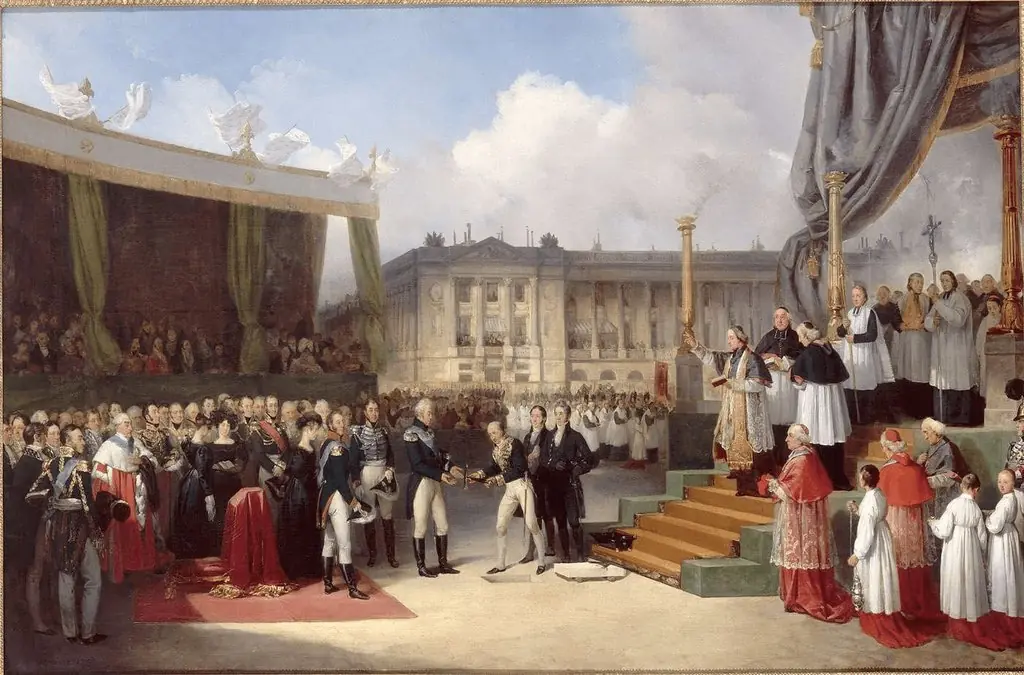 Inauguration du monument à la mémoire de Louis XVI par Charles X, place de la Concorde, 3 mai 1826
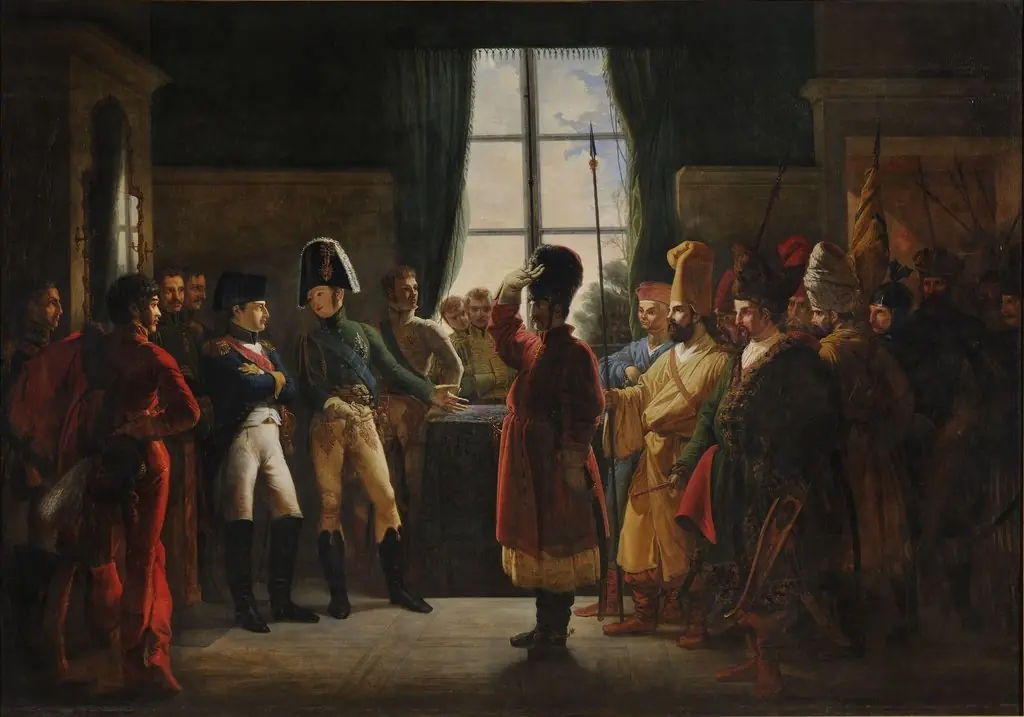 Alexander I presents to Napoleon I the Kalmyks, Cossacks and Baskirs of the Russian army, July 9, 1807
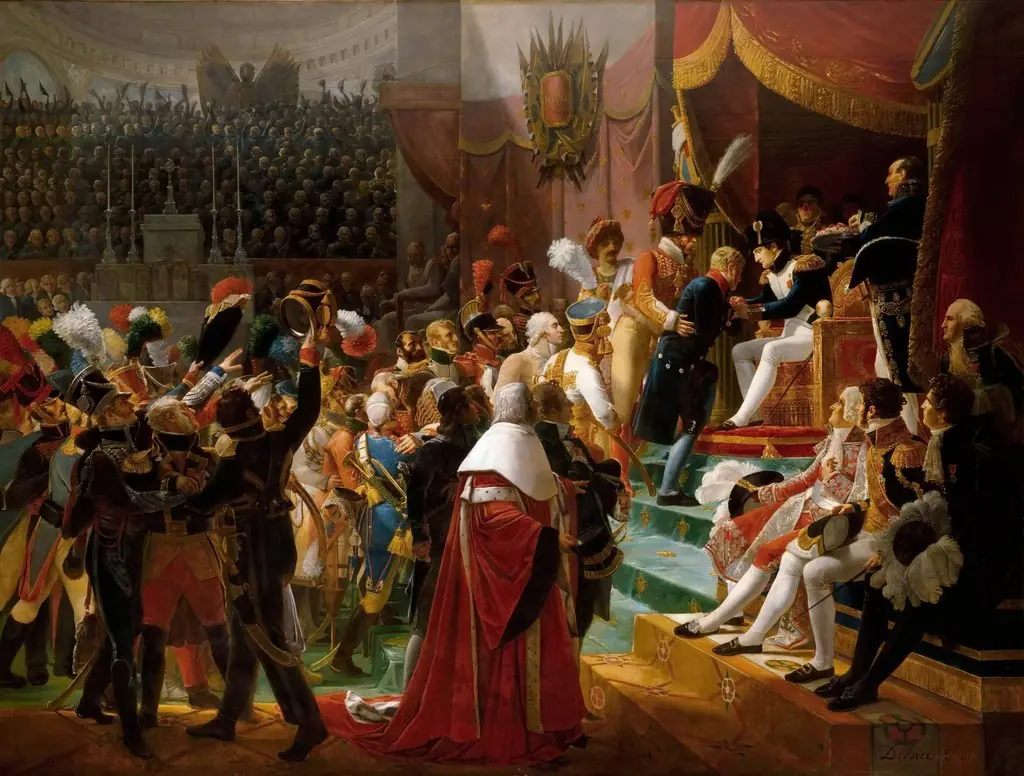 First distribution of the decorations of the Legion of Honor, made by Bonaparte, in the church of the imperial hotel of Invalides, July 14, 1804
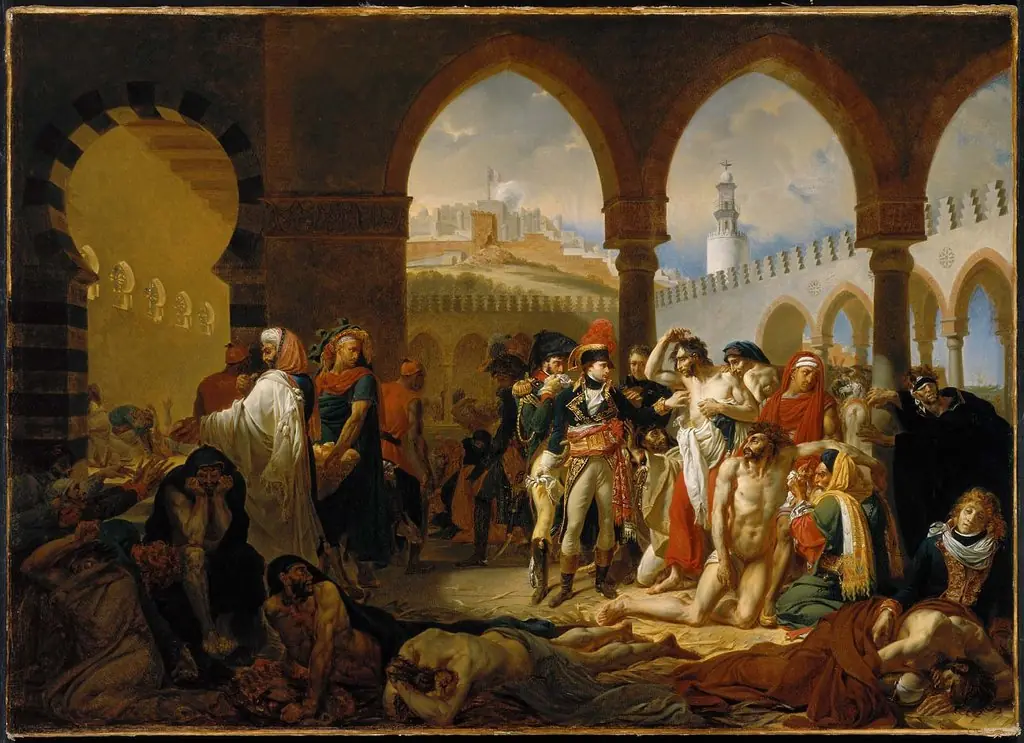 General Bonaparte Visiting the Plague-Stricken at Jaffa
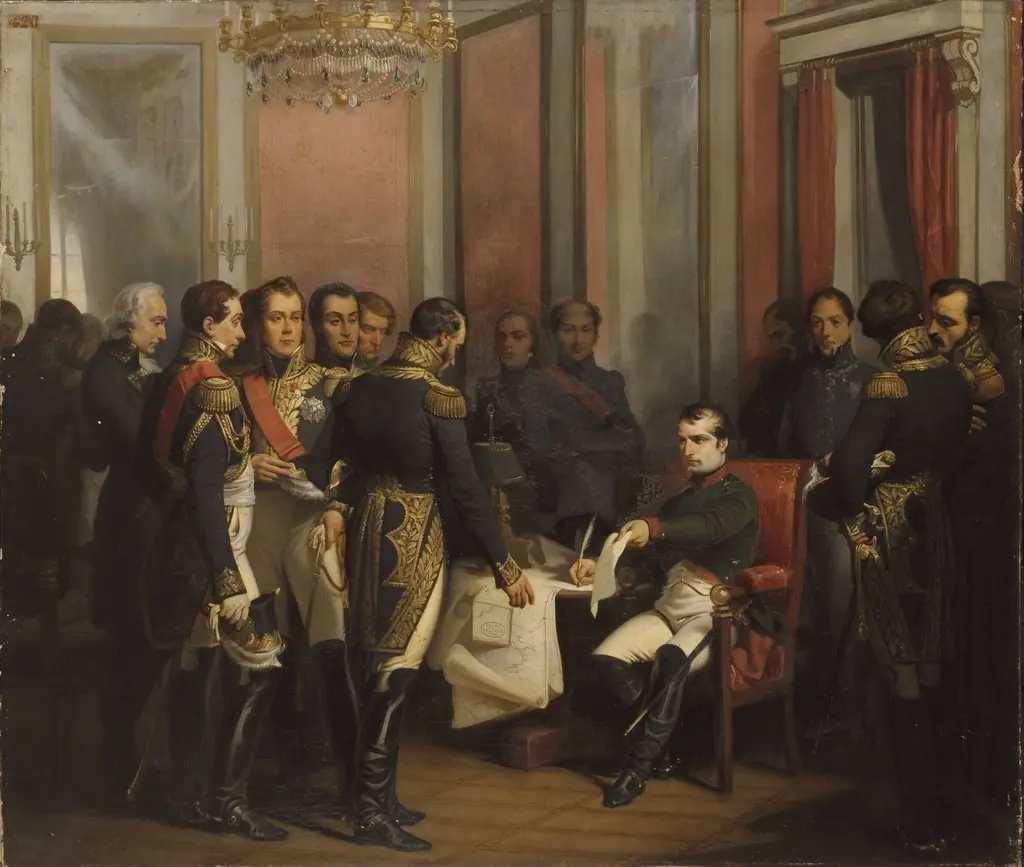 Napoléon signs his abdication at Fontainebleau 11 April 1814
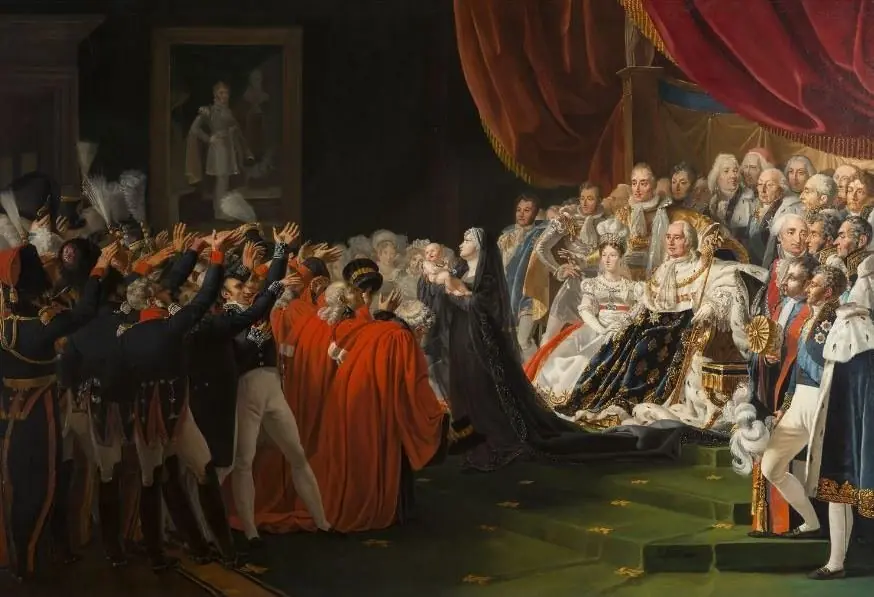 The Duke of Bordeaux presented to the people and the army by the Duchess of Berry in the presence of the king, surrounded by the royal family and the main figures of the State
 Vlad Țepeș și solii turci
 Napoleon in Egypt
 Napoleon I visiting the infirmary at Les Invalides, February 11, 1808
 The Battle of the Pyramids