Artwork
Jacopo Pesaro, Bishop of Paphos, being presented by Pope Alexander VI to Saint Peter
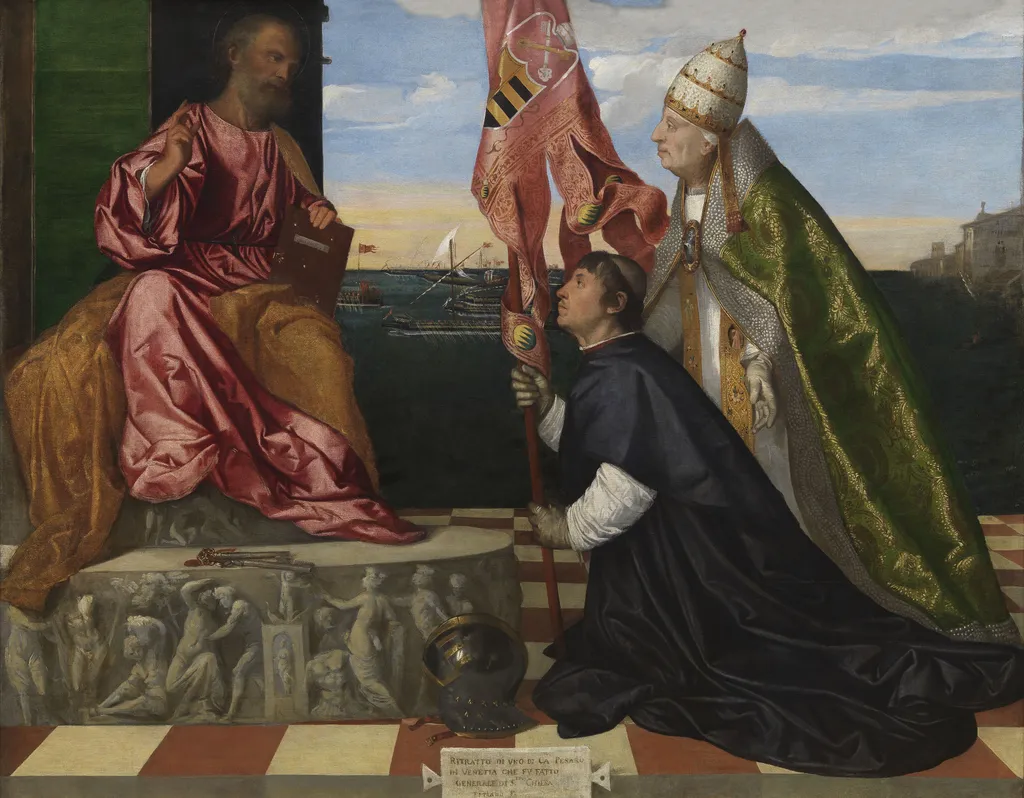
Jacopo Pesaro, Bishop of Paphos, being presented by Pope Alexander VI to Saint Peter is an oil painting by the High Renaissance artist Titian. It dates from 1504 and is held in the collection of the Royal Museum of Fine Arts Antwerp.
About this work
Technique & Style
X-ray examination revealed a uniform colour texture across the surface, undermining earlier hypotheses that the canvas was painted in stages by multiple hands;.
The work is an oil painting on canvas, measuring 146 × 184 cm; records 145 × 183 cm). X-ray examination revealed a uniform colour texture across the surface, undermining earlier hypotheses that the canvas was painted in stages by multiple hands;. Restoration carried out shortly before 2003 confirmed that the handling relates closely to the monumental style Titian developed around 1510–11.
Stylistically, the picture suggests a young artist still balancing several masters: the figure of Pope Alexander VI shows somewhat archaic traits, full lighting and a strong contour line, recalling Gentile Bellini, Titian's first point of reference, while Saint Peter displays the psychological depth characteristic of Giovanni Bellini, the dominant figure of Venetian painting at the time. The kneeling Pesaro, by contrast, is rendered with a vigorous realism that is unmistakably Titian's own, offering an early foretaste of his mature art. The composition adapts the standard Venetian ex-voto formula of a donor presented to the Virgin by his patron saint, especially as developed by Giovanni Bellini, whose hand has been detected in the design.
History & Provenance
The painting was commissioned as an ex-voto by Jacopo Pesaro, a member of the patrician Pesaro family and Bishop of Paphos, to commemorate the Venetian naval victory at Santa Maura (Lefkada) in August 1502 during the Ottoman–Venetian War (1499–1503).
The work remained in the Pesaro family’s possession until the early seventeenth century, likely displayed in their residence. Anthony van Dyck recorded it in Venice in 1623. By 1652 it had entered the collection of Charles I of England, later purchased into the Spanish royal collection and loaned to the convent of San Pasquale in Madrid.
In 1823 it was in the collection of William I of the Netherlands, who donated it to the Royal Museum of Fine Arts, Antwerp, where it remains.
The painting is held in the collection of the Royal Museum of Fine Arts Antwerp (Koninklijk Museum voor Schone Kunsten Antwerpen). Its provenance traces back to the Pesaro family until the early 17th century, after which it entered the collection of Charles I of England. Following the king's execution and the subsequent sale of his assets in 1652, the work was acquired for the Spanish royal collection and housed at the convent of San Pasquale in Madrid.
By 1823, it belonged to William I of the Netherlands, who donated it to the Antwerp museum. The earliest documented record of the artwork is a drawing made by Anthony van Dyck in Venice in 1623.
Context
Scholars have long debated the dating of Titian’s Jacopo Pesaro..., early attributions placed it as his earliest surviving work, but radiographic study shows a uniform texture more akin to his mature style of 1510‑11, supporting later estimates. The painting is situated within the Venetian High Renaissance, reflecting the ex‑voto tradition and the influence of Giovanni Bellini’s compositional formulas, while also displaying Titian’s emerging use of classical reliefs and narrative detail. Critical reception highlights its significance as a rare early public commission commemorating the 1502 Venetian victory at Santa Maura, marking a pivotal moment in Titian’s transition from Bellini’s workshop to independent mastery.
Legacy
The painting was quickly recognized as Titian's earliest surviving canvas, a claim reinforced by technical study and contemporary accounts that place its execution between 1503 and 1506‑5). Its status as an ex‑voto celebrating the 1502 Venetian victory at Santa Maura gave the work a narrative role that later secured a prestigious commission for the Pesaro Altarpiece (1518‑19), a key milestone in the artist’s development. The composition, with Saint Peter presenting the bishop to Pope Alexander VI, was widely reproduced in drawings and engravings, shaping the visual language of Venetian donor portraits and contributing to Titian’s reputation as a master of narrative altarpieces.
Overview
Titian's oil painting, "Jacopo Pesaro, Bishop of Paphos, being presented by Pope Alexander VI to Saint Peter," depicts a significant moment of ecclesiastical and military patronage. Housed in the Royal Museum of Fine Arts, Antwerp, this work was commissioned as a votive offering, commemorating a specific Venetian naval triumph. Its creation date is now generally placed around 1510–11, making it an early example of the artist's developing style.
Subject & Meaning
The painting serves as an ex-voto, commissioned by Jacopo Pesaro to commemorate the Venetian naval success in retaking Santa Maura from the Ottoman Turks in August 1502. Pesaro, a prominent member of the Venetian patriciate, is shown being introduced by Pope Alexander VI to Saint Peter, signifying divine approval for his role as papal legate and commander of the fleet. This act of devotion underscores the religious and political dimensions of the conflict.
Own this work as a print
Artist & collection
Artist
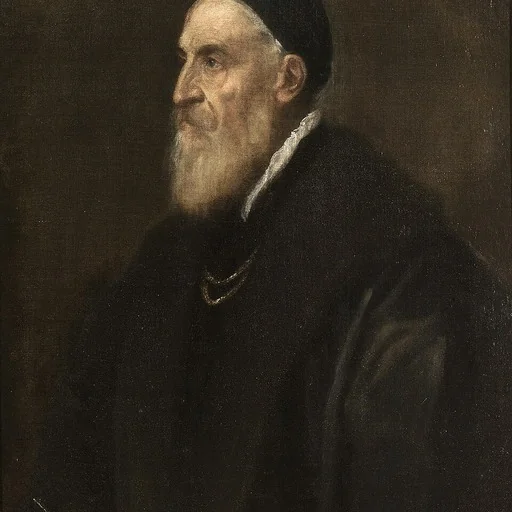
Tiziano Vecellio (Italian:; c. 1488/1490 – 27 August 1576), Latinized as Titianus, hence known in English as Titian ( TISH-ən), was an Italian Renaissance painter. The most important artist of Renaissance Venetian…


- Madonna and Child Enthroned with Saints and Donor
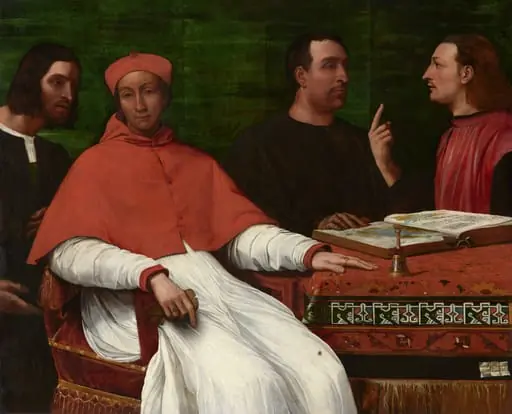 Cardinal Bandinello Sauli, His Secretary, and Two Geographers
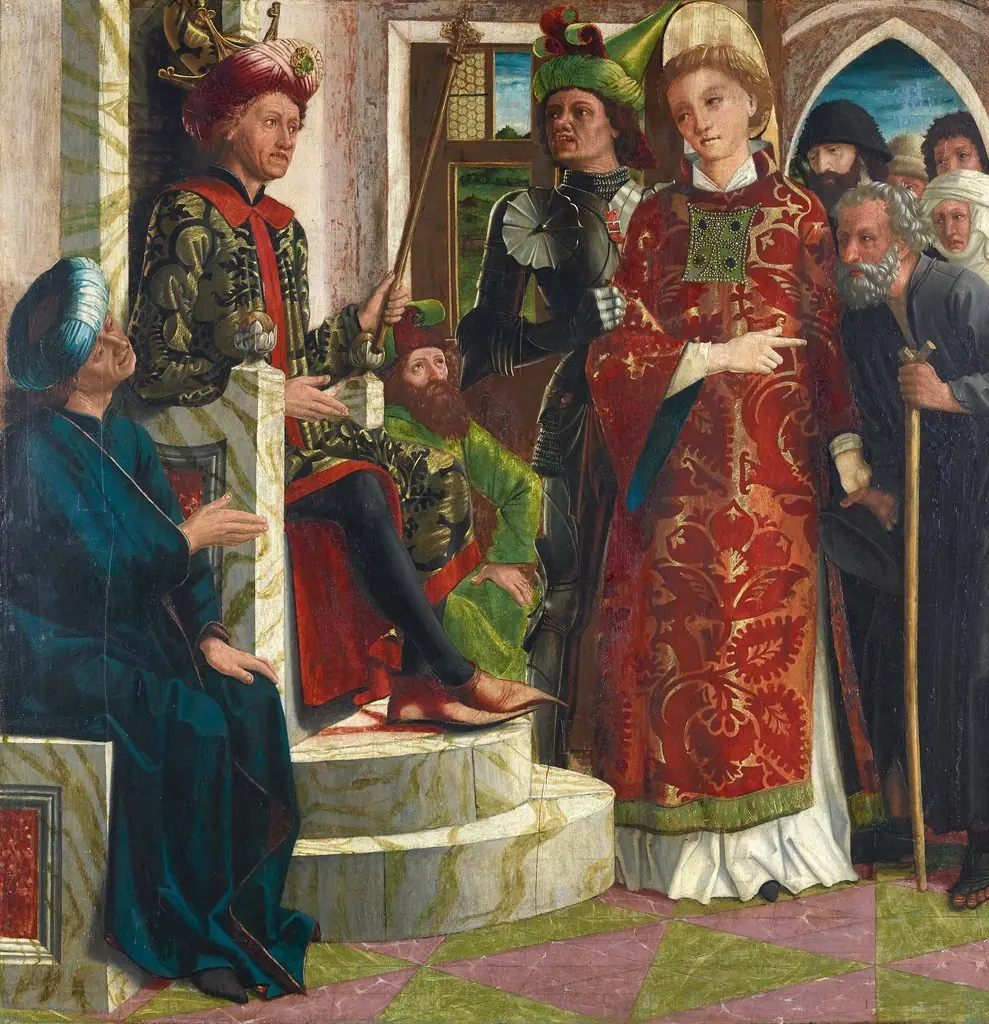 Der hl. Laurentius vor Kaiser Decius
 Der Disput von Kirchenlehrern über das Mysterium der unbefleckten Empfängnis
 Portrait of Cardinal Marcello Cervini degli Spannocchi
 The Holy Family, with the Young Saint John the Baptist, a Cat, and Two Donors
 Saint Bruno and his Companions before Urban II
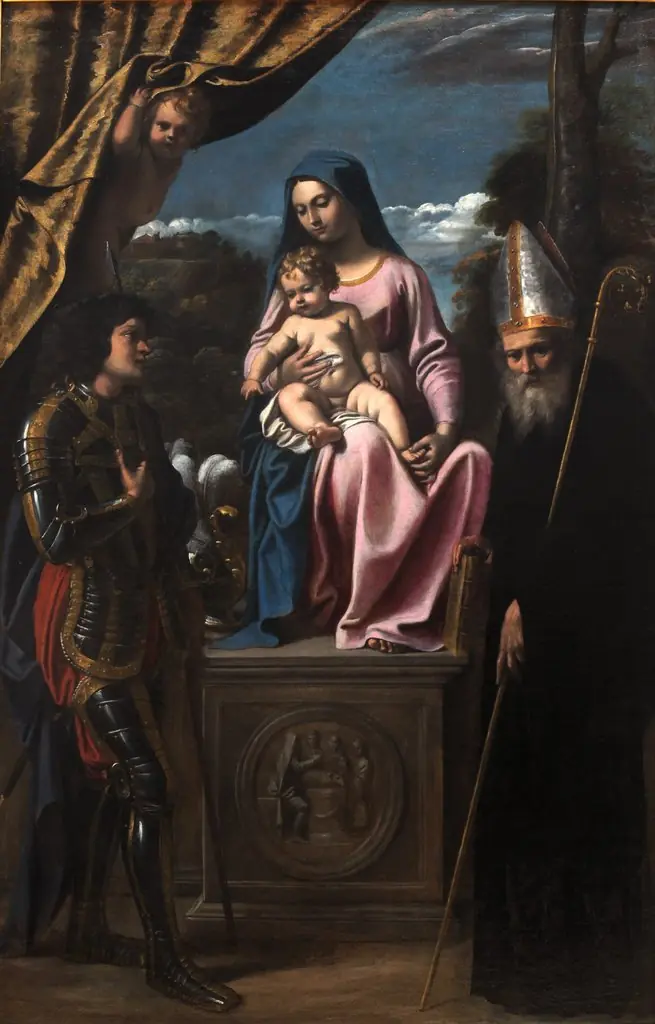 Virgin and Child between St Benedict and St Quentin
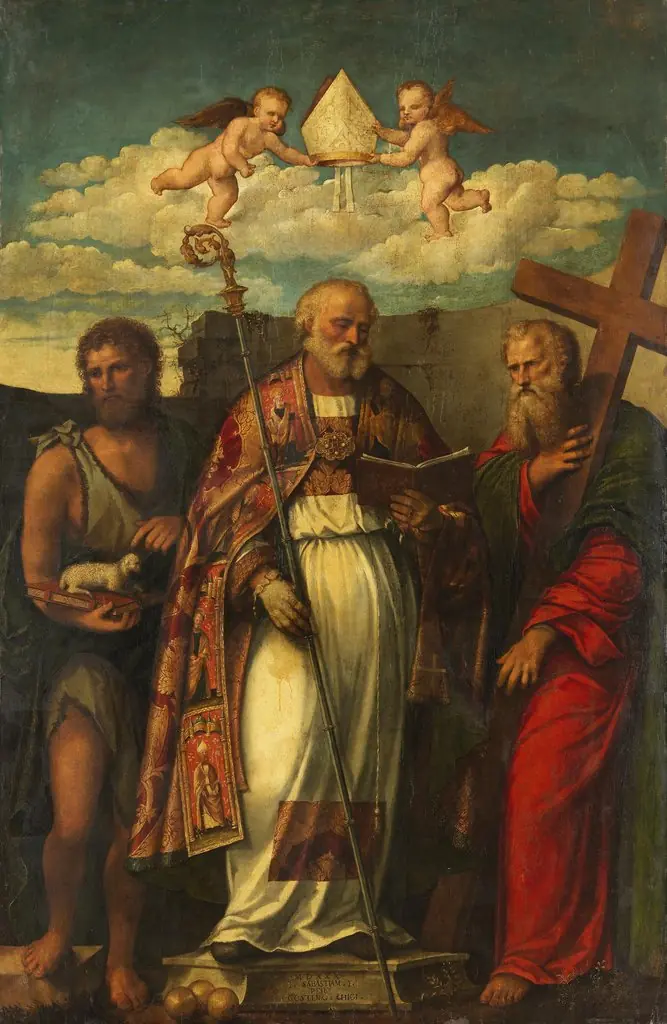 Saint Nicholas of Bari, John the Baptist and Philip
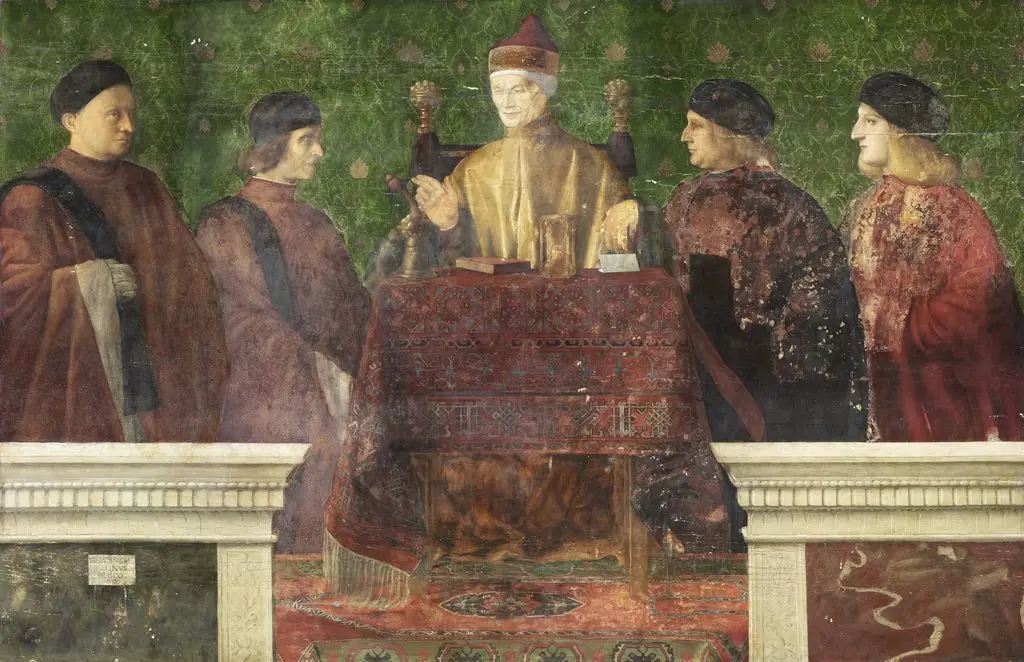 The Doge Leonardo Loredan with four Companions
 Giacomo and Cardinal Marco, investing Andrea, Abbot of San Zeno, with his Benefice
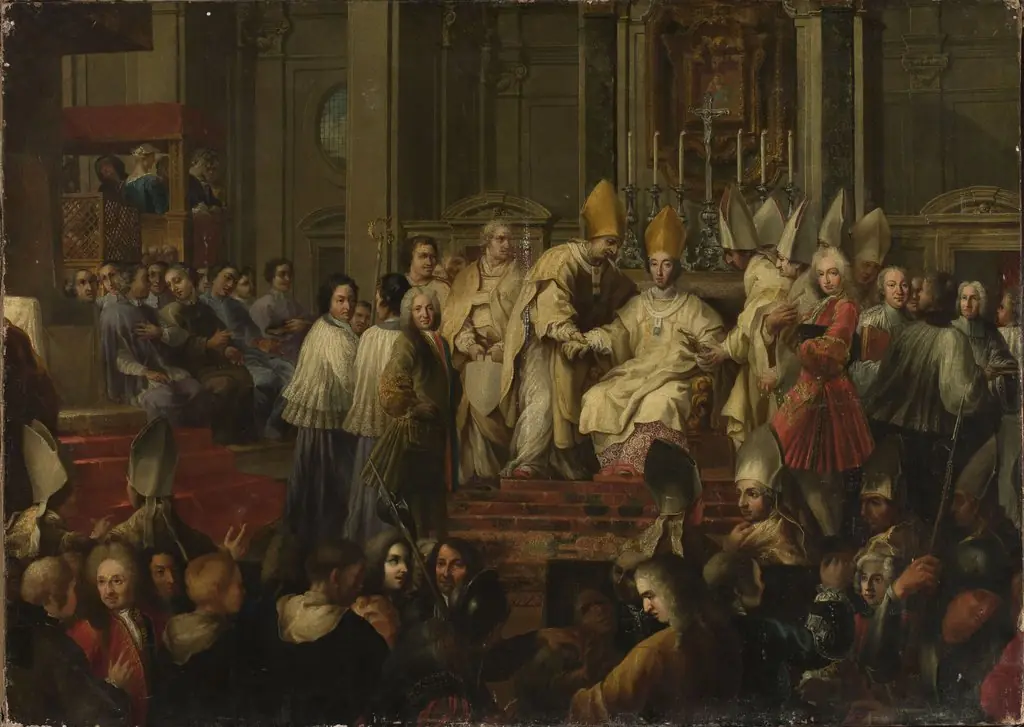 Anointing of a bishop