Artwork
Peter Paul Rubens
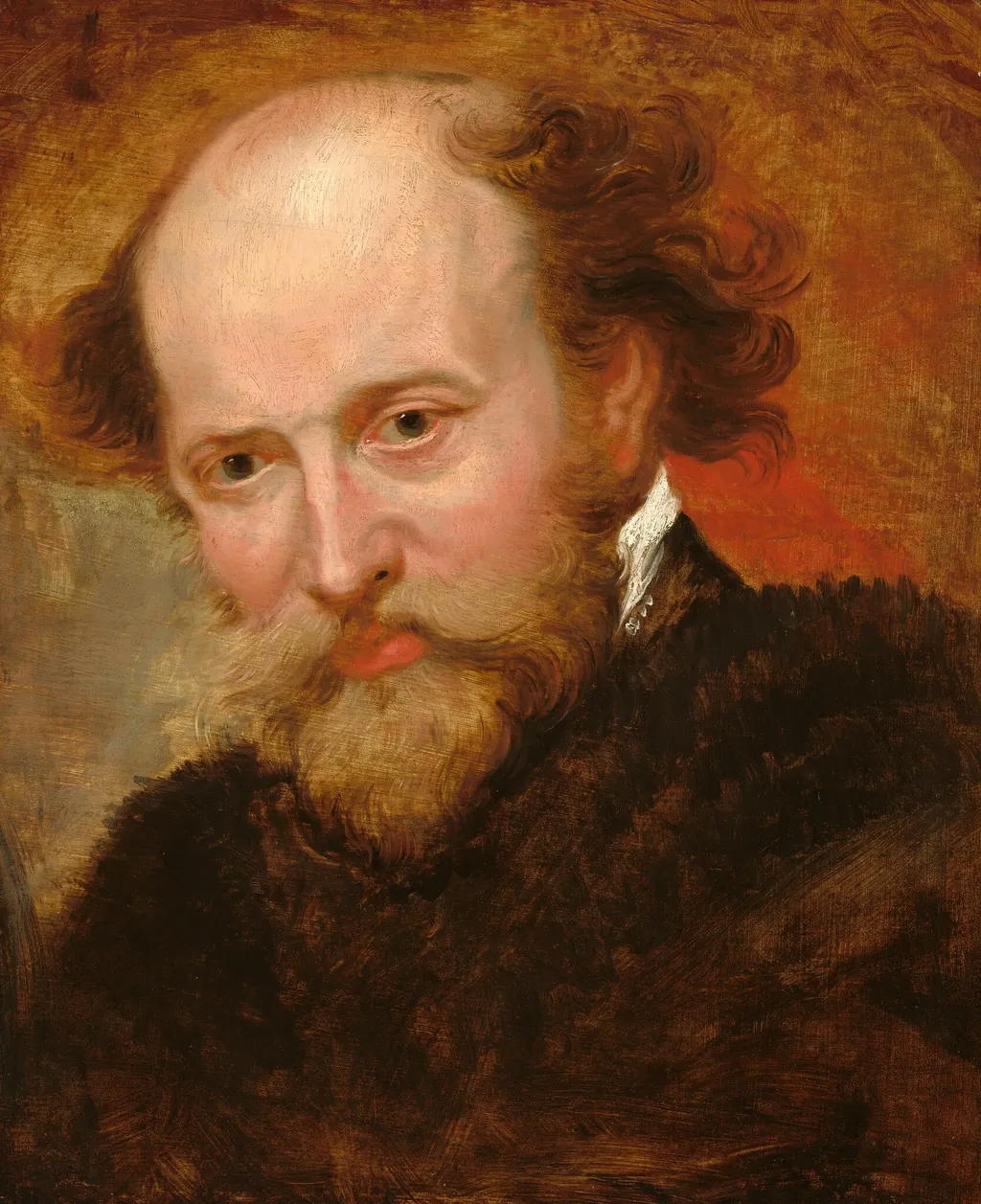
Peter Paul Rubens is an oil painting by the Baroque artist Studio of Sir Peter Paul Rubens. It dates from 1620 and is held in the collection of the National Gallery of Art.
About this work
Subject & Meaning
The painting is a portrait that represents Peter Paul Rubens, the Flemish Baroque master, as its central figure.
The painting is a portrait that represents Peter Paul Rubens, the Flemish Baroque master, as its central figure. According to the National Gallery of Art’s catalog, the work shows Rubens himself, underscoring his status as both artist and subject within the tradition of self‑portraiture. The composition lacks overt allegorical symbols, but by presenting the artist in a direct, bust‑length format it conveys the painter’s public persona and artistic authority.
Provenance records indicate the piece entered the National Gallery of Art in 1960 after a chain of ownership that began in 19th‑century Europe, reinforcing its significance as a historically documented work of Rubens scholarship.
Technique & Style
Executed in 1620, this portrait utilizes oil paint applied to a wooden panel support. The work measures 41.3 by 33.7 centimeters. While historically linked to Peter Paul Rubens as both subject and potential creator, technical and stylistic analysis reveals specific weaknesses that complicate its attribution.
Scholars suggest the painting may not be an original by Anthony van Dyck, as once proposed in early inventories describing a bold-headed portrait, but rather a contemporary replica of a lost Van Dyck original. These qualitative assessments regarding the handling of the medium and the overall execution distinguish the piece from the definitive works of the attributed masters, positioning it as a significant, albeit derivative, example of early seventeenth-century Flemish portraiture.
History & Provenance
The painting, dated 1620 and executed in oil on panel, is believed to depict Peter Paul Rubens and may be associated with an Antwerp inventory entry from 18 February 1689 that recorded a portrait of Rubens painted by Van Dyck. However, questions regarding attribution have led scholars to consider the work possibly a contemporary replica of a lost Van Dyck original. The earliest documented provenance traces the panel to S. Robinson, Esq., in London, after which it entered the London art market.
From there it passed to a private collection in the United States before being purchased in 1926 by the New York dealer P. Jackson Higgs. In 1927 the work was sold to William R. Timken of New York, and upon his death it passed to his widow, Lillian Guyer Timken. She bequeathed the painting in 1960 to the National Gallery of Art in Washington, D.C., where it remains in the collection.
The painting is held in the National Gallery of Art in Washington, D.C., where it is catalogued under accession number 1960.6.33. It entered the museum’s collection in 1960 as a bequest from Lillian Guyer Timken, following its acquisition in 1927 by her husband, William R. Timken. Prior to this, the work was owned by P. Jackson Higgs of New York, who purchased it in 1926 from a London art market.
The painting has been part of the gallery’s permanent collection since its donation, with no major exhibitions documented in the provided sources.
Context
Scholarship surrounding this portrait has centered on its contested attribution and its role in understanding the artistic dialogue between Peter Paul Rubens and Anthony van Dyck. An Antwerp estate inventory from 1689 (Denucé, 1932) tentatively linked the work to Van Dyck, describing a 'bold head' of Rubens painted by him, though the National Gallery of Art’s panel exhibits stylistic weaknesses casting doubt on this claim. Early 20th-century critics, including Frank E. Washburn Freund, initially championed its authenticity as a Rubens self-portrait, framing it as a significant rediscovery within the artist’s oeuvre.
However, subsequent analysis has increasingly favored the interpretation of the work as a contemporary replica of a lost Van Dyck original, situating it within the broader context of workshop production and artistic emulation in 17th-century Antwerp. Its place in art history thus hinges on its ambiguous authorship, reflecting the fluid boundaries of collaboration and influence between two foundational Baroque masters.
Legacy
The work entered the National Gallery of Art in 1927 after its purchase from P. Jackson Higgs and was bequeathed to the museum in 1960, establishing a documented provenance that traces from an English private collection through the Higgs gallery to the Timken family. Scholarly attention to the attribution and nature of the piece is evident in contemporary analyses that discuss its possible relationship to a lost Van Dyck original and treat it as a contemporary replica, reflecting ongoing debates about Rubens’s workshop practices;. The painting’s cataloguing in the NGA collection, with details of oil on panel, dimensions, and a 1620 inception date, underscores its recognized status within the museum’s holdings and contributes to the broader reputation of Rubensian portraiture in early modern art.
Overview
This oil on panel painting, titled Peter Paul Rubens, depicts the renowned Baroque artist in a seated pose within a modest interior. The identity of the painter responsible for this work remains largely unknown, which distinguishes it within art history. This anonymity prevents a deeper understanding of the artist's broader oeuvre or biographical context, focusing attention instead on the subject and the painting itself.
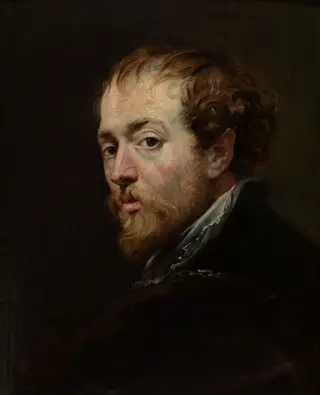
Artist & collection

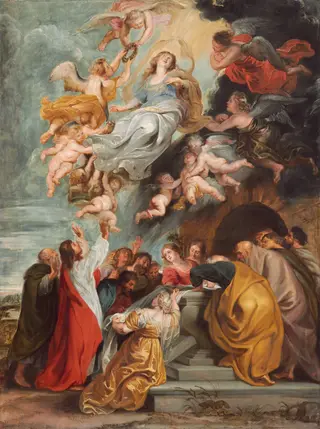
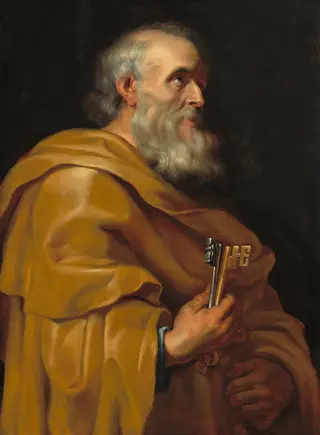
- Portrait of Peter Paul Rubens
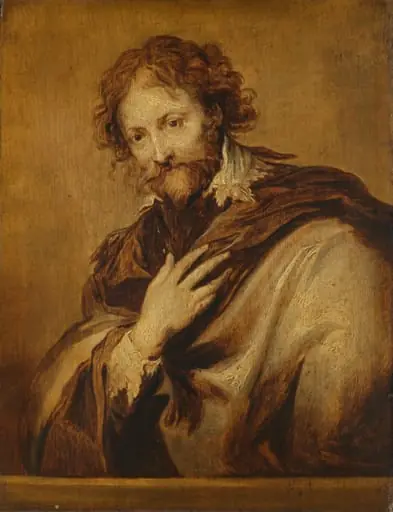 Portrait of Peter Paul Rubens (1577-1640)
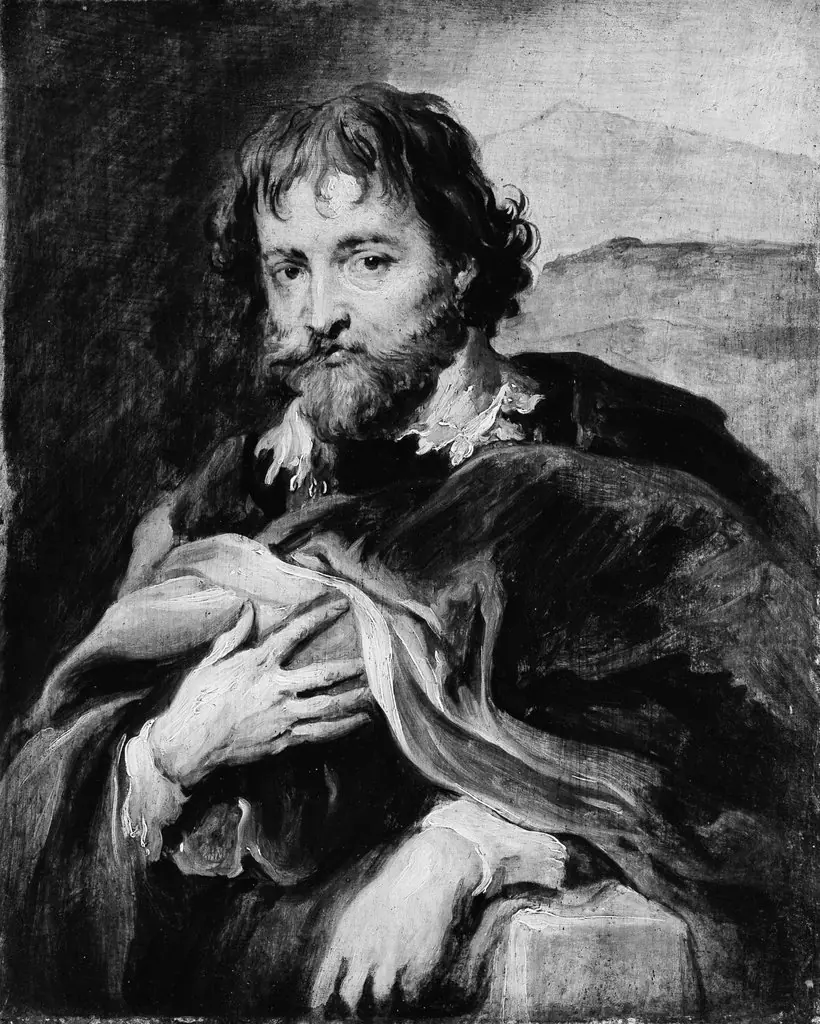 Sir Peter Paul Rubens (1577–1640)
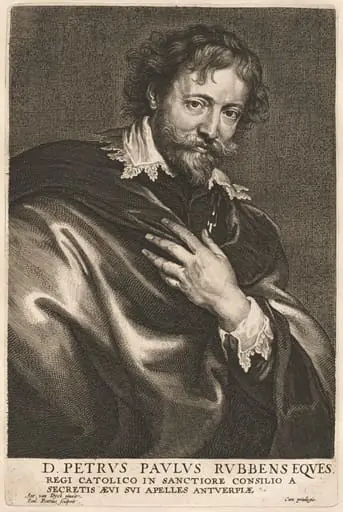 Peter Paul Rubens
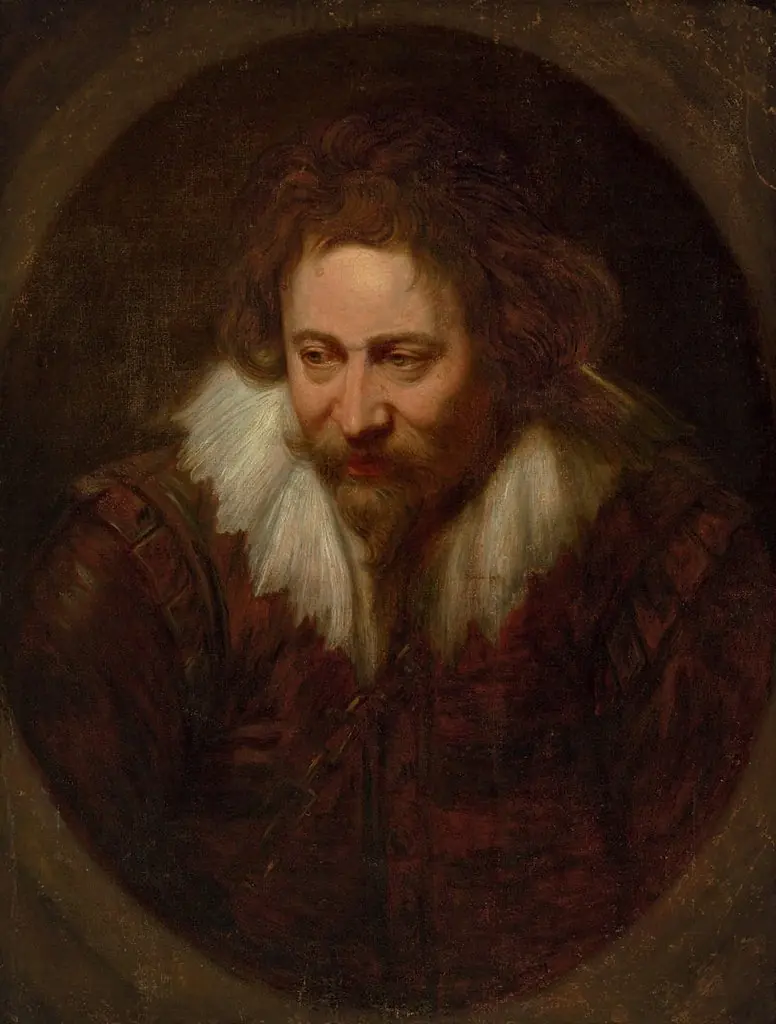 Portrait of a man, known traditionally as Peter Paul Rubens
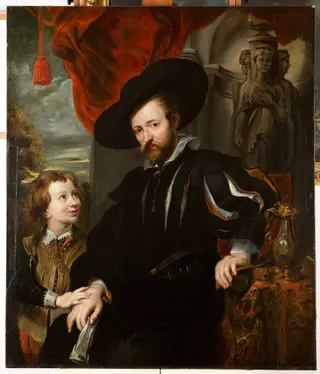 Peter Paul Rubens mit seinem Sohn Albert
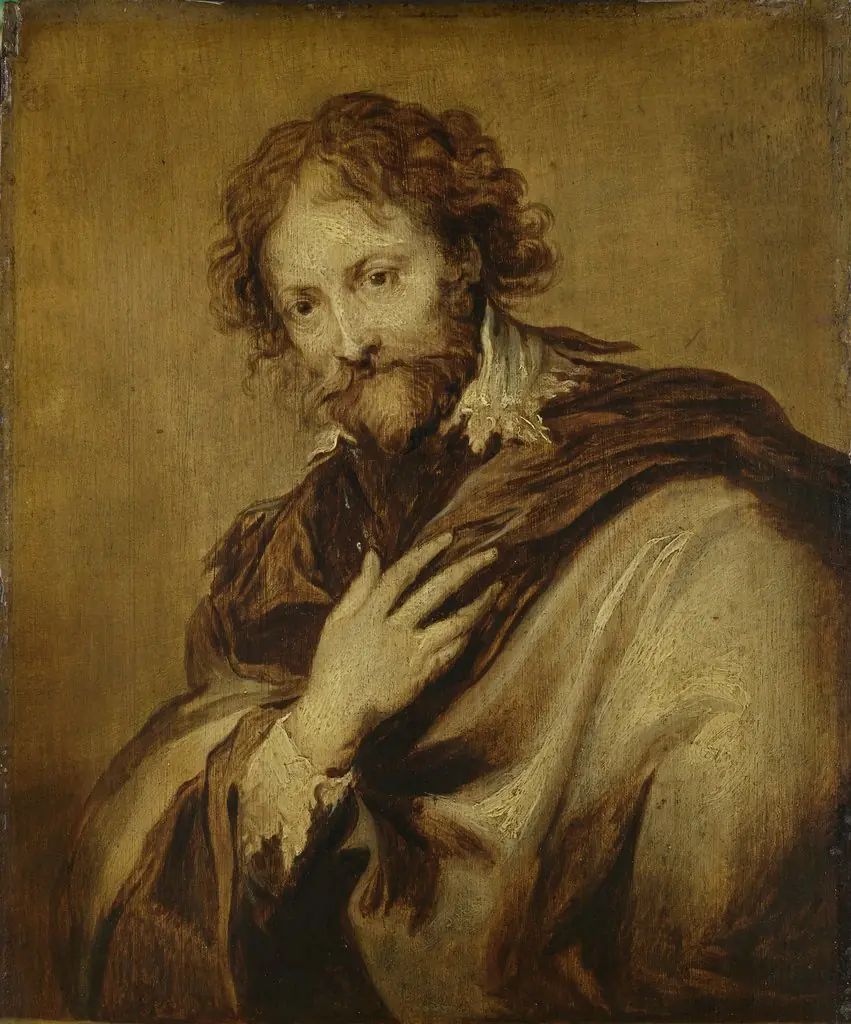 Portrait of a man, identified as Peter Paul Rubens (1577-1640). Painter and diplomat