Artwork
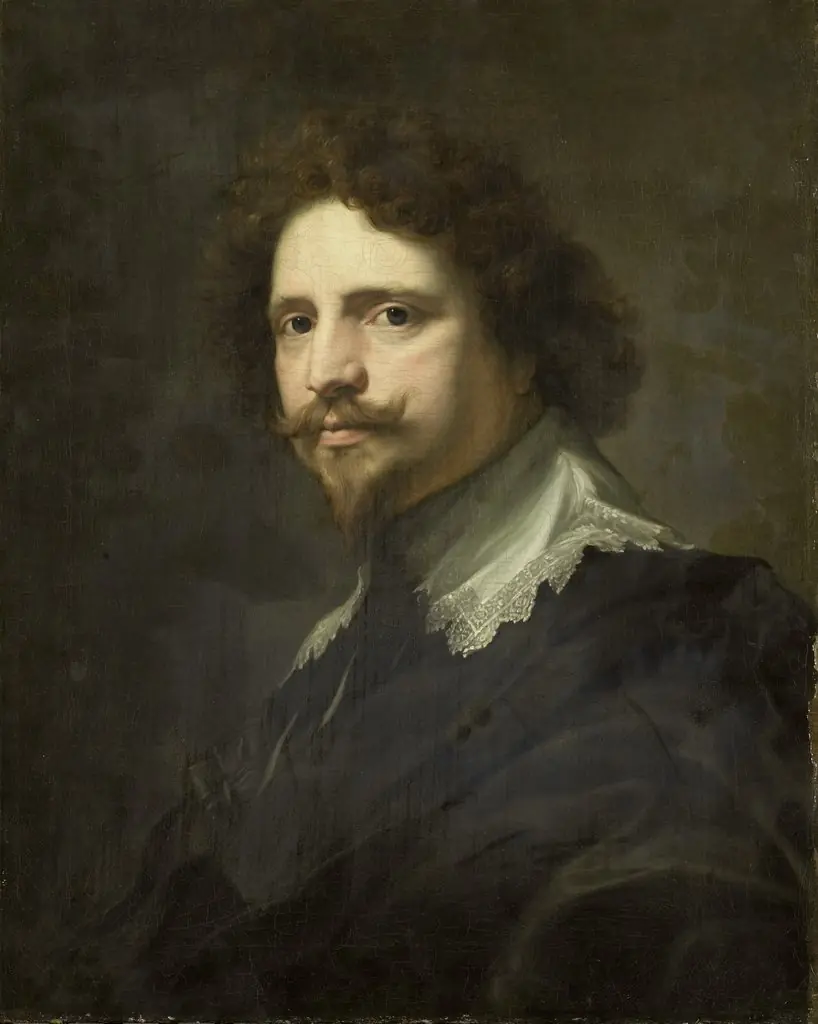
Portrait of a man, identified as Peter Paul Rubens (1577-1640). Painter and diplomat
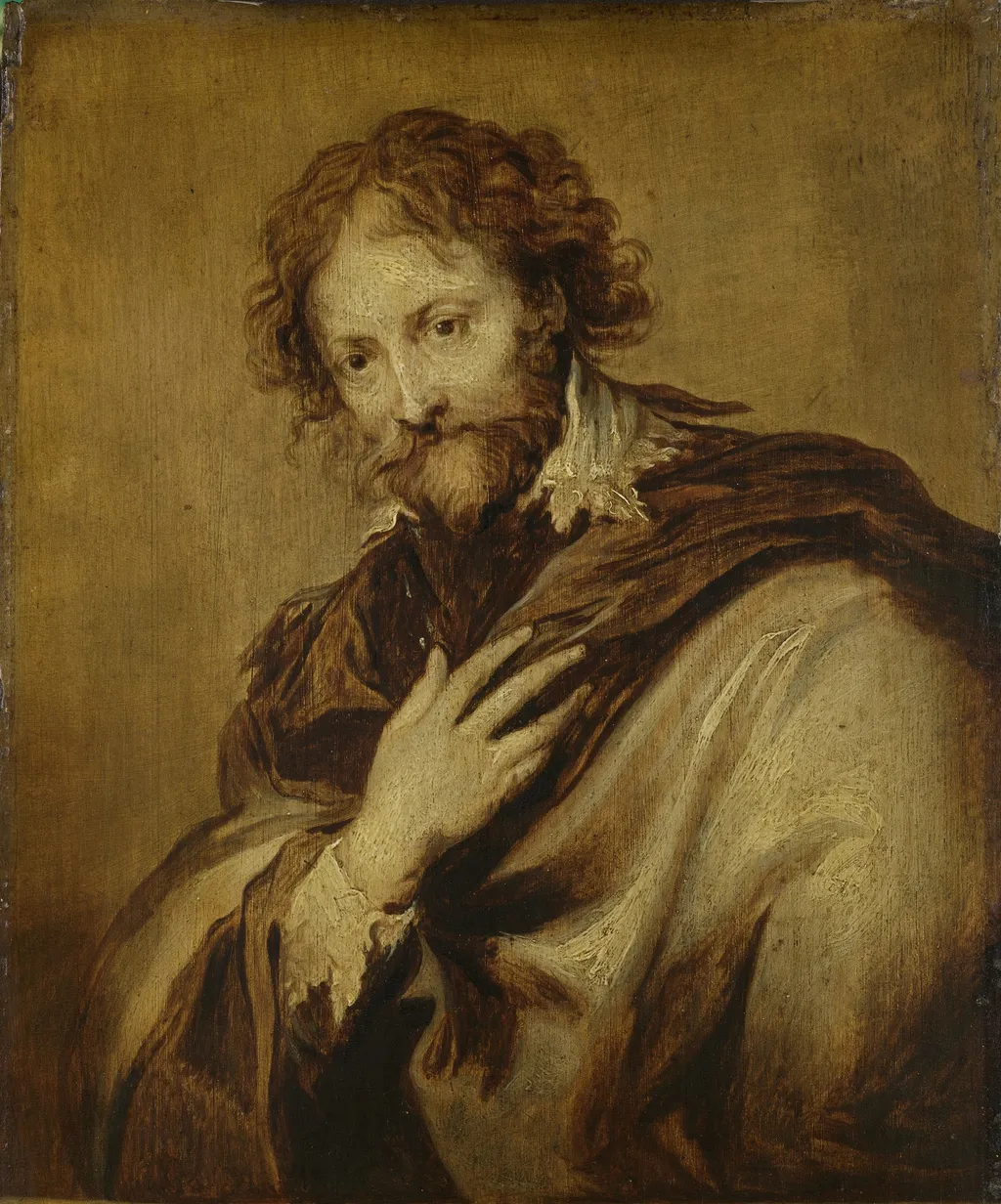
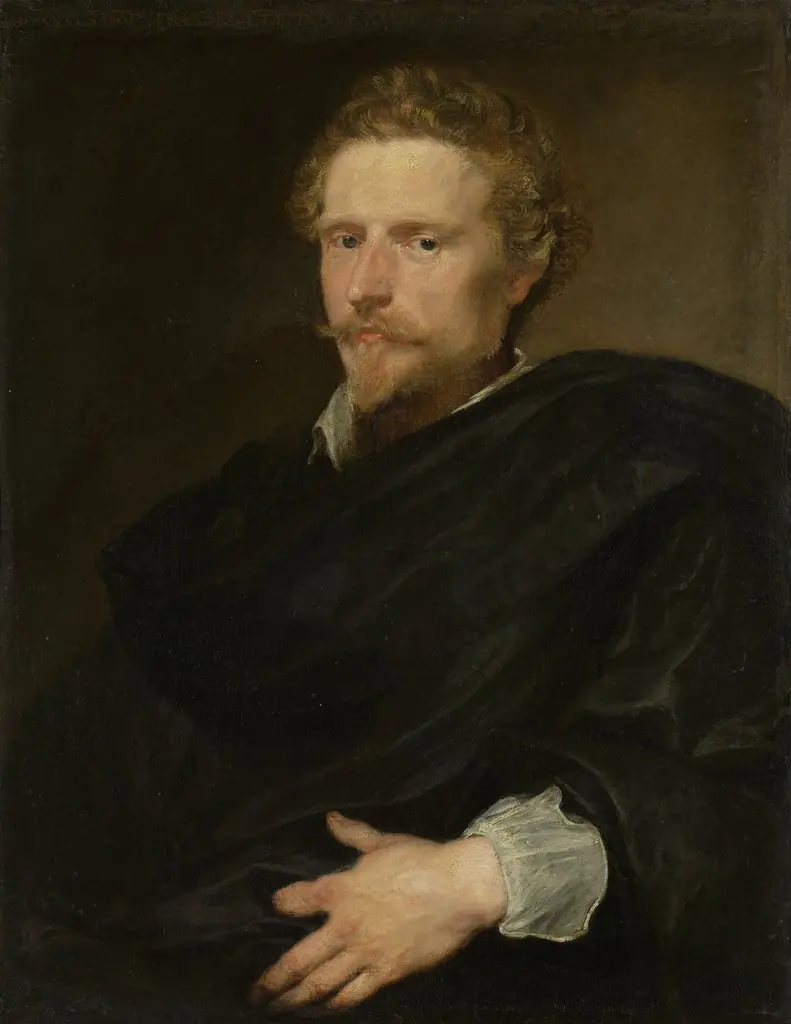
Portrait of a man, identified as Peter Paul Rubens (1577-1640). Painter and diplomat is an oil painting by the Flemish Baroque painting artist Anthony van Dyck. It is held in the collection of the Rijksmuseum.
About this work
Subject & Meaning
As a portrait, the image serves as a visual record of Rubens's likeness, created posthumously since the work dates to 1650, a decade after the subject's death.
The work depicts Peter Paul Rubens, the renowned Flemish painter and diplomat. As a portrait, the image serves as a visual record of Rubens's likeness, created posthumously since the work dates to 1650, a decade after the subject's death. The painting functions as a commemorative representation, preserving the memory of the artist within the collection history of the Low Countries.
No complex allegorical symbols or additional iconographic elements are described in the available records beyond the direct identification of the sitter.
Technique & Style
Oil paint applied to a wooden panel creates a smooth, reflective surface that defines the work’s tactile presence. The brushwork exhibits Van Dyck’s characteristic fluid modeling, with delicate chiaroscuro that models facial features and drapery in three dimensions. Subtle impasto highlights the sitter’s collar and cuffs, adding textural contrast.
The composition balances restrained realism with elegant poise, reflecting Baroque formal conventions while emphasizing the sitter’s dignified bearing.
History & Provenance
The portrait of Peter Paul Rubens attributed to Anthony van Dyck was created in 1650 in the Low Countries. It entered the collection of Lucretia Johanna van Winter and subsequently passed through the hands of Hendrik Six van Hillegom, Jan Pieter Six VI, Pieter Hendrik Six van Vromade, and Jan Six van Vromade before being acquired by the Rijksmuseum. The work, painted on panel with oil, measures 26 cm in height and 20 cm in width and remains part of the museum's collection.
Portrait of a man, identified as Peter Paul Rubens, painted by Anthony van Dyck in 1650, is held by the Rijksmuseum in Amsterdam. The work is cataloged under the museum's collection with inventory number SK-A-2476 and has been part of the Rijksmuseum's exhibition since its acquisition.
The painting entered the museum's collection through successive owners including Lucretia Johanna van Winter, Hendrik Six van Hillegom, Jan Pieter Six VI, Pieter Hendrik Six van Vromade, and Jan Six van Vromade before being acquired by the Rijksmuseum.
Overview
Anthony van Dyck’s oil portrait, dated circa 1650, presents a seated gentleman identified as the celebrated Flemish painter and diplomat Peter Paul Rubens (1577–1640). Executed in the Baroque portrait tradition, the work emphasizes the sitter’s dignified presence through restrained composition and a dark, unadorned backdrop that directs attention to his facial features and attire.
Context
Van Dyck began his artistic training in Rubens’s workshop, absorbing the master’s compositional vigor and colour palette. By the time he painted this portrait, van Dyck had established a reputation as a leading portraitist across Europe, and the painting serves as a visual testament to the professional lineage linking the two artists within the broader Baroque movement.
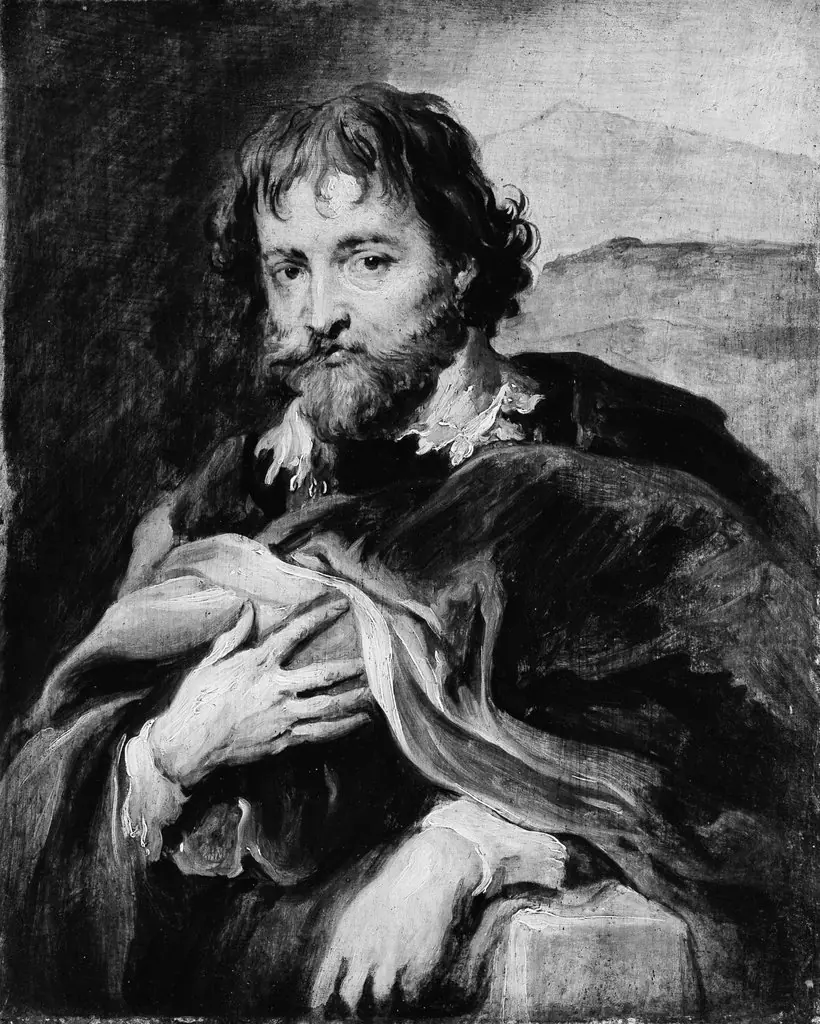
Own this work as a print
Artist & collection
Artist
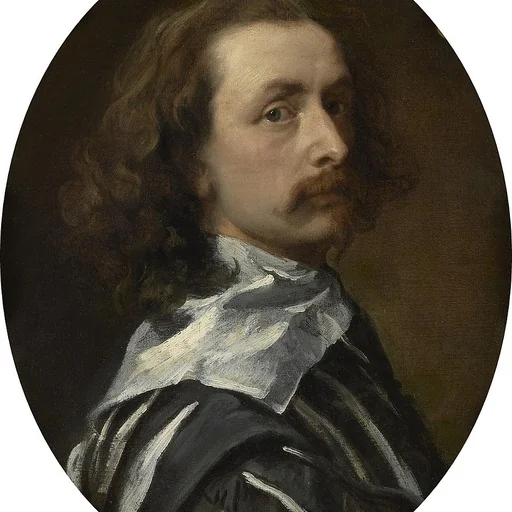
Sir Anthony van Dyck (; Dutch: Antoon van Dijck; 22 March 1599 – 9 December 1641) was a Flemish Baroque artist, who became the leading court painter in England after success in the Spanish Netherlands and Italy.

 Johannes Baptista Franck (ca. 1599-1663)
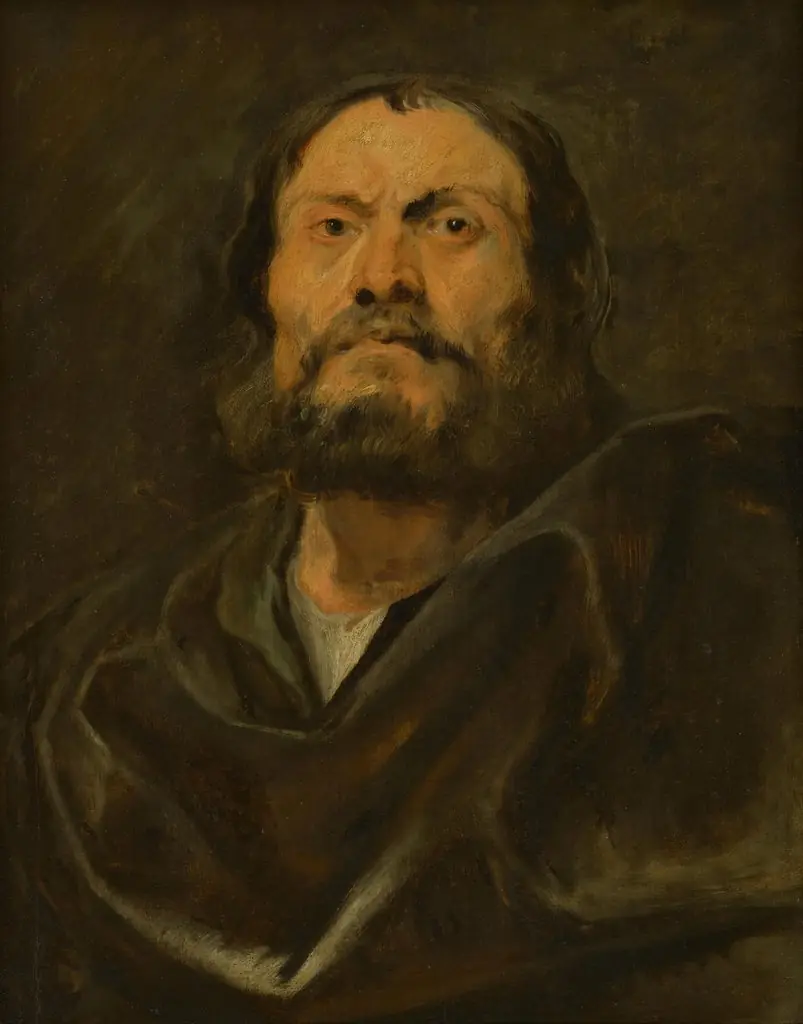 An Apostle
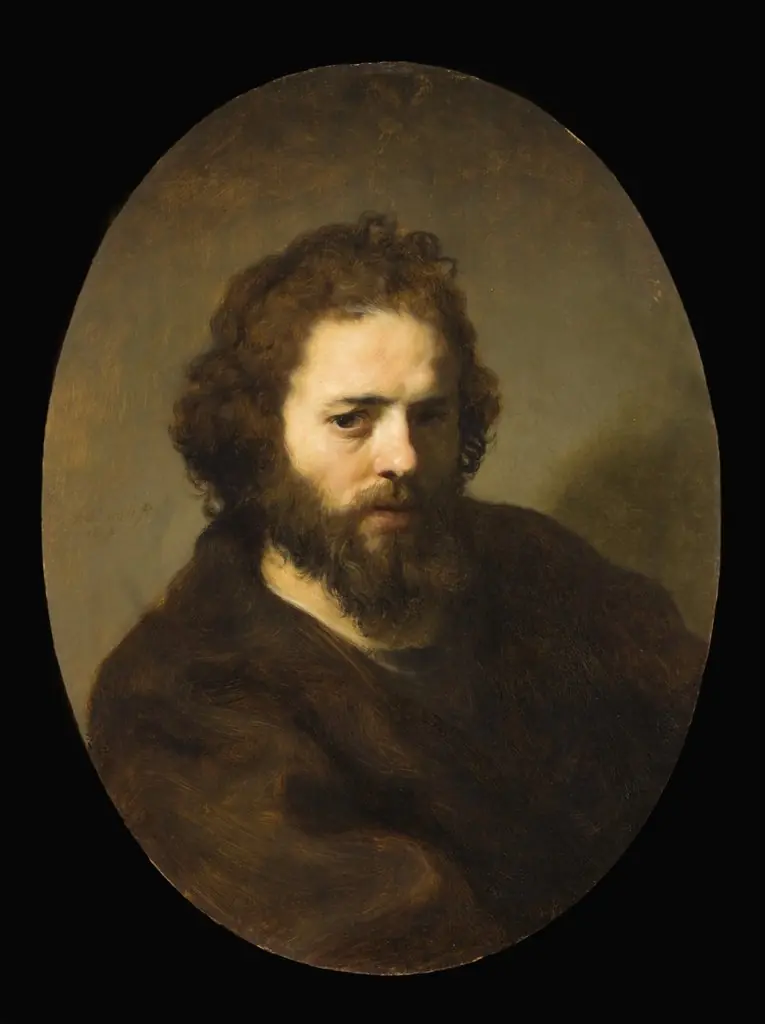 Portrait of a Bearded Man, formerly called John the Baptist
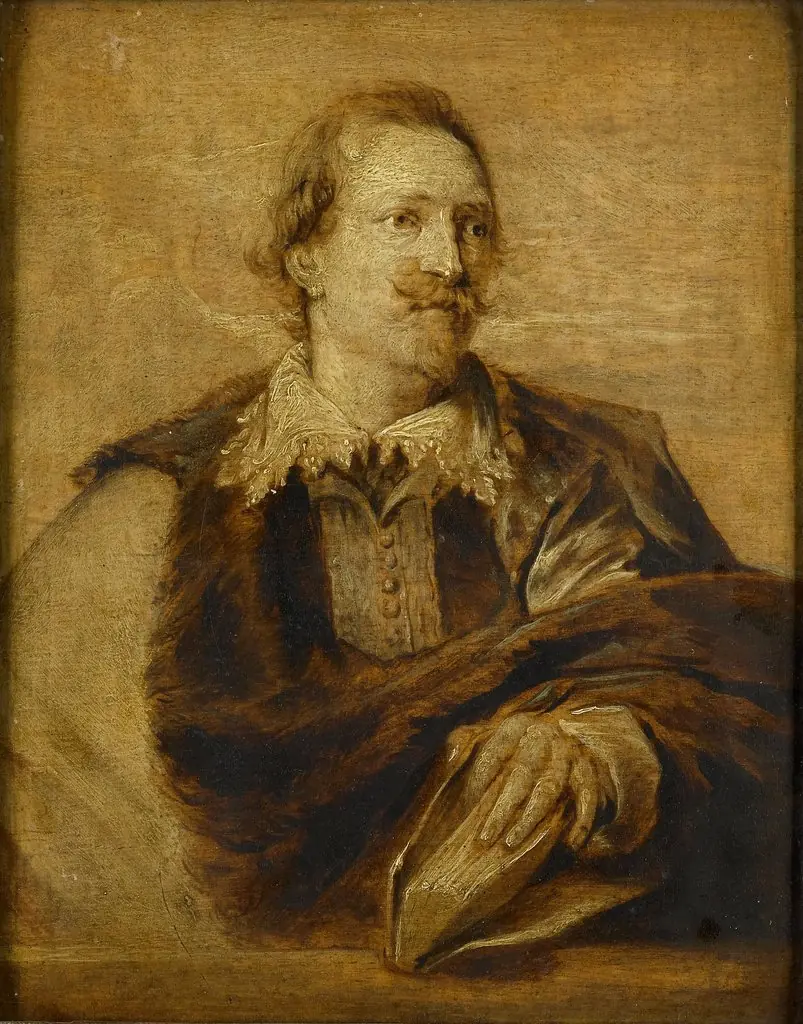 Jan Caspar Gevaerts (1593-1666). Jurist, historian and philologist
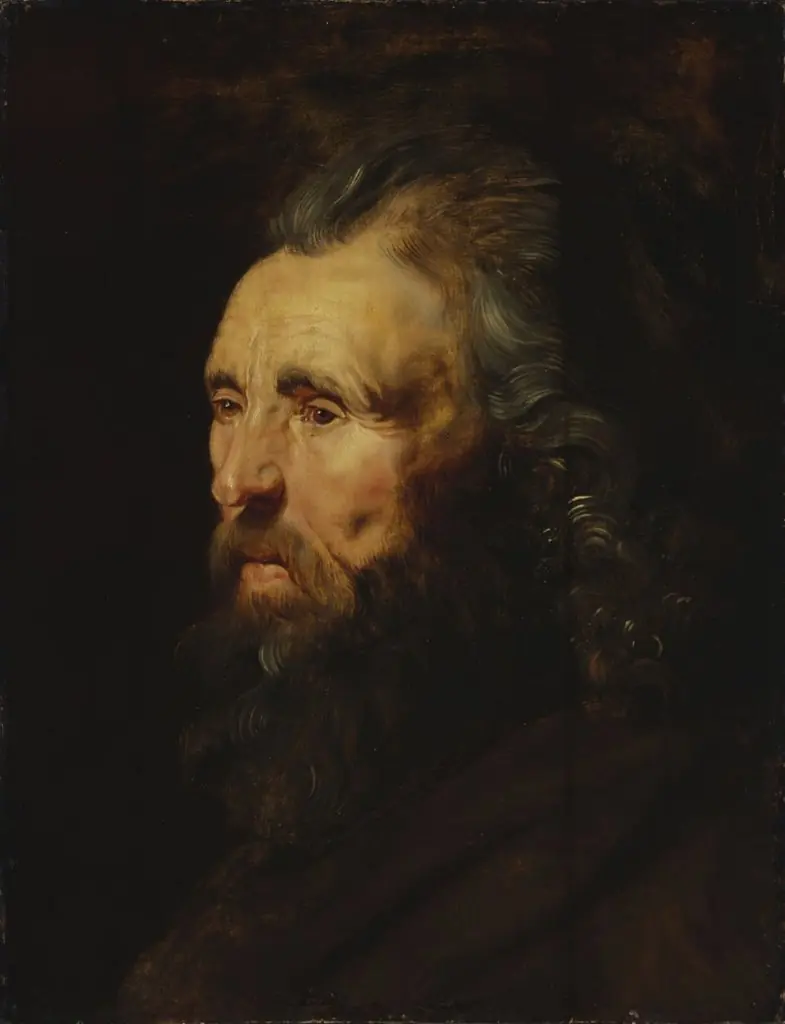 Study of a Man's Head
 Portrait of Michel le Blon (1587-1657). Agent of Queen Christina of Sweden, goldsmith and engraver
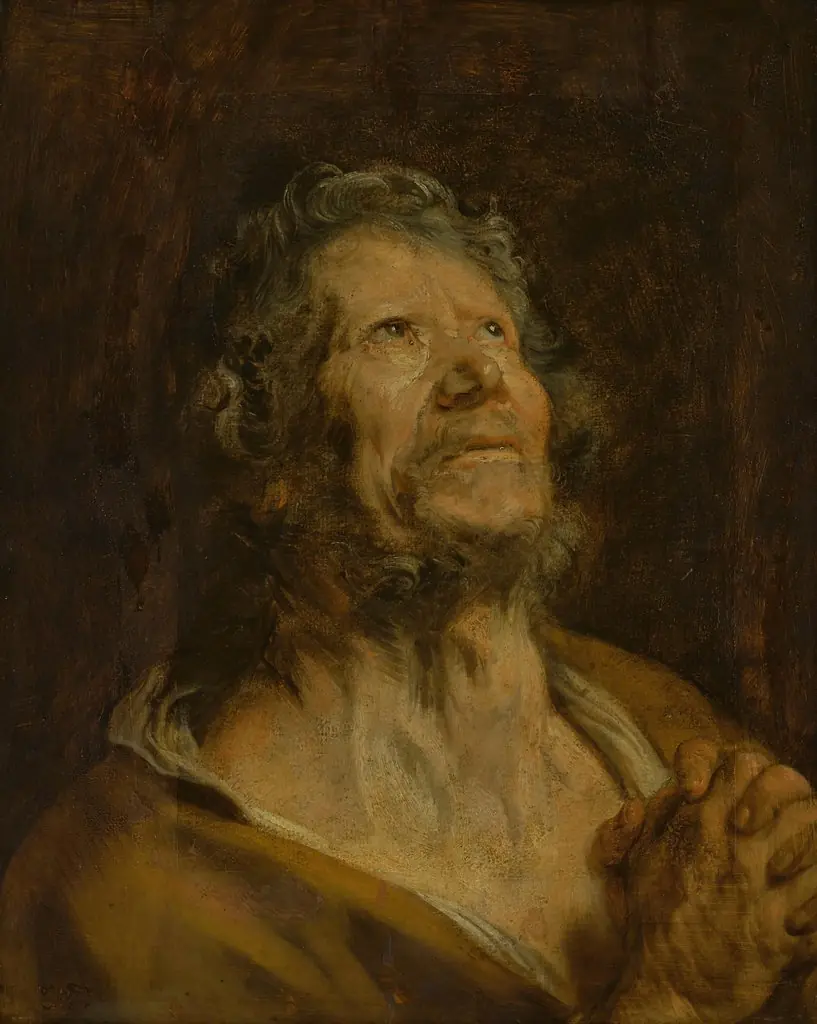 An Apostle with Folded Hands