Artwork
Saint Peter
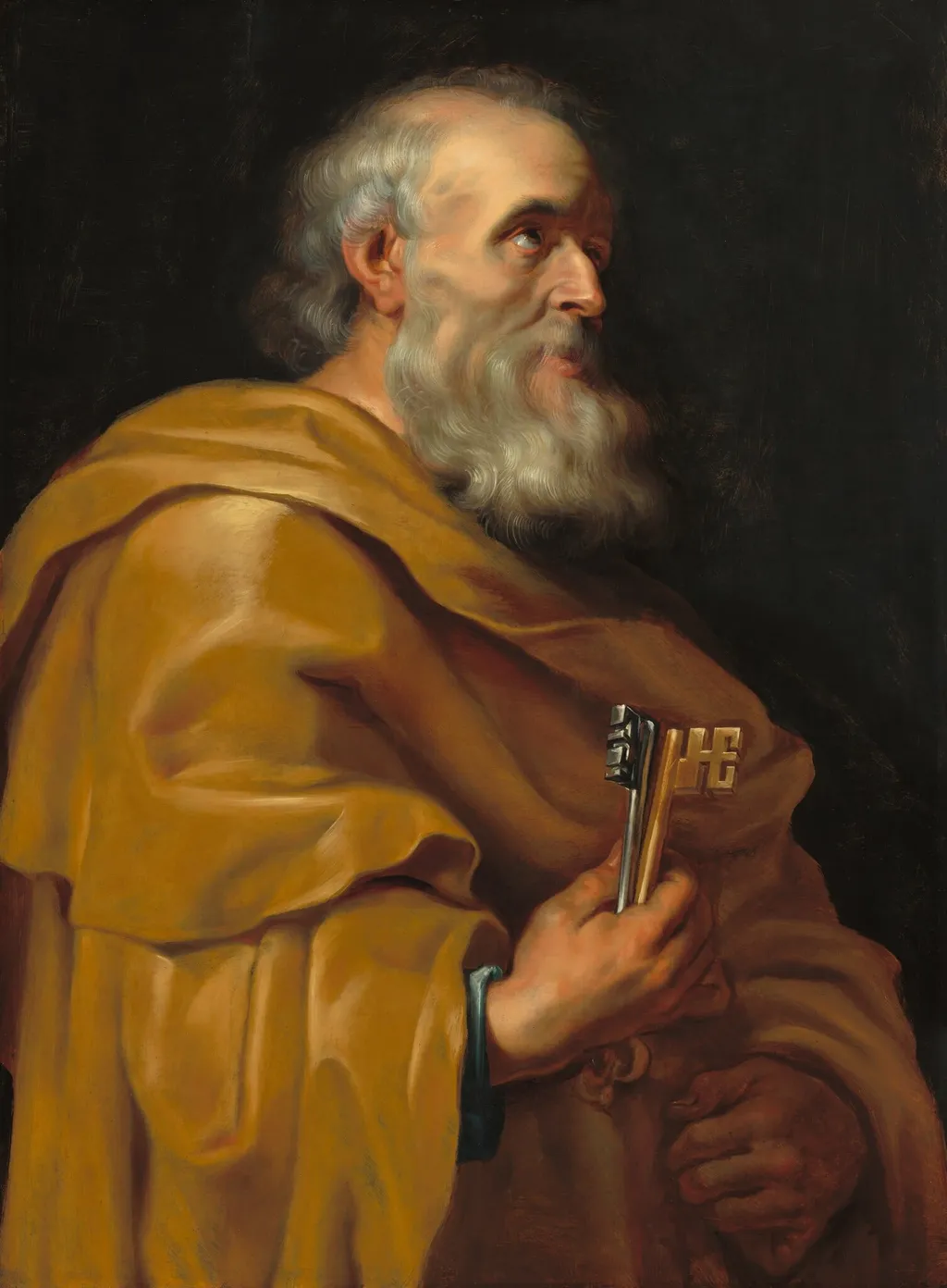
Saint Peter is an oil painting by the Baroque artist Studio of Sir Peter Paul Rubens. It dates from 1617 and is held in the collection of the National Gallery of Art.
About this work
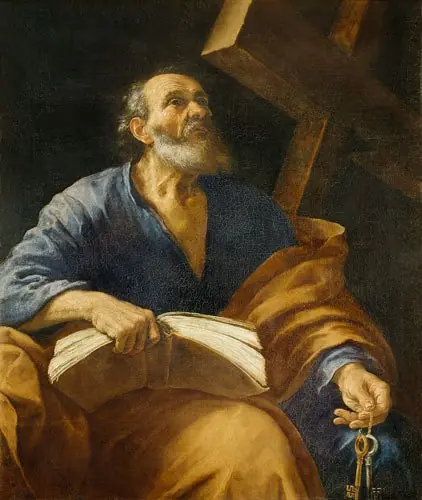
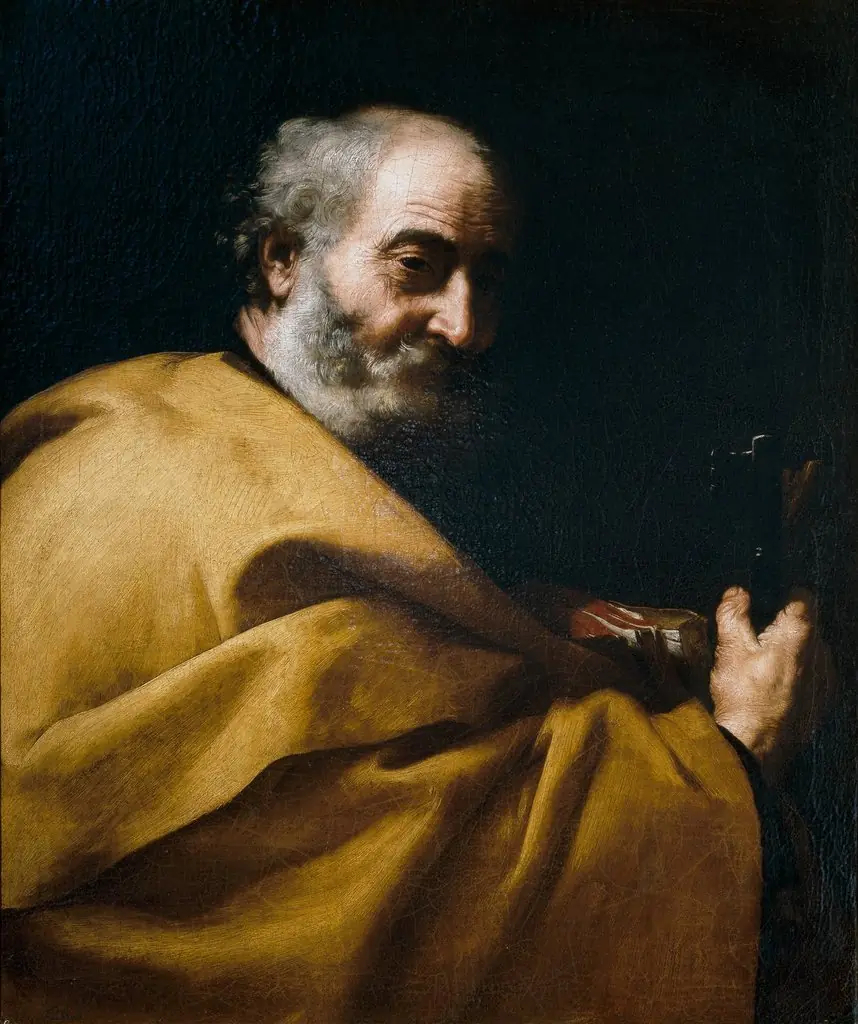
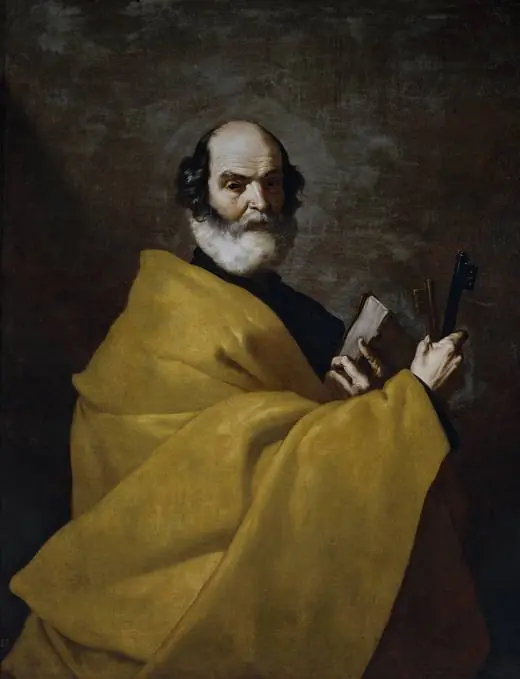
Saint Peter stands in a long robe with a thick gray beard, a book in one hand and a key in the other, his face tired but calm. Soft light and dark contrast set him against a plain background, a gold halo glowing behind his head. Oil on panel, 1617.
Technique & Style
The painting is executed in oil on a wooden panel support, with the medium applied in a manner consistent with early 17th-century Flemish practice.
The painting is executed in oil on a wooden panel support, with the medium applied in a manner consistent with early 17th-century Flemish practice. Its small, rectangular format (92 × 67.5 cm) and the use of panel indicate a preference for durable, traditional supports favored by artists of the period. The handling is restrained yet expressive, with careful attention to the modeling of Saint Peter’s aged face and hands, rendered through subtle glazes and delicate brushwork to convey naturalistic detail and devotional intensity.
The palette is subdued, dominated by earth tones and soft contrasts, emphasizing the saint’s pensive, introspective expression. While no detailed condition report is provided, the work’s survival in institutional care since 1960 suggests stable preservation under professional stewardship.
History & Provenance
Created in 1616, this oil-on-panel painting of Saint Peter is attributed to an unknown artist, though some records associate it with Sir Peter Paul Rubens. The work's documented ownership chain begins with Cardinal Joseph Fesch of Lyons, whose 1841 catalogue listed a 'Head of Saint Peter' matching the subject, although the cited dimensions do not align with the current panel. Subsequent claims of ownership by King Leopold II of the Belgians and the Countess Vaughan are considered dubious due to this discrepancy.
By 1914, the painting was in the collection of Eugen Boross in Larchmont, New York. It was acquired by William R. Timken by 1936 and passed to his widow, Lillian Guyer Timken, upon his death in 1949. Following her death in 1959, the work was bequeathed to the National Gallery of Art in Washington, D.C., in 1960.
The painting Saint Peter is held in the collection of the National Gallery of Art in Washington, D.C., where it was received in 1960 as a bequest from Lillian Guyer Timken. The work entered the gallery's inventory following its ownership by her husband, William R. Timken, who acquired it by 1936, and earlier by Eugen Boross of Larchmont, New York, by 1914. While earlier provenance records in dealer prospectuses link the piece to Cardinal Joseph Fesch and Leopold II of the Belgians, these connections are considered dubious because the dimensions listed in Fesch's 1841 catalogue do not match the current painting.
The National Gallery of Art lists the work as an oil on panel painting from 1616 attributed to an unknown artist or possibly Sir Peter Paul Rubens.
Context
The 1616 oil panel portraying Saint Peter, recorded in the National Gallery of Art catalogue, exemplifies early‑Baroque religious imagery. Its early ownership is traced to Cardinal Joseph Fesch and later to Leopold II before entering the Timken family and finally being bequeathed to the Gallery in 1960. Scholars have questioned the supposed link to Leopold II and the attribution to Rubens, noting mismatches between the documented dimensions of the 1841 Fesch catalogue entry and the work’s actual size.
The piece is discussed in scholarship as part of the anonymous workshop output that circulated in the early seventeenth century, illustrating the diffusion of Counter‑Reformation iconography through private collections.
Overview
This oil on panel painting portrays Saint Peter, a pivotal figure in Christian tradition. The work presents him in a long robe, characterized by a thick gray beard and a contemplative expression. His frontal pose draws the viewer's attention directly to his aged face, which conveys a sense of weariness tempered by inner peace. The composition emphasizes his spiritual significance through a focused portrayal.
Subject & Meaning
Saint Peter is identifiable through his traditional attributes: a book, symbolizing his role as an evangelist or keeper of sacred texts, and a key, representing his authority as the keeper of the Gates of Heaven. His countenance, marked by a thick gray beard and a tired yet serene gaze, suggests a life of profound experience and spiritual devotion. This portrayal emphasizes his enduring significance within Christian iconography.
Artist & collection