Artwork
Road to Calvary
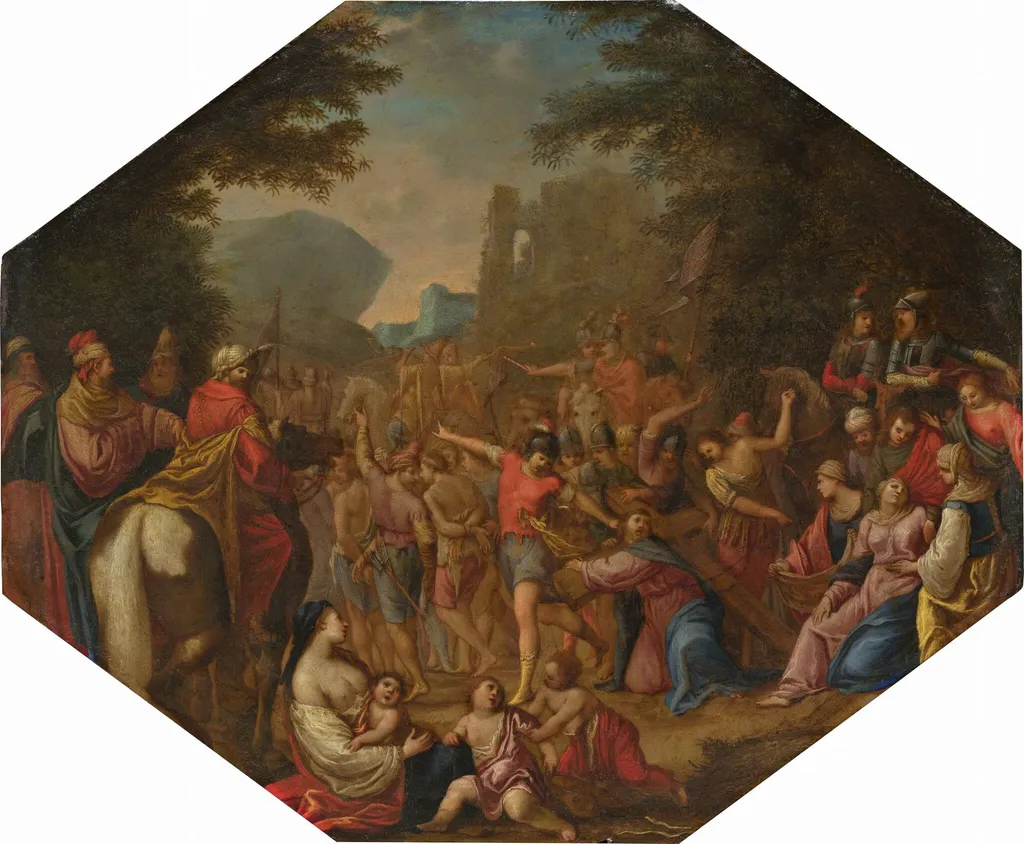
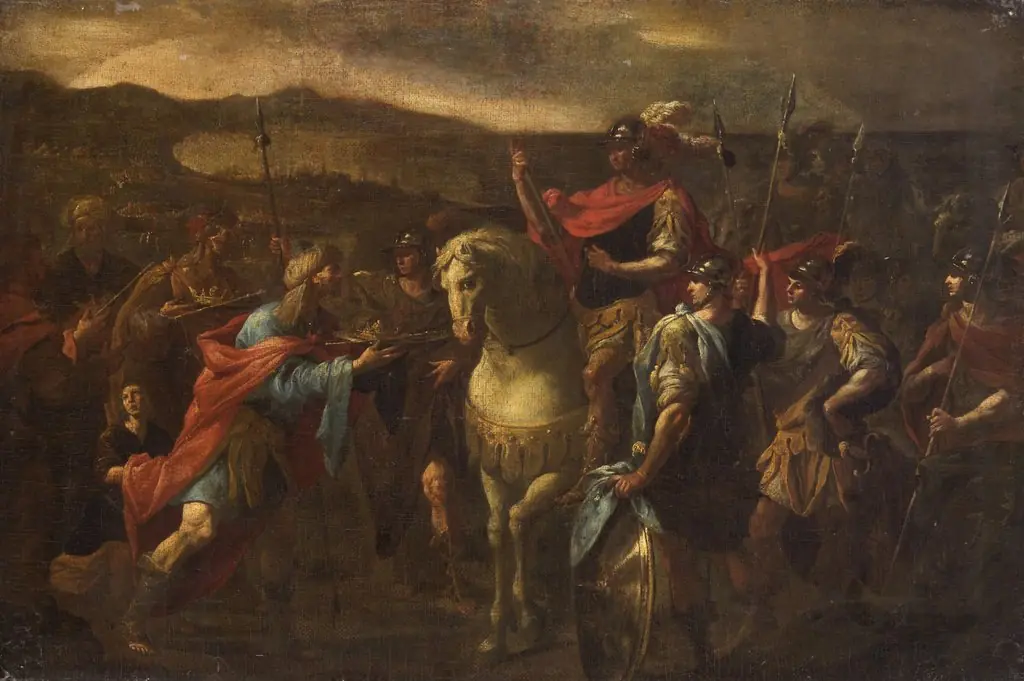
Road to Calvary is an oil painting by the Baroque artist Circle of Claude Déruet. It dates from 1618 and is held in the collection of the National Gallery of Art.
- Inscription
- Inscribed:on flag in gold paint: [S P] Q R
About this work
Technique & Style
Executed with oil paint on a thin copper support, demonstrating typical Baroque period handling of metal substrates for heightened luminosity and detail.
Oil on copper painting created in 1617 depicting the biblical Road to Calvary scene. Executed with oil paint on a thin copper support, demonstrating typical Baroque period handling of metal substrates for heightened luminosity and detail. The work measures 34.4 cm in height by 41.8 cm in width, reflecting precise contemporary dimensions recorded at acquisition. Its condition remains stable with original surface integrity preserved through careful conservation practices.
History & Provenance
Road to Calvary was painted in 1617 as an oil on copper work attributed to an anonymous follower of Claude Deruet. It entered the collection of Edward T. Wilson and his wife in Italy around 1971, and was subsequently gifted in stages to the National Gallery of Art, with the final transfer completed in 1997.
The painting Road to Calvary is held in the collection of the National Gallery of Art in Washington, D.C. It entered the museum through a partial and promised gift from Mr. and Mrs. Edward T. Wilson, who had acquired the work in Italy around 1971. The gift was finalized in 1997, following an initial partial donation in 1996. The source material does not record a specific inventory or accession number for the work, nor does it provide any details regarding past or future exhibitions.
Context
The painting titled Road to Calvary, created in 1617 on copper, is attributed to the circle of Claude Deruet, reflecting the religious intensity characteristic of early Baroque art in Rome. Its provenance traces to the collection of Edward T. Wilson and his wife, acquired in Italy around 1971 and later gifted to the National Gallery of Art in 1997. The work is housed in the National Gallery of Art in Washington, D.C., where it remains part of the permanent collection.
The attribution to Deruet’s circle underscores scholarly discussions about anonymous religious commissions in the early 17th century and contributes to understanding the diffusion of Caravaggesque influences beyond established masters.
Legacy
The painting’s influence and legacy are anchored in its scholarly recognition and museum stewardship. Art historians cite its compositional analysis of Caravaggisti techniques as a reference point for Baroque religious imagery, while its inclusion in major exhibitions has reinforced its status as a key example of early 17th-century devotional art. The work’s provenance, acquired by the Wilson family in Italy around 1971 and later gifted to the National Gallery of Art, highlights its journey from private collection to public institution, underscoring its cultural significance.
As part of the National Gallery of Art’s collection in Washington, D.C., it remains accessible to researchers and the public, contributing to ongoing studies of anonymous masters and their impact on European painting traditions.
Overview
Road to Calvary is an oil painting executed on a copper support. The composition presents a bustling procession, with a dense crowd gathered around a central figure in the foreground and additional participants, including mounted riders, receding into the distance. A landscape of trees and a cloud‑filled sky frames the scene, emphasizing its narrative scope.
Subject & Meaning
The work portrays the biblical episode of Christ’s journey to his crucifixion, populated by a multitude of onlookers and soldiers. The central figure, likely Christ, is surrounded by a varied assembly that conveys the social and emotional complexity of the event, inviting contemplation of collective responsibility and individual devotion.
Artist & collection
Artist

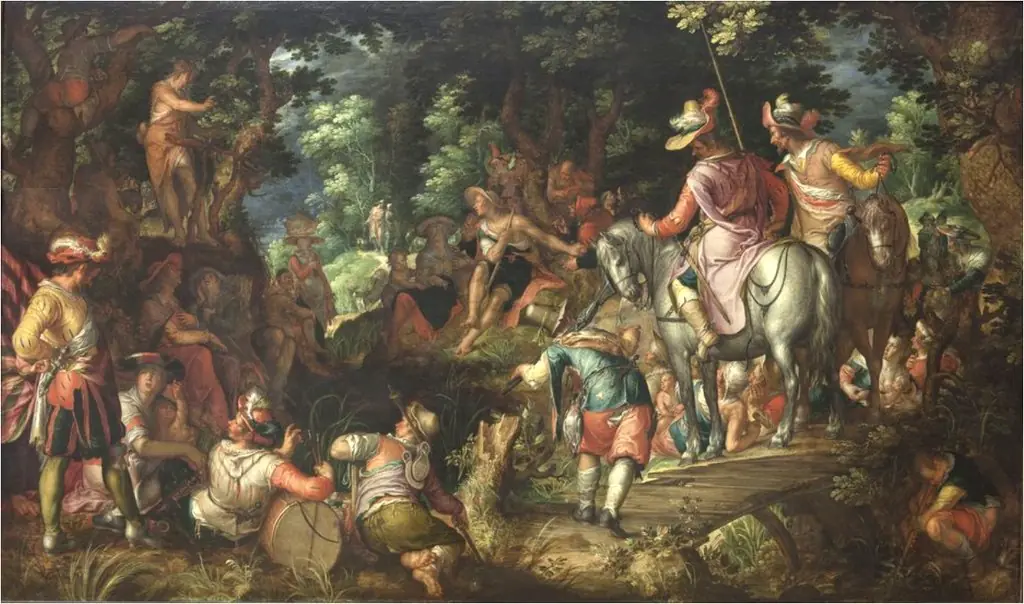 John the Baptist Preaching in the Forest
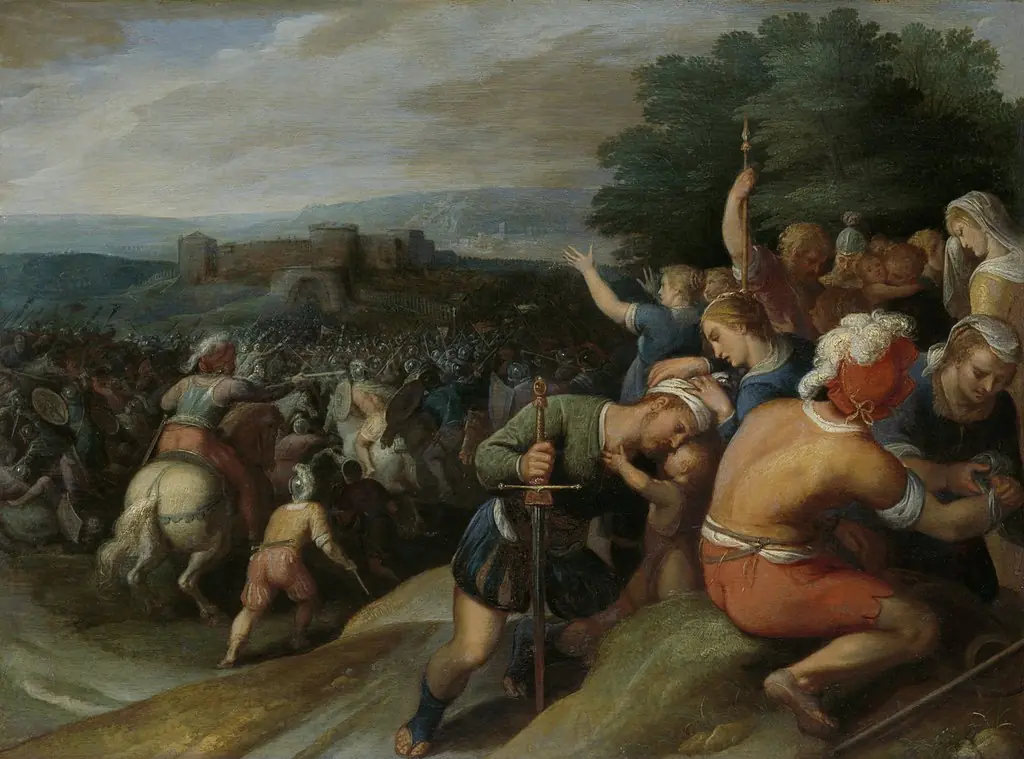 The Batavians Surround the Romans at Vetera
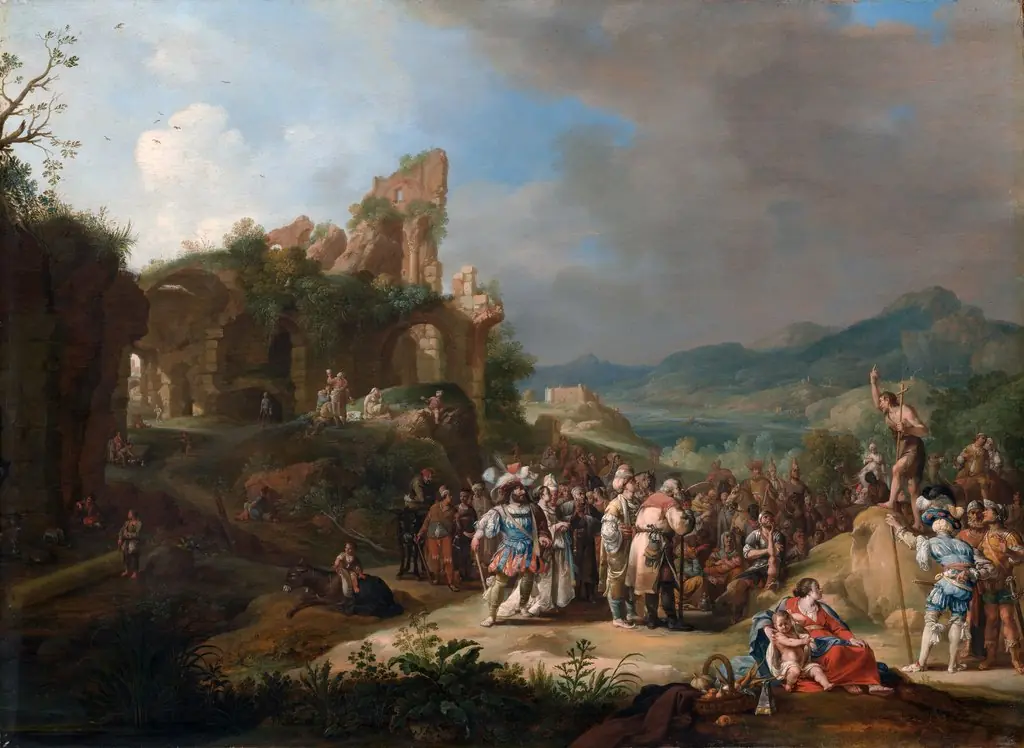 The Preaching of John the Baptist
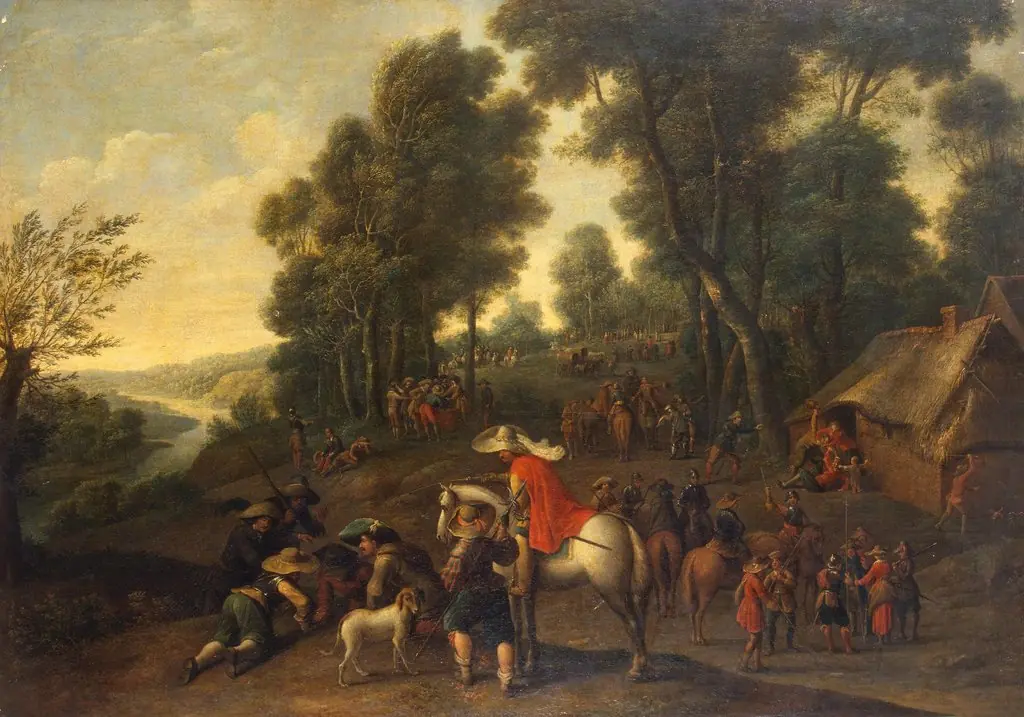 Halt of Horsemen in a Forest
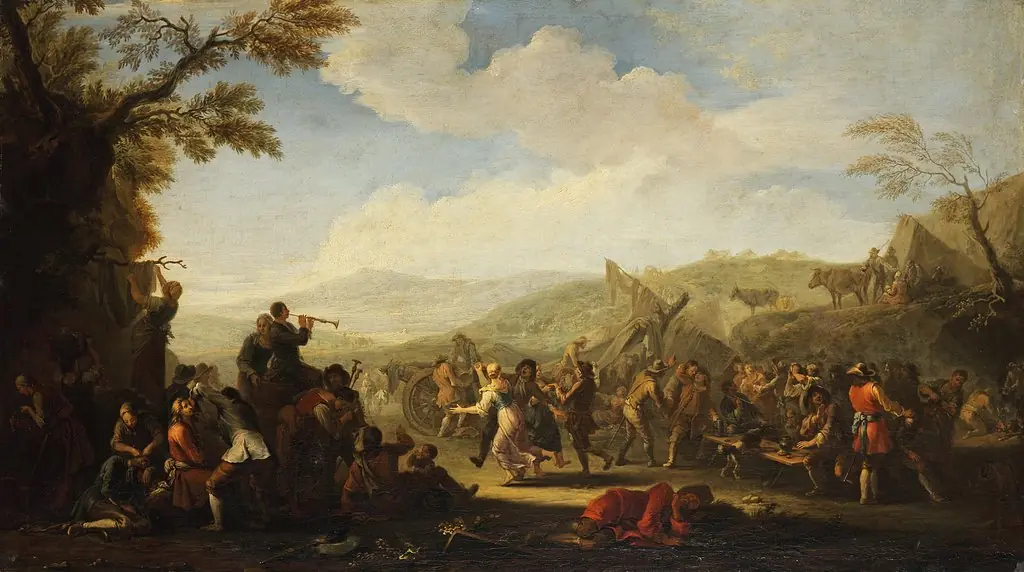 Amusement in the Field Camp
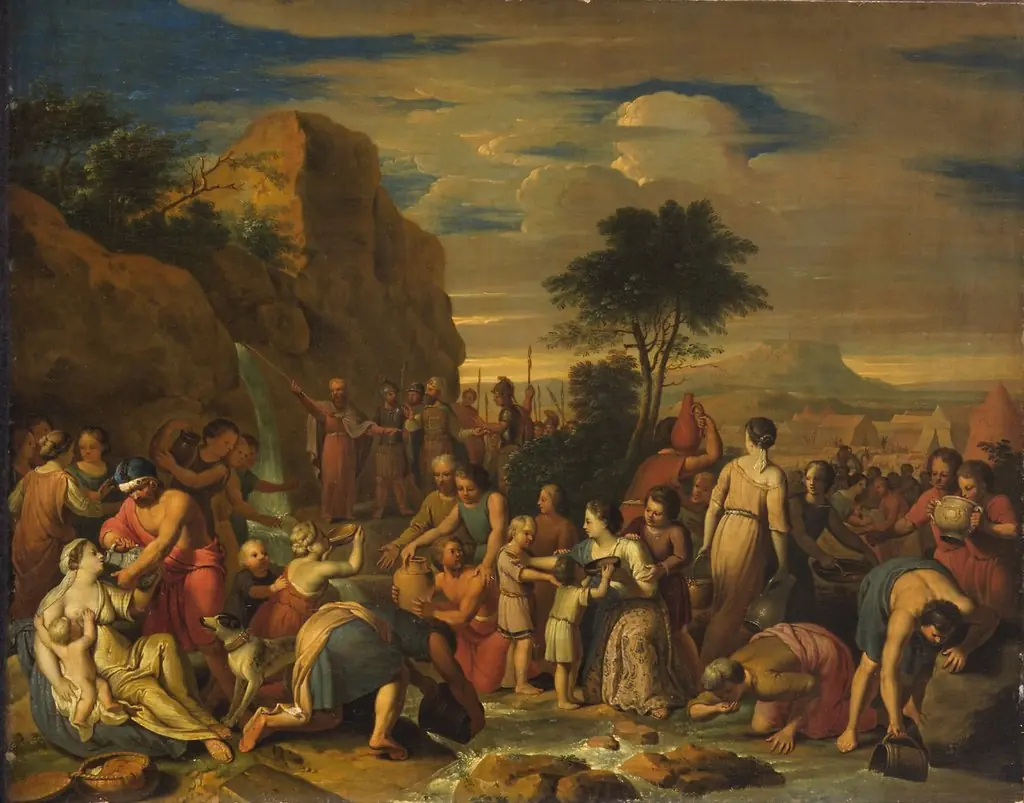 Moses schlägt Wasser aus dem Felsen
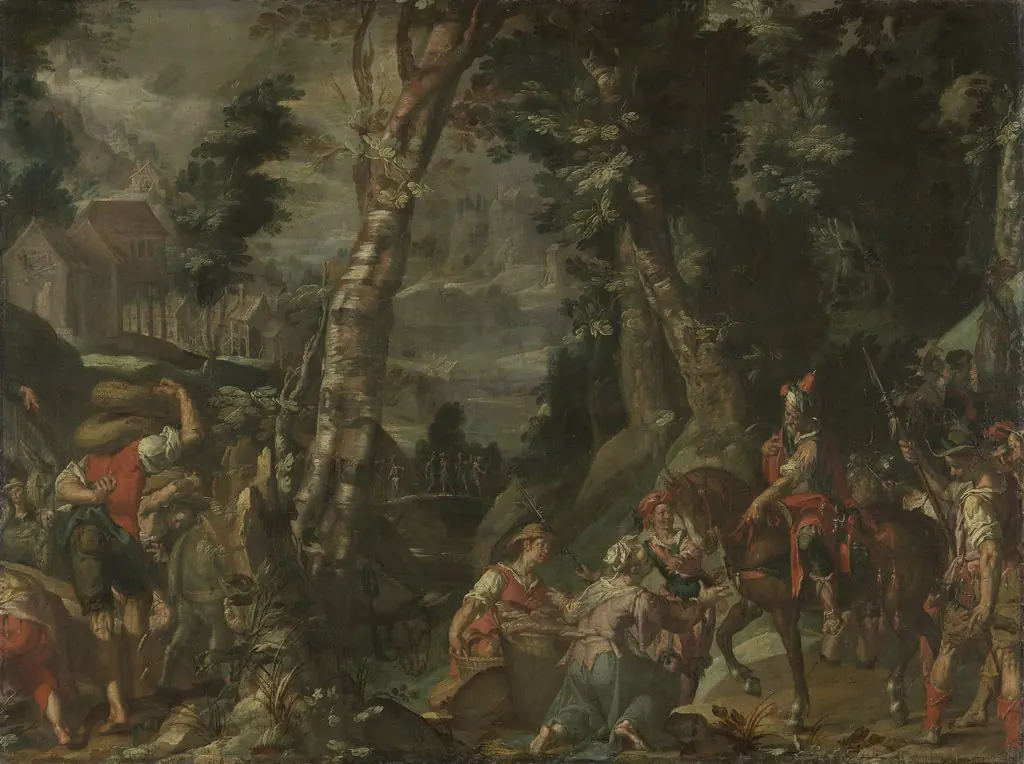 Meeting between David and Abigail
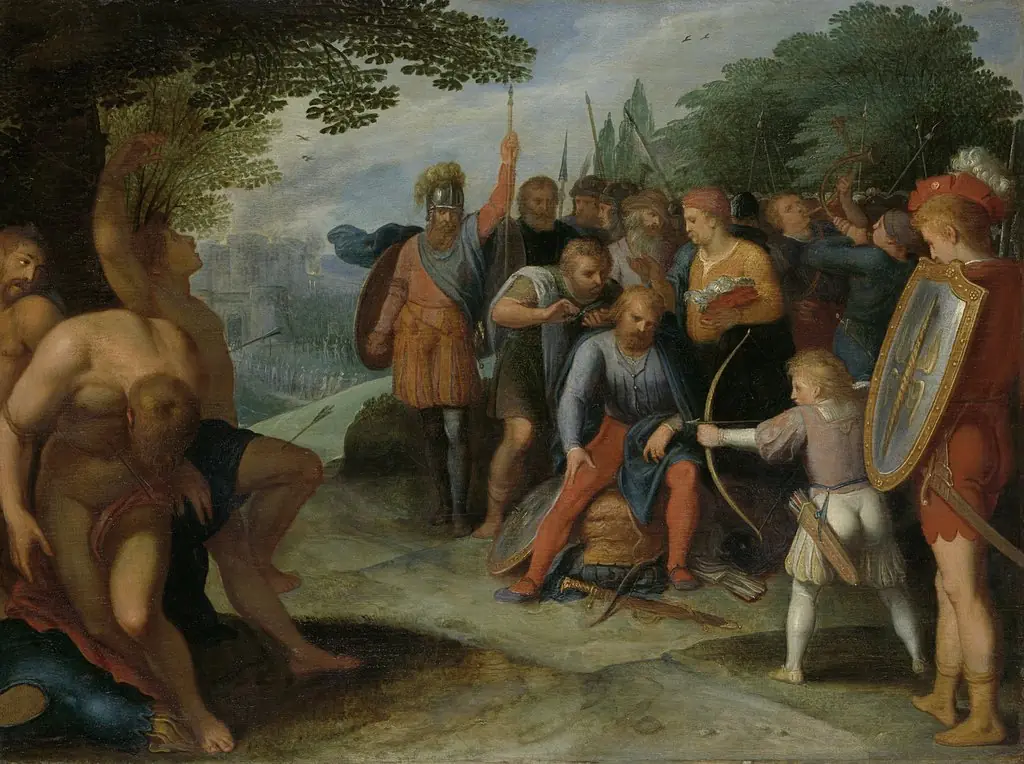 After the Fall of Vetera Castra Claudius Civilis has his hair cut while his son shoots some prisoners
 Pustiirile războiului
 Alexander en Diogenes
 Indische Könige huldigen Alexander dem Großen
- The Road to Calvary