Artwork
Saint Peter
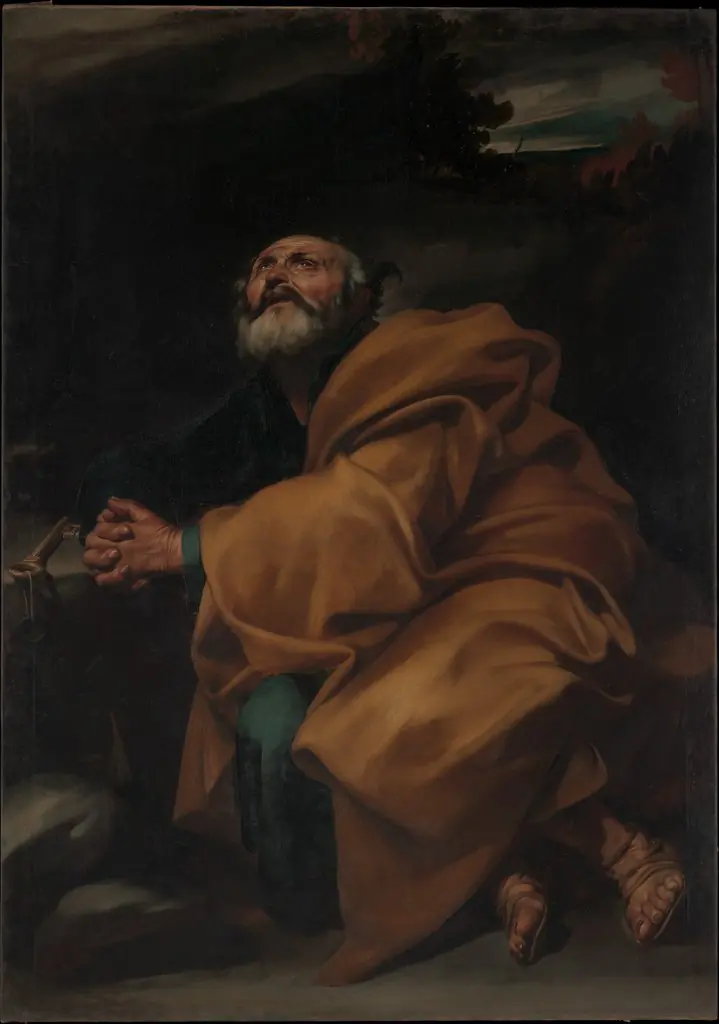
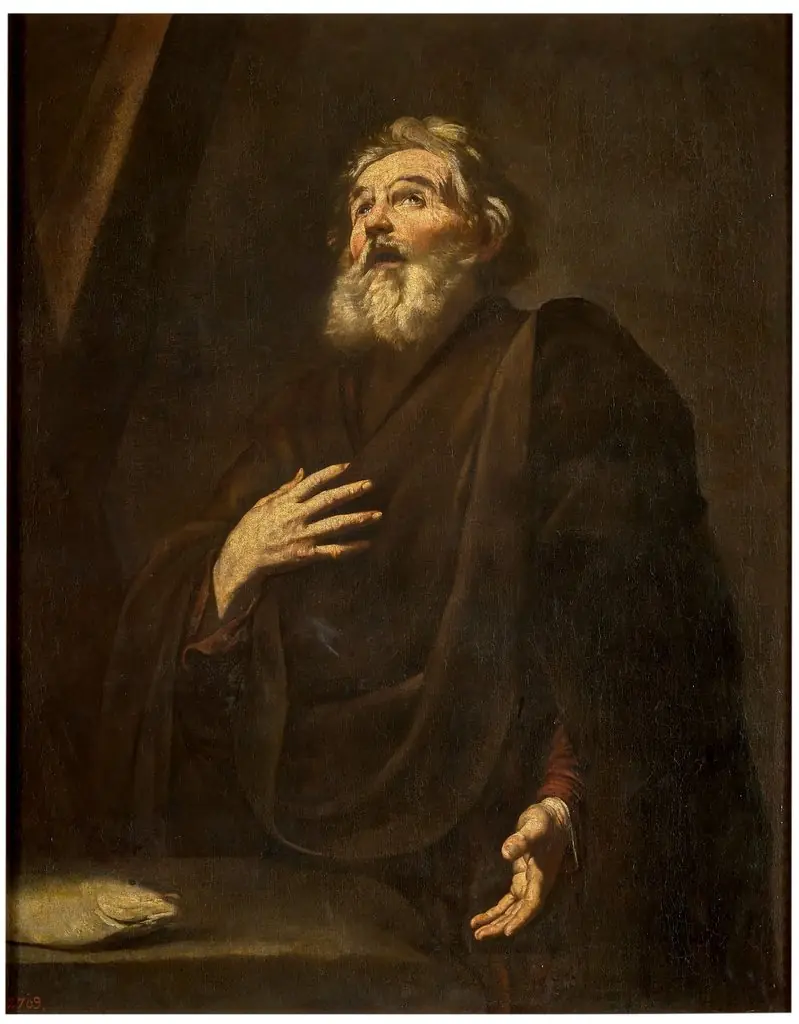
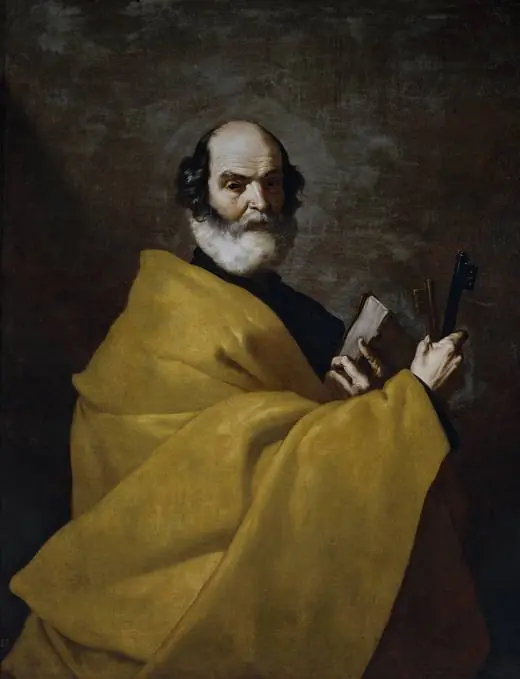
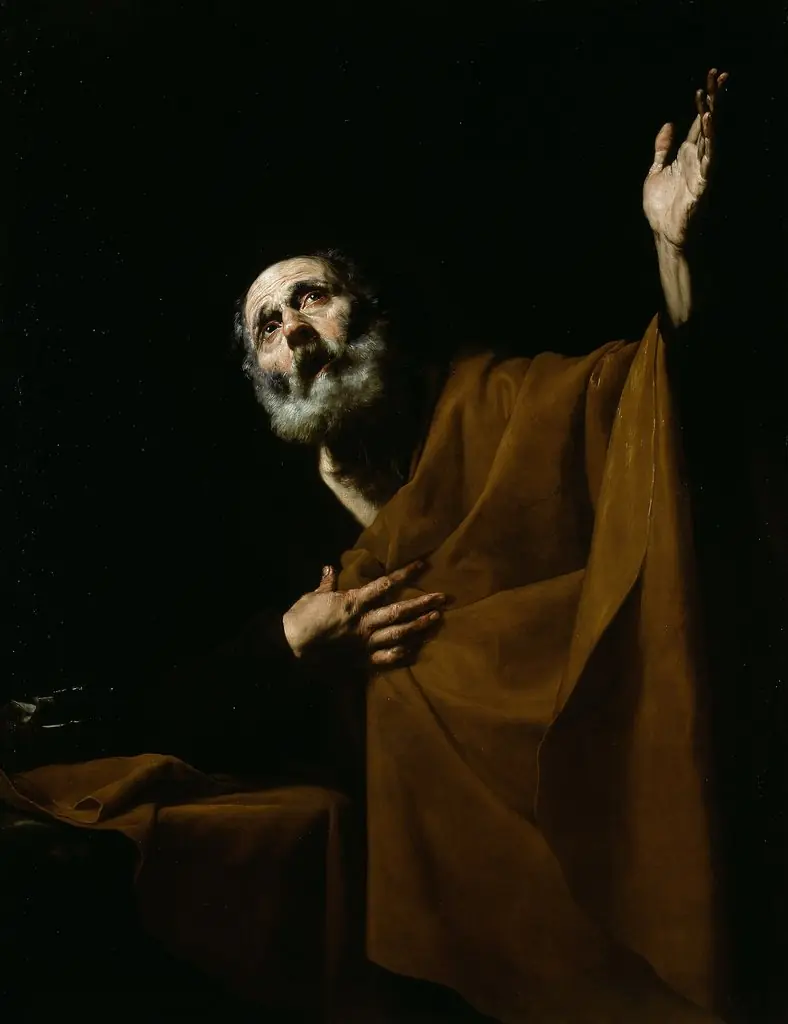
Saint Peter is an oil painting by the Early Baroque Italian artist Jusepe de Ribera. It dates from 1630 and is held in the collection of the Museo del Prado.
About this work
Subject & Meaning
Ribera presents him as an elderly, bearded man, a standard iconographic type for the saint in Baroque religious art.
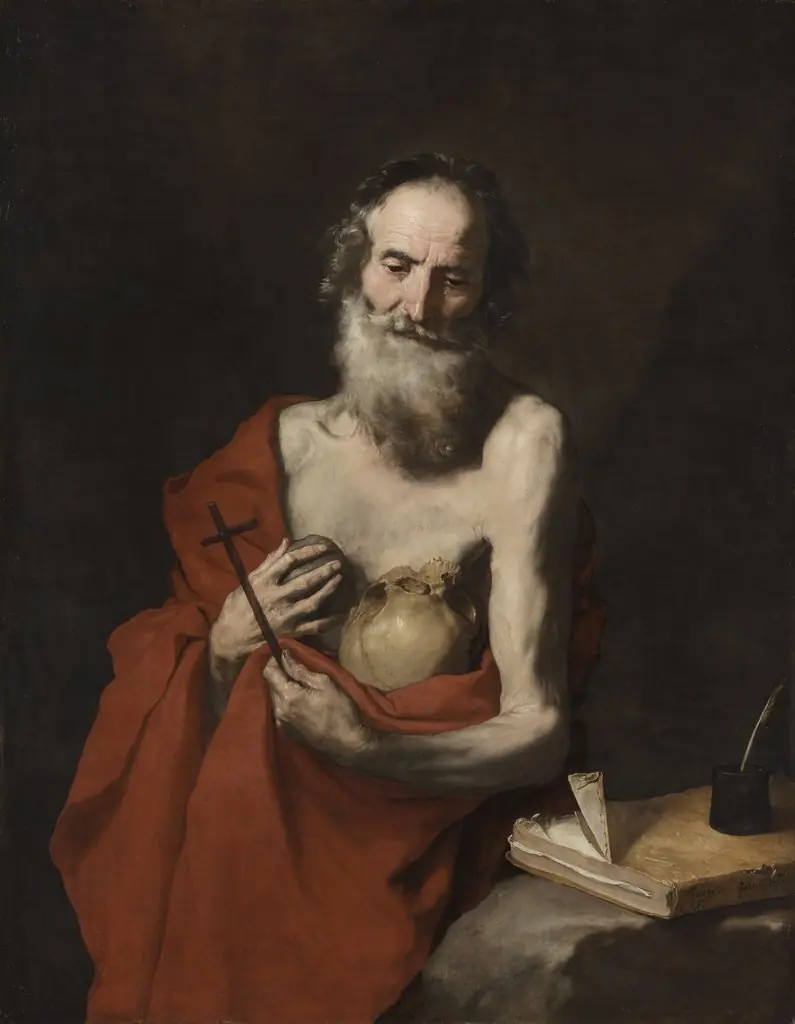
The painting depicts Saint Peter, the chief apostle and traditional first bishop of Rome. Ribera presents him as an elderly, bearded man, a standard iconographic type for the saint in Baroque religious art. He is shown holding a book, a symbol of his role as a teacher of Christian doctrine and an author of two epistles in the New Testament, and a key, the principal attribute identifying Peter, derived from Christ's words in Matthew 16:19 conferring upon him the power to "bind and loose" and the authority to open the gates of heaven. Together these attributes signify Peter's foundational role in the Church and his function as its gatekeeper.
As a religious work by Jusepe de Ribera, the painting belongs to the tradition of Counter-Reformation devotional imagery, in which the apostles were rendered with sober realism to encourage meditation on scriptural figures and to affirm Catholic teaching on apostolic authority.
Technique & Style
The painting employs oil on canvas, a medium Ribera frequently used for its luminous depth and tactile handling. The support dimensions are 75 cm in height by 64 cm in width, consistent with cabinet-sized devotional works of the period. Handling is marked by vigorous, expressive brushwork that animates the saint’s craggy features and voluminous drapery, with sharply raking light modeling the forms to convey both physical presence and spiritual intensity.
Stylistically, the composition aligns with Ribera’s Caravaggisti phase, combining naturalistic detail with a restrained tenebrism that isolates the figure against a dark ground, emphasizing psychological gravity over decorative flourish.
History & Provenance
The painting Saint Peter was created in 1630 by Jusepe de Ribera, depicting the apostle with a book and key in oil on canvas. It entered the Spanish royal collection under Ferdinand VII of Spain and has been housed at the Museo del Prado in Madrid since its acquisition, remaining part of the museum's holdings today.
The painting Saint Peter by Jusepe de Ribera (1630) is housed in the Museo del Prado in Madrid, where it is recorded under the inventory number P00968. It entered the collection of Ferdinand VII of Spain and has remained in the museum's holdings since the 19th century. The work was displayed in the Prado's retrospective of Ribera in 1955 and featured in the 2011 exhibition "Spanish Masters of the Golden Age" before returning to its permanent display.
Overview
Jusepe de Ribera’s oil painting Saint Peter, created circa 1630, presents the apostle in a contemplative pose. The work belongs to the early Italian Baroque period and is part of the Museo del Prado’s collection. Ribera, a Spanish painter who spent most of his career in Naples, is noted for his dramatic realism and religious subjects.
Context
Ribera’s work aligns with the Counter‑Reformation’s demand for clear, emotionally resonant religious imagery. By portraying Peter with unmistakable attributes, the painting served both devotional and didactic purposes, reinforcing the apostle’s role as a spiritual gatekeeper within the broader narrative of 17th‑century Catholic art.
Own this work as a print
Artist & collection
Artist
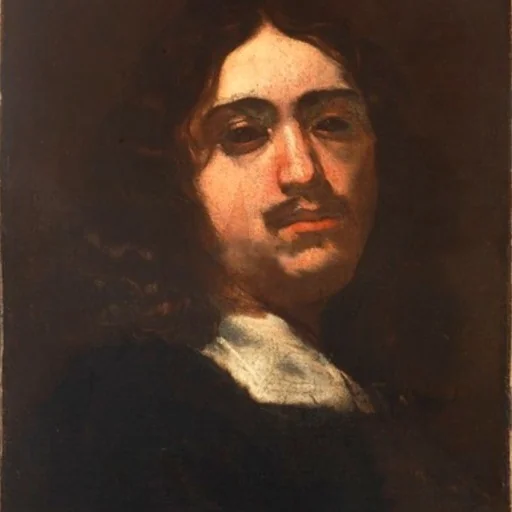
Jusepe de Ribera (Valencian:; baptised 17 February 1591 – 3 November 1652) was a Spanish painter and printmaker.