Artwork
The Italian Comedians (copy)
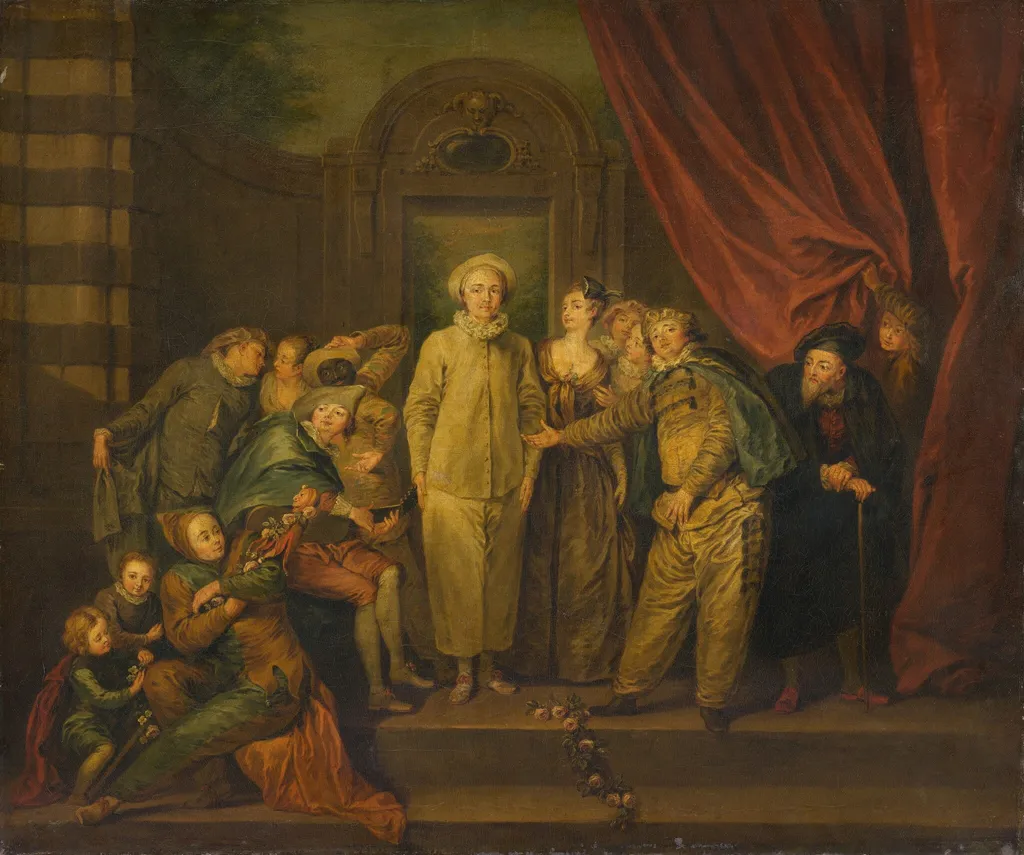
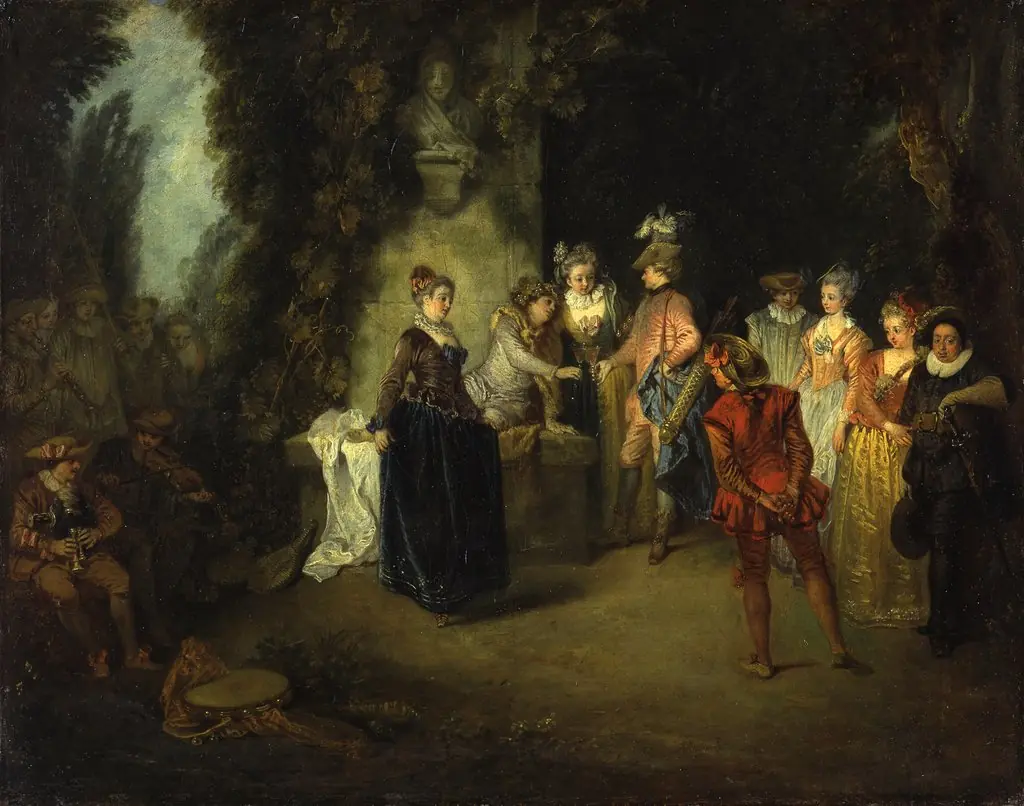
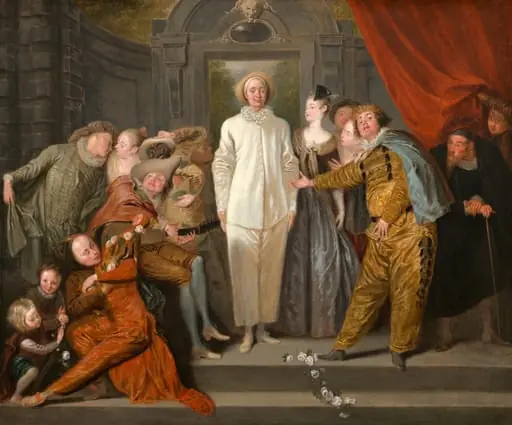
The Italian Comedians (copy) is an oil painting by the Romanticist artist after Antoine Watteau. It dates from 1850 and is held in the collection of the National Gallery of Art. The Italian Comedians is an oil on canvas painting depicting a lively theatrical scene.
About this work
Overview
, where it entered in 1960 as a gift from Georges Wildenstein.
The Italian Comedians (copy) is an oil on canvas painting executed in 1850 by an anonymous artist working after Antoine Watteau, the seminal French painter of the Rococo period. Measuring 63.8 by 76 centimeters (25 1/8 by 29 15/16 inches), the work replicates Watteau's celebrated theatrical subject and is held in the collection of the National Gallery of Art in Washington, D.C., where it entered in 1960 as a gift from Georges Wildenstein. As a nineteenth-century copy of a canonical eighteenth-century composition, the painting occupies a significant position in the history of artistic reproduction, attesting to the enduring demand for Watteau's imagery well beyond the artist's lifetime and the original work's availability.
Technique & Style
The work is executed in oil on canvas with a smooth, blended brushwork that produces a polished finish. The palette is dominated by warm browns, golds, and greens, with the red curtain providing a strong vertical accent. Light falls evenly across the figures, creating soft shadows that model the forms without dramatic contrast. The surface shows fine craquelure throughout, consistent with its age and medium. These technical qualities closely emulate Watteau's own handling of paint, which was renowned for its silvery tonalities and delicate atmospheric effects. The copyist's approach prioritizes fidelity to the original composition over personal interpretation, maintaining the balanced arrangement of figures and the integration of architecture and human presence that distinguishes Watteau's theatrical scenes. The even lighting and smooth surface treatment suggest a nineteenth-century academic training that valued finish and clarity over the more spontaneous brushwork that would characterize later artistic movements.
History & Provenance
The painting was created in 1850, during a period of renewed interest in Watteau's work. Its earliest documented owner was Camille Groult (1837-1908) of Paris, by 1899, when it was mentioned in Emilia Francis Strong Dilke's French Painters of the XVIIIth Century. The painting remained in the Groult family until at least 1956, though it was not included in the 21 March 1952 sale of the Groult collection held in Paris. Correspondence in the National Gallery of Art curatorial files confirms the family's continued ownership in 1956. Subsequently, the work passed to Georges Wildenstein in New York. In 1997, Wildenstein & Co. was unable to document when Georges Wildenstein acquired the painting, or whether it was acquired by him personally or by the firm. Wildenstein donated the painting to the National Gallery of Art in 1960, where it received accession number 1960.13.1. The work was exhibited in 1990 at The J.Bspeed Art Museum in Louisville, Kentucky, as part of The Mask of Comedy: The Art of Italian Commedia, where it was listed as number 11 and reproduced in the catalogue.
Context
The proliferation of copies after Watteau's compositions in the nineteenth century reflects both the scarcity of his original works on the market and the deep aesthetic hold his imagery maintained over subsequent generations of artists and collectors. Watteau himself had produced multiple versions and variations of his own compositions, creating a complex web of autograph and studio works that complicated attribution and encouraged copying. The Groult family's long stewardship of this painting indicates its status as a valued object within a significant collection of French art. Emilia Francis Strong Dilke's inclusion of the work in her 1899 survey demonstrates its recognition among scholars and connoisseurs of eighteenth-century French painting. The painting's eventual passage through Georges Wildenstein, one of the most prominent dealers and scholars of Old Master paintings in the twentieth century, further attests to its perceived quality and art-historical interest. Colin Eisler discussed the work in his 1977 publication on the Samuel H. Kress Collection, and Philip Conisbee and colleagues included it in the 2009 systematic catalogue of French paintings at the National Gallery of Art, ensuring its place in the scholarly record.
Legacy
As a copy, The Italian Comedians does not carry the creative authority of Watteau's autograph works, yet it preserves and transmits a composition that might otherwise have remained accessible only to a limited audience. The painting's afterlife in the twentieth and twenty-first centuries illustrates the evolving status of copies within art history: once dismissed as mere derivatives, such works are now increasingly recognized as documents of artistic reception, market demand, and cultural memory. The painting's presence in the National Gallery of Art, one of the world's premier collections, elevates its significance beyond its reproductive function, offering visitors insight into how Watteau's vision was interpreted and perpetuated. The work's inclusion in the 1990 exhibition at the Speed Art Museum, dedicated to the art of Italian commedia, demonstrates its continued utility for understanding the visual culture of the theater. In an age of digital reproduction, the physical copy retains its value as a material object that bears the traces of nineteenth-century craft and collecting practices, bridging the historical distance between Watteau's era and our own.
Artist & collection
Artist