Artwork
The Italian Comedians
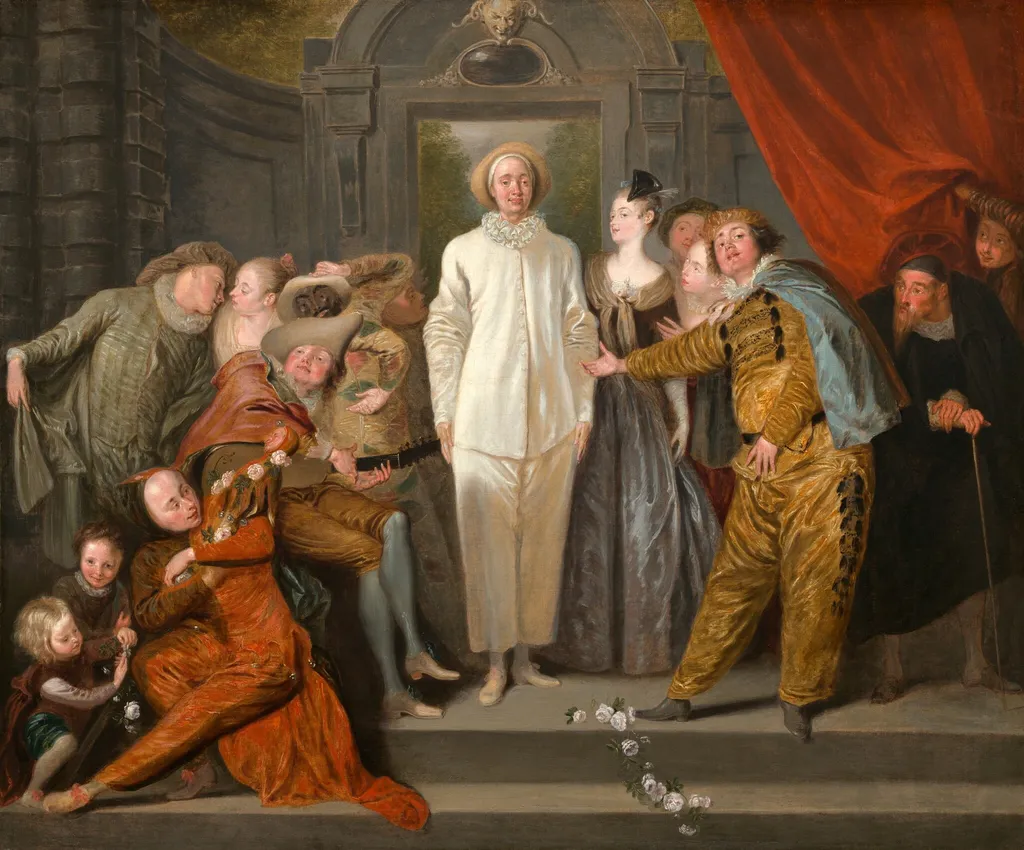
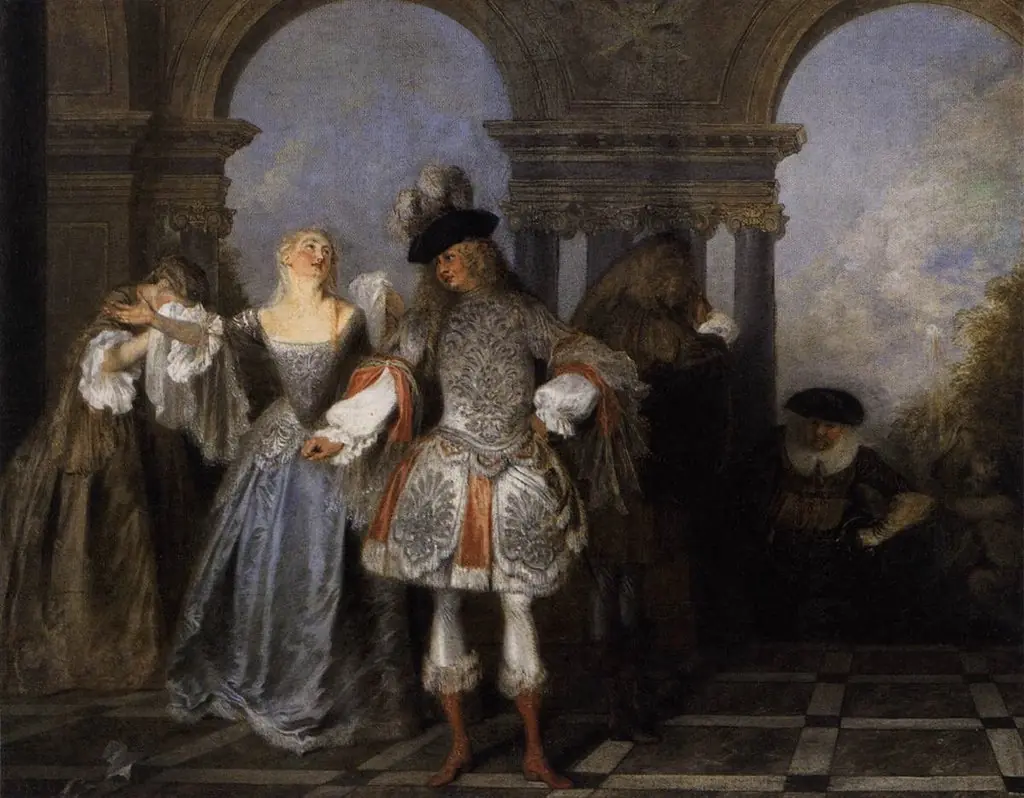
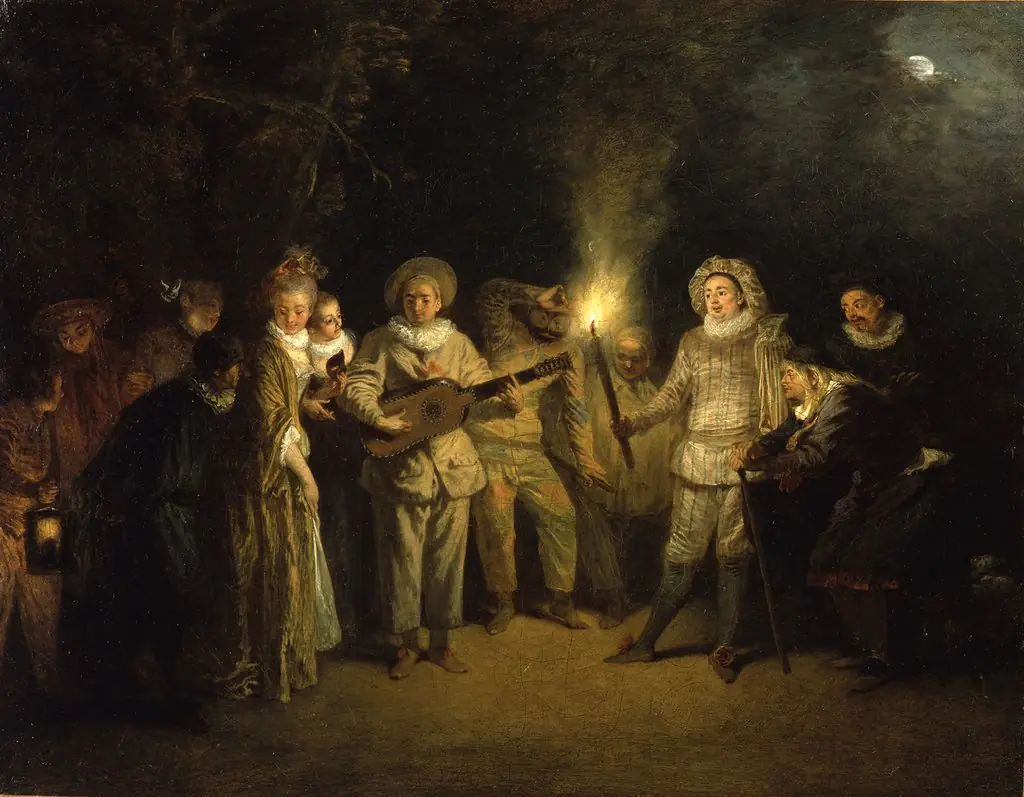
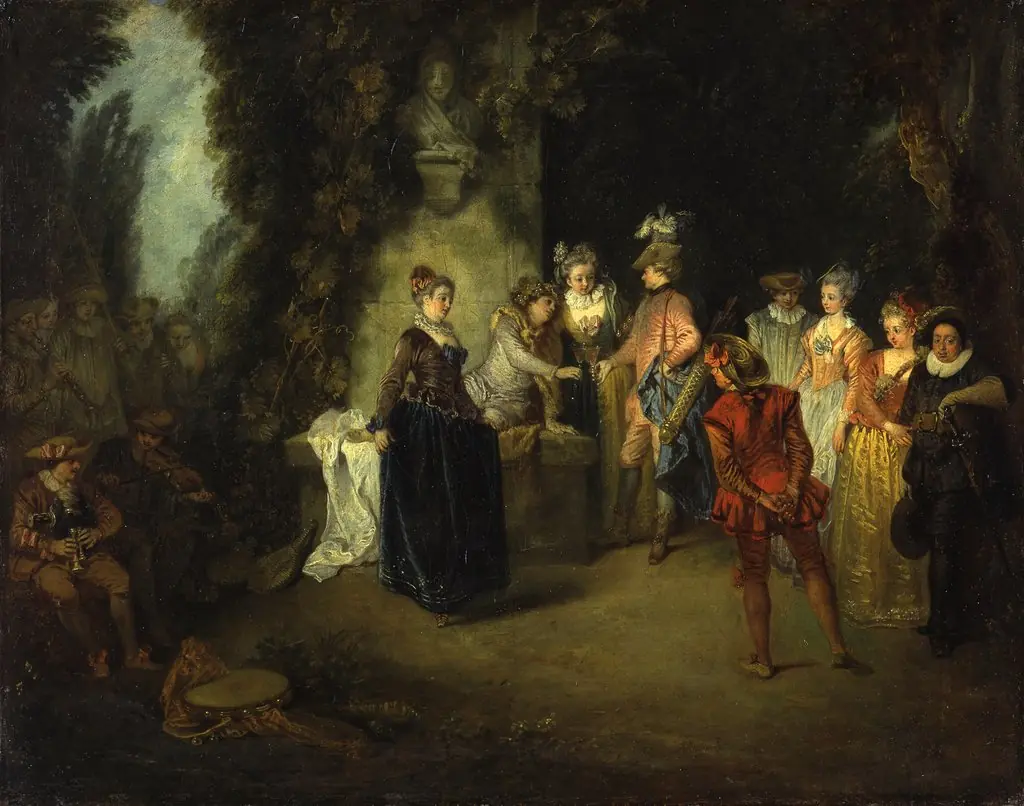
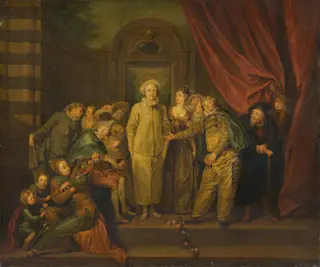
The Italian Comedians is an oil painting by the Baroque artist Jean Antoine Watteau. It dates from 1720 and is held in the collection of the National Gallery of Art.
About this work
Technique & Style
The composition reflects the artist's distinct stylistic approach to capturing fleeting moments of performance within a painted narrative.
Executed in 1720, this work is an oil painting on canvas measuring 63.8 by 76.2 centimeters. As a genre scene, the piece exemplifies Watteau's characteristic handling of the medium, utilizing the fluidity of oil paint to render the theatrical costumes and expressive gestures of the Italian comedians. The composition reflects the artist's distinct stylistic approach to capturing fleeting moments of performance within a painted narrative.
While specific details regarding the current surface condition or technical underlayers are not detailed in the available records, the work's classification as a canvas oil painting establishes its fundamental material construction and support structure.
History & Provenance
Painted in 1720, The Italian Comedians was possibly commissioned by the London physician Dr. Richard Mead. Following Mead's death, the work appeared in his estate sale in March 1754, where it was paired with A Pastoral Conversation. The painting subsequently entered the collection of either Alderman William Beckford or his brother Richard, before passing to Roger Harenc.
After Harenc's estate sale in 1764, where it was offered alongside A Musical Conversation, the canvas was acquired by Augustus Henry, the 3rd Duke of Grafton.
Between 1851 and 1856, Thomas Baring purchased the work, later bequeathed to his nephew, the 1st Earl of Northbrook. By June 1888, the dealer Agnew & Sons sold the painting to Sir Edward Cecil Guinness (later 1st Earl of Iveagh). It remained in the Guinness family until February 1930, when Wildenstein & Co. acquired it from Walter Edward Guinness, 1st Baron Moyne.
Baron Heinrich Thyssen-Bornemisza purchased the piece by July 1930. After returning to Wildenstein by 1936, the Samuel H. Kress Foundation bought the painting in November 1942 and gifted it to the National Gallery of Art, Washington, D.C., in 1946, where it is held as part of the Samuel H. Kress Collection (accession no. 1946.16.1).
Legacy
The painting changed hands among prominent collectors, including Thomas Baring, the 1st Earl of Iveagh, and the Thyssen-Bornemisza family, a trajectory that reflects its esteemed status. Its acquisition by the Samuel H. Kress Foundation and subsequent donation to the National Gallery of Art in Washington, D.C., cemented its institutional presence. Scholarship on early Watteau works, such as Raines's study of Watteau and "Watteaus" in England before 1760, has referenced the piece, highlighting its relevance to art-historical discourse.
Overview
Antoine Watteau's painting, The Italian Comedians, executed around 1720, is an oil on canvas work depicting a gathering of figures. This genre scene captures a moment that suggests a theatrical performance or a backstage encounter. The composition features a group of individuals dressed in eighteenth-century attire, some in elaborate costumes, arranged on a set of steps, inviting viewers to observe their interaction.
Subject & Meaning
The artwork portrays a troupe of performers, likely from the Commedia dell'arte, a form of improvised theatre. Figures are shown interacting, with one man kneeling in a gesture that could be part of a dramatic scene or a moment of deference. The central standing figures, a man in white and a woman in a long dress, command attention amidst the diverse group, whose varied costumes hint at their distinct roles within the theatrical world.
Own this work as a print
Artist & collection
Artist
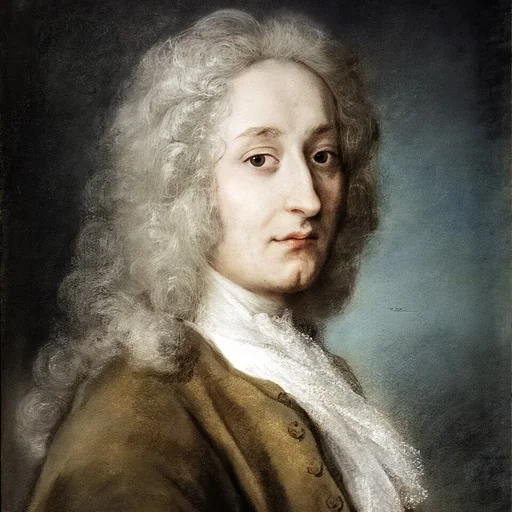
Jean-Antoine Watteau was a French painter and draughtsman whose brief career spurred the revival of interest in colour and movement, as seen in the tradition of Correggio and Rubens.