Artwork
William Seton
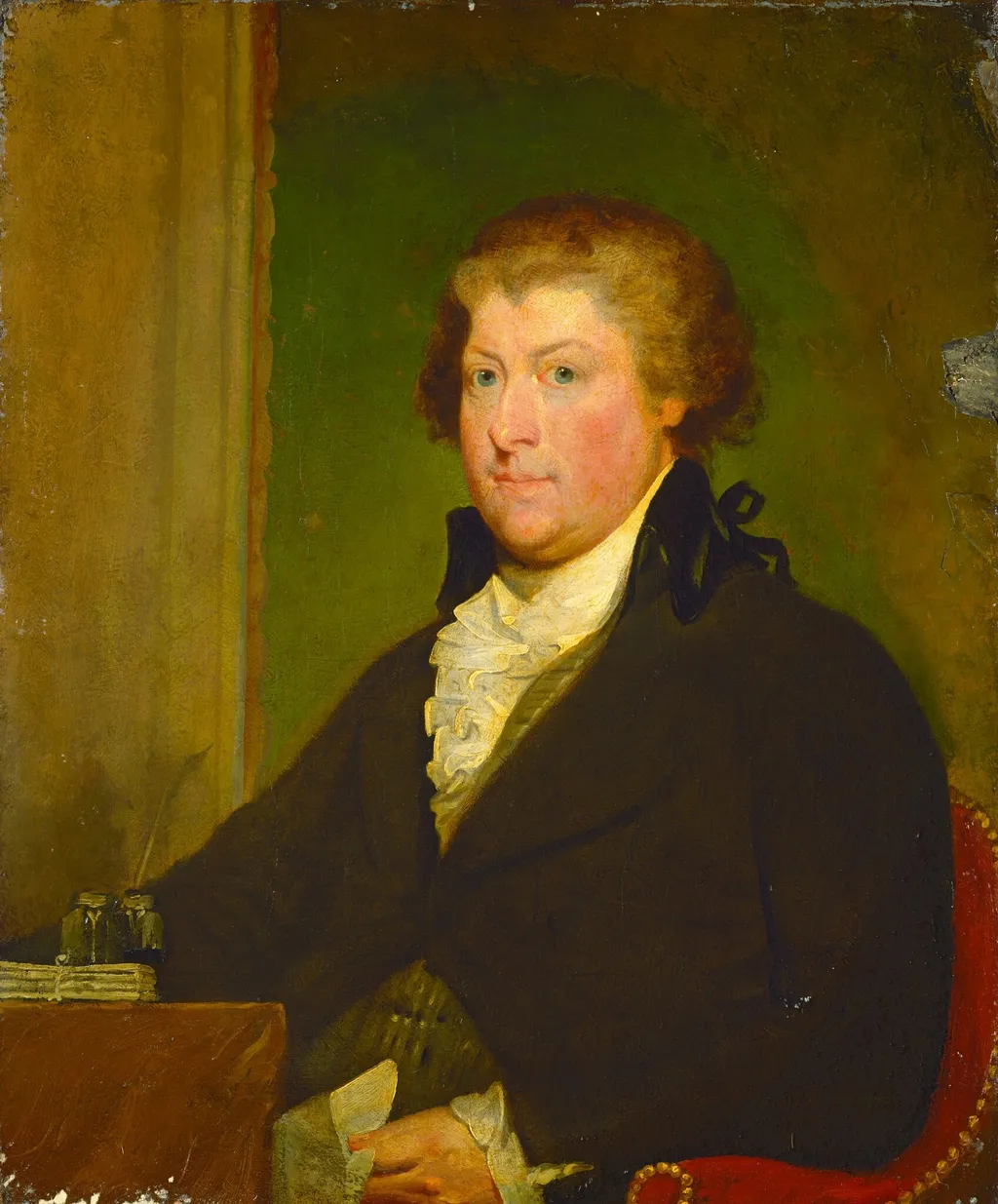
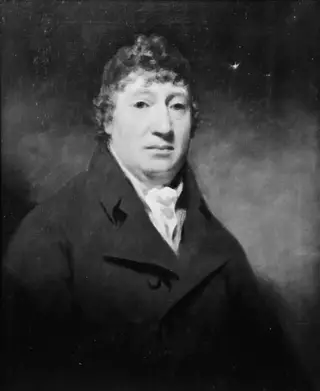
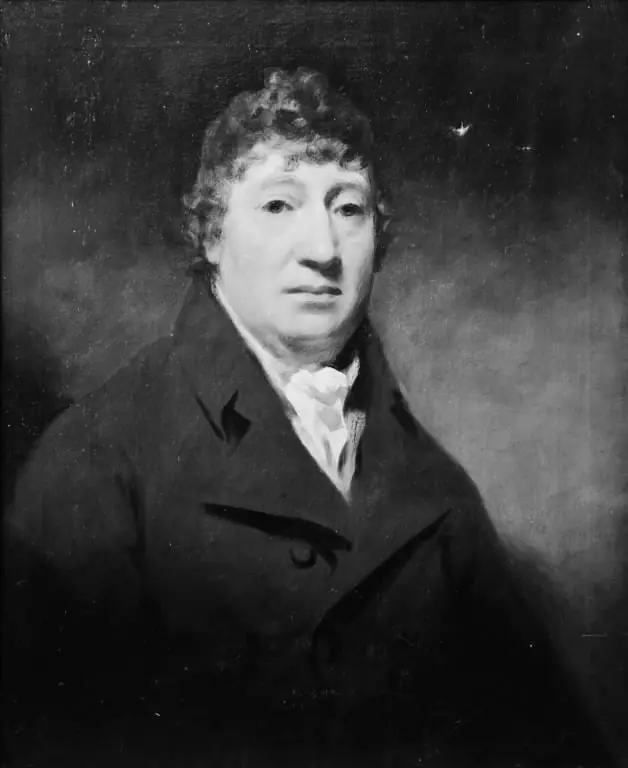
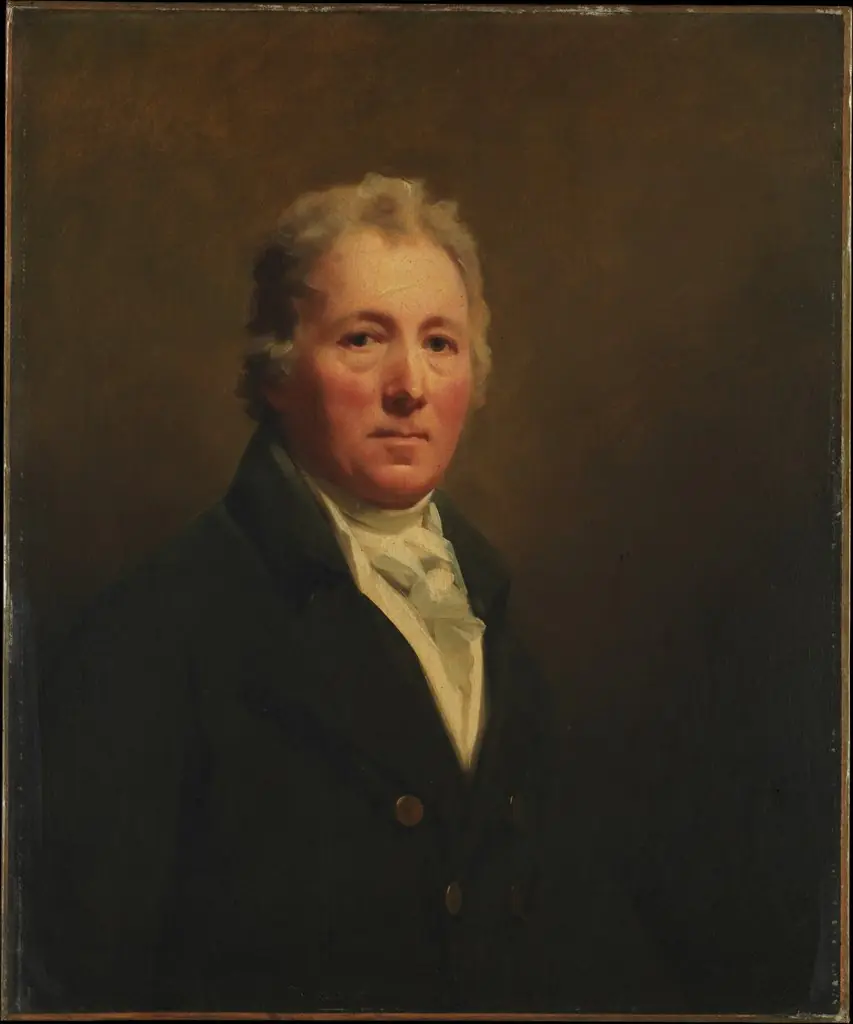
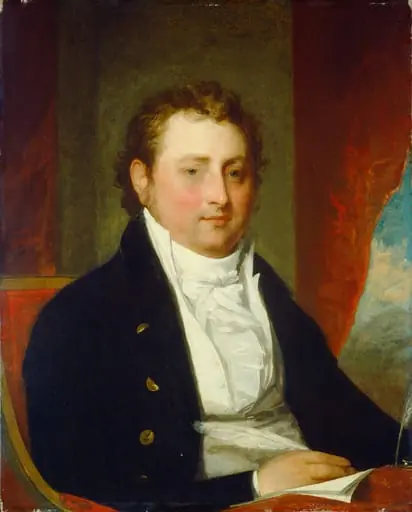
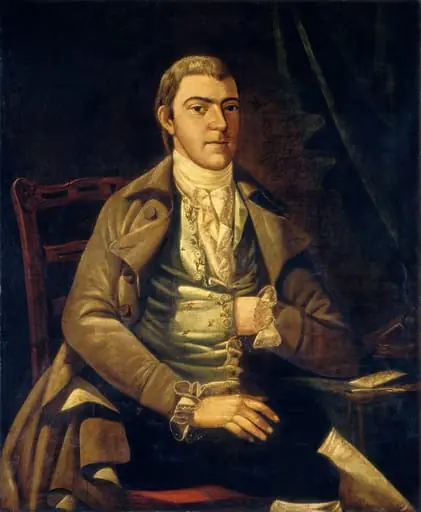
William Seton is an oil painting by the American Folk Art artist after Gilbert Stuart. It dates from 1794 and is held in the collection of the National Gallery of Art.
About this work
William Seton, serious and dressed in the fashion of the 1790s, rendered in careful detail. The portrait dates to around 1793 or 1794, perhaps painted from memory of how he looked some years earlier.
Subject & Meaning
As a portrait, it functions to record the sitter’s appearance and social standing, a common purpose in late‑18th‑century American art.
The work is a 1793 oil portrait that represents William Seton, an American merchant and philanthropist. As a portrait, it functions to record the sitter’s appearance and social standing, a common purpose in late‑18th‑century American art. The composition follows the conventions of elite portraiture, emphasizing dignified pose and refined attire, though the sources do not specify additional iconographic symbols.
The painting’s provenance traces from Rose M. de Forest to Thomas B. Clarke, then to the National Gallery of Art, underscoring its historical significance. Its authorship is attributed to an anonymous follower of Gilbert Stuart.
Technique & Style
Executed in 1793, the portrait of William Seton is an oil painting on canvas support. The work measures 43.2 cm in height and 35.5 cm in width. Stylistically, the piece is attributed to an anonymous artist working after Gilbert Stuart, reflecting the formal conventions of late 18th-century American portraiture.
The medium consists of oil paint applied to the canvas, a standard technique for the period. While the specific handling of the brushwork is not detailed in the available records, the classification identifies the genre strictly as a portrait. The painting is currently held within the Andrew W. Mellon collection at the National Gallery of Art in Washington, D.C.
History & Provenance
The portrait of William Seton is an oil on canvas work dated 1793, recorded as a likeness of the sitter in the National Gallery of Art’s collection. It was owned by Rose M. de Forest before being acquired by Thomas B. Clarke on 6 December 1921; after Clarke’s death it passed to his estate and was sold on 29 January 1936 through M. Knoedler & Co. to the A. W. Mellon Educational and Charitable Trust, which later gifted the painting to the NGA in 1947. The work is attributed to an anonymous American artist working after Gilbert Stuart, reflecting the style of early Federal portraiture.
The portrait of William Seton is held in the National Gallery of Art in Washington, D.C., as part of the Andrew W. Mellon collection. It was accessioned as a gift from the A. W. Mellon Educational and Charitable Trust in 1947. Prior to this donation, the work was purchased on December 6, 1921, by Thomas B. Clarke of New York from Rose M. de Forest.
Following Clarke's death, the painting was sold from his estate on January 29, 1936, through the gallery M. Knoedler & Co. to the Mellon Trust. The National Gallery of Art curatorial records note that the painting was previously exhibited in 1928 at the Philadelphia Museum of Art as part of the exhibition 'Portraits by Early American Artists of the Seventeenth, Eighteenth and Nineteenth Centuries Collected by Thomas B. Clarke'.
Overview
The painting titled William Seton is an oil on canvas portrait depicting a man with a solemn demeanor. The artist rendered the subject with considerable attention to detail, capturing his features and attire. Notably, this work was created after 1793 or 1794, a period when the style it embodies was becoming less prevalent, suggesting a deliberate choice or a retrospective intent by the painter.
Context
Created sometime after 1793 or 1794, this portrait of William Seton stands out due to its adherence to an older artistic convention. This timing suggests the artist may have been working from memory or an earlier likeness, rather than a contemporary sitting. The painting thus offers insight into the persistence of certain artistic styles even as new movements began to emerge.
Artist & collection
Artist