Artwork
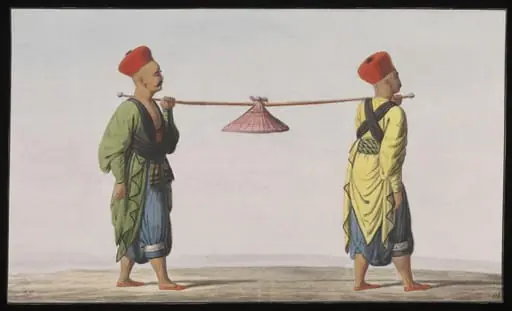
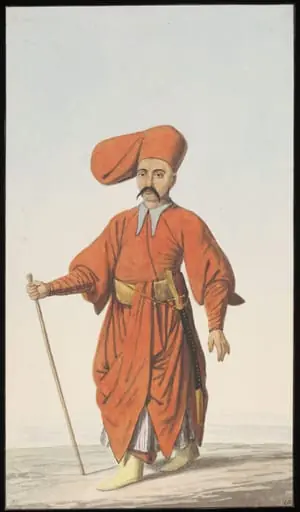
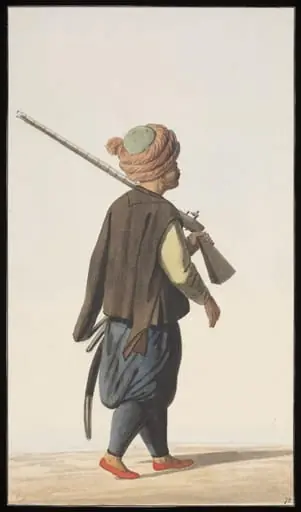
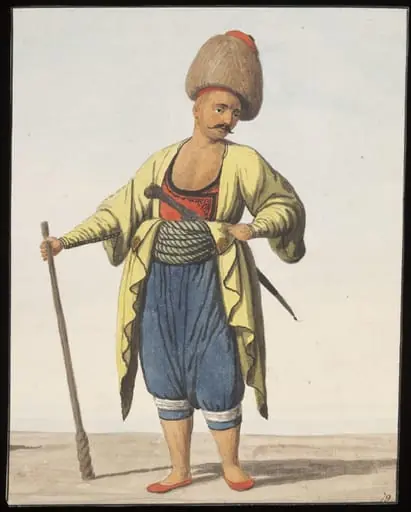
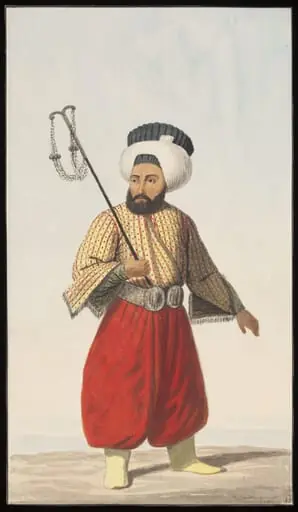
Biçakçi, or itinerant knife grinder
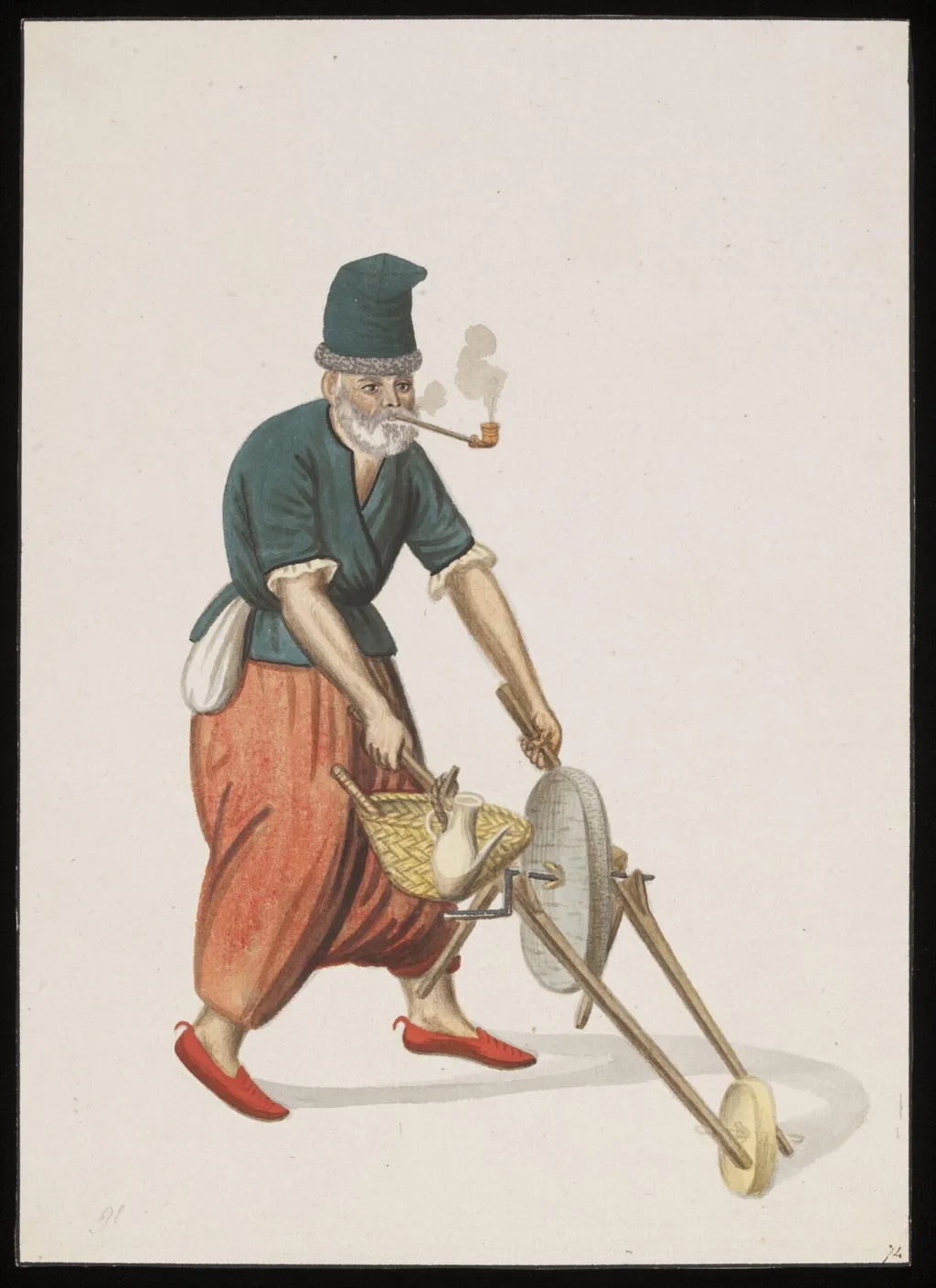
Biçakçi, or itinerant knife grinder is a watercolor work on paper by the Romanticist artist Anonymous Greek artist. It dates from 1809 and is held in the collection of the Victoria and Albert Museum.
About this work
Overview
This watercolor, titled Biçakçi (itinerant knife grinder), belongs to a larger collection of Ottoman scenes commissioned by British diplomat Stratford Canning, later Viscount Stratford de Redcliffe. The series was created during Canning’s early posting in Istanbul, where he sought visual records of the city’s institutions, architecture, and daily life.
Subject & Meaning
The image depicts a travelling knife grinder, a figure common in Ottoman street life, illustrating the everyday labor and itinerant trades that populated the urban landscape. By focusing on such a specific occupation, the work offers a glimpse into the socioeconomic fabric of early‑19th‑century Istanbul.
Technique & Style
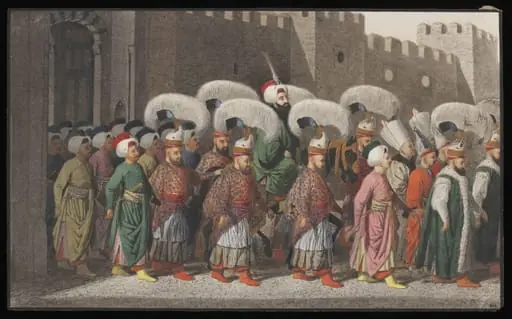
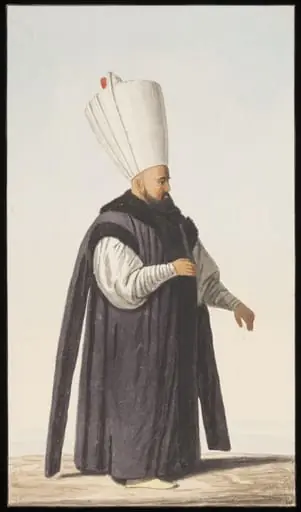
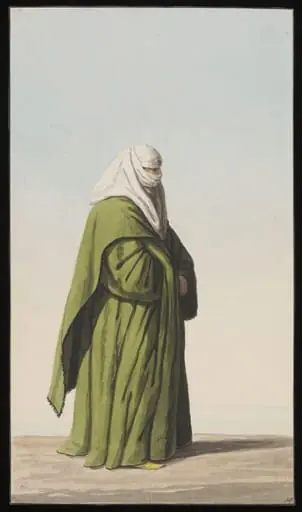
The artist blends the rich, saturated water‑ and body‑colours typical of Ottoman miniature traditions with European conventions of linear perspective and spatial depth. This hybrid approach results in a vivid, detailed rendering that balances decorative surface treatment with a more naturalistic sense of space.
History & Provenance
In 1810 the young architect Charles Cockerell met the artist in Istanbul and discussed technique, though he never recorded the painter’s name.
The creator’s identity remains uncertain, though Turkish scholars associate him with the workshop of Konstantin Kapidagli. In 1810 the young architect Charles Cockerell met the artist in Istanbul and discussed technique, though he never recorded the painter’s name. Cockerell’s copies of the artist’s architectural studies now reside in the British Museum.
The original watercolor set was bequeathed to Canning’s daughter Charlotte and later purchased by the Victoria and Albert Museum in 1895.
Context
The commission reflects Canning’s diplomatic curiosity: during his tenure as first secretary to Robert Adair, he systematically explored Ottoman institutions and customs, both officially and informally. Employing a local artist allowed him to acquire a visual archive that complemented written reports, bridging Eastern artistic practices with Western documentary needs.
Artist & collection

![A Pasha travelling with his escort[?], by Anonymous Greek artist](https://artifactworldgallery.com/img/anonymous-greek-artist--a-pasha-travelling-with-his-escort--01de32b8fcf30843-w320.webp)
![A Serbetci, or drinks seller[?], by Anonymous Greek artist](https://artifactworldgallery.com/img/anonymous-greek-artist--a-serbetci-or-drinks-seller--61bdf44039236f66-w320.webp)