Artwork
Carlos III leaving the Port of Naples, as Seen from the Land
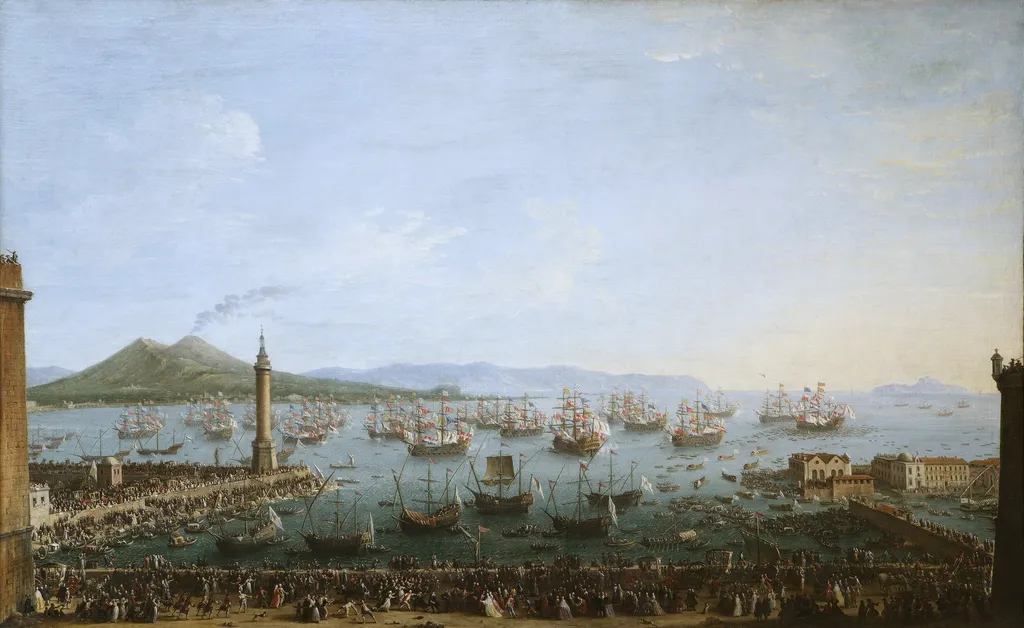
Carlos III leaving the Port of Naples, as Seen from the Land is an oil painting by the Rococo painting artist Antonio Joli. It dates from 1759 and is held in the collection of the Museo del Prado.
About this work
Subject & Meaning
Architectural details frame the scene, while distant landscapes of Vesuvius, the Sorrentine Peninsula, and Capri provide geographic context.
Carlos III leaving the Port of Naples, as Seen from the Land depicts the monarch's embarkation for Spain following the deaths of his elder brothers, symbolizing his accession to the Spanish throne. The composition emphasizes the departure with ships poised to sail, crowds of courtiers and clergy, and the presence of Secretary Bernardo Tanucci, marking the event of 6 October 1759. Architectural details frame the scene, while distant landscapes of Vesuvius, the Sorrentine Peninsula, and Capri provide geographic context. The work is part of a pair with a sea view version, both housed in the Museo del Prado, and a related canvas is held at the Museo Nazionale di Capodimonte in Naples.
Technique & Style
Executed in 1759, this work is an oil painting on canvas measuring 128 cm in height and 205 cm in width. The composition employs a panoramic format to depict a historical departure, framing a central fleet of ships with furled sails within the harbor through subtle architectural elements at the edges. The foreground is densely populated with figures representing clergy, courtiers, and aristocrats gathered to witness the embarkation, creating a detailed narrative scene. In the background, the artist renders a expansive landscape view that includes Mount Vesuvius, the Sorrento coast, and the island of Capri, integrating specific topographical features into the history painting genre.
History & Provenance
Painted by Antonio Joli in 1759, the work was commissioned by the Neapolitan court to commemorate the departure of Charles III for Spain following the death of his two elder brothers. The specific event depicted occurred on October 6, 1759, capturing the moment of the royal embarkation in the Port of Naples. Joli produced the piece in a pair with a companion view from the sea, both created with different vantage points to document the historic transition of power. While one version is held in the Museo del Prado in Madrid, the specific painting titled "Carlos III leaving the Port of Naples, as Seen from the Land" is conserved in the Museo nazionale di Capodimonte in Naples.
Context
Antonio Joli painted Carlos III leaving the Port of Naples, as Seen from the Land in 1759, a history painting depicting Charles III's departure from Naples to become king of Spain after the death of his elder brothers. The work was commissioned by the Neapolitan court and first recorded in the Museo del Prado collection, with a second version in the Museo Nazionale di Capodimonte in Naples showing a different viewpoint of the same event. Contemporary accounts note the painting's depiction of the royal entourage including Bernardo Tanucci and its surrounding landscape featuring Vesuvius, Capri and the Sorrentine coast, reflecting the political significance of the departure across European courts.
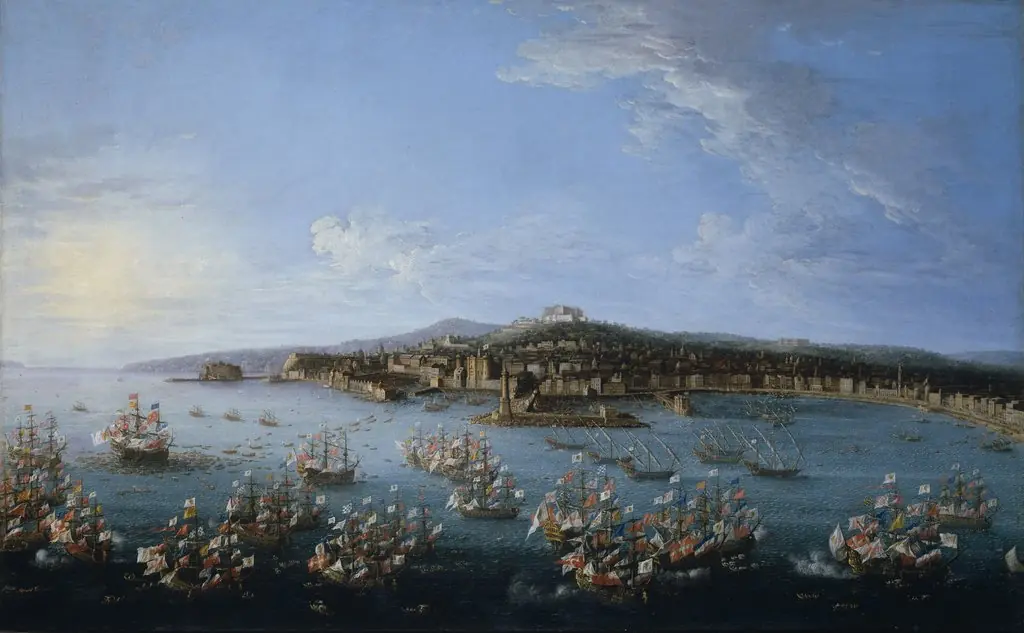
Scholarship situates the work within Joli's vedute production and the broader 18th-century tradition of documenting dynastic transitions, while its paired companion piece Charles III's Departure for Spain, Seen from the Sea demonstrates compositional dialogue between land and sea perspectives on the same historical moment.
Legacy
The work has been recognized as a significant example of 18th-century history painting, particularly for its role in documenting the political transition of Charles III. It is frequently cited in scholarship on the artistic representation of Bourbon court events and has influenced later depictions of royal departures in European art. The painting's dual versions, one viewed from land and another from sea, have been studied for their compositional contrast and narrative depth, contributing to discussions on perspective in vedute. Its presence in major institutions such as the Museo del Prado and the Museo Nazionale di Capodimonte has ensured continued scholarly attention to Joli's work and the broader context of Neapolitan painting in the Enlightenment era.
Own this work as a print
Artist & collection

Artist
Antonio Joli painted grand, sunlit views of Italian ruins and landscapes in the 1700s.

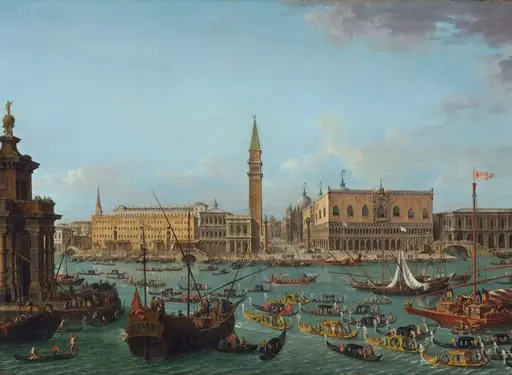 Procession of Gondolas in the Bacino di San Marco, Venice
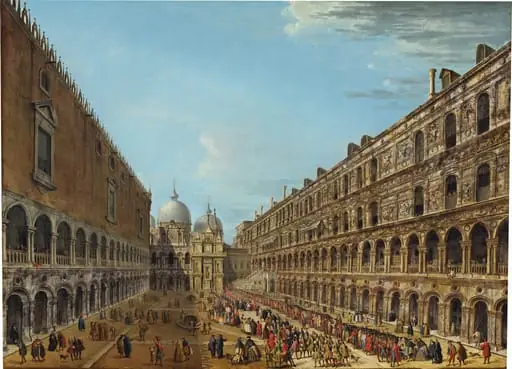 Procession in the Courtyard of the Ducal Palace, Venice
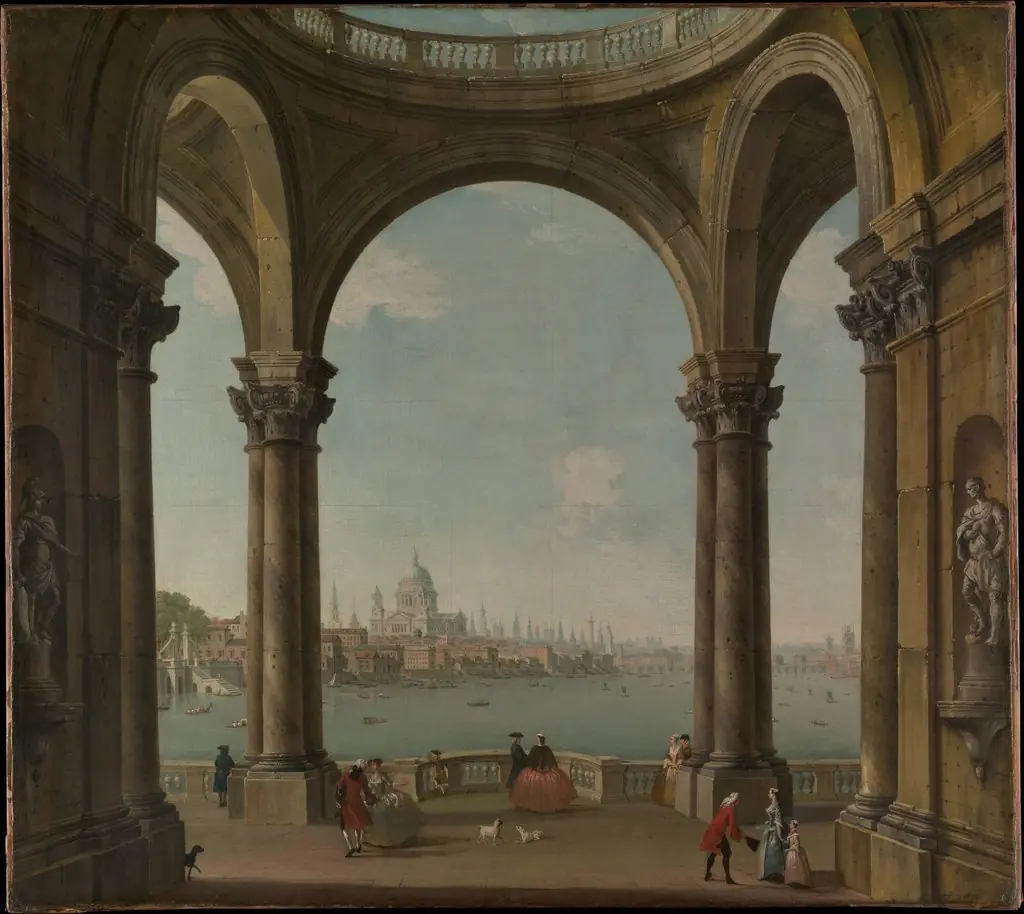 Capriccio with St. Paul's and Old London Bridge
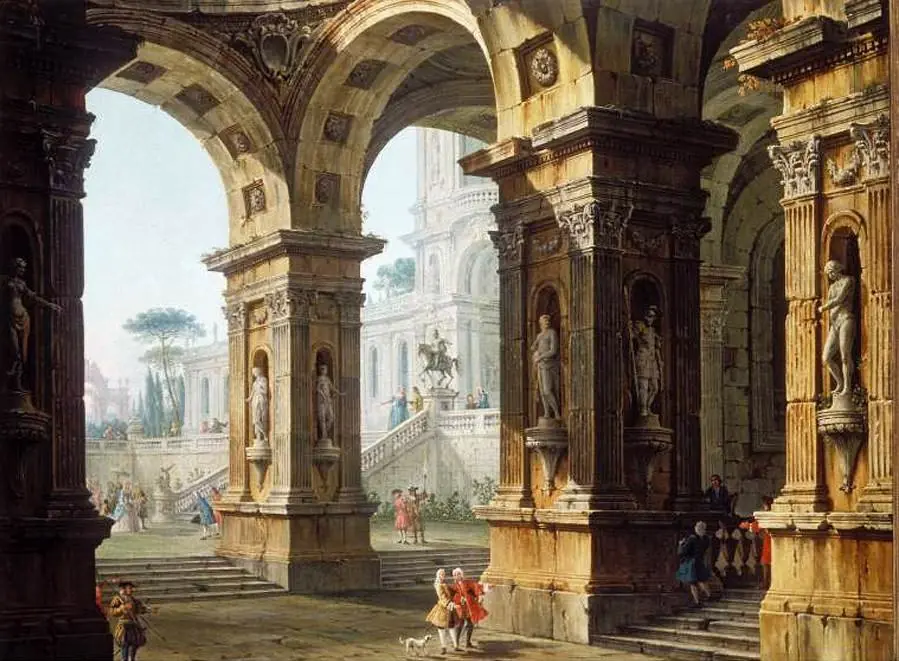 Capriccio with Elegant Figures
- Carlos III leaving the Port of Naples, as Seen from the Sea
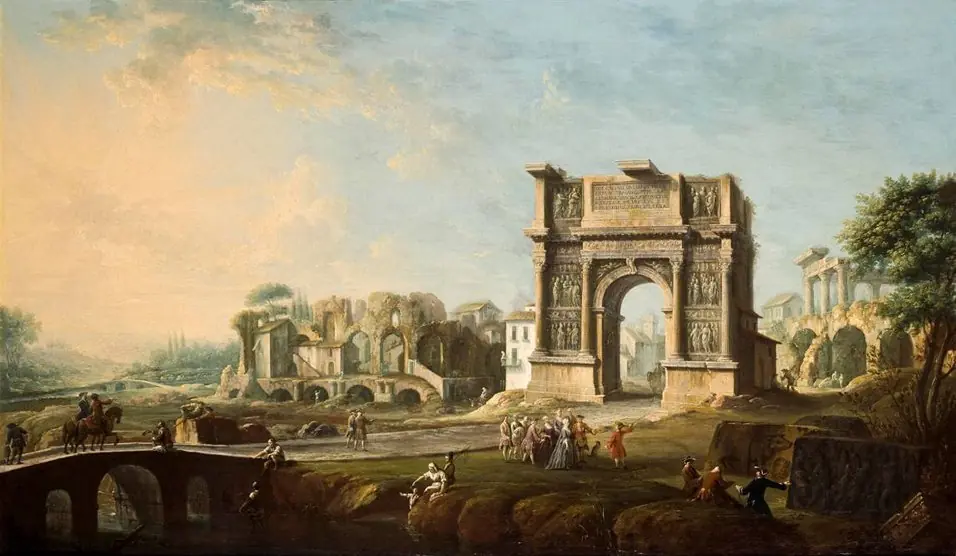 The Arch of Trajan at Benevento
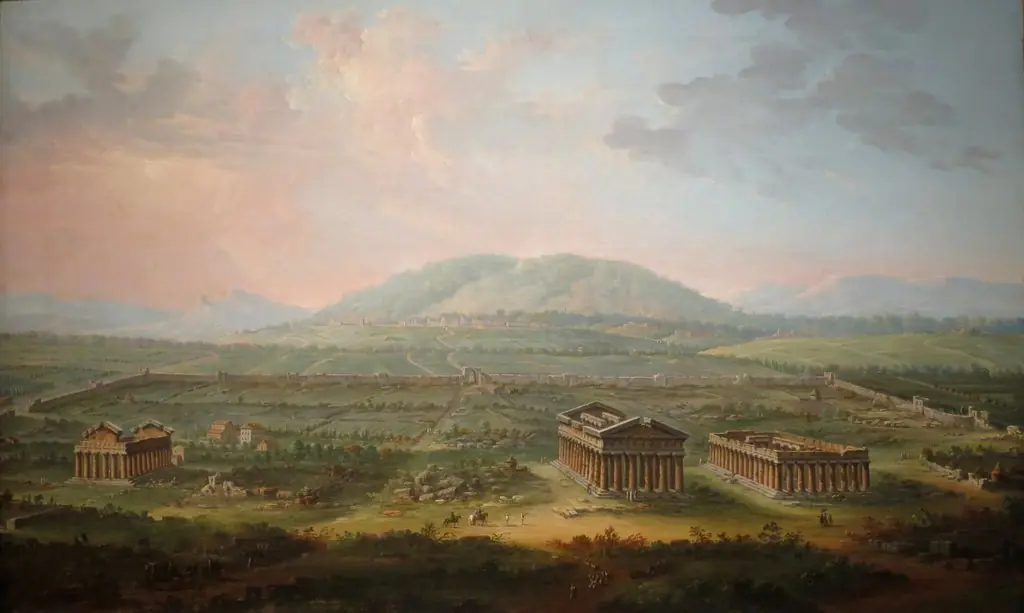 A View of Paestum
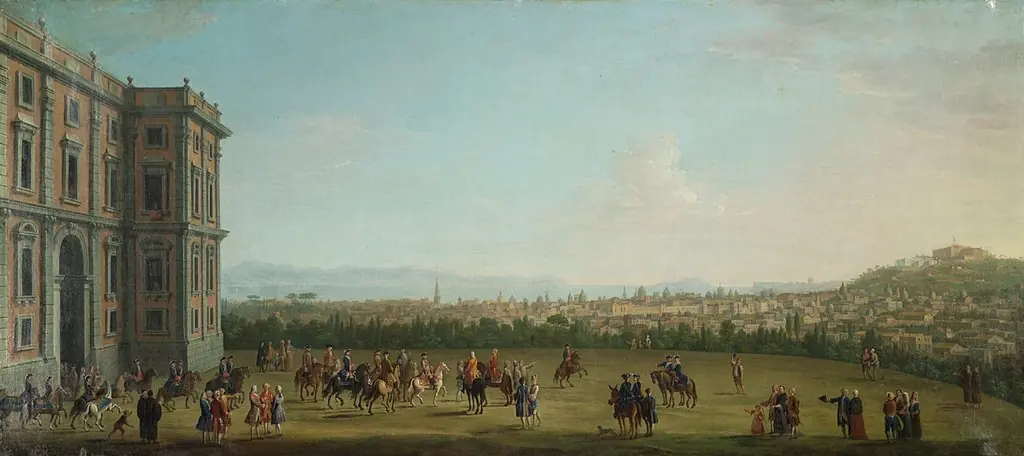 Ansicht von Neapel vom Palazzo di Capodimonte (Im Vordergrund Ferdinand IV. als Kind mit Gefolge beim Ausritt)
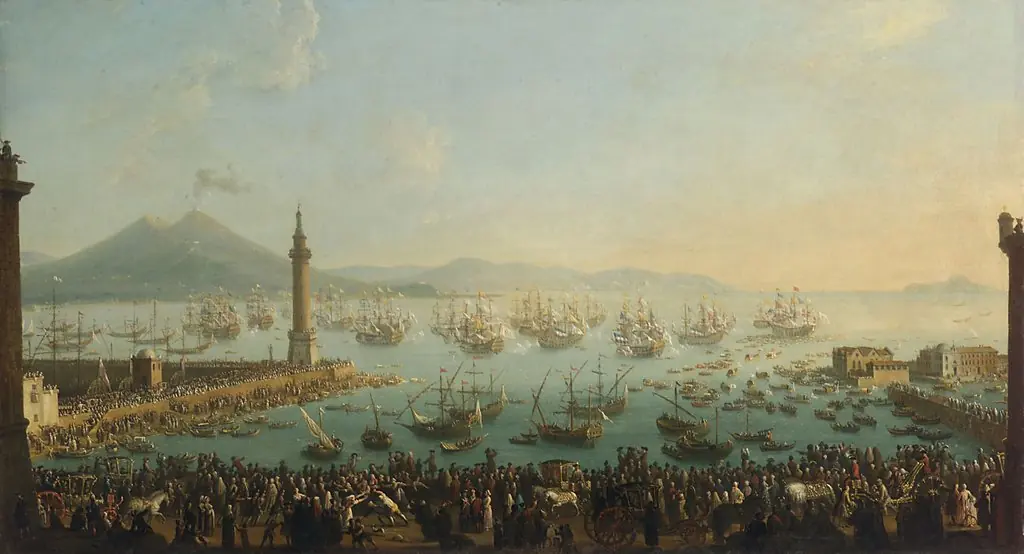 Hafen von Neapel mit Abfahrt Karls III. nach Spanien (1759)
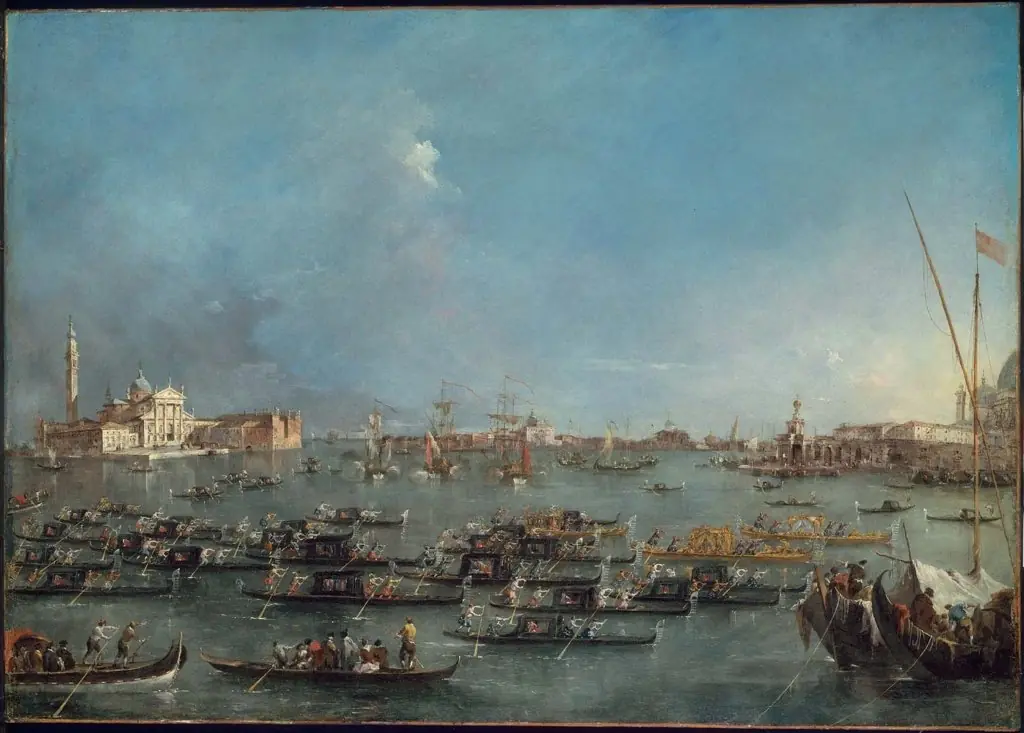 Procession of Gondolas in the Bacino di San Marco
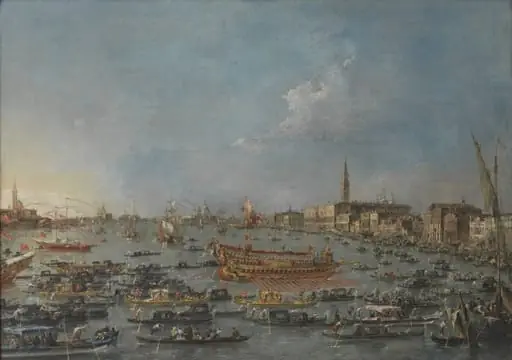 The Bucintoro Festival of Venice
 Untitled
 The Meeting of Pope Pius VI and Doge Paolo Renier at San Giorgio in Alga
 Coastal Landscape with Balaam and the Ass
 Port with Warships
 View of the Old Port of Toulon (El puerto viejo de Tolón)
 Council of War on board the 'Queen Charlotte', commanded by Lord Exmouth, prior to the Bombardment of Algiers, 26 August 1816