Artwork
Christ on the Lake of Gennesaret
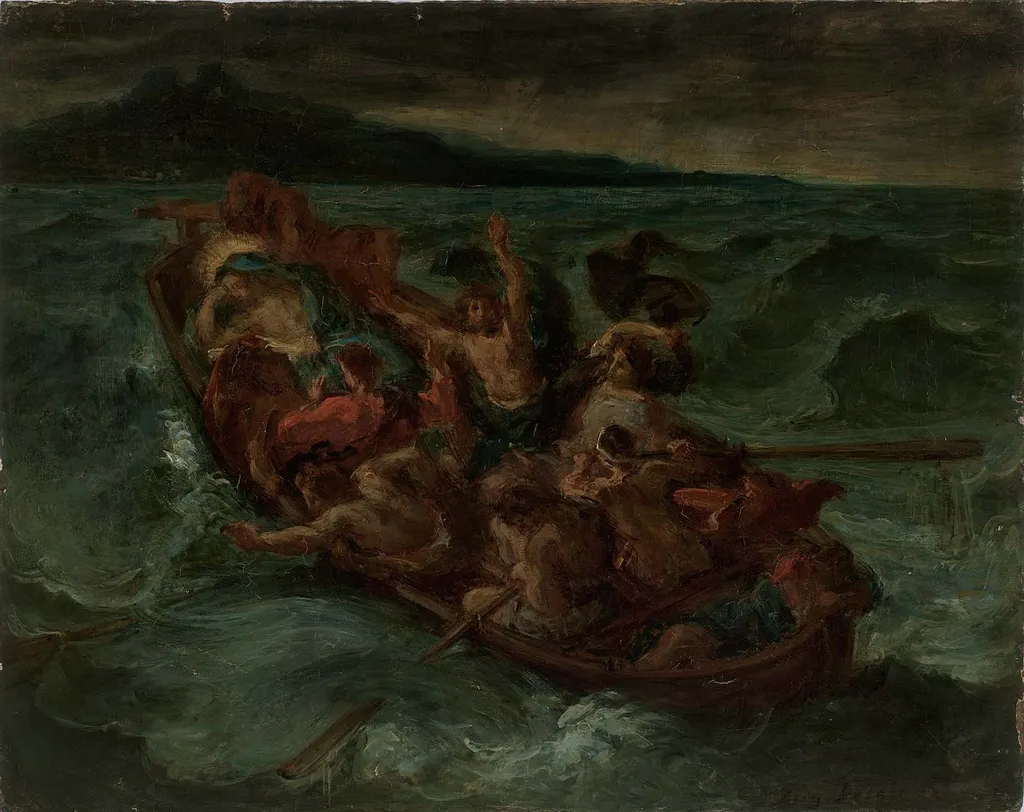
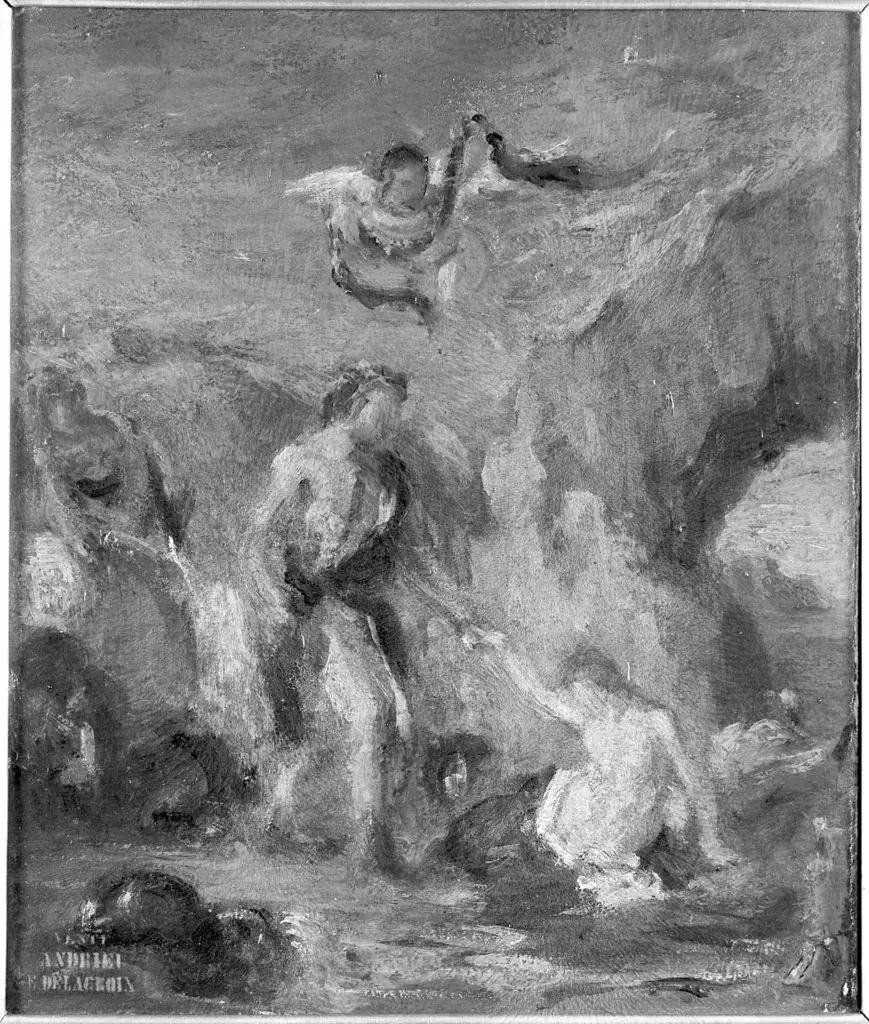
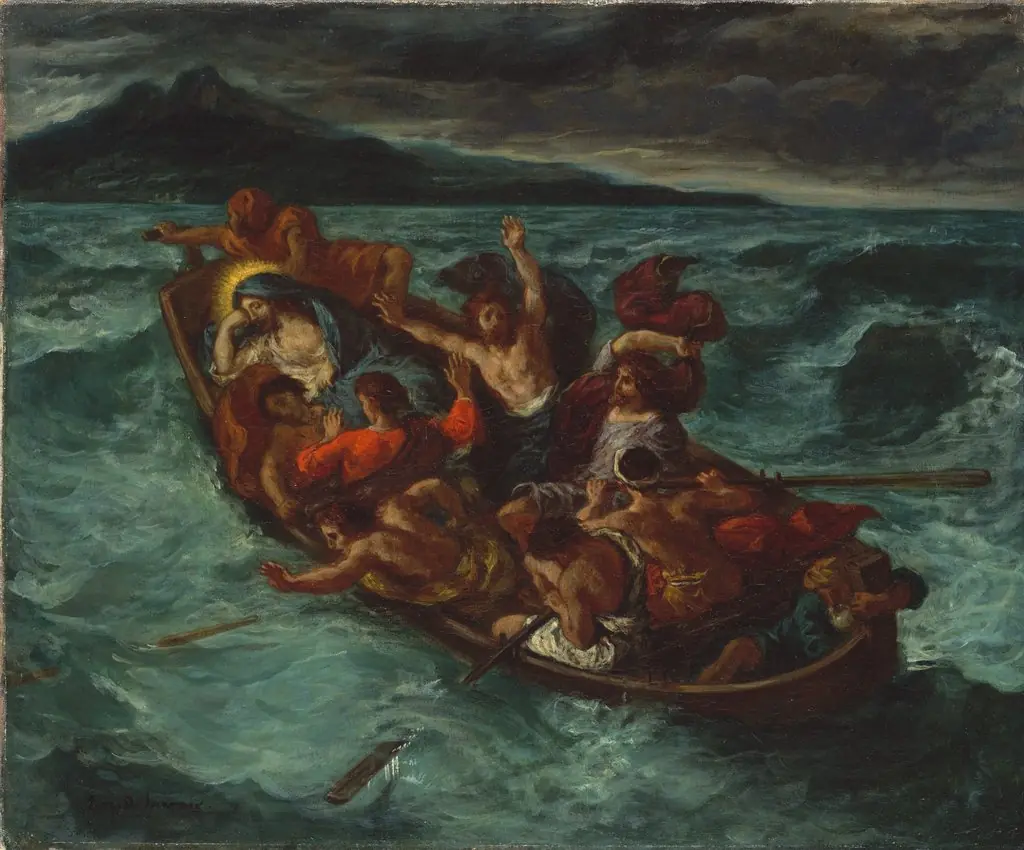
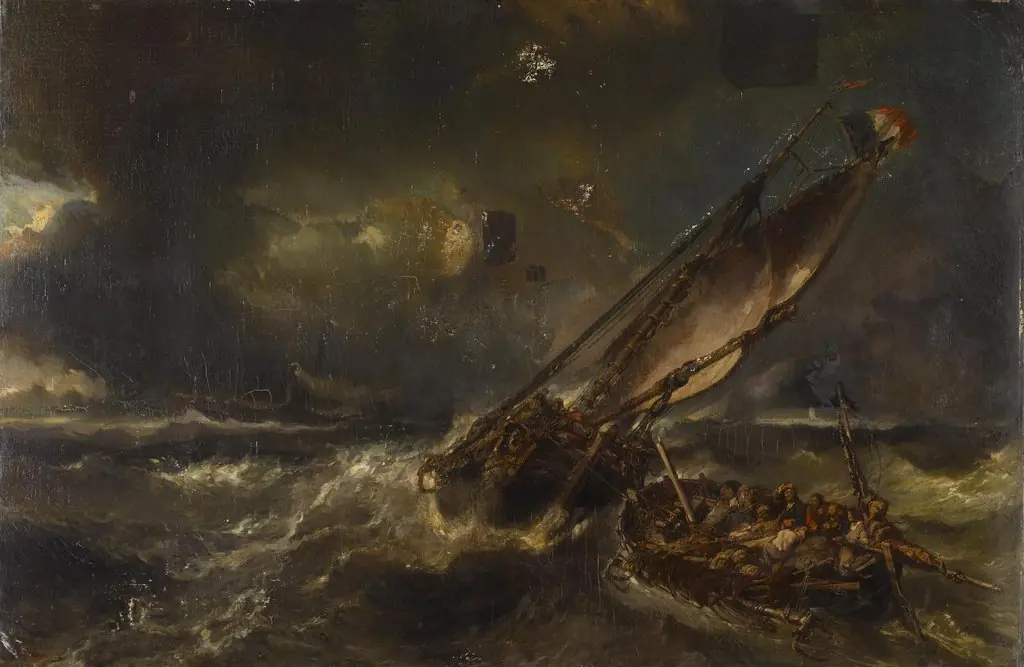
Christ on the Lake of Gennesaret is an unspecified painting by the French Romanticist artist Pierre Andrieu. It dates from 1850 and is held in the collection of the Museum of Fine Arts Boston.
About this work
Overview
Andrieu’s approach reflects 19th-century French religious painting traditions, emphasizing emotional intensity over idealized serenity.
Painted around 1850 by Pierre Andrieu, this work illustrates the biblical episode of Christ calming the storm on the Sea of Galilee. Executed in oil on canvas, it is part of the collection at the Museum of Fine Arts, Boston. The composition centers on a small boat caught in violent weather, with figures reacting to the chaos around them. Andrieu’s approach reflects 19th-century French religious painting traditions, emphasizing emotional intensity over idealized serenity.
Subject & Meaning
The scene depicts Christ standing calmly in a boat as disciples struggle against a sudden tempest, referencing Matthew 8:23–27. His composed posture contrasts with the panic of those around him, suggesting divine authority amid human fear. The painting underscores themes of faith and protection, inviting viewers to reflect on trust in the face of overwhelming adversity. No overt symbolism distracts from the immediacy of the moment.
Technique & Style
Andrieu employs chiaroscuro to heighten the drama, with a narrow band of light illuminating Christ’s figure against a dark, churning sea and sky. Brushwork is energetic in the water and clouds, while the figures are rendered with careful attention to gesture and anatomy. The palette favors deep blues, grays, and muted earth tones, reinforcing the storm’s oppressive atmosphere. The composition directs the eye toward Christ’s outstretched hand, the visual and narrative anchor.
History & Provenance
The painting entered the Museum of Fine Arts, Boston’s collection in the late 19th century, likely acquired through a private dealer or donor familiar with French academic art. Little is documented about its earlier ownership, but its style aligns with religious works popular in mid-19th-century France. Andrieu, a lesser-known follower of Ingres, produced numerous biblical scenes for ecclesiastical and private patrons during this period.
Context
Created during a time when French academies promoted historical and religious subjects, Andrieu’s painting reflects the era’s preference for emotionally charged narratives grounded in scripture. While major artists like Delacroix explored similar themes with greater radicalism, Andrieu’s approach remained within conservative academic boundaries. The work speaks to a broader 19th-century interest in making biblical stories vivid and accessible to lay audiences.
Legacy
Though not widely exhibited outside Boston, the painting remains a representative example of mid-19th-century French religious art. It contributes to the museum’s collection of narrative biblical scenes and offers insight into how lesser-known artists interpreted canonical stories for contemporary audiences. Andrieu’s work, while not influential in the broader art historical canon, preserves the aesthetic values of his time.
Own this work as a print
Artist & collection