Artwork
April Love
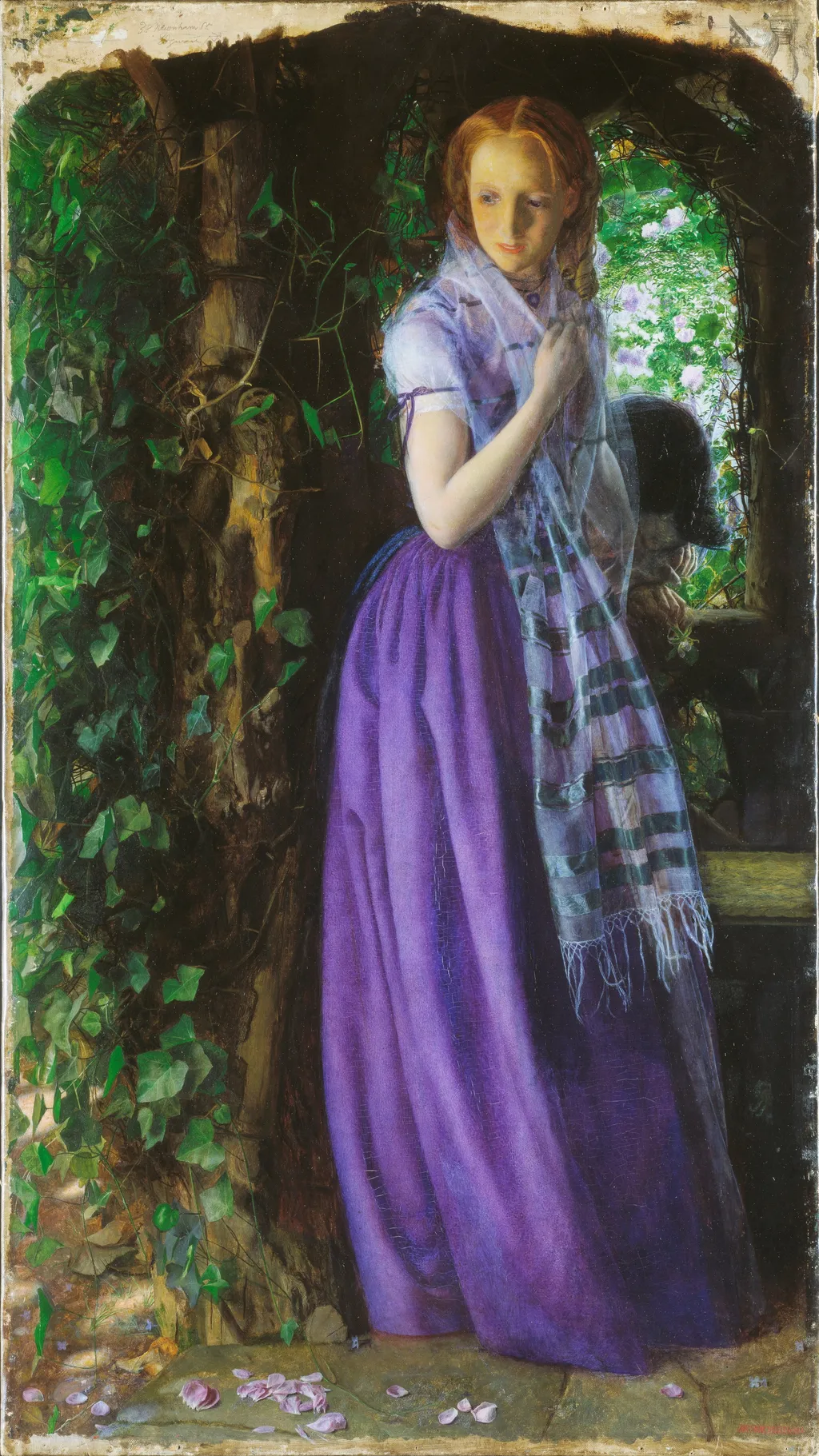
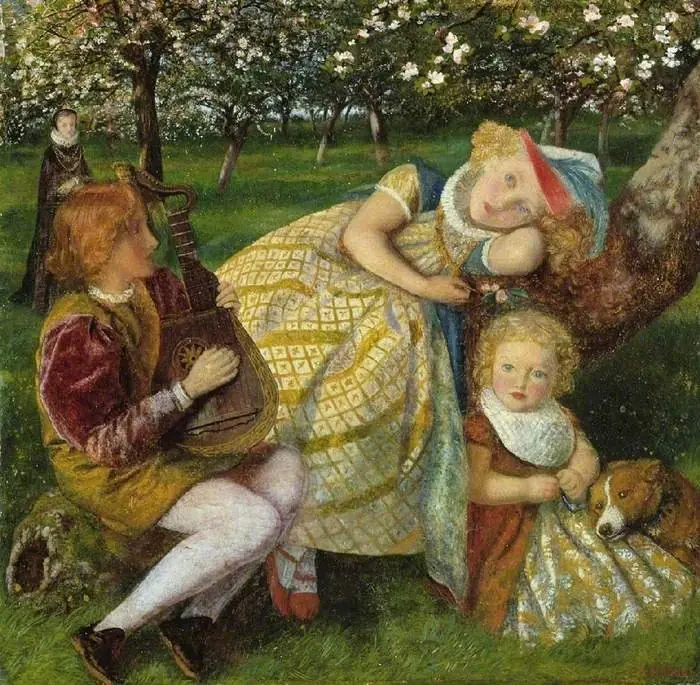
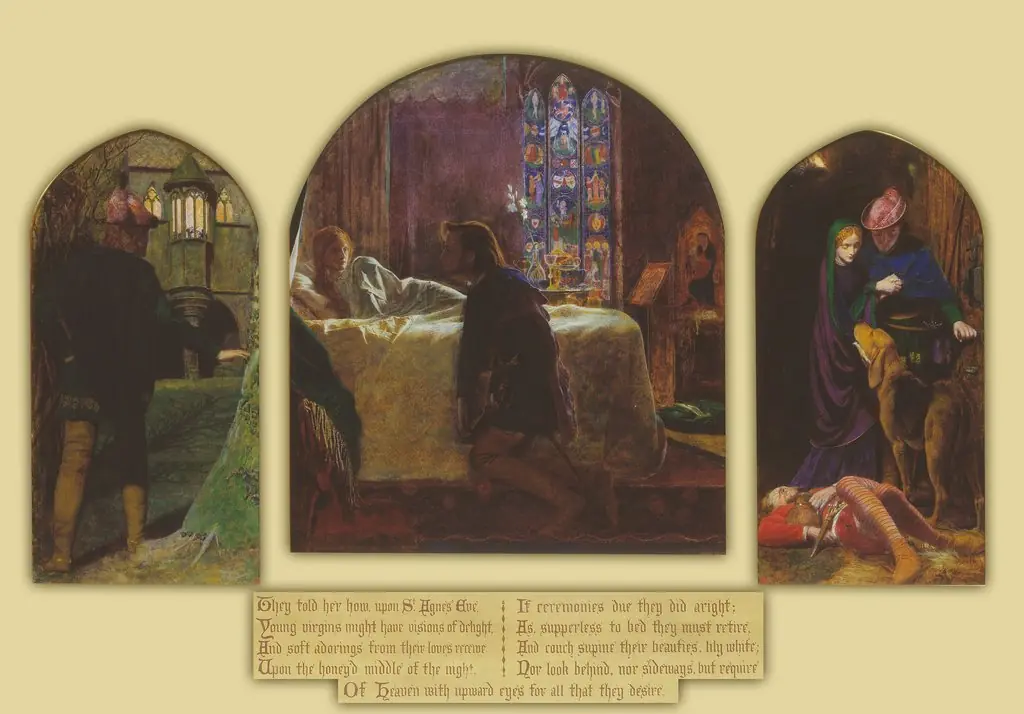
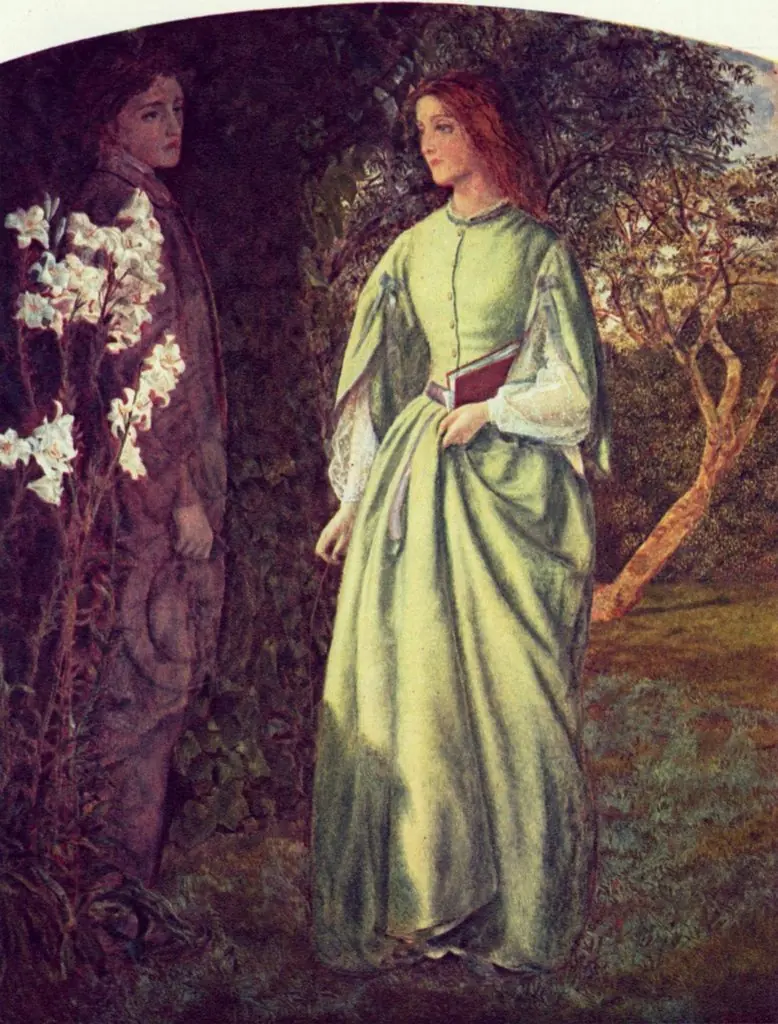
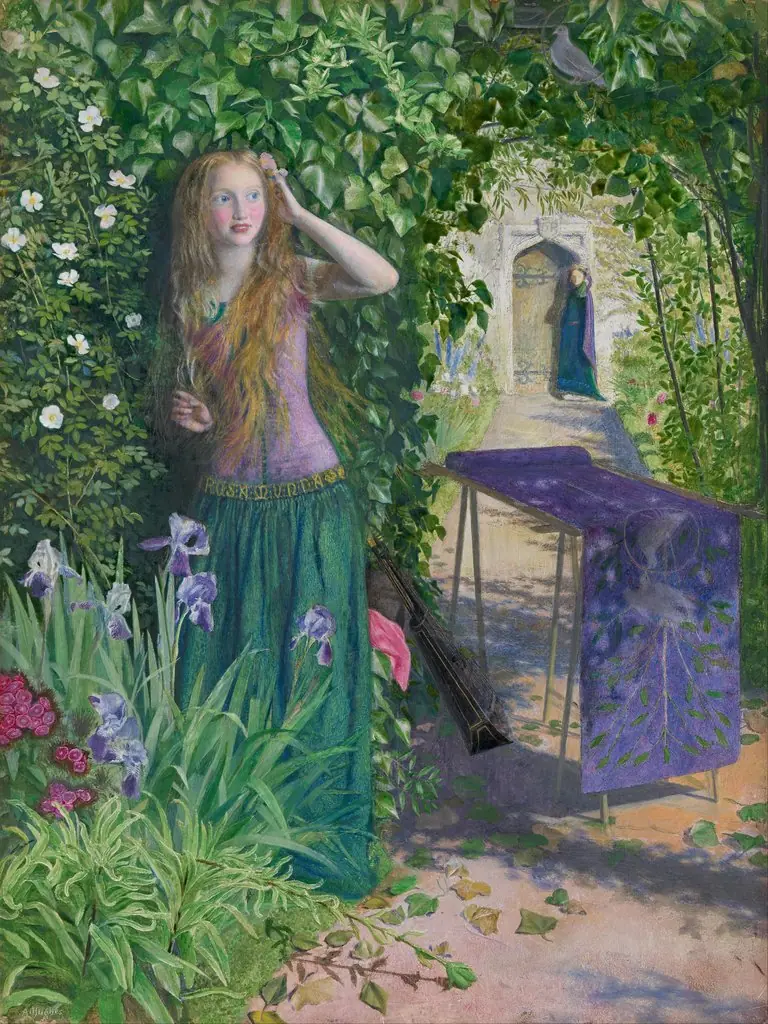
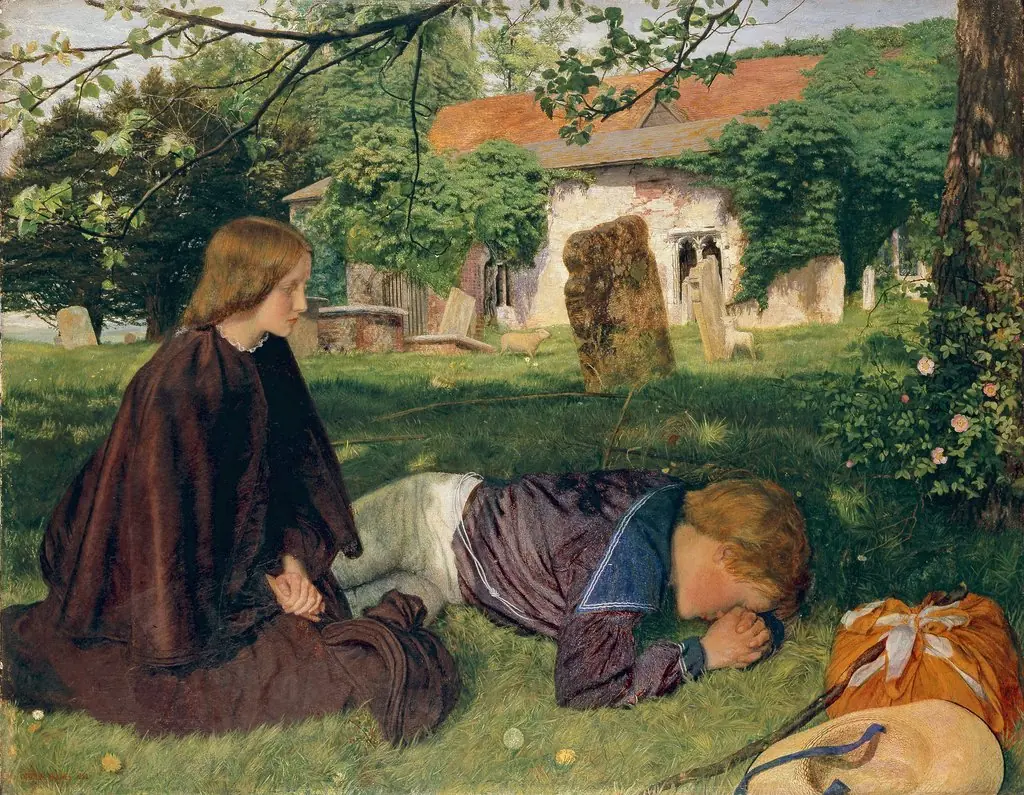
April Love is an oil painting by the Pre-Raphaelite artist Arthur Hughes. It dates from 1855 and is held in the collection of the National Gallery.
About this work
Overview
Arthur Hughes’s oil painting April Love was completed in the mid‑1850s and first shown at the Royal Academy in 1856. The work portrays a young couple caught in a moment of emotional tension, with the woman’s tear‑streaked face turned toward fallen blossoms, while the male figure is hinted at only by a bowed head. The composition reflects the Pre‑Raphaelite interest in intimate, narrative scenes.
Subject & Meaning
The central figure, a woman in a purple dress, adjusts a blue scarf as she gazes at wilted pink petals scattered on the floor, a visual cue for the passing of spring and the fragility of youthful affection. Her subdued expression and the barely visible partner suggest a crisis of love, echoing contemporary poetic meditations on the fleeting nature of romance.
Technique & Style
Executed in oil, the painting employs a subtle chiaroscuro that models the figure against a dimly lit, ivy‑covered wall, allowing sunlight to illuminate the dress and petals. Hughes’s handling of colour, rich purples, blues, and pinks, creates a luminous contrast with the deep greens of the background, a hallmark of Pre‑Raphaelite attention to detail and naturalistic lighting.
History & Provenance
The model for the woman was Tryphena Ford, whom Hughes married in 1855. After its Royal Academy debut, the painting entered the collection of designer William Morris before being acquired by the Tate Gallery in 1909, where it remains part of the Tate Britain holdings.
Artist & collection
Artist
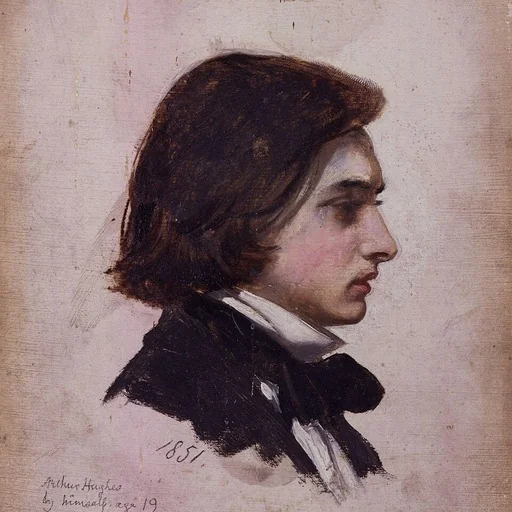
Arthur Hughes (27 January 1832 – 22 December 1915) was an English painter and illustrator associated with the Pre-Raphaelite Brotherhood.

 Compared in the Pre-Raphaelites course