Artwork
Italian Landscape
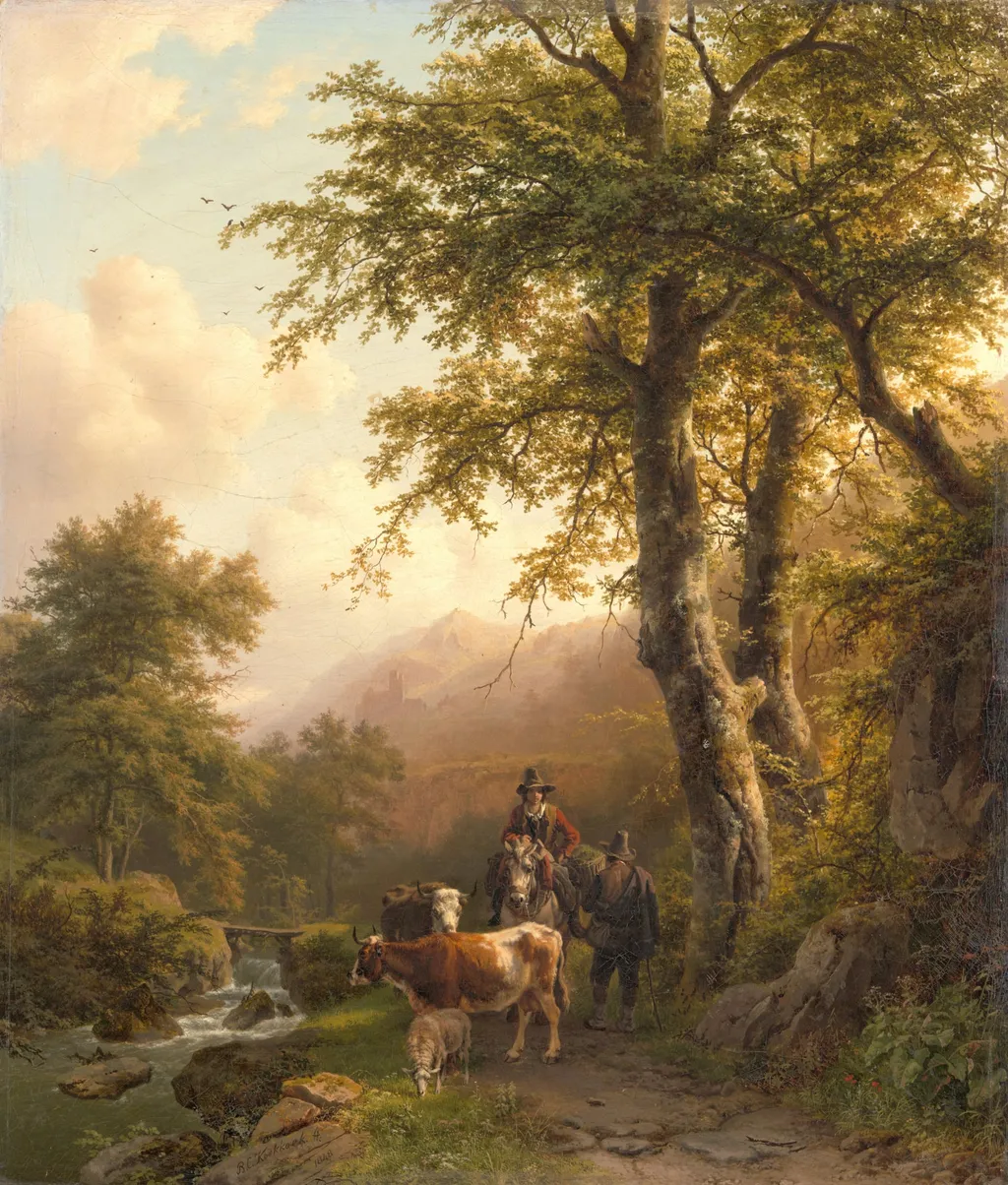
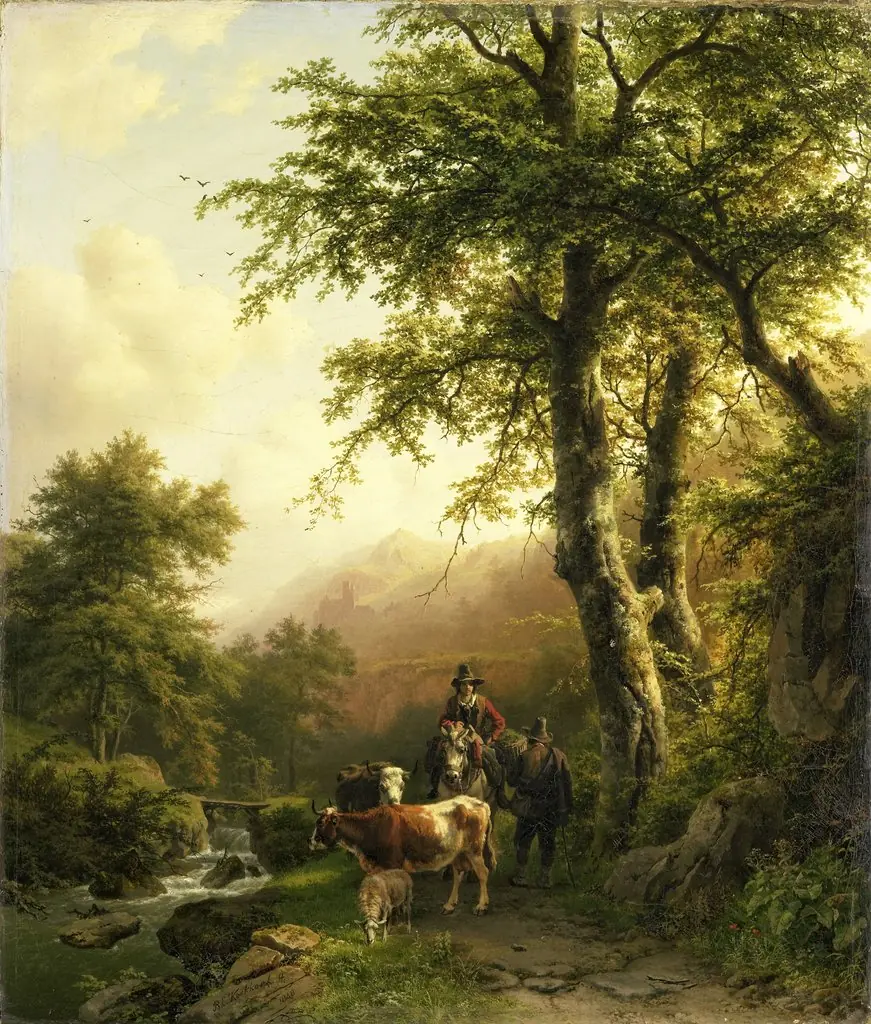
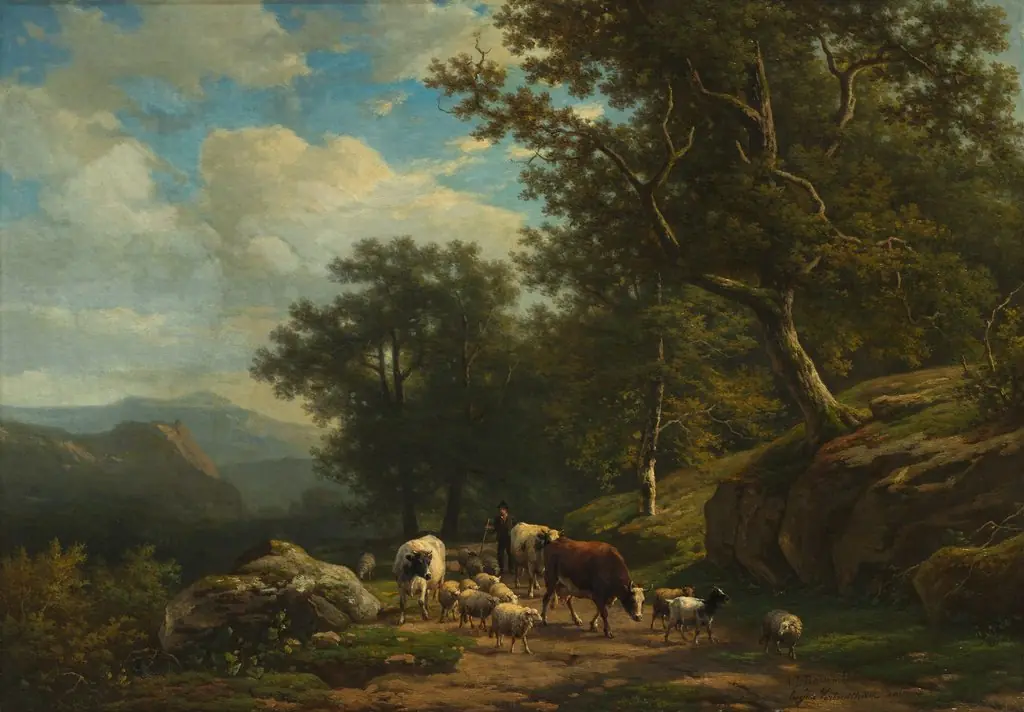
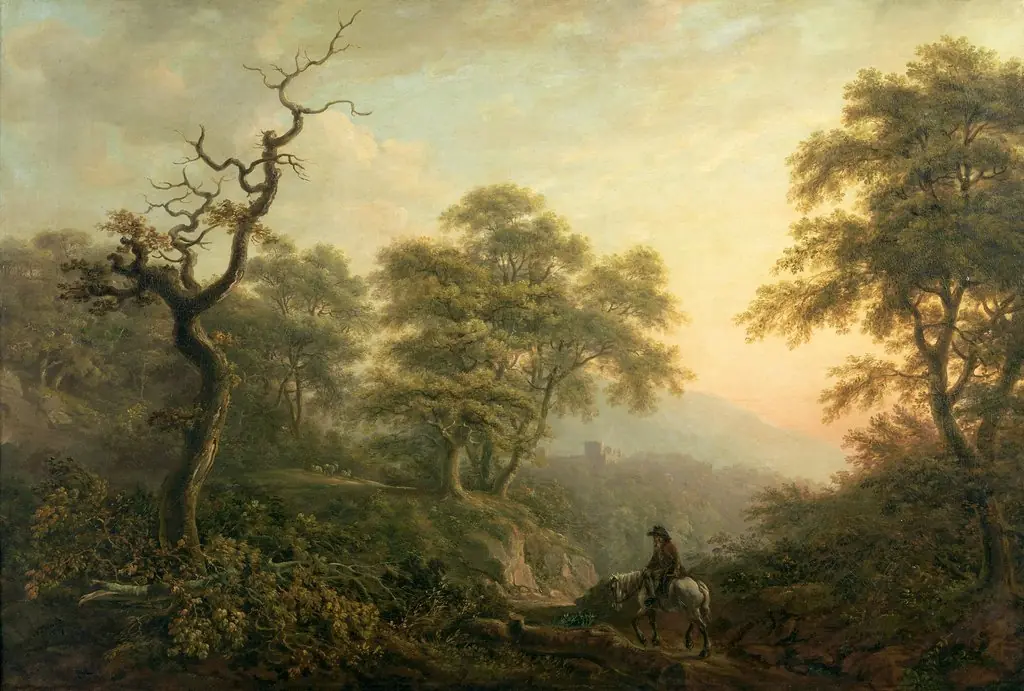
Italian Landscape is an unspecified painting by the Hague School artist Barend Cornelis Koekkoek. It dates from 1848 and is held in the collection of the Rijksmuseum.
About this work
Artists from the Hague School often painted scenes they’d never visited, using sketches and imagination.
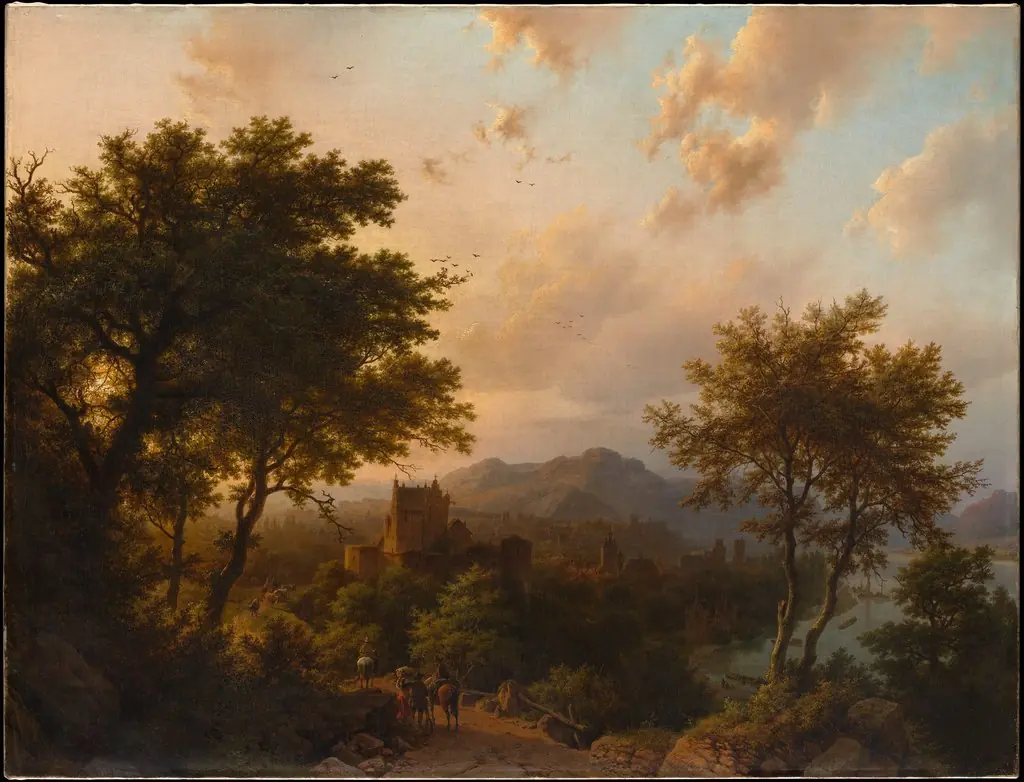
You see a mountain path where a shepherd and a man on horseback stop to talk under trees. A stream rushes by on the left, and snow-capped peaks rise in the distance beside a small castle.
This painting was made in 1848, but it’s not Italian, it’s Dutch. Artists from the Hague School often painted scenes they’d never visited, using sketches and imagination. The soft light and quiet moment feel real, even if the place isn’t.
To see more like it, look up the Hague School.
Subject & Meaning
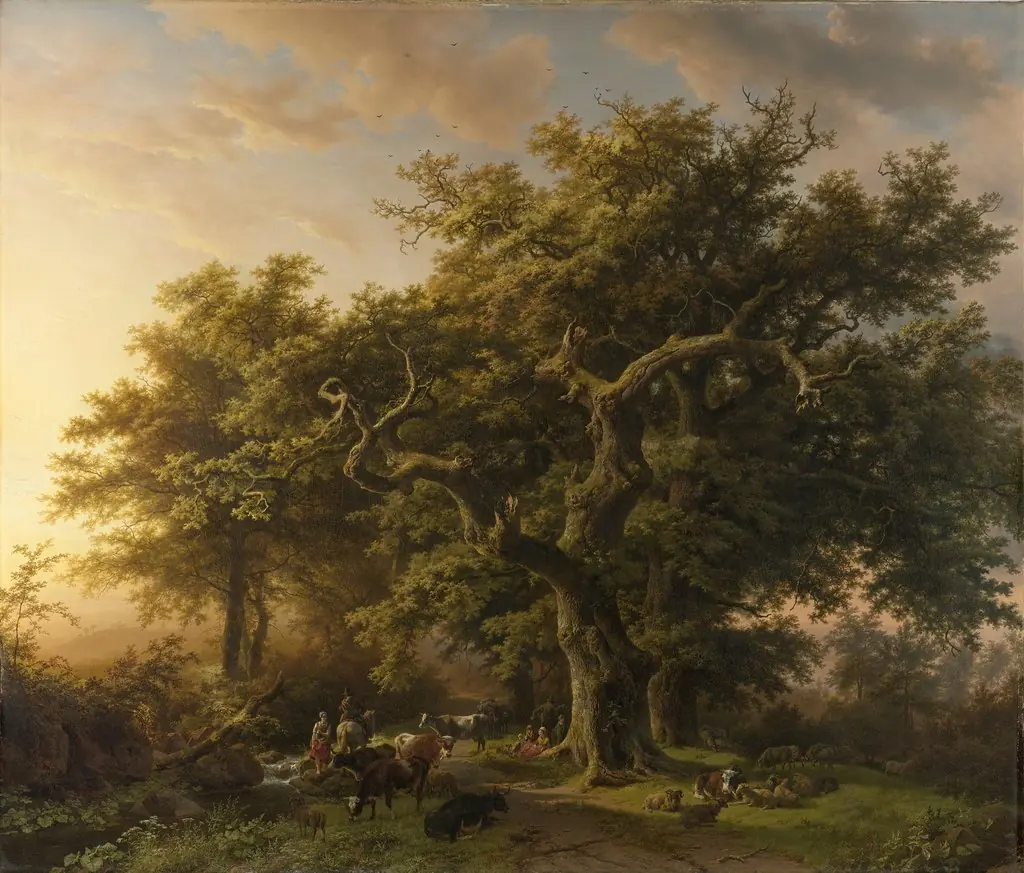
Italian Landscape depicts an idealized, romanticized vision of nature rather than a literal topographical record. Consistent with Koekkoek's broader oeuvre, the work likely features monumental trees, winding paths, and panoramic views that blend meticulous observation with atmospheric mood. The artist often dramatized natural elements, such as large oaks, to emphasize the paltriness of humanity in comparison to the greatness of creation. Tiny figures are frequently included within these imposing environments to create a contrast between humble man and majestic nature. This approach reflects Koekkoek's belief that art must remain true to nature through rigorous study while synthesizing these observations into an idealized composition. The painting embodies the principles of Dutch Romantic landscape painting, drawing inspiration from seventeenth-century masters to evoke a nostalgic, poetic interpretation of the Italian countryside.
Context
Barend Cornelis Koekkoek is historically regarded as the founding father of Dutch Romantic landscape painting and was celebrated during his lifetime as the "Prince of Landscape Painting." His 1848 work, *Italian Landscape*, exemplifies his mature style, which synthesizes meticulous observation with idealized composition rooted in the seventeenth-century Dutch Golden Age tradition. Art historian G. H. Marius noted in 1973 that Koekkoek's oeuvre is defined by detailed reproductions of wooded structures and a nostalgic atmosphere that draws comparisons to masters like Ruisdael and Cuyp. Koekkoek's influence extended beyond his own canvas through the establishment of the Cleves Drawing Academy in 1841, which fostered the "Cleves Romanticism" school. This movement blended realism with an idealized mood, attracting students who traveled to the region to study under the master and emulate his principles of capturing light and nature.
Legacy
Barend Cornelis Koekkoek's Italian Landscape exerted lasting influence through his role as mentor and founder of the Cleves Romantic school, shaping 19th-century landscape painting across Europe. His pedagogical approach, emphasizing meticulous observation of nature and idealized composition, trained notable artists including Frederik Marinus Kruseman and Johann Bernard Klombeck, who carried forward his romanticized vision of wilderness. The work's legacy is institutionalized through the B.C. Koekkoek-Haus museum in Kleve, which preserves his former residence and studio as a monument to Dutch Romanticism, and through continued scholarly attention to his techniques, as documented in 20th-century studies like Angelika Nollert's 1997 dissertation. His artistic philosophy, articulated in Herinneringen en Mededeelingen van eenen Landschapsschilder, remains a reference for landscape artists, while his paintings continue to be exhibited in major collections worldwide.
Own this work as a print
Artist & collection
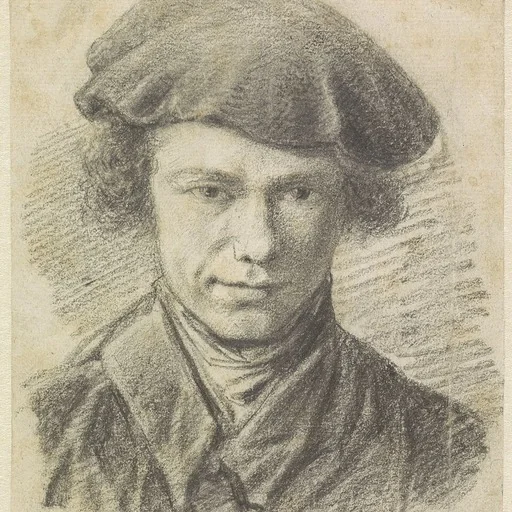
Artist
Barend Cornelis Koekkoek (October 11, 1803 – April 5, 1862) was a Dutch landscape artist and lithographer, and the most famous member of the Koekkoek family of painters.