Artwork
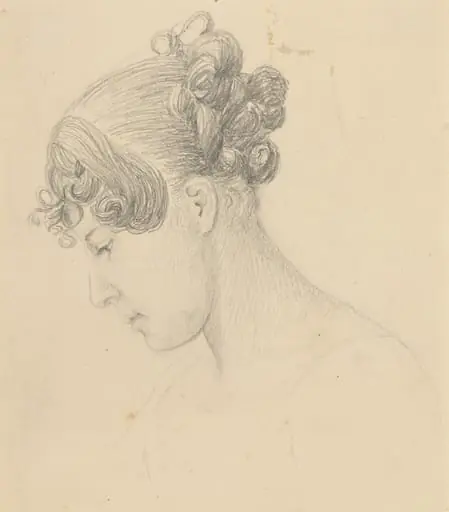
A Young Woman with an Elaborate Hairdo
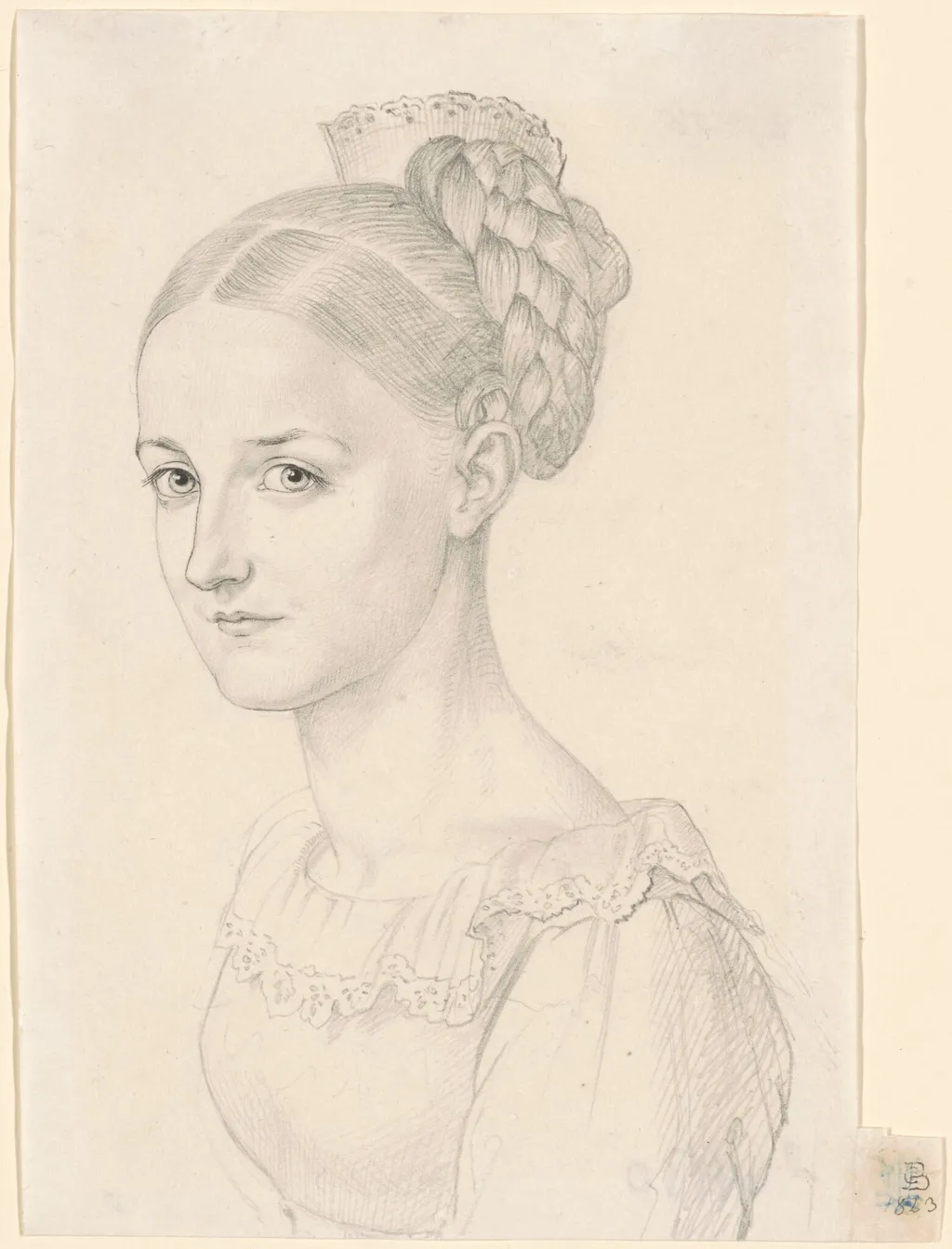
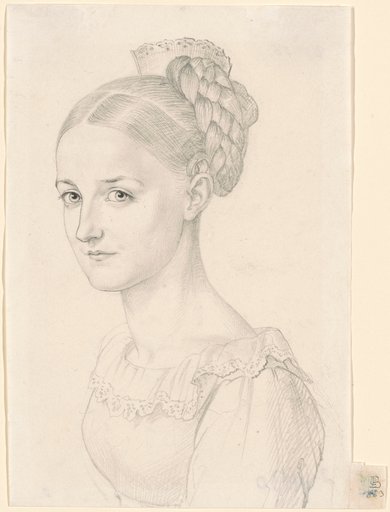
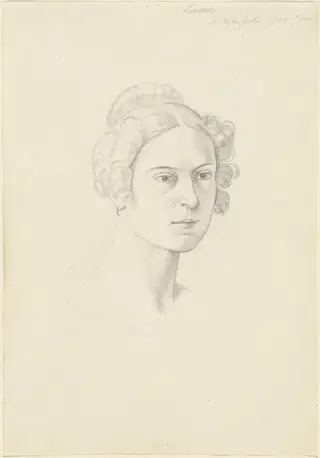
A Young Woman with an Elaborate Hairdo is an ink drawing by the Romanticist artist Carl Barth. It dates from 1823 and is held in the collection of the National Gallery of Art.
- Inscription
- Inscribed:lower right in pen and black ink: CB (in monogram) 1823; by later hand, upper left verson in graphite: 60755; by later hand, lower left in graphite: ?64/30
About this work
Overview
Created in 1823 by Carl Barth, this drawing depicts a young woman rendered in graphite and black ink on wove paper. The composition centers on her poised gaze and meticulously detailed coiffure, emphasizing quiet intimacy over grandeur. The medium’s precision allows for subtle tonal gradations, capturing the softness of skin and the complexity of fabric without overt theatricality.
Subject & Meaning
The absence of narrative context focuses attention on personal presence, suggesting a study of individuality within social norms.
The subject is a young woman, portrayed with direct eye contact that invites quiet engagement rather than idealization. Her elaborate braided hairstyle, wrapped around the head, reflects contemporary fashion of the early 19th century, while the lace collar suggests modest refinement. The absence of narrative context focuses attention on personal presence, suggesting a study of individuality within social norms.
Technique & Style
Barth employs fine graphite lines and controlled pen strokes to define form, augmented by cross-hatching to model volume in the hair and fabric. Delicate shading conveys the texture of lace and the sheen of braided strands, while the paper’s smooth surface enhances the precision of the lines. The technique avoids heavy contrast, favoring nuanced transitions that lend realism without dramatic effect.
History & Provenance
The drawing was completed in 1823 during Barth’s active years as a portraitist in Europe. Its survival in good condition suggests it was carefully preserved, possibly as a private study or commission. No documented exhibition history or early ownership records are widely known, indicating it may have remained within familial or artistic circles before entering institutional collections.
Context
In the early 1820s, detailed portrait drawings were common among artists refining their skills or fulfilling private commissions. Barth’s work aligns with a tradition of intimate, unidealized female portraiture emerging in German-speaking regions. The focus on hairstyle and dress reflects societal emphasis on personal presentation, while the medium’s accessibility made such studies practical for both artists and patrons.
Legacy
Though not widely published or exhibited in its time, the drawing remains a quiet example of early 19th-century draftsmanship. It contributes to understanding how artists captured individual character through restrained means, preserving the aesthetic values of its era without overt sentimentality. Its endurance offers insight into the quiet, everyday practices of portrait study beyond grand public works.
Own this work as a print
Artist & collection