Artwork
Harlequin as Crippled Soldier
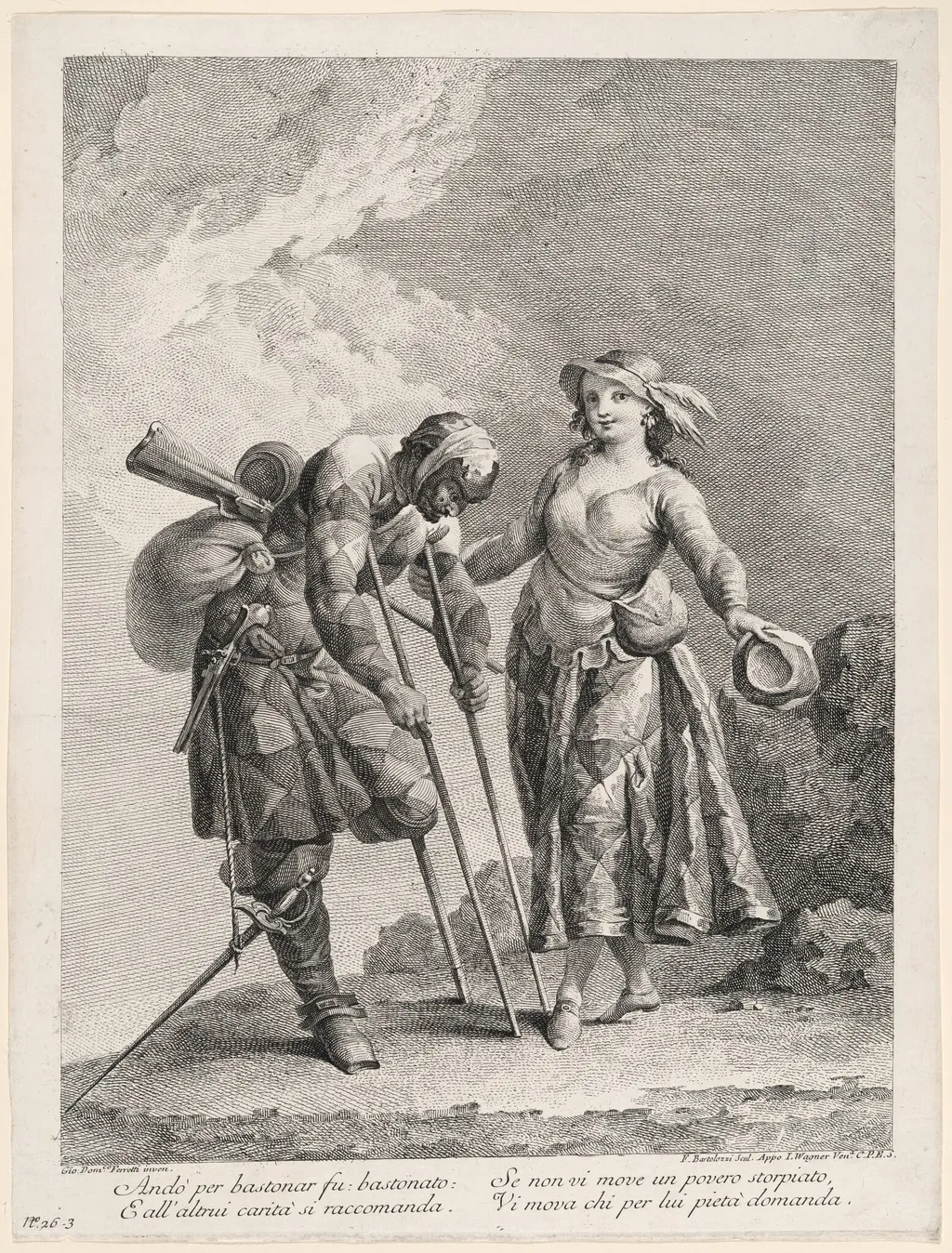
Harlequin as Crippled Soldier is an ink print by the Romanticist artist Francesco Bartolozzi. It dates from 1760 and is held in the collection of the National Gallery of Art.
- Inscription
- Inscribed:lower left in plate: Gio. Dom.co Ferretti inven.; lower right in plate: F. Bartolozzi Scul. Appo I. Wagner Ven.a C.P.E.S.; lower center in plate: Andò per bastonar fu: bastonato: / E all'altrui carità si raccomanda. / Se non vi move un povero storpiato, / Vi mova chi per lui pietà domanda.; by later hand, lower left in brown ink: No. 26-3; by later hand, on verso in graphite: No. 2; 59/2; 3L
- Markings
- Marked:crest with crown and W(?) below
About this work
Overview
Though Bartolozzi is better known for his crayon-style engravings, this work demonstrates his command of linear detail and tonal contrast.
Created in 1760 by Italian engraver Francesco Bartolozzi, this print combines etching and engraving on laid paper to portray a harlequin figure transformed into a wounded veteran. Though Bartolozzi is better known for his crayon-style engravings, this work demonstrates his command of linear detail and tonal contrast. The image resides in the National Gallery of Art, Washington, D.C., as part of its print collection.
Subject & Meaning
The figure, dressed in the traditional diamond-patterned costume of a harlequin, is depicted as a disabled soldier, leaning on a crutch, bandaged at the forehead, and clutching a sword. His downward gaze and hunched posture suggest exhaustion or grief. The juxtaposition of theatrical costume with physical trauma implies a commentary on the fragility of identity, perhaps reflecting post-war societal neglect of veterans.
Technique & Style
Bartolozzi employed fine etched lines and controlled engraving to render texture in fabric, metal, and skin. Shading is achieved through cross-hatching and delicate stippling, lending volume to the figure without background detail. The sparse landscape, minimal trees and rolling hills, focuses attention on the subject’s emotional state, aligning with emerging sensibilities that valued psychological depth over ornate settings.
History & Provenance
The print was produced during Bartolozzi’s tenure in London, where he gained prominence as a reproductive engraver. While many of his works illustrated literary or mythological themes, this original composition stands as a rare personal expression. It entered the National Gallery of Art’s collection through established print acquisition channels in the 20th century, with no documented earlier ownership beyond its initial circulation.
Context
In the mid-18th century, European art increasingly turned toward human vulnerability and emotional realism. The harlequin, traditionally a comic figure, was reimagined in literature and visual art as a symbol of hidden sorrow. Bartolozzi’s print reflects this trend, resonating with contemporary interest in the psychological toll of war and the blurred line between performance and reality in public life.
Legacy
Though not widely reproduced or celebrated in its time, the work exemplifies Bartolozzi’s ability to infuse technical precision with emotional nuance. It remains a quiet example of how printmakers contributed to evolving 18th-century narratives around trauma and identity. Its preservation in a major public collection ensures continued study of the intersection between theatrical archetypes and real human suffering.
Own this work as a print
Artist & collection
Artist
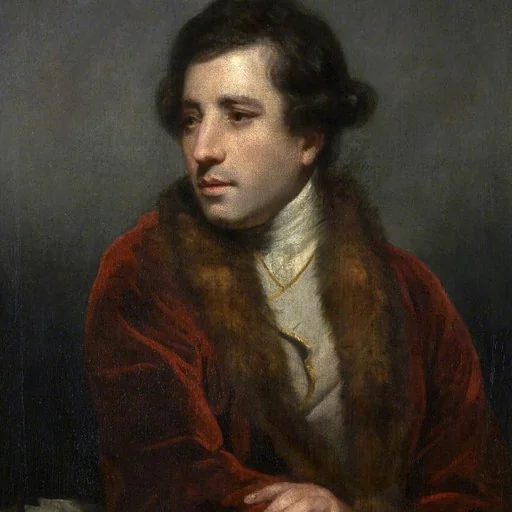
Francesco Bartolozzi (21 September 1727 – 7 March 1815) was an Italian engraver, whose most productive period was spent in London. He is noted for popularizing the "crayon" method of engraving.

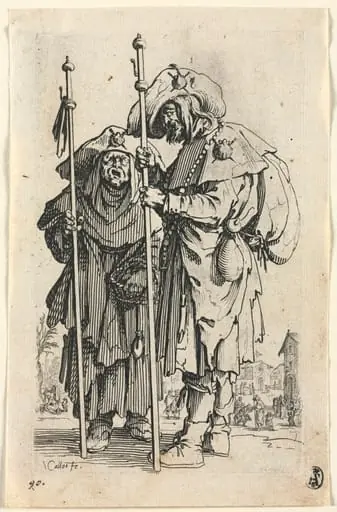 The Beggars: The Two Pilgrims
 Two Beggars and Leprous Child
 The Two Pilgrims
 The Two Pilgrims
 The Seller of Rat Poison
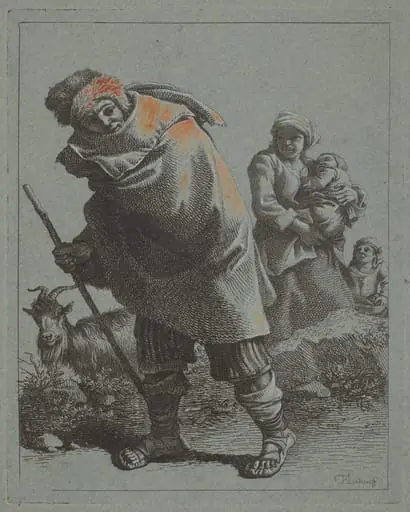 Shepherd with Walking Stick and a Peasant Woman with Child
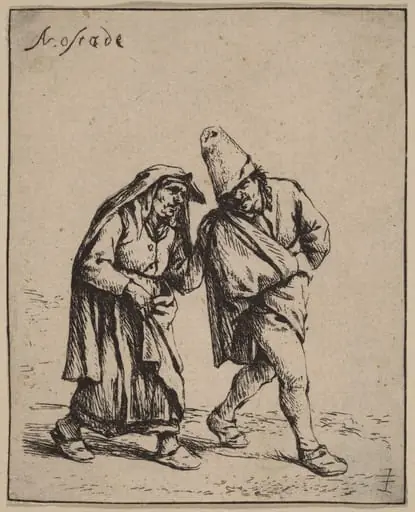 Peasant Couple Walking
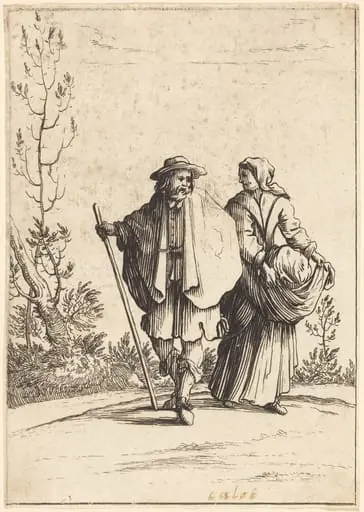 Beggar Couple, with Landscape in Background
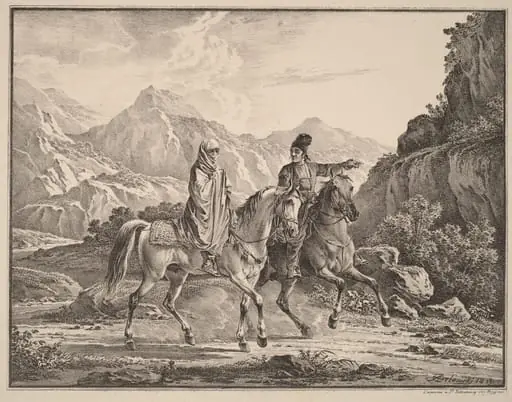 Man and Veiled Woman on Horseback
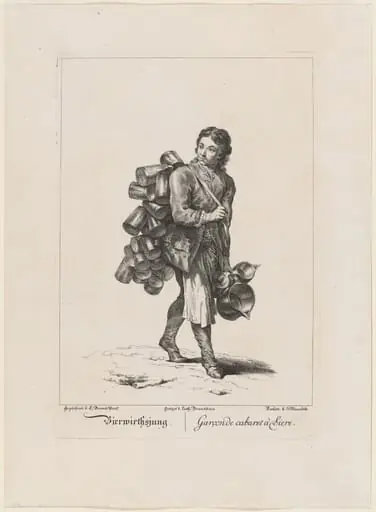 Bierwirthsjung (Beer Hall Boy)
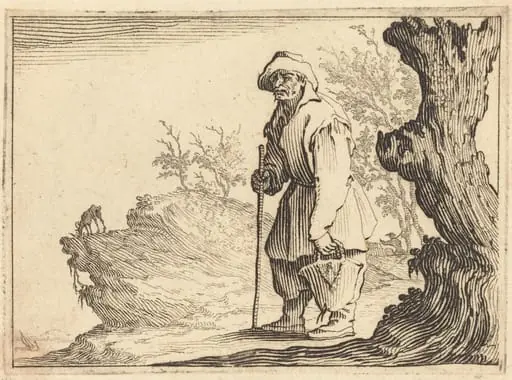 Peasant with Sack
- Harlequin Unmasked