Artwork
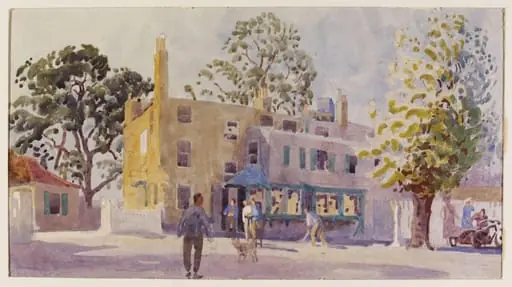
Stanfield House, Hampstead
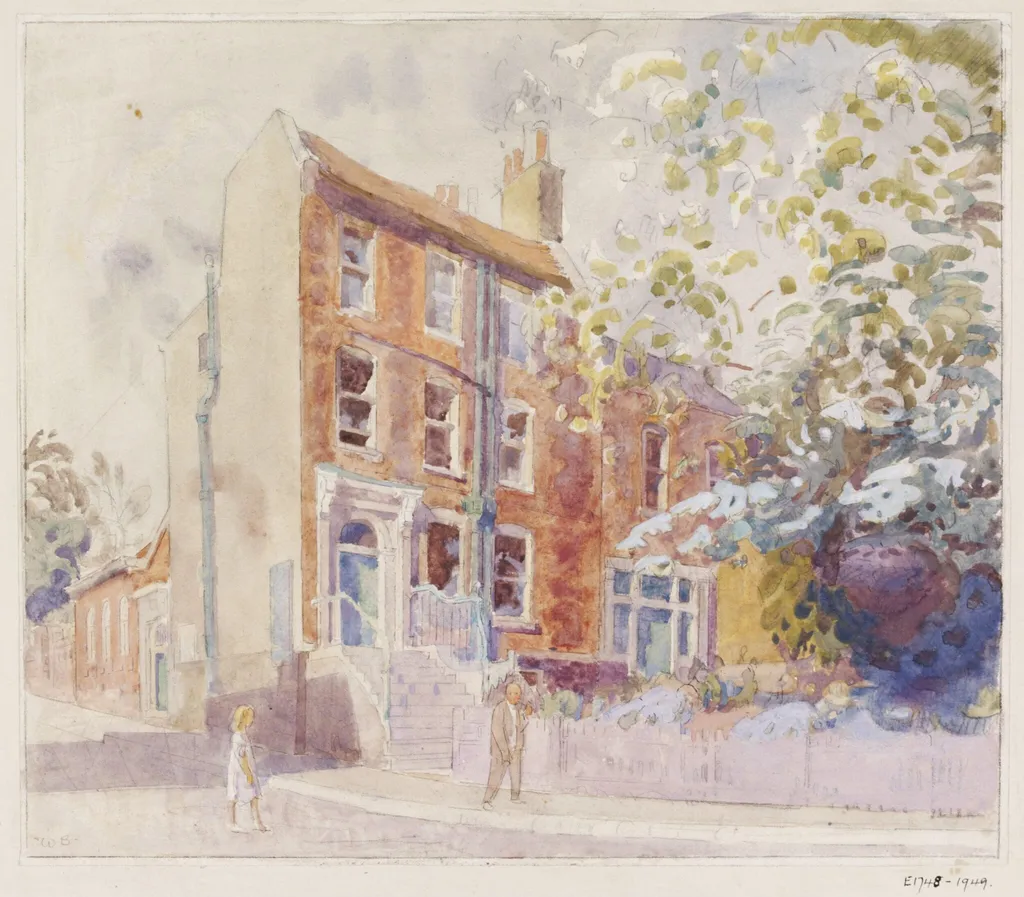
Stanfield House, Hampstead is a watercolor work on paper by Bayes. It dates from 1940 and is held in the collection of the Victoria and Albert Museum.
About this work
Overview
Created in 1940, this watercolour by Bayes portrays an 18th‑century brick house in Hampstead as seen from the street. The composition is anchored by a large tree on the right, with a child standing in the foreground and a passerby near the doorway. The sky is rendered in pale, soft tones, while the brushwork remains loose, giving the edges a slightly blurred quality.
Subject & Meaning
The painting records a modest, three‑storey townhouse characterised by its narrow façade and warm brick hues. Empty windows and a partially ajar door convey a quiet, everyday scene, while the surrounding autumn‑laden trees frame the house, suggesting a moment of calm amid the urban landscape.
Technique & Style
Bayes employs rapid brushstrokes typical of watercolour, allowing colour to flow and edges to remain indistinct. The palette is restrained, focusing on earthy brick tones, muted greens, and a pale sky, emphasizing form over detail and highlighting the medium’s translucency.
History & Provenance
The work belongs to the Recording Britain project, a wartime scheme launched by the Ministry of Labour and National Service and funded by the Pilgrim Trust.
The work belongs to the Recording Britain project, a wartime scheme launched by the Ministry of Labour and National Service and funded by the Pilgrim Trust. Directed by Sir Kenneth Clark, the initiative commissioned artists between 1940 and 1943 to document Britain’s built environment in anticipation of wartime damage. Bayes contributed this piece as part of the larger body of over 1,500 works produced by 97 artists.
Context
Recording Britain sought to preserve visual records of the nation’s architectural heritage during World War II, reflecting concerns about bombings, possible invasion, and landscape change. The project encouraged traditional techniques such as watercolour, reinforcing a sense of national identity through detailed yet accessible depictions of familiar locales like Hampstead.
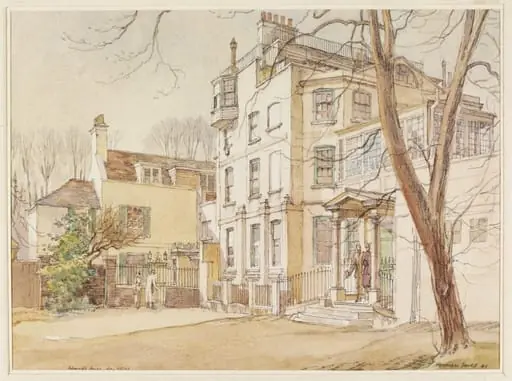
Artist & collection
Artist
Walter John Bayes was an English painter and illustrator who was a founder member of both the Camden Town Group and the London Group and also a renowned art teacher and critic.

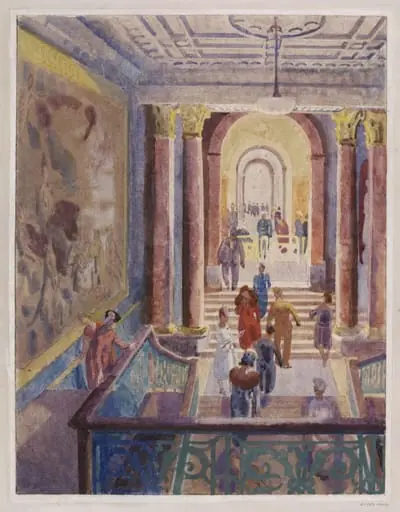
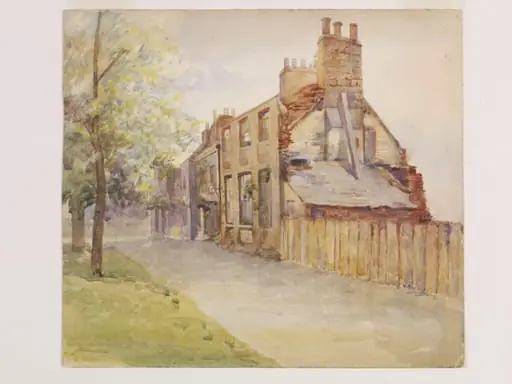 Old brick residences in the grounds of the South Kensington Museum (now the Victoria and Albert Museum)
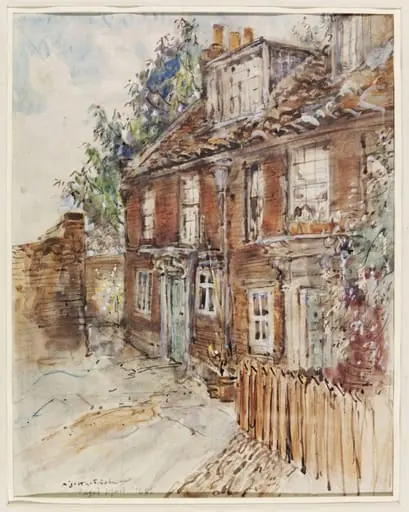 Page's Yard, Chiswick Mall
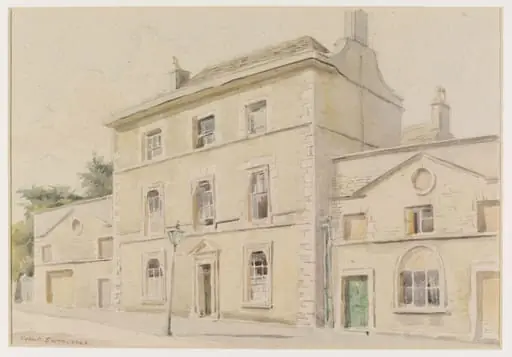 Georgian House, Cecily Hill, Cirencester
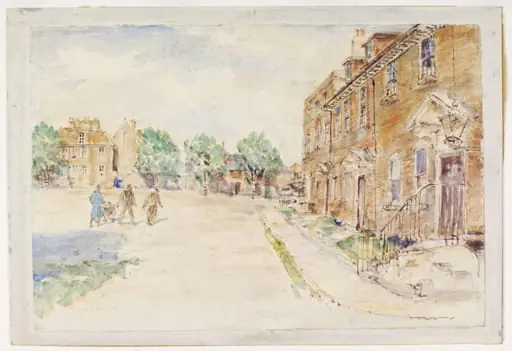 18th century houses at The Butts, Brentford
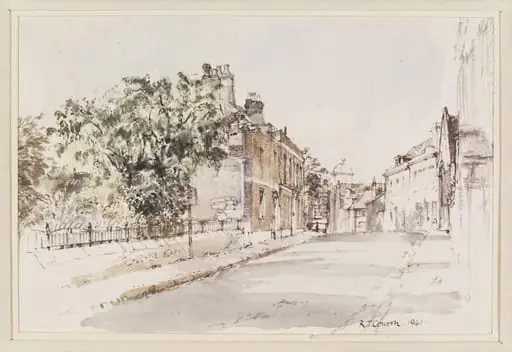 St. Thomas Street, Winchester
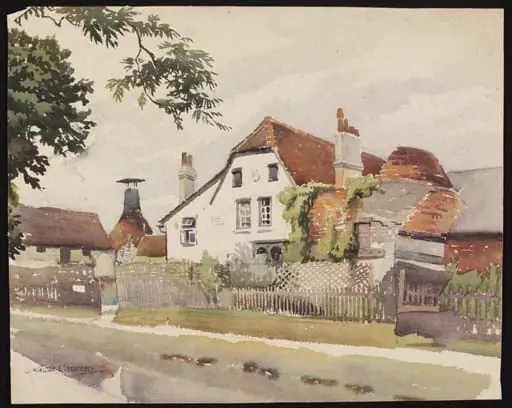 Kilns and Maltings on the Canal Bank, Bishop's Stortford
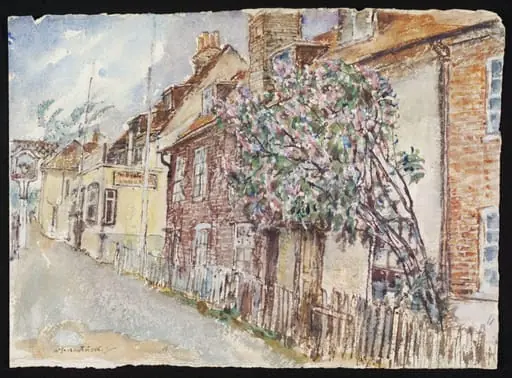 The Bull Inn and Cottages, Strand-on-the-Green, Chiswick
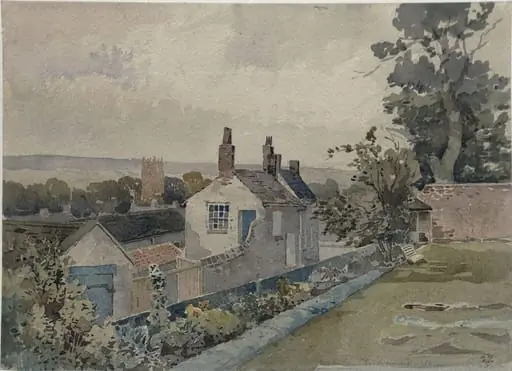 At Richmond, Yorkshire