Artwork
Saint Bartholomew
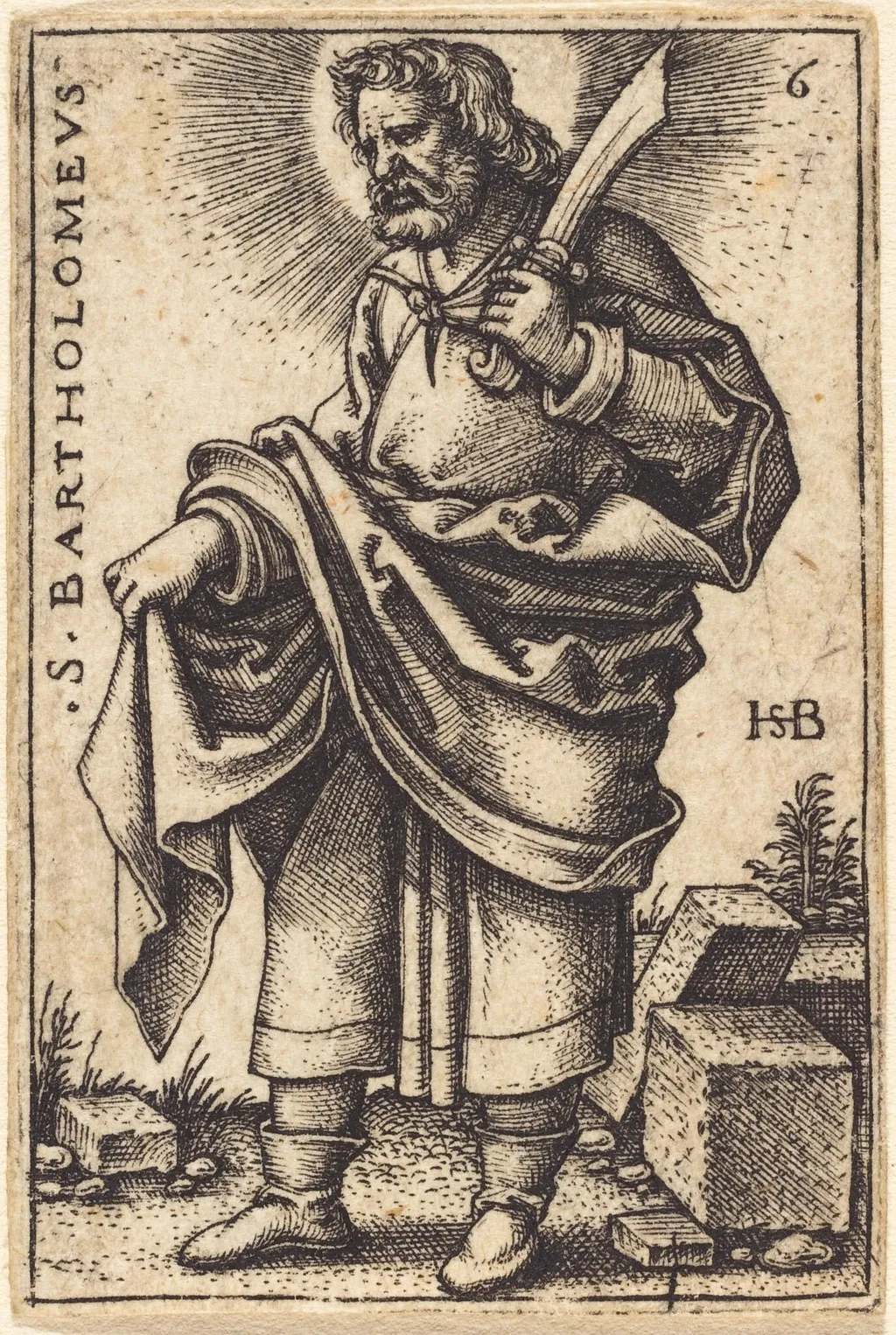
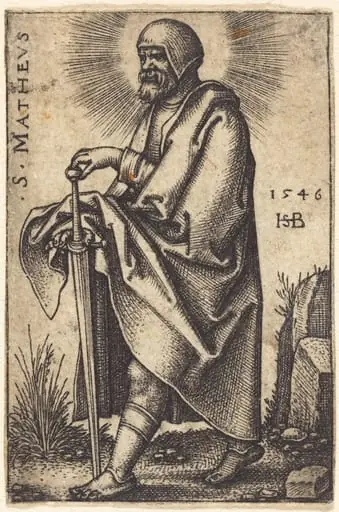
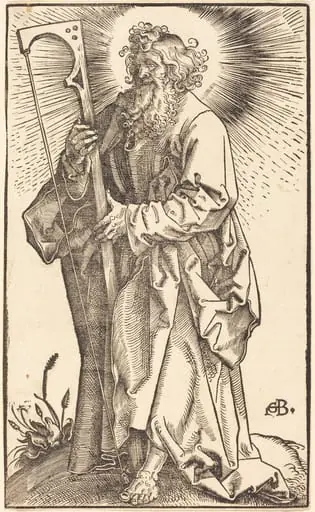
Saint Bartholomew is an ink print by the Renaissance artist Sebald Beham. It dates from 1546 and is held in the collection of the National Gallery of Art.
About this work
Overview
Saint Bartholomew is a 1546 engraving by German artist Sebald Beham, depicting the apostle in a traditional religious genre scene.
Subject & Meaning
The work portrays Saint Bartholomew, identifiable by the inscription 'S. Bartholomeus', holding a flaying knife (often misidentified as a sword) and a piece of his own skin, referencing his martyrdom. His weary expression and detailed, worn attire convey the severity of his ordeal.
Technique & Style
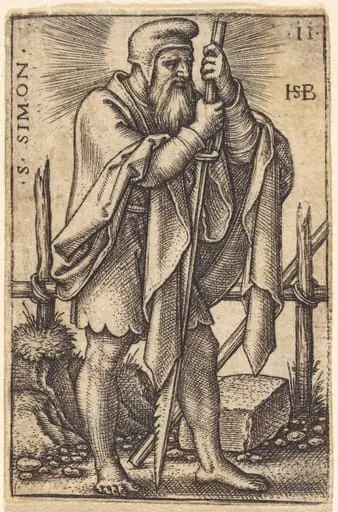
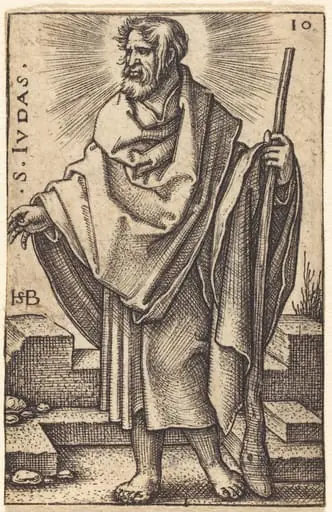
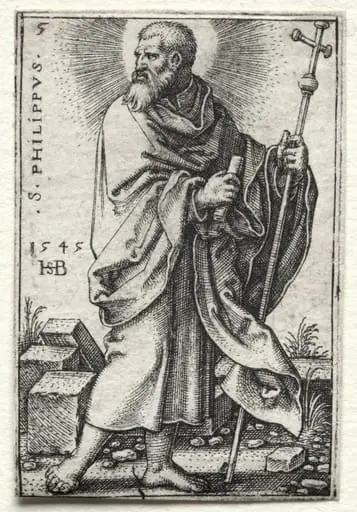
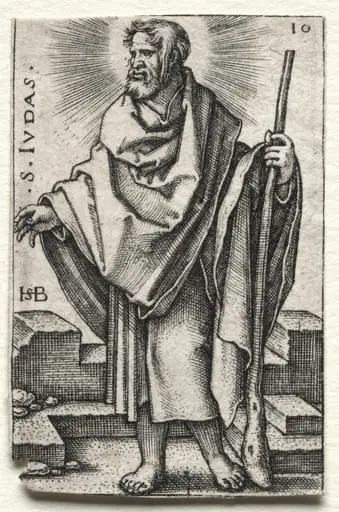
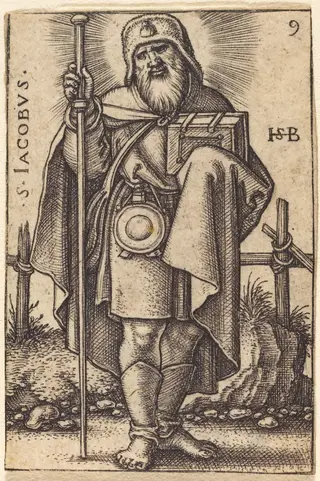
Beham employed intricate line work to achieve depth and shading, characteristic of the 'Little Masters' group, known for finely detailed small-scale prints. The figure is set against a subdued, suggestive background of rocks and plants, emphasizing the subject.
History & Provenance
Created in 1546 by Sebald Beham, a prominent Nuremberg-based painter and printmaker, following in the tradition of Albrecht Dürer. Specific provenance details are not provided.
Context
Part of a broader 16th-century German printmaking tradition, 'Saint Bartholomew' reflects the religious themes common during the period, as well as the technical precision of the 'Little Masters'.
Legacy
While specific legacy details of 'Saint Bartholomew' are not highlighted, Sebald Beham's work, including this engraving, contributes to the enduring influence of the 'Little Masters' on European printmaking techniques and traditions.

Own this work as a print
Artist & collection
Artist
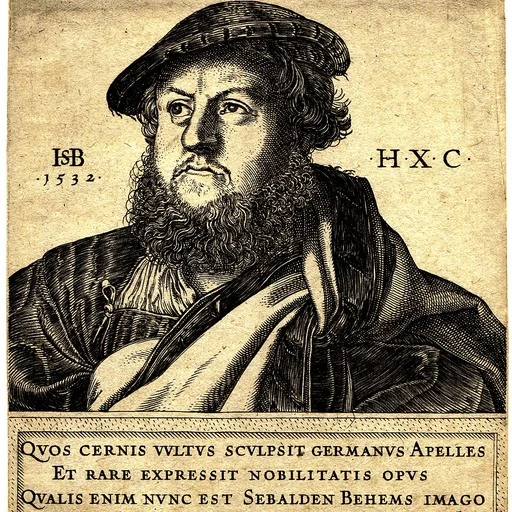
Sebald Beham (1500–1550) was a German painter and printmaker, mainly known for his very small engravings.