Artwork
St. Bartholomew
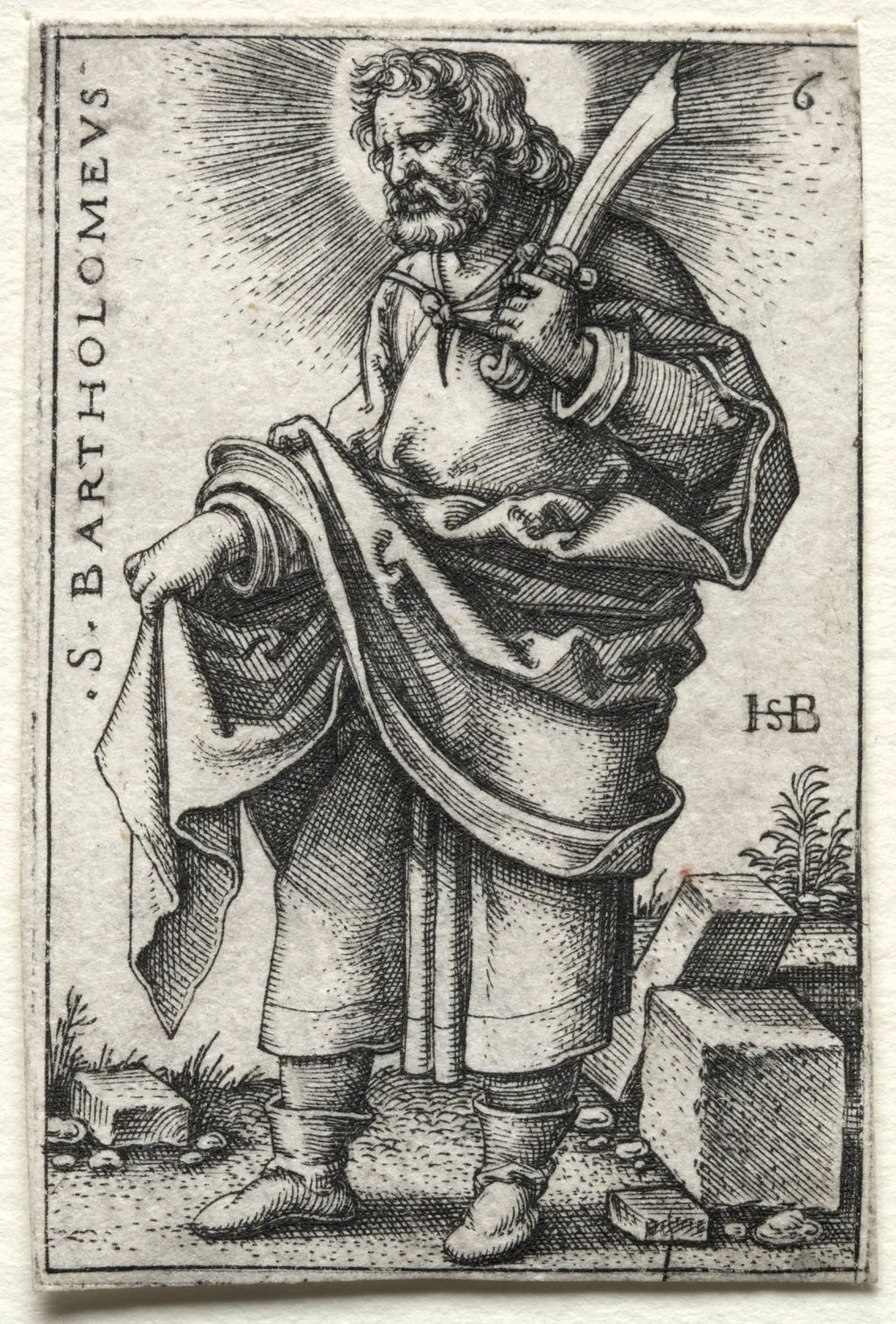
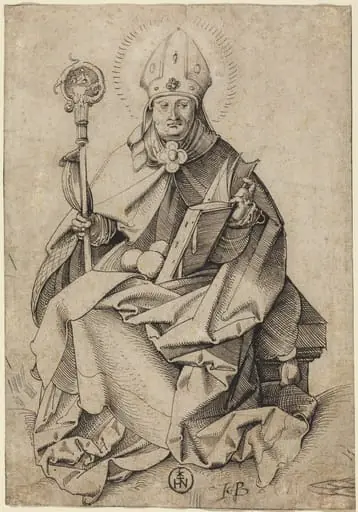
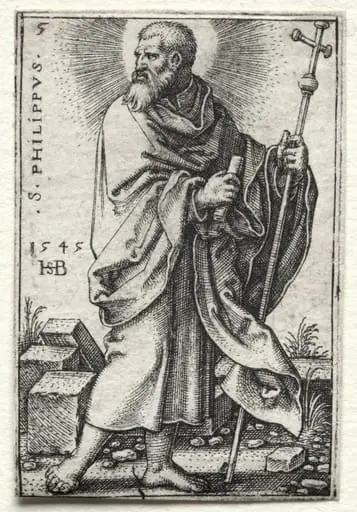
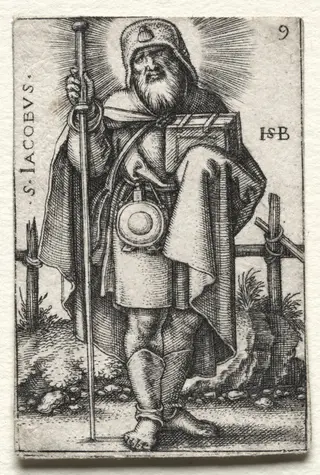
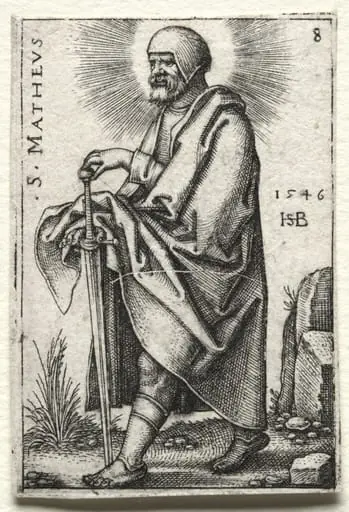
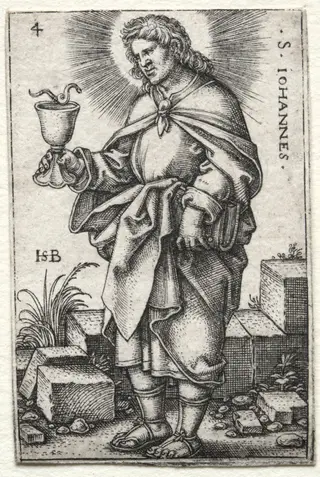
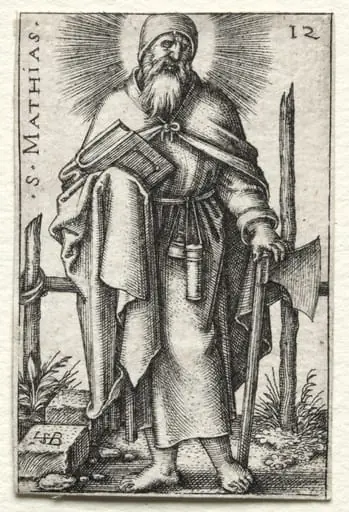
St. Bartholomew is a print by the Renaissance artist Sebald Beham. It dates from 1546 and is held in the collection of the Cleveland Museum of Art.
- Accession no.
- 1987.113
About this work
Overview
Created in 1546 by the German artist Hans Sebald Beham, this print depicts a bearded figure dressed in period costume, clutching a sword in one hand and a scroll in the other. The composition rests on uneven terrain dotted with sparse vegetation, and the work bears the inscription “S. Bartholomeus” alongside the monogram HSB, identifying both subject and maker.
Subject & Meaning
The figure represents Saint Bartholomew, one of the twelve apostles traditionally associated with a flaying knife, here symbolized by the sword. The accompanying scroll alludes to his role as a missionary and preacher, while the modest setting emphasizes the saint’s humility and martyrdom within a devotional context.
Technique & Style
Executed as a finely incised black‑and‑white print, the image showcases the meticulous line work typical of the “Little Masters,” a group of Nuremberg artists who followed Albrecht Dürer’s emphasis on precision. Beham’s handling of texture, visible in the folds of the tunic and the delicate foliage, demonstrates his skill in rendering complex detail on a small scale.
History & Provenance
Hans Sebald Beham, born in Nuremberg and later active in Frankfurt, produced a series of religious prints that circulated widely in the mid‑16th century. This particular piece entered the collection of the Cleveland Museum of Art, where it remains part of the institution’s holdings of Northern Renaissance graphic art.
Own this work as a print
Artist & collection
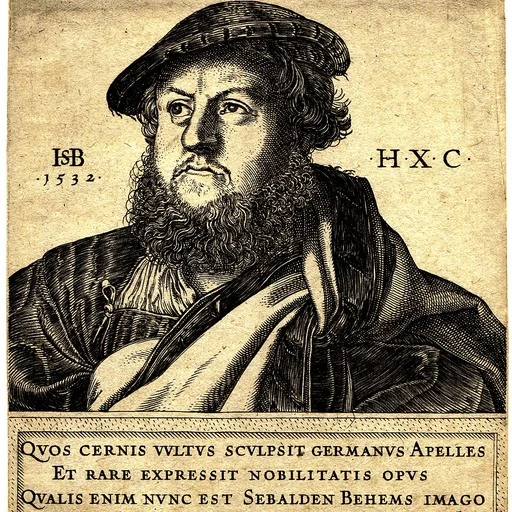
Artist
Sebald Beham (1500–1550) was a German painter and printmaker, mainly known for his very small engravings.