Artwork
A Capriccio of Palaces and a Loggia Facing a Classical Bridge
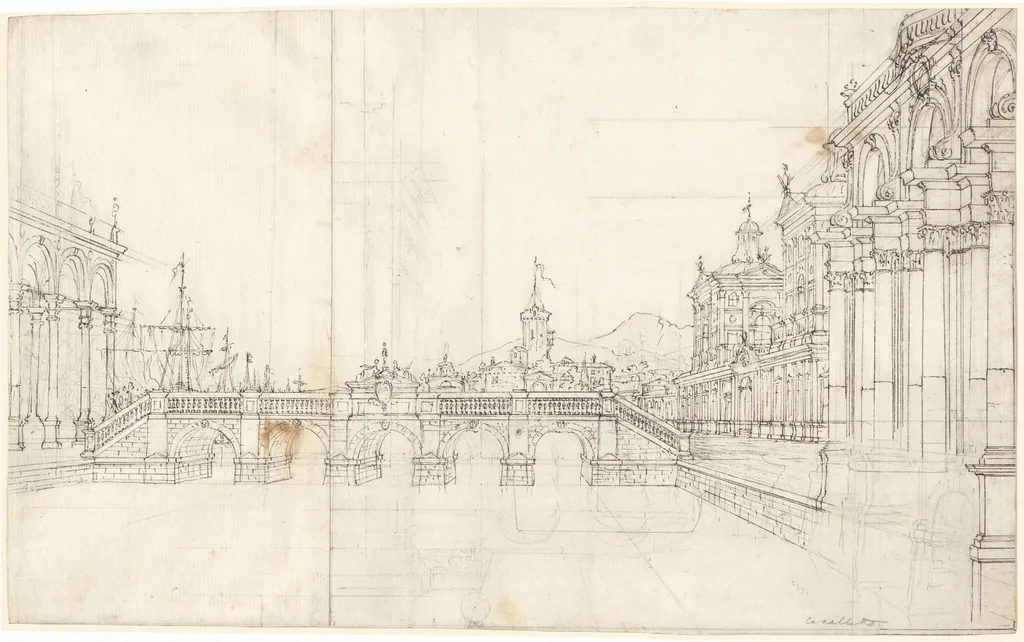
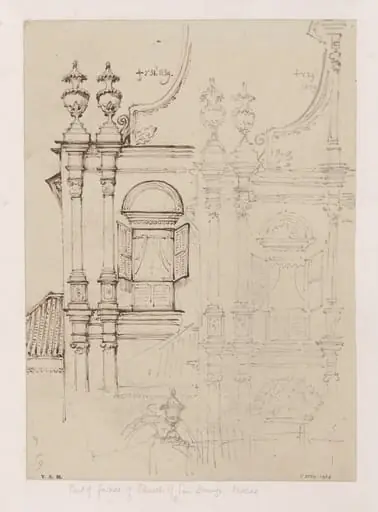
A Capriccio of Palaces and a Loggia Facing a Classical Bridge is an ink drawing by the Romanticist artist Bernardo Bellotto. It dates from 1765 and is held in the collection of the National Gallery of Art.
- Inscription
- Inscribed:by later hand, lower right in graphite: Canaletto; by later hand, lower left verso in graphite: 976; by later hand, lower right verso in graphite: A633 / IV-V; sketch in brown ink of a pilaster
About this work
Overview
A Capriccio of Palaces and a Loggia Facing a Classical Bridge is a drawing by Bernardo Bellotto, dated to around 1765. It presents a fictitious cityscape combining grand architectural elements.
Subject & Meaning
The drawing depicts an imaginary urban scene featuring a tall, ornate palace, a smaller tower, a classical arched bridge with statues, and a domed palace with columns by a waterfront. Ships are moored near the left-hand structure, blending real and imagined architectural motifs.
Technique & Style
Bellotto employed thin, precise pen and black ink lines over graphite to meticulously detail the buildings' decorations. The work's emphasis on line work over color suggests it may be a study, prioritizing explorations of form and structure.
History & Provenance
Created circa 1765, specific details about the drawing's commission, original ownership, or early exhibition history are not provided in the available information.
Context
This capriccio reflects 18th-century European artistic tendencies to create imaginative, idealized cityscapes. The use of precise lines and attention to architectural detail aligns with Bellotto's known style, often blending observation with fantasy.
Legacy
While the drawing's direct influence or notable exhibitions are not specified, it contributes to the broader understanding of Bellotto's oeuvre and the capriccio genre's popularity during the period.
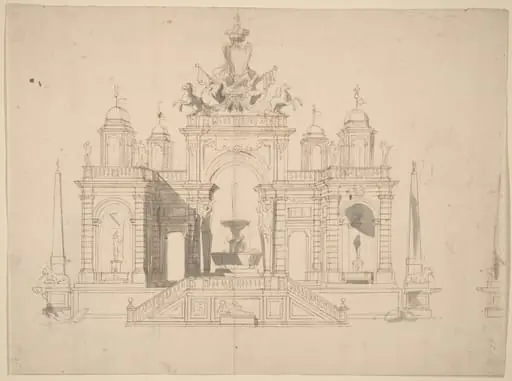
Own this work as a print
Artist & collection
Artist
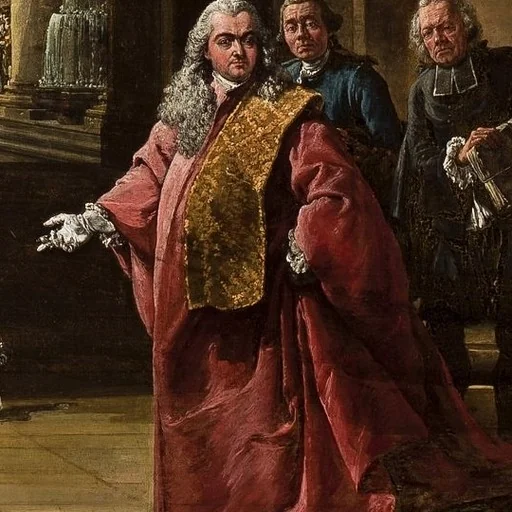
Bernardo Bellotto, was an Italian urban landscape painter or vedutista, and printmaker in etching famous for his vedute of European cities – Dresden, Vienna, Turin, and Warsaw.

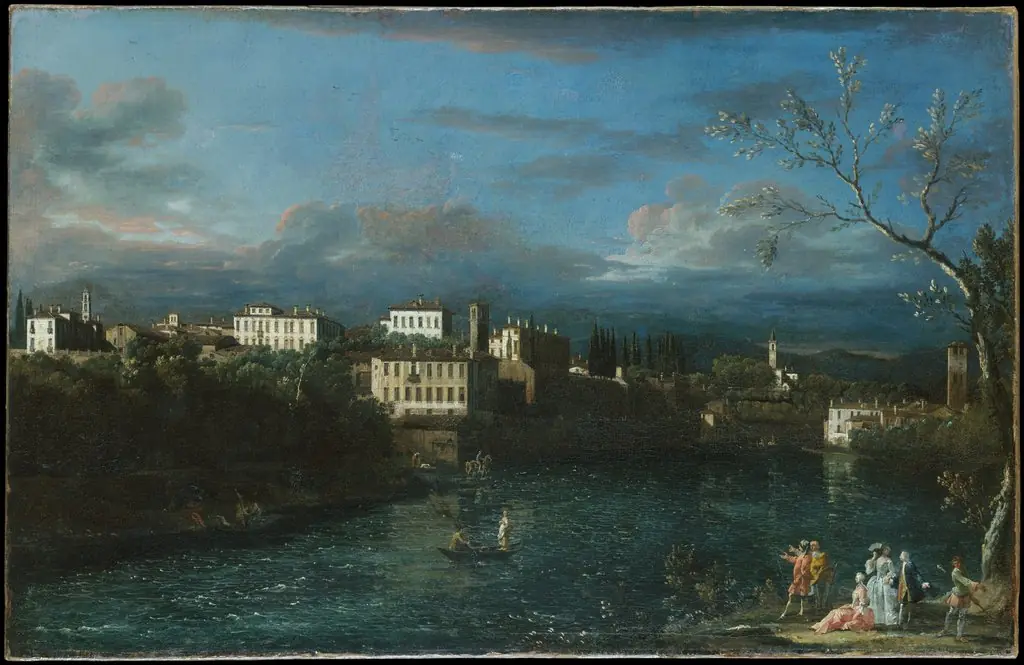
- Study for "The Seconda Macchina for the Chinea of 1754: An Allegory of Waterworks"
 The church of S. Domingos, Macau
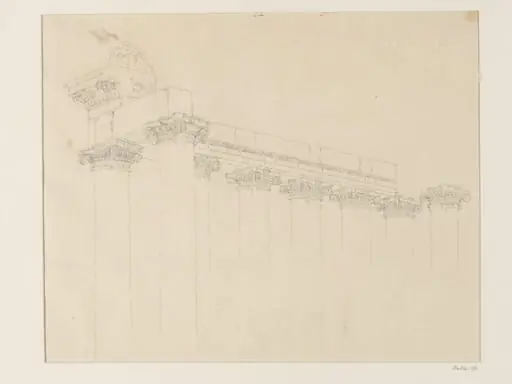 Ancient ruins in and near Rome
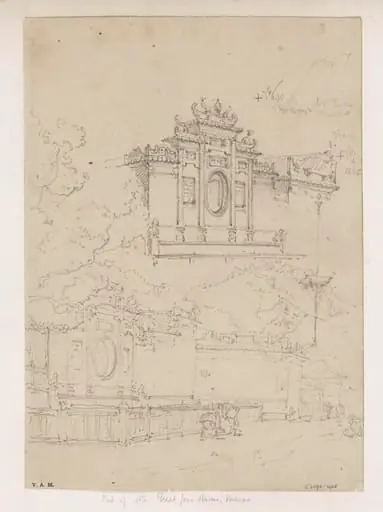 Drawings of the A-Ma temple, Macau
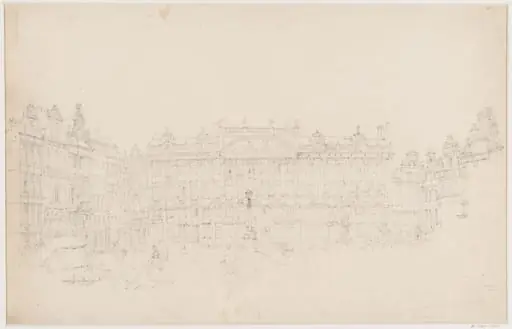 Grande Place, Brussels
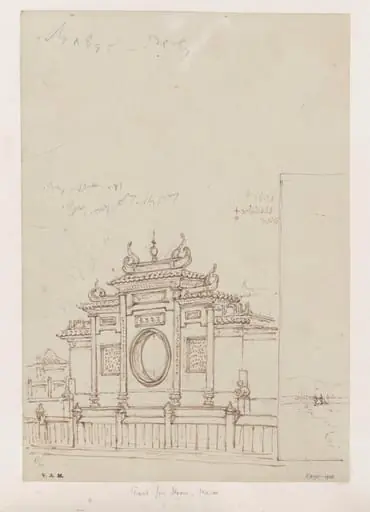 The main entrance to the A-Ma Temple, Macau
![The Ripetta in Rome [verso], by Augustin Pajou](https://artifactworldgallery.com/img/augustin-pajou--the-ripetta-in-rome-verso--4bc04e9c9476a91b-w320.webp) The Ripetta in Rome [verso]
The Ripetta in Rome [verso]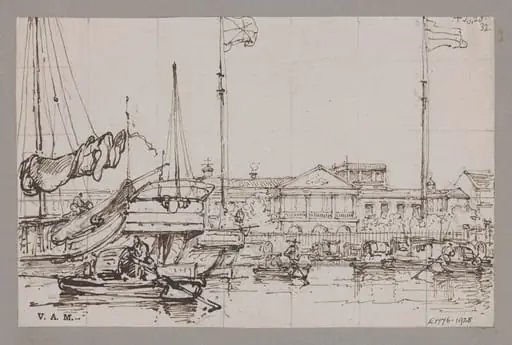 View of East India Company's Factory, Canton
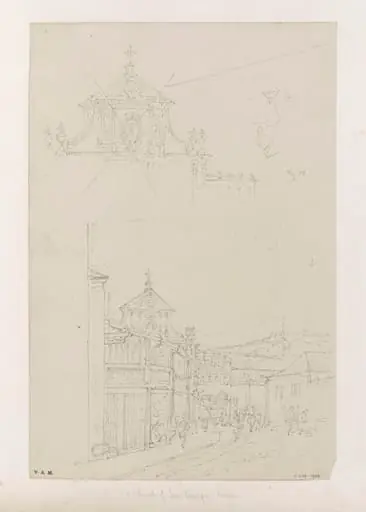 The church of San Domingos, Macau
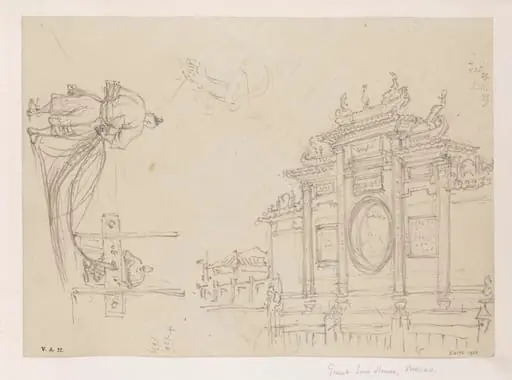 The main entrance to the A-Ma Temple, Macau
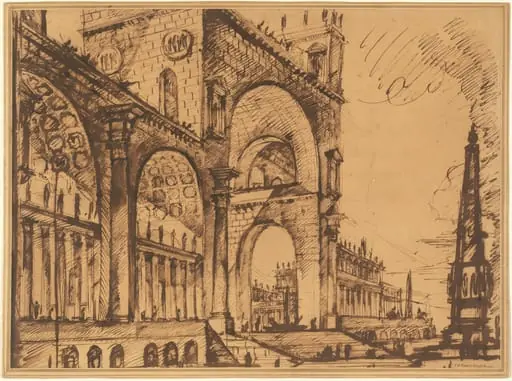 Fantasy on a Magnificent Triumphal Artch
 Fantasy Panorama of Rome from St. Peter's to the Castel San Angelo