Artwork
Club Night
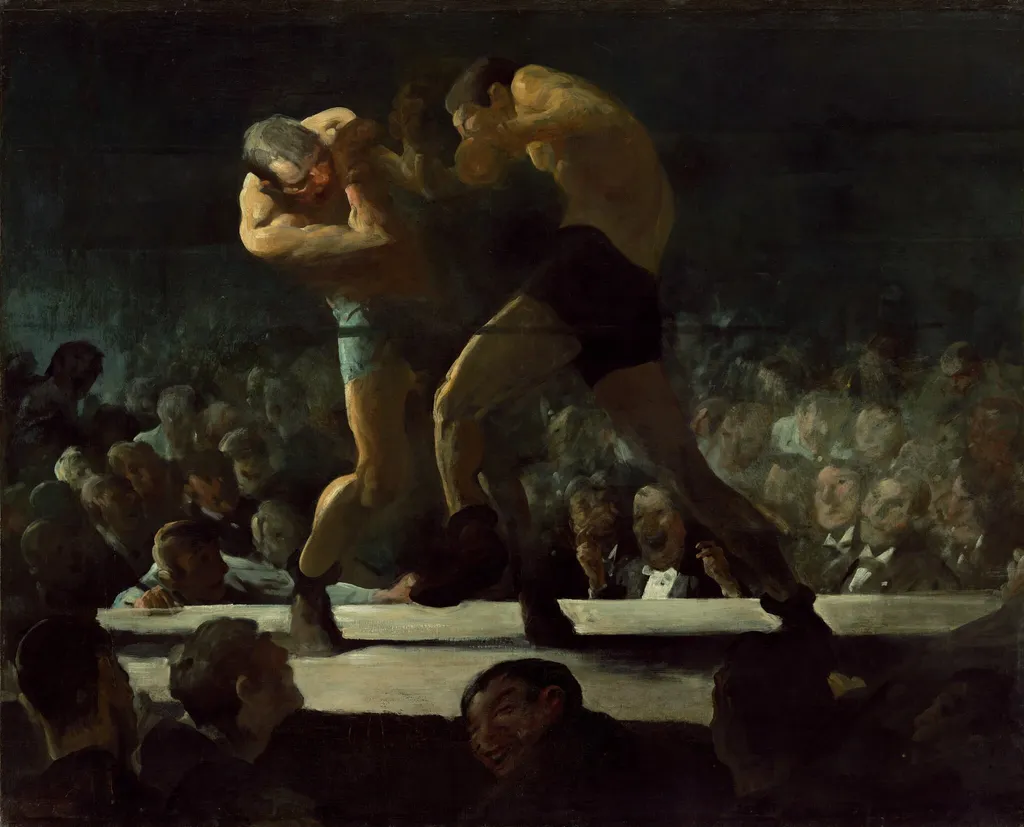
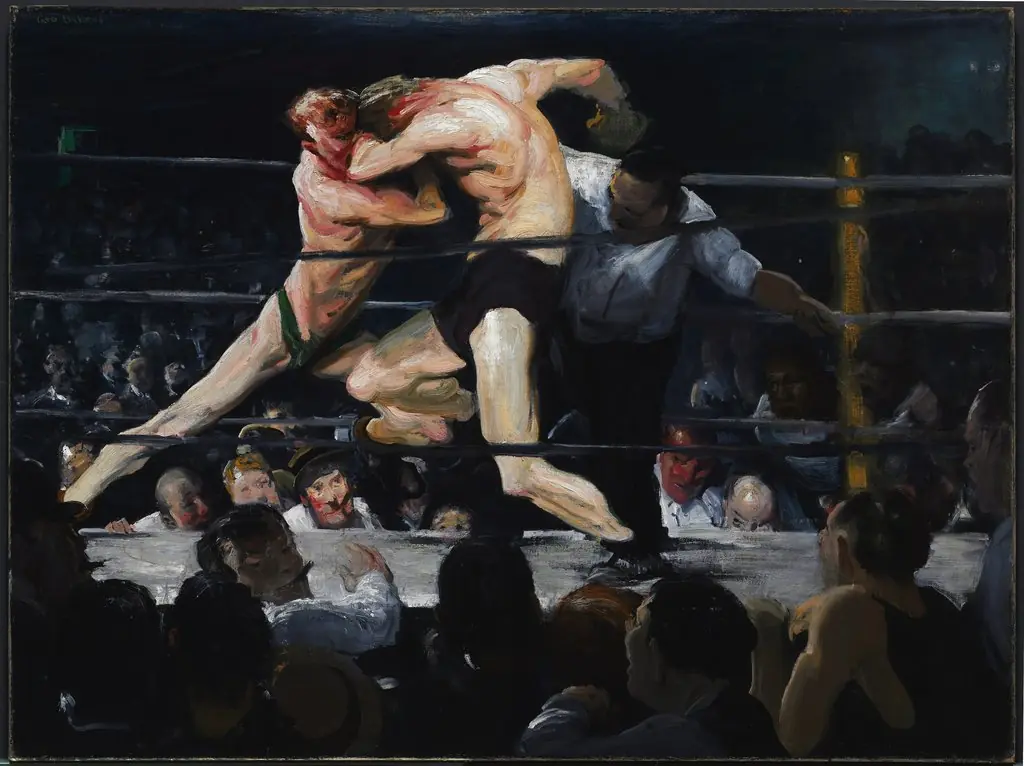
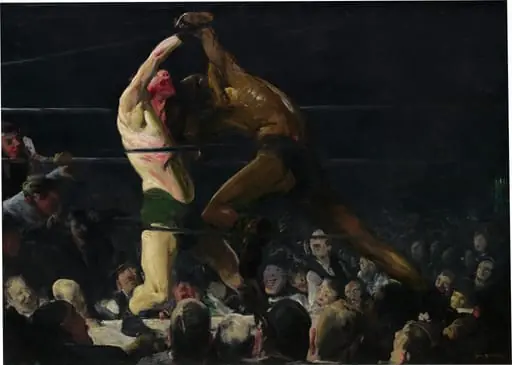
Club Night is an oil painting by the Realist artist George Bellows. It dates from 1907 and is held in the collection of the National Gallery of Art.
About this work
Technique & Style
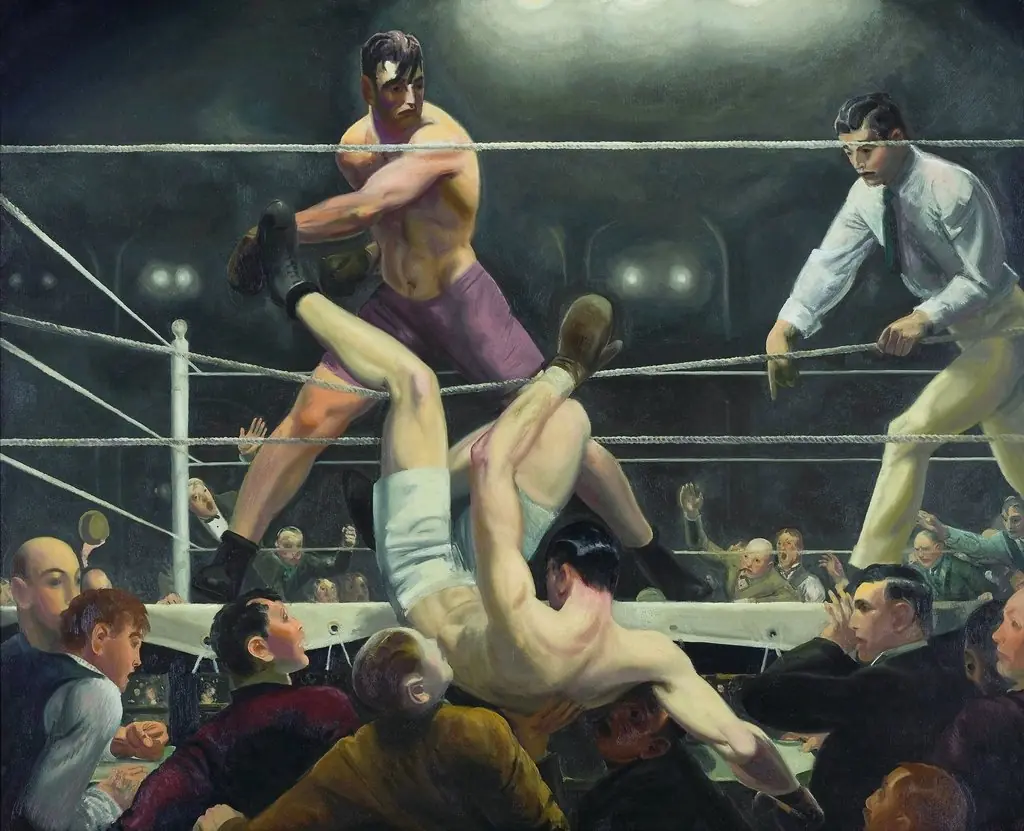
George Bellows created Club Night in 1907 using oil paint on a canvas support. The work measures 109.2 cm in height and 135 cm in width. The painting depicts a boxing match, one of the urban sporting subjects for which Bellows became known early in his career. The piece remains in the collection of the National Gallery of Art in Washington, D.C.
History & Provenance
Whitney retained the painting until 1982, when he deeded it to the John Hay Whitney Charitable Trust in New York.
George Bellows painted Club Night in 1907 in oil on canvas. The work was handled by The Hackett Galleries in New York, which printed a prospectus for the painting in 1930. Collector John Hay Whitney purchased the work from The Hackett Galleries in 1930 (though the artist's record book, annotated by Emma Bellows, dates the sale to 1931 and notes it was bought "thru Helen Hackett Gallery").
Whitney retained the painting until 1982, when he deeded it to the John Hay Whitney Charitable Trust in New York. That same year, the trust gave the painting to the National Gallery of Art, where it remains.
Club Night is held in the collection of the National Gallery of Art in Washington, D.C. Its accession number is not specified in the provided sources, but it was deeded to the John Hay Whitney Charitable Trust in 1982 and gifted to the National Gallery of Art that same year. The work was previously owned by John Hay Whitney, who purchased it from The Hackett Galleries in 1930.
Overview
George Bellows’ 1907 oil on canvas, titled Club Night, captures a bustling interior scene illuminated by a stark, focused light. At the centre, a shirtless man balances on a table, cradling a woman as they move in a theatrical gesture, while the surrounding patrons observe with varied attention. The composition juxtaposes the bright, highlighted figures against a predominantly dark backdrop, creating a vivid sense of immediacy.
Subject & Meaning
The work portrays a moment of public entertainment, likely a dance or performance within a nightclub setting. The central dancer’s exposed torso and the intimate embrace suggest a display of physical prowess and sensuality, while the onlookers’ mixed reactions, leaning forward, resting heads, reflect a collective fascination with spectacle and the social dynamics of early‑twentieth‑century urban leisure.
Own this work as a print
Artist & collection
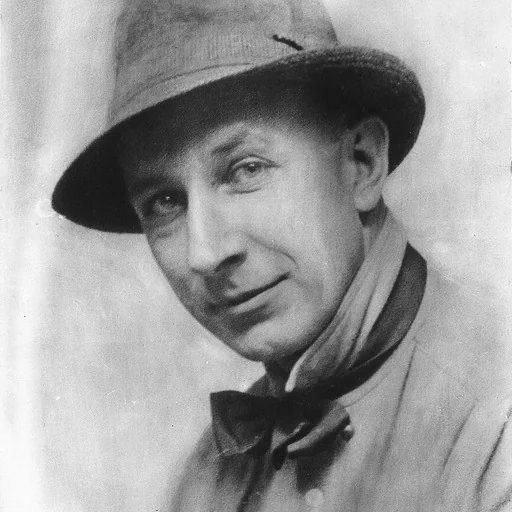
Artist
George Wesley Bellows (August 12 or August 19, 1882 – January 8, 1925) was an American realist painter, known for his bold depictions of urban life in New York City.