Artwork
Untitled
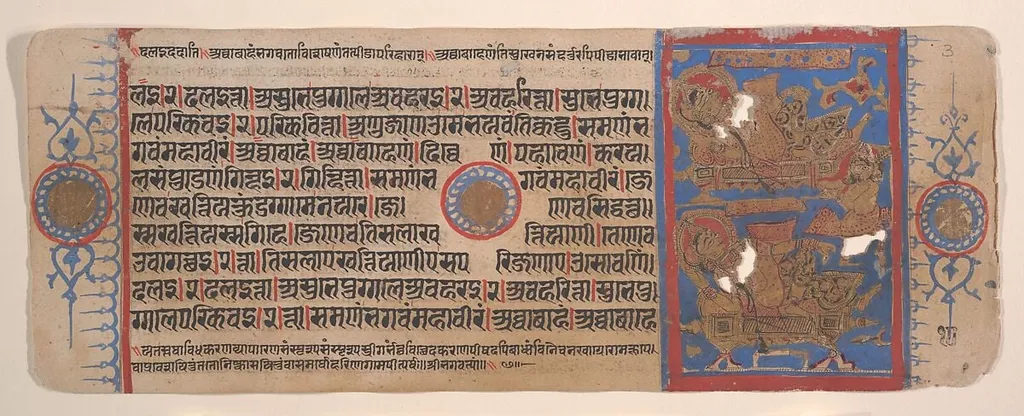
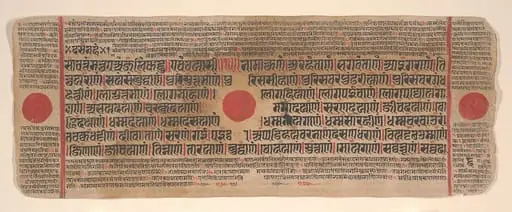
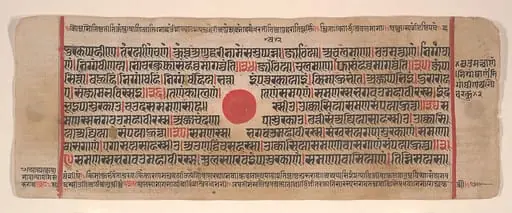
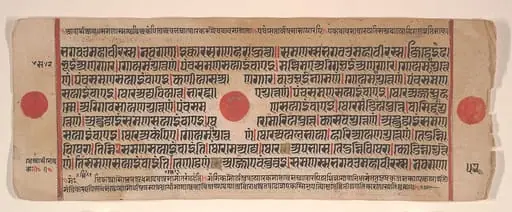
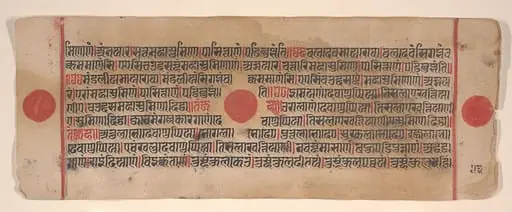
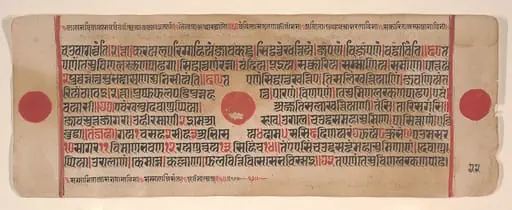
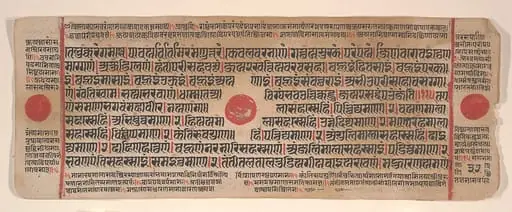
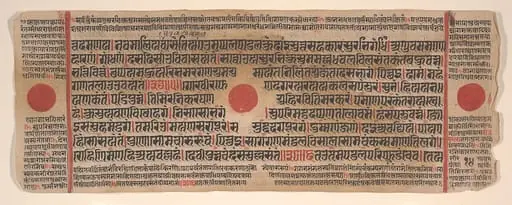
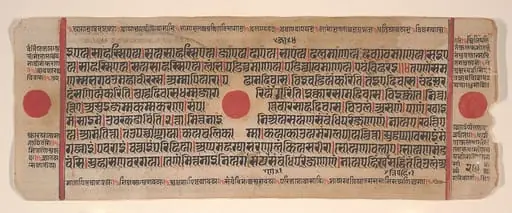
Untitled is a watercolor painting by the Indian Miniature artist Bhadrabahu. It dates from 1449 and is held in the collection of the Metropolitan Museum of Art.
About this work
Subject & Meaning
As a piece of religious art, its primary subject matter is the Jain faith, serving as a visual representation of its spiritual themes.
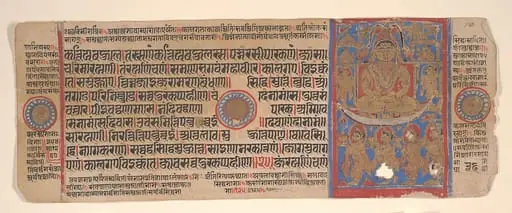
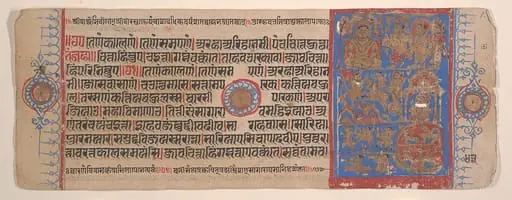
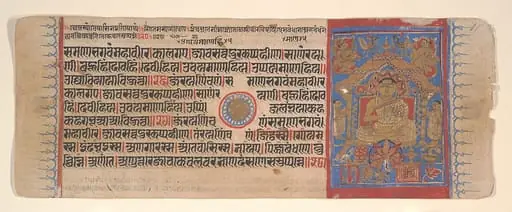
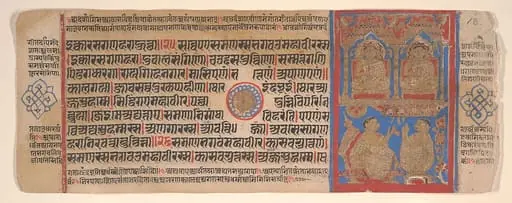
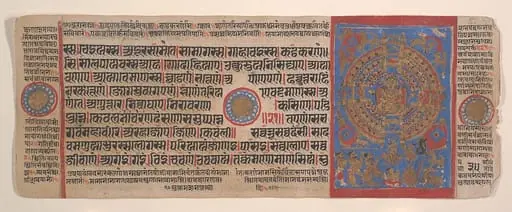
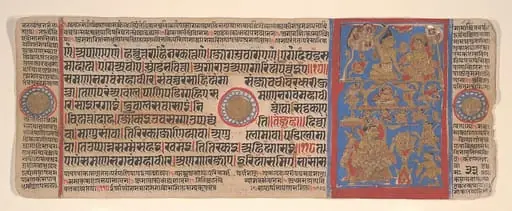
Created in 1449 in India, this work is a religious painting depicting a Jain subject. As a piece of religious art, its primary subject matter is the Jain faith, serving as a visual representation of its spiritual themes. The composition, executed in ink, opaque watercolour, and gold on paper, belongs to the tradition of Indian Jain manuscript illumination, in which sacred texts were illustrated to convey doctrine.
While the specific narrative scene is not detailed in the available records, the work's classification and content confirm its role within Jain religious culture of the mid-fifteenth century.
Technique & Style
The painting is executed in ink, opaque watercolour, and gold applied to a paper support, a technique typical of Indian manuscript production in the fifteenth century. Its dimensions are approximately 11.4 by 28.9 centimetres, and it is dated 1449. The work belongs to the religious genre, specifically depicting a Jain subject.
The composition features flattened spatial relationships and restrained colour fields, with gold accents highlighting sacred motifs, reflecting the stylized formal qualities of Jain manuscript painting. The piece is housed in the Metropolitan Museum of Art's collection of Indian painting.
History & Provenance
The painting was produced in 1449 in India, executed in ink, opaque watercolour, and gold on paper. It entered the collection of the Metropolitan Museum of Art, where it is identified by the accession number 57.51.38.3. The available sources do not document an earlier ownership chain, commission, or intermediate provenance, nor any past exhibitions or loan history for the piece.
Overview
This untitled painting, created by Bhadrabahu in 1449, is rendered with ink, opaque watercolor, and gold on paper. It is a religious work that illustrates principles of Jainism, a faith originating in India. The composition features a central figure, likely a monk, engaged in instruction, set against a luminous background.
Context
Originating from Gujarat, India, this painting is characteristic of Jain artistic traditions. It exemplifies how visual art was employed to articulate and disseminate the spiritual doctrines of Jainism, a religion known for its emphasis on peace and simplicity. Such works provided visual aids for contemplation and instruction within the community.
Artist & collection