Artwork
Paintings after Ancient Masters: Calligraphy
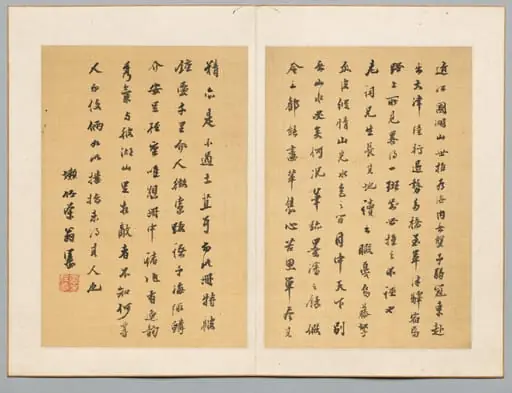
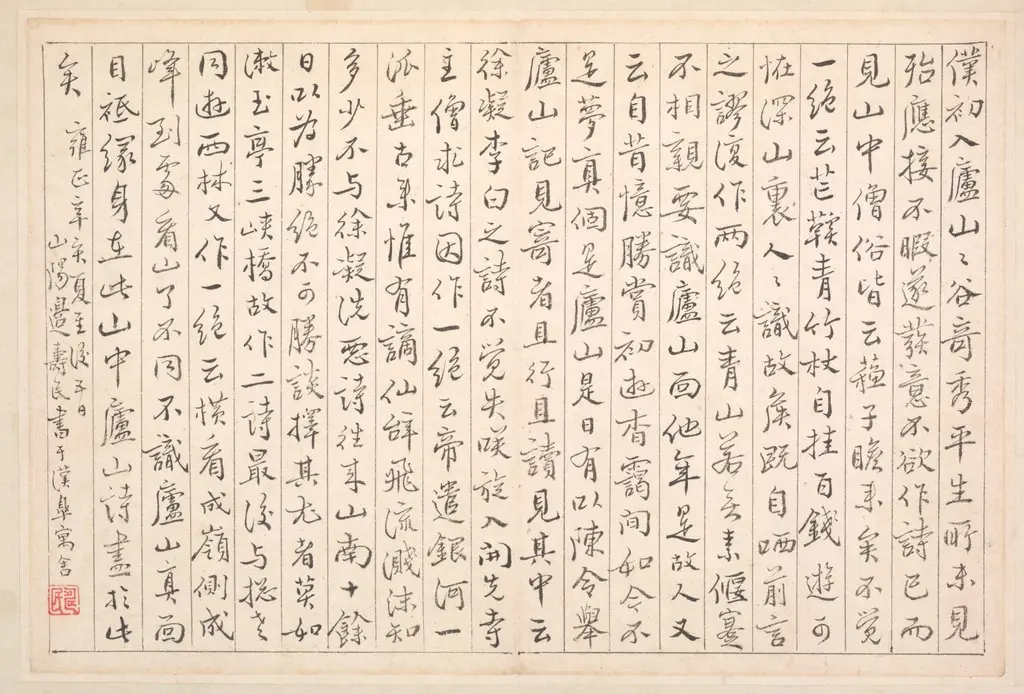
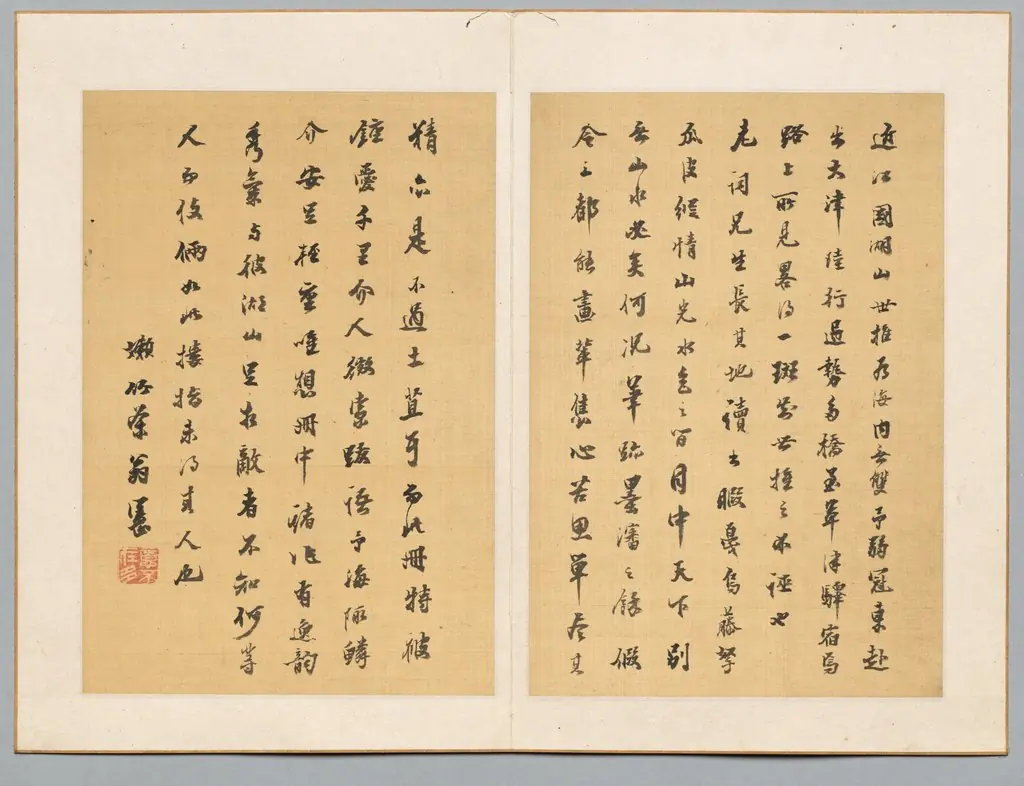
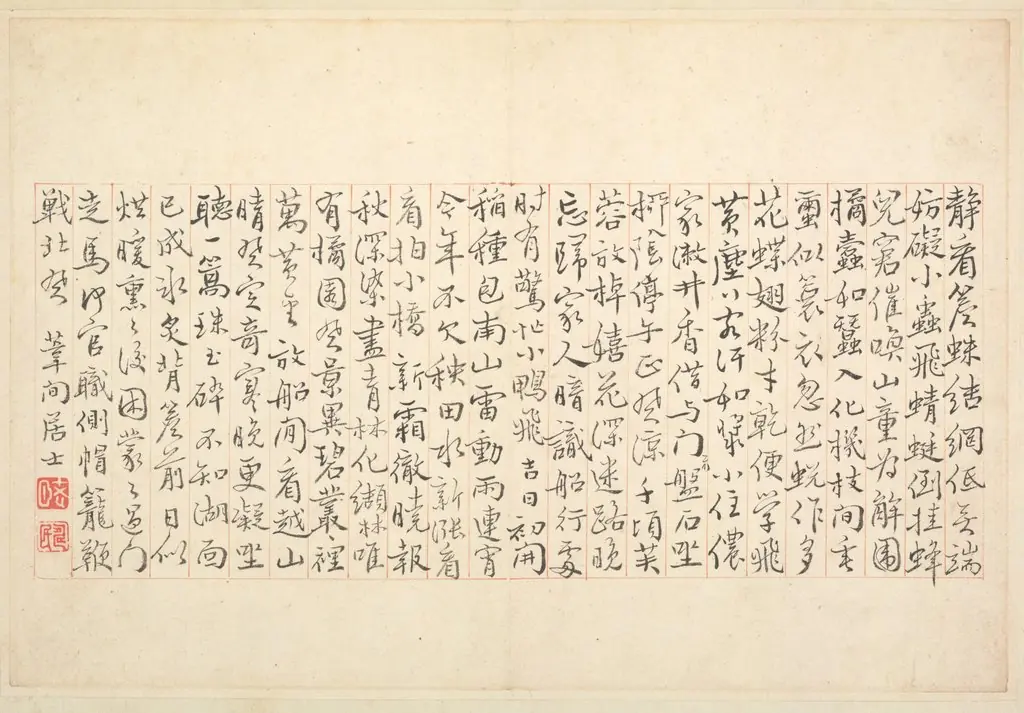
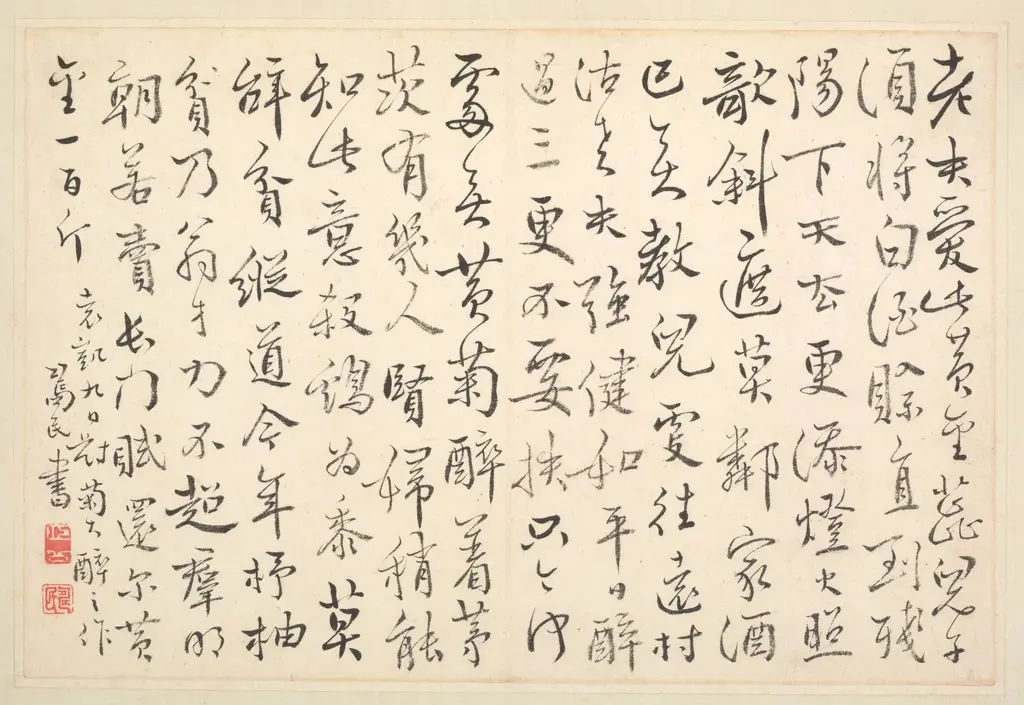
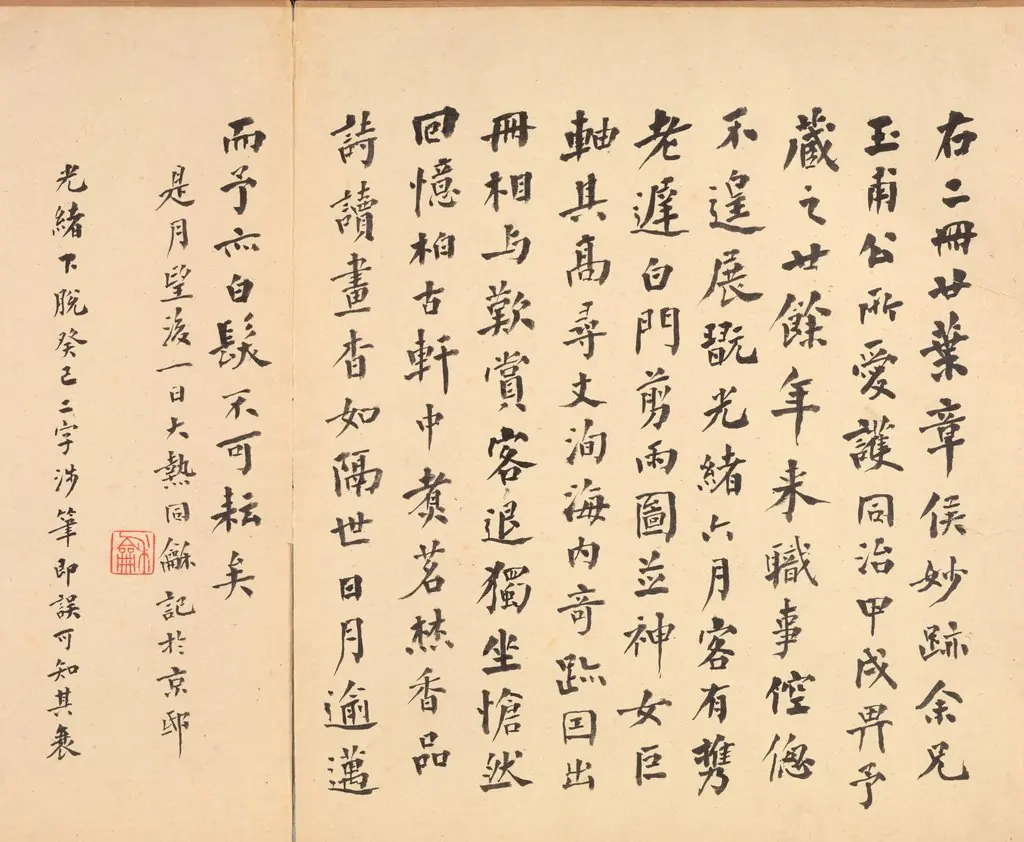
Paintings after Ancient Masters: Calligraphy is an unspecified painting by the Chinese Orthodox School artist Chen Hongshou. It dates from 1625 and is held in the collection of the Cleveland Museum of Art.
About this work
Overview
Created in 1625 by the Chinese artist Chen Hongshou, this work consists of a sheet of light‑coloured paper covered with handwritten calligraphic characters. The composition is organized into two vertical columns that dominate the surface, while two modest red seals are positioned in the lower left corner. The piece is part of the collection of the Cleveland Museum of Art.
Subject & Meaning
The text appears to be a reproduction of an older calligraphic model, suggesting a study or practice exercise rather than an original literary composition. By emulating a historic style, the work reflects the artist’s engagement with classical precedents and the scholarly tradition of copying revered scripts to internalize their aesthetic principles.
Technique & Style
Ink applied with a brush varies in intensity, producing a contrast between bold, assertive strokes and finer, more delicate lines.
Ink applied with a brush varies in intensity, producing a contrast between bold, assertive strokes and finer, more delicate lines. The unevenness of the pigment adds a tactile quality, while the paper’s slight yellowish hue and clean, though not perfectly straight, edges convey the materiality of a traditional writing surface. The red seals, stamped with personal or official marks, complement the monochrome script.
History & Provenance
Chen Hongshou, a noted painter and calligrapher of the late Ming dynasty, produced this piece during the final years of his career. It entered the holdings of the Cleveland Museum of Art, where it is displayed as part of the museum’s Asian art collection, providing insight into Ming‑period calligraphic practice.
Artist & collection
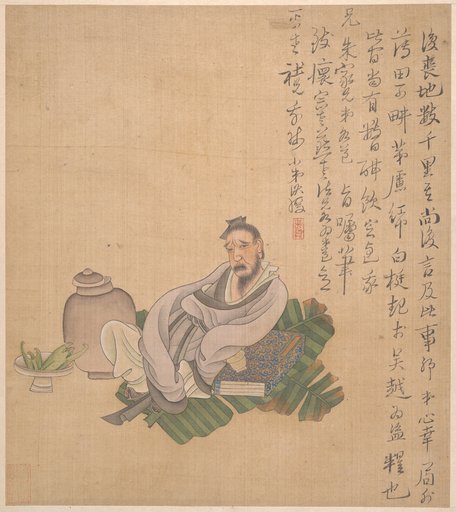

 明/清 陳洪綬、陳字 雜畫 冊|Figures, flowers, and landscapes
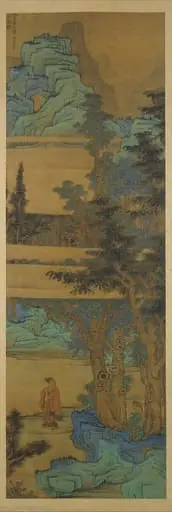 明 陳洪綬 樹下高士圖 軸|Scholar-recluse in blue-green landscape
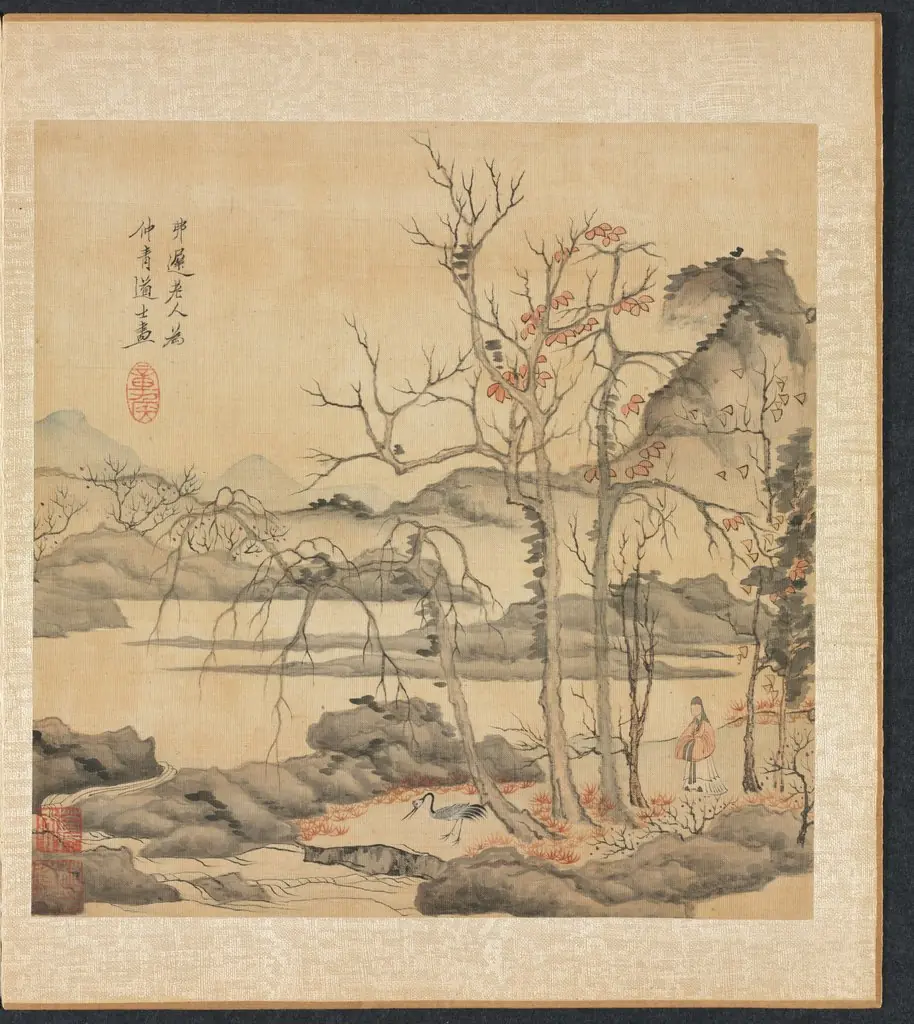 Paintings after Ancient Masters: Daoist and Crane in Autumn Landscape
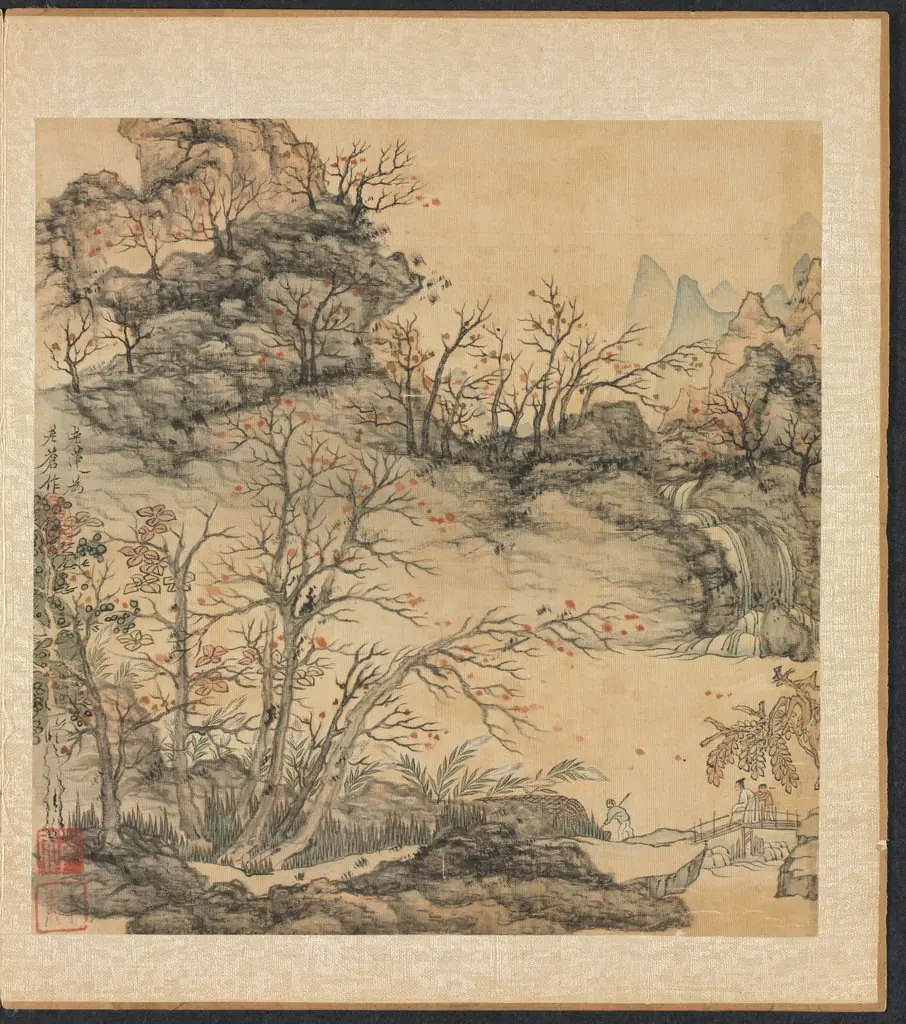 Paintings after Ancient Masters: Autumn Landscape
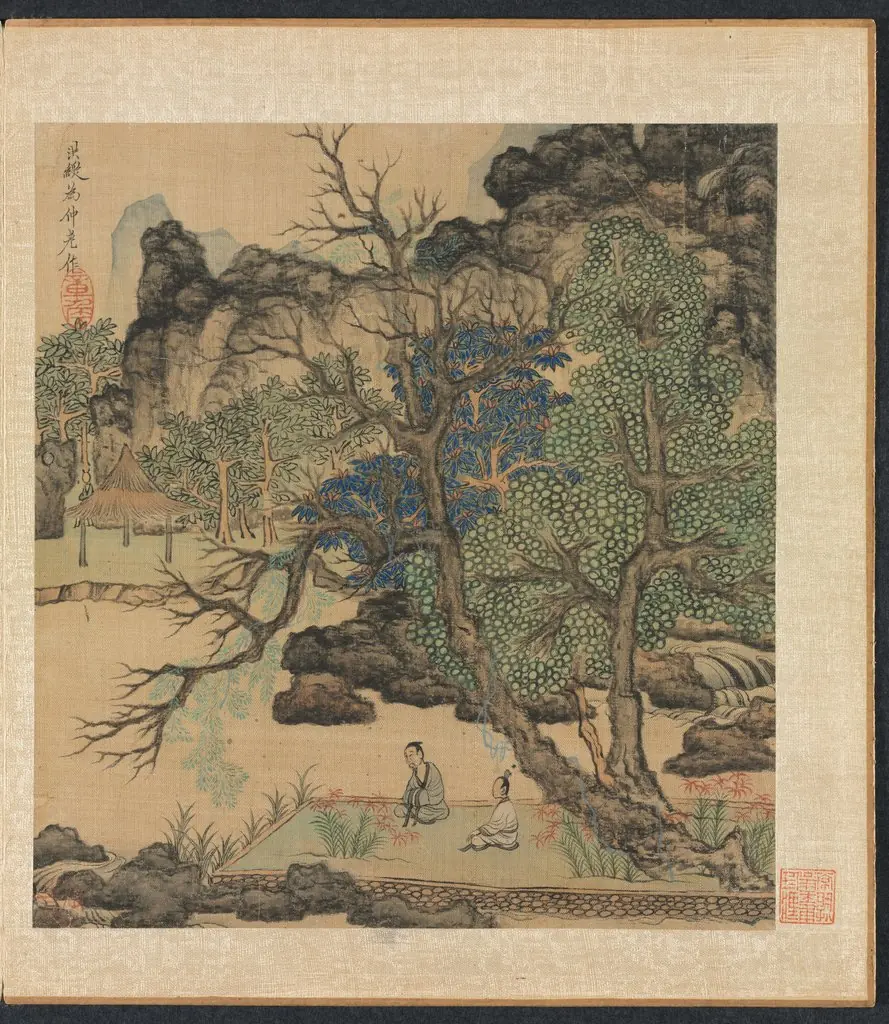 Paintings after Ancient Masters: Scholars in a Garden
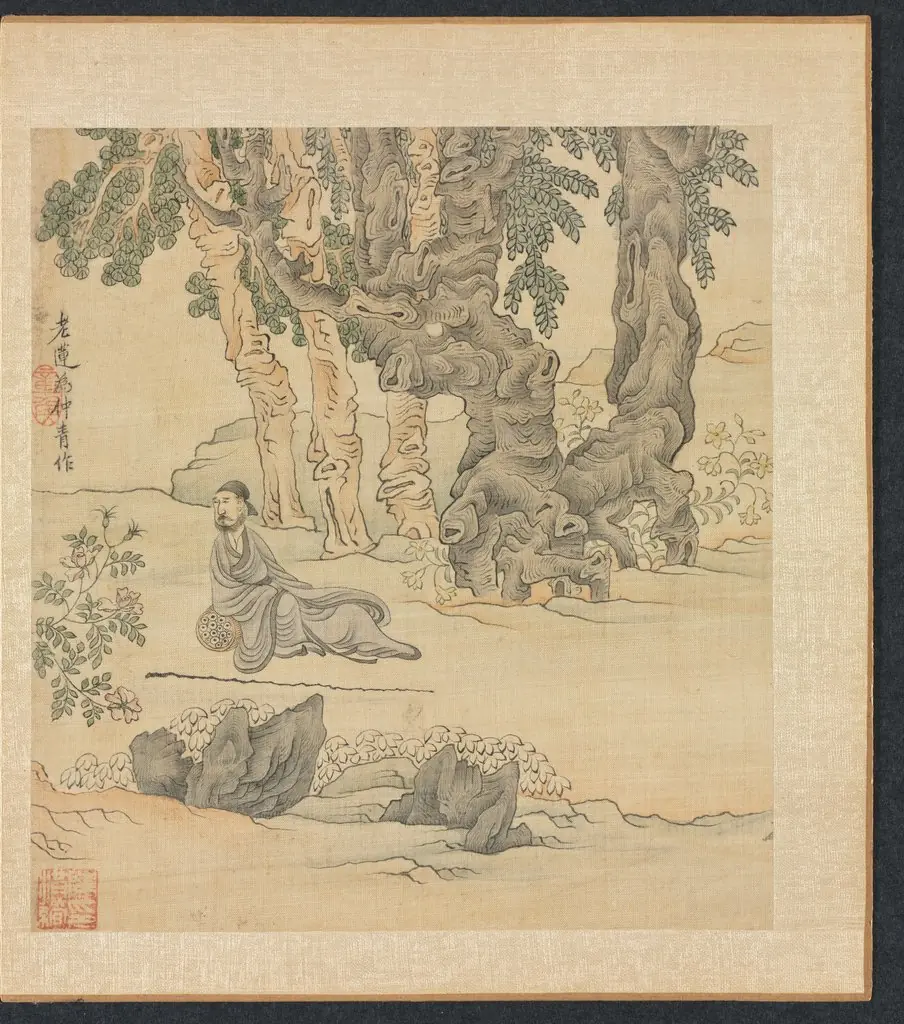 Paintings after Ancient Masters: Portrait of Zhongqing in a Landscape
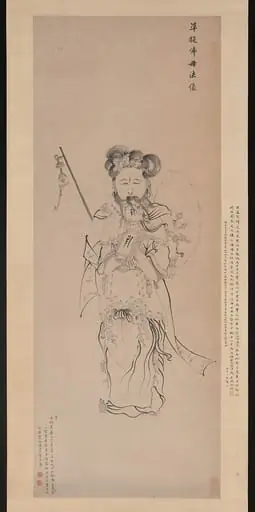 明 陳洪綬 準提佛母法像圖 軸|Bodhisattva Guanyin in the Form of the Buddha Mother
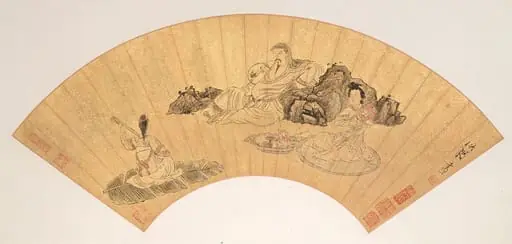 明 陳洪綬 山水花鳥人物圖 扇冊|Landscapes and Flowers