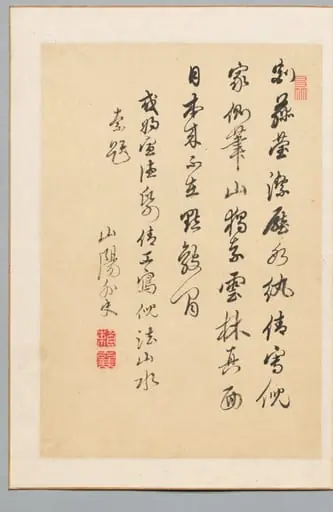
Artwork
Calligraphy
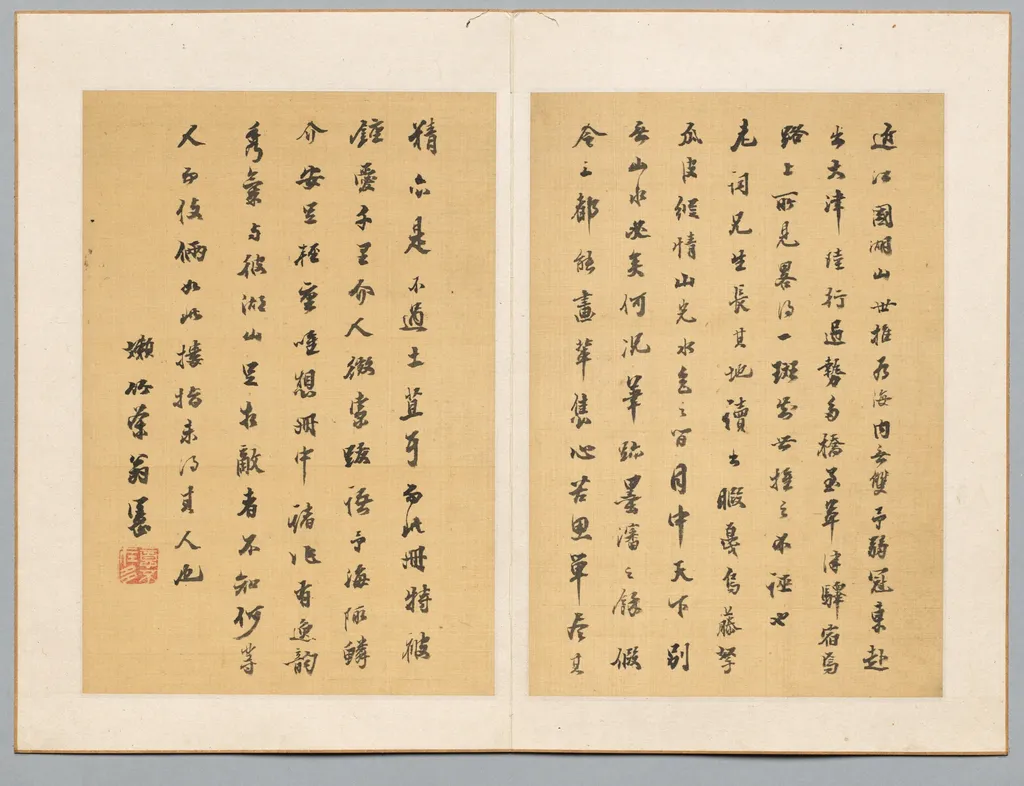
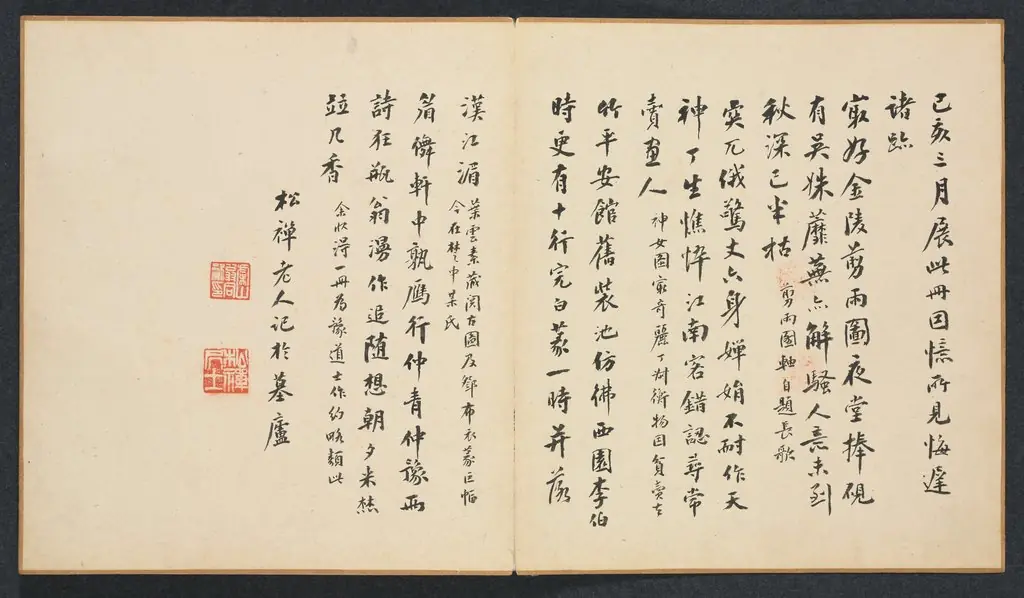
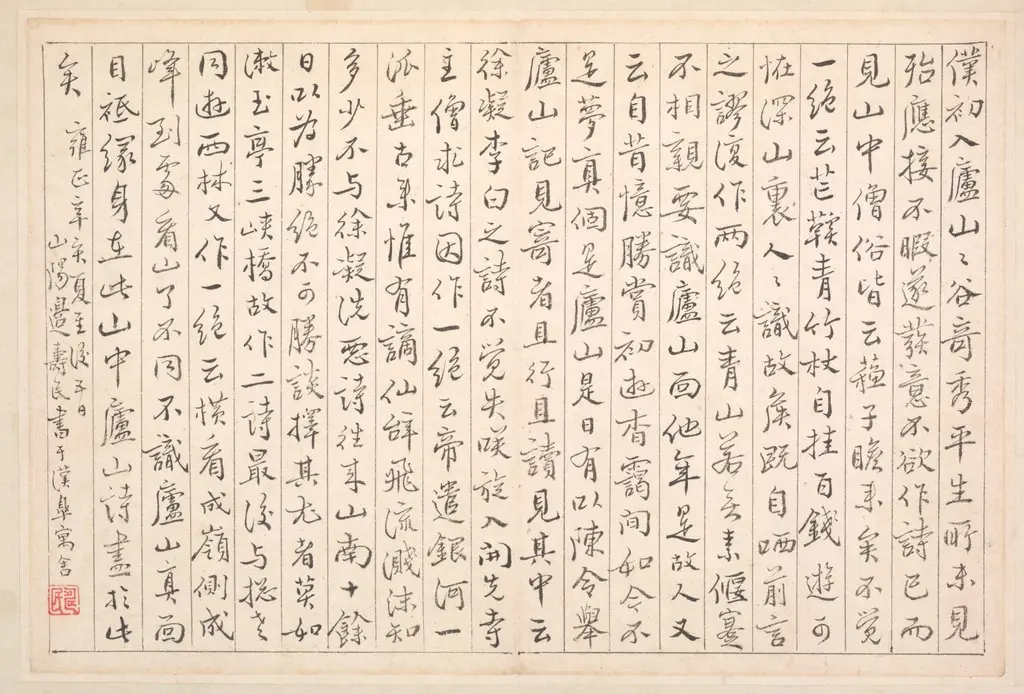
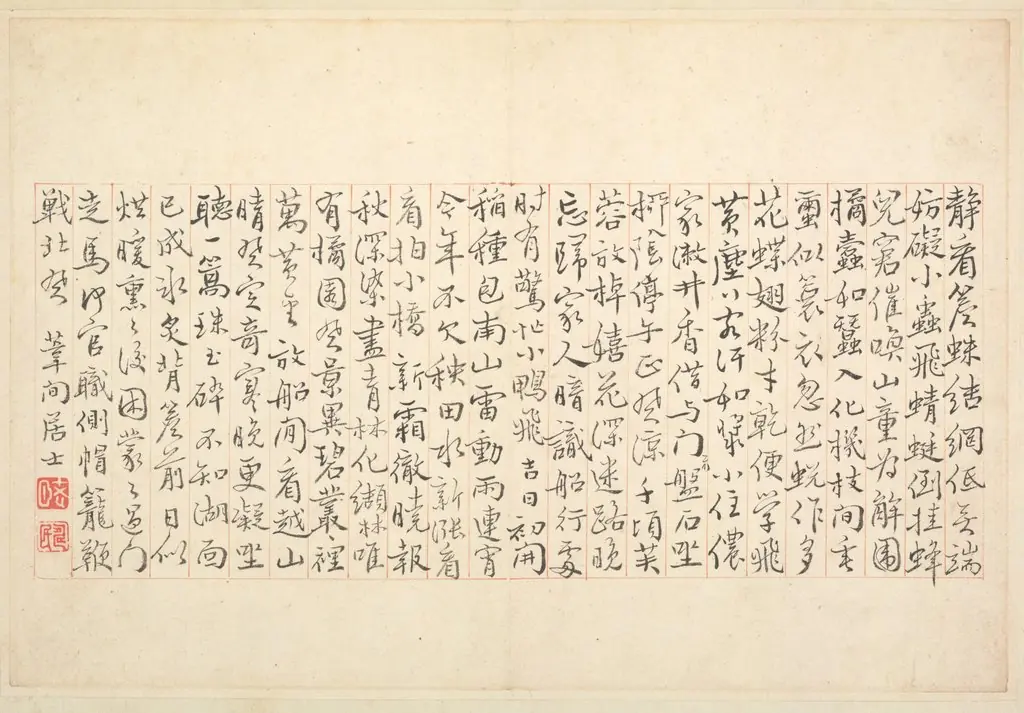
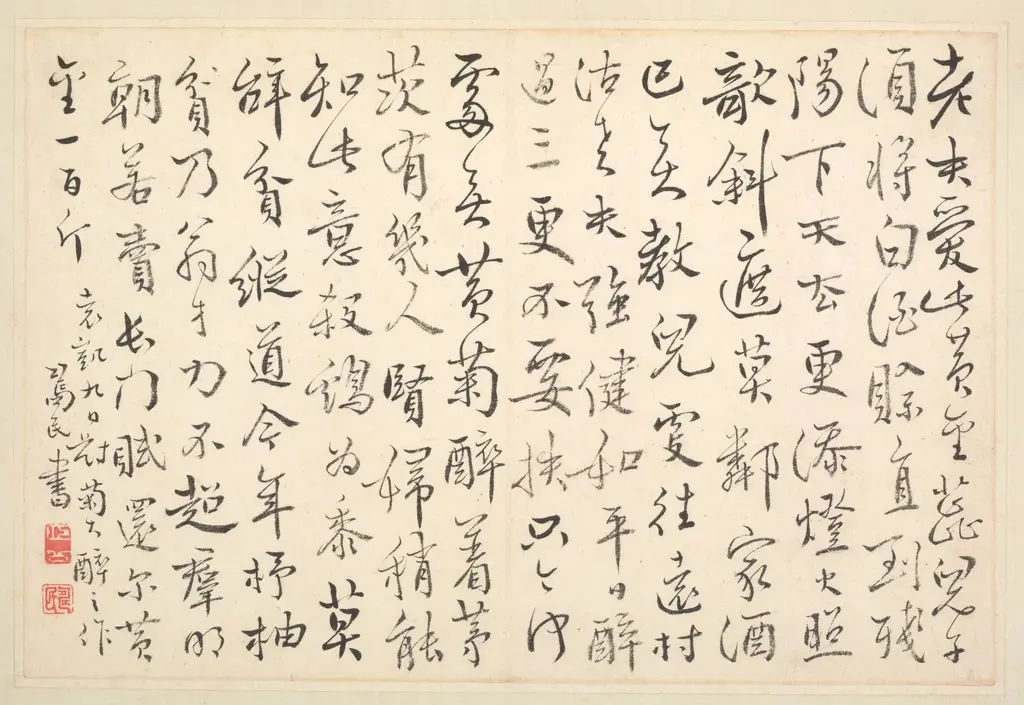
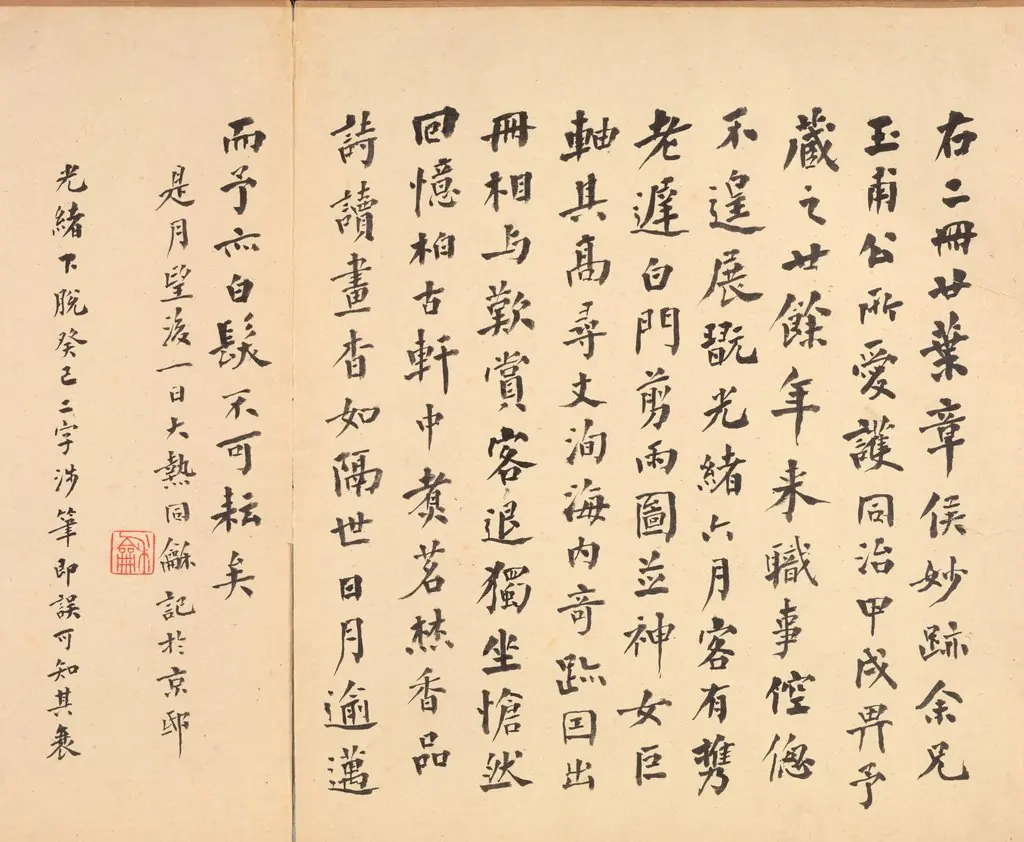
Calligraphy is an unspecified painting by the Nanga artist Tanomura Chikuden. It dates from 1822 and is held in the collection of the Cleveland Museum of Art.
About this work
History & Provenance
The piece is currently held in the collection of the Cleveland Museum of Art, where it is identified by the accession number 1972.
The work Calligraphy by Tanomura Chikuden was created in Japan in 1822. It is classified as a painting and dates specifically to January 1, 1822. The piece is currently held in the collection of the Cleveland Museum of Art, where it is identified by the accession number 1972.117.1.13.
While the specific commission details and the full chain of ownership prior to the museum's acquisition are not detailed in the available records, the work's creation is firmly attributed to the artist during the early 19th century in Japan.
Context
Tanomura Chikuden painted Calligraphy in 1822, reflecting the Edo-period emphasis on refined brushwork and textual mastery within the Shijō school tradition. The work demonstrates how calligraphic aesthetics were integrated into broader painting practices, particularly through its precise rendering of Chinese characters using ink wash techniques characteristic of Kyoto's literati circles. Its inclusion in the Cleveland Museum of Art collection since 1972 underscores its recognized significance in Japanese painting scholarship, where it continues to inform studies of 19th-century cross-cultural artistic exchange and the evolution of monochrome expression.
Overview
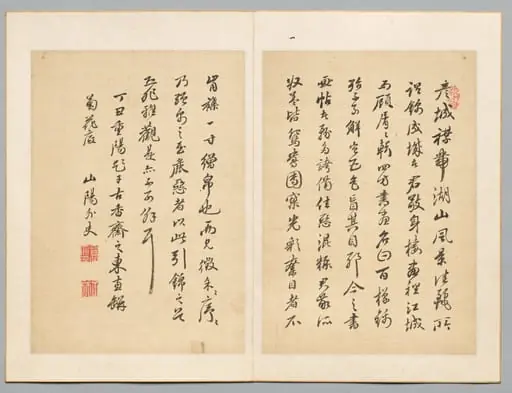
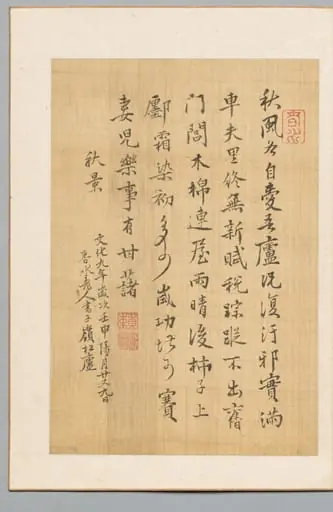
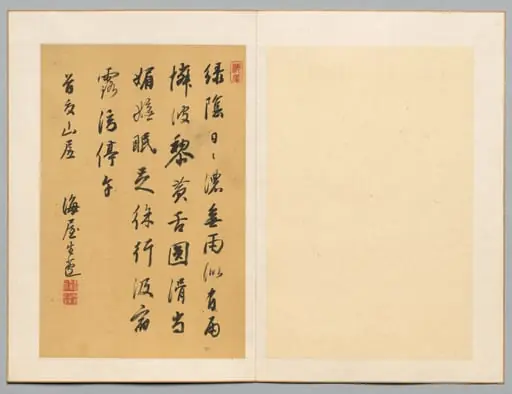
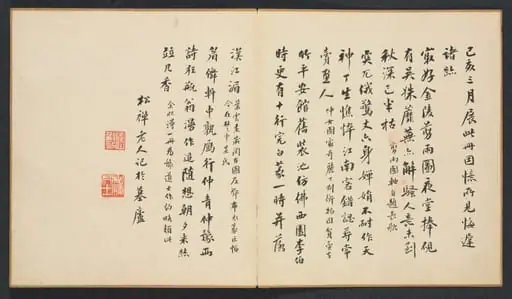
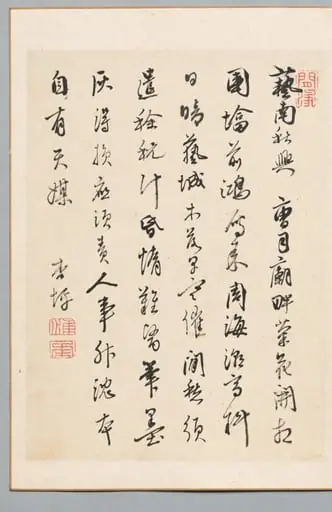
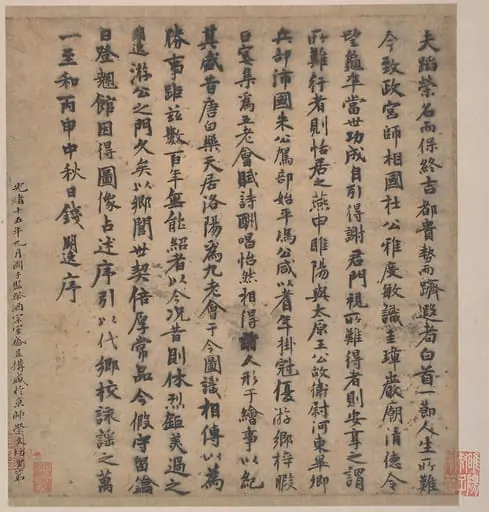
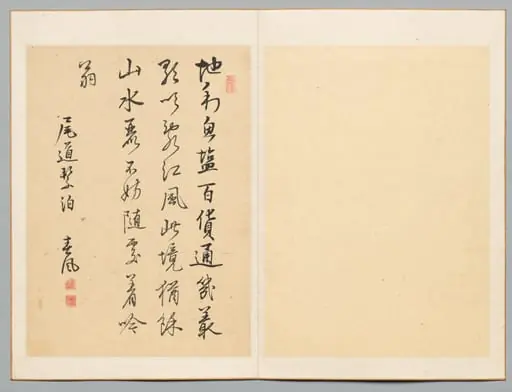
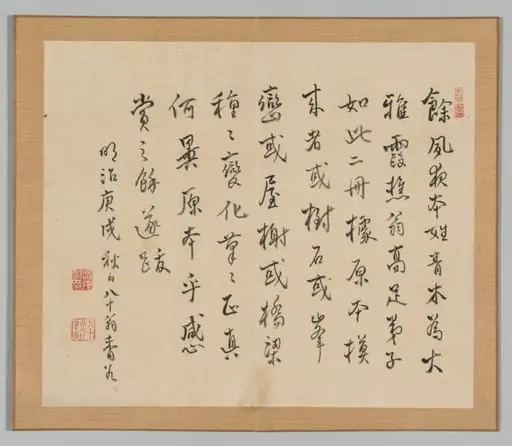
Created in 1822 by the Japanese artist Tanomura Chikuden, this work of calligraphy consists of two sheets of light‑brown paper bearing black ink characters arranged in vertical columns. The sheets are housed in the Cleveland Museum of Art, where they are displayed as an example of early‑nineteenth‑century Japanese brushwork.
Subject & Meaning
The inked text appears to be a poetic composition or personal correspondence, its balanced spacing suggesting careful attention to rhythm and meaning. While the exact content is not transcribed here, the formal arrangement of characters reflects the traditional Japanese emphasis on harmony between form and literary expression.
Technique & Style
Chikuden employs a brush with controlled pressure, producing strokes that vary subtly in thickness, lending each character a lively, organic quality. The paper’s warm, yellowish hue enhances the contrast with the deep black ink, and a small red seal in the corner of the left sheet authenticates the piece in the customary Japanese manner.
Own this work as a print
Artist & collection


- Calligraphy
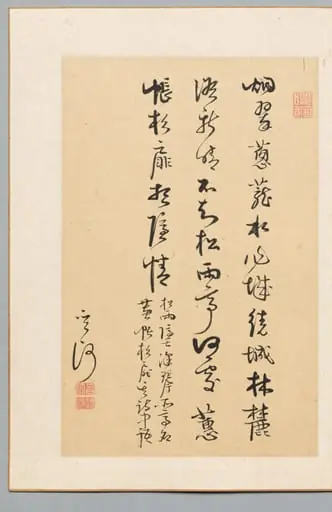 Calligraphy
 Paintings after Ancient Masters: Calligraphy
 Album of Calligraphy and Paintings
 Album of Calligraphy and Paintings
 Album of Calligraphy and Paintings
 Paintings after Ancient Masters: Calligraphy
 Calligraphy with Willow and Swallows
 Album of Calligraphy and Paintings
 清 傳高鳳翰 書畫合璧 冊|Landscapes and Calligraphy