Artwork
The Wrath of Elihu
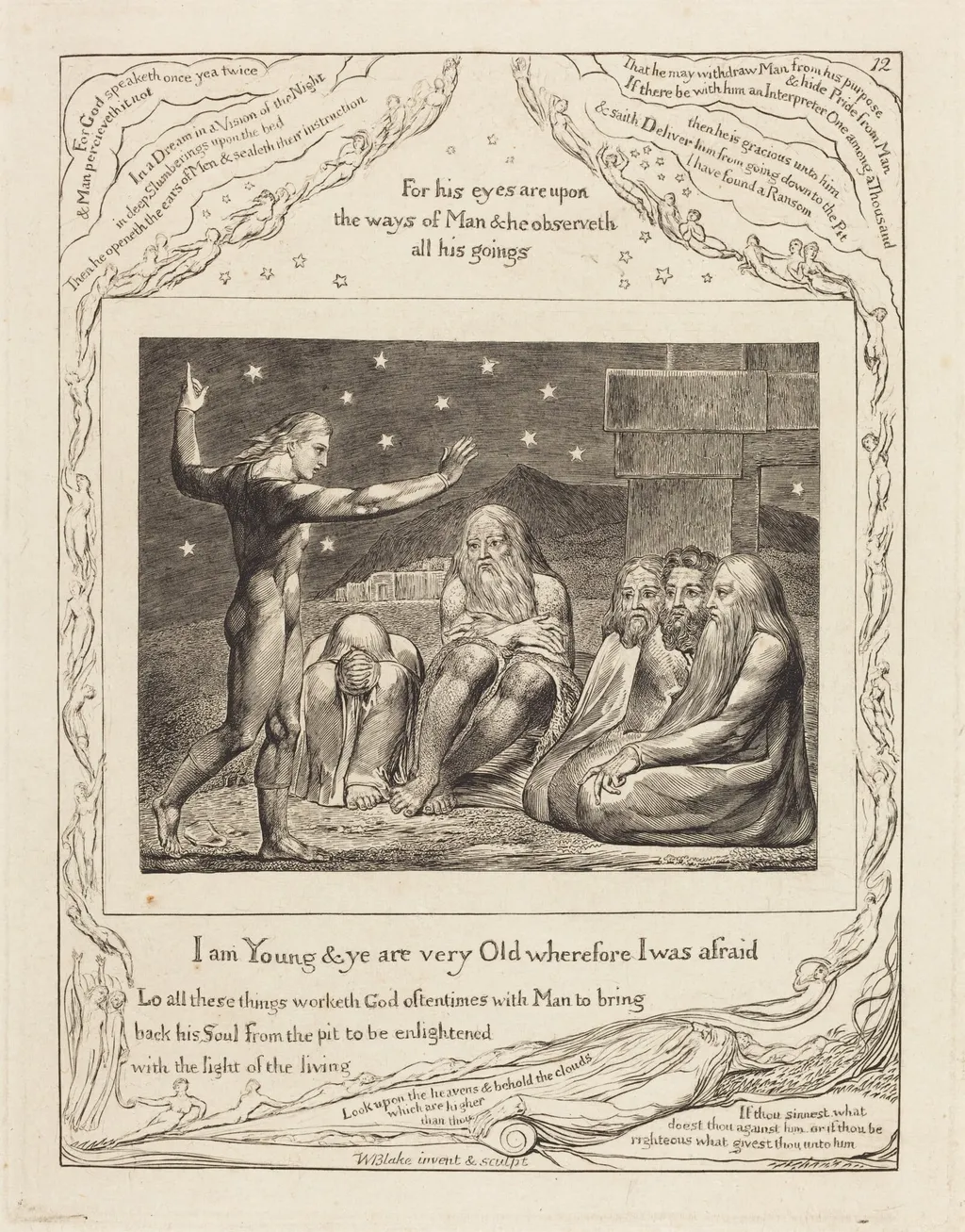
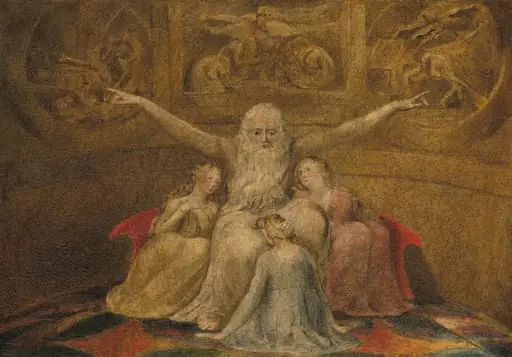
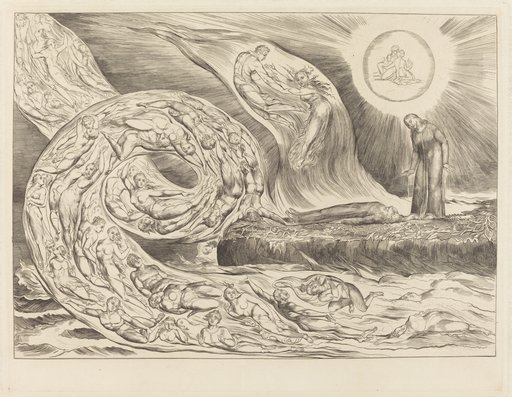
The Wrath of Elihu is an ink print by the Romanticist artist William Blake. It dates from 1825 and is held in the collection of the National Gallery of Art.
About this work
Overview
The Wrath of Elihu is an 1825 engraving by William Blake, created during the later, visionary phase of his career, characterized by biblical and mythological themes.
Subject & Meaning
The engraving depicts a tense, dramatic night scene with four men in a dimly lit room. One figure, arms raised towards the sky (and visible stars through a window), addresses the other three seated men, who gaze up with serious expressions. Surrounding text quotes Bible verses on divine observation of human actions, underscoring a theme of judgment or spiritual address.
Technique & Style
Blake employed fine lines to achieve deep shadows and intensity in the scene, hallmark of his expressive and symbolic visual language. The engraving technique, involving carving detailed images, was a medium Blake mastered.
History & Provenance
Produced in London during Blake’s later career, the work remained part of an unrecognized body of work during his lifetime. Its current location or ownership is not specified in available information.
Context
Created within the Romantic era, The Wrath of Elihu reflects Blake’s unique blend of literary and artistic visionary expression, aligning with the era’s emphasis on emotion and imagination.
Legacy
Though unrecognized in his time, Blake’s works, including The Wrath of Elihu, now solidify his position as a central figure in Romantic-era art and literature, influencing subsequent generations with his symbolic and imaginative style.
Own this work as a print
Artist & collection
Artist
William Blake (28 November 1757 – 12 August 1827) was an English poet, painter and printmaker.